Kei Truck & Kei Car Laws in Alaska (2026)
LegalSB 239, signed June 24, 2026, made every legally imported vehicle 25 years or older fully road legal. Full registration and title, no FMVSS proof, effective immediately.
Are Kei Trucks Legal in Alaska?
Yes, fully legal as of June 24, 2026. Governor Mike Dunleavy signed Senate Bill 239 into law on June 24, 2026, and its registration provisions took effect immediately. The new statute, AS 28.10.068, says the Alaska DMV may not require a vehicle to comply with current Federal Motor Vehicle Safety Standards (FMVSS) before registering it, as long as the vehicle is at least 25 years old and was legally imported into the United States. A companion provision, AS 28.10.221(e), blocks the DMV from refusing, suspending, or revoking a title on FMVSS grounds for vehicles registered under the new rule.
That means popular models like the Suzuki Carry, Honda Acty, Daihatsu Hijet, Subaru Sambar, and Mitsubishi Minicab can now be titled, registered, and driven on any Alaska public road, from Anchorage surface streets to the Parks Highway. There is no speed limited road restriction, no antique plate scheme, and no kei specific carve out. A 25 year old kei truck registers like any other vehicle.
Alaska's law is also broader than most state kei fixes. It covers every legally imported vehicle past the 25 year line, so JDM vans, Skylines, and European market classics all benefit from the same statute. We covered the full story of how the law passed in our SB 239 legalization breakdown.
What Changed with SB 239
Alaska never passed a deliberate kei ban. The problem was a 2006 regulation, 2 AAC 92.020, that let the DMV refuse registration to any vehicle from model year 1981 or newer without an FMVSS certification label or a manufacturer's compliance letter. The year 1981 was hard coded because it was 25 years before 2006. The state intended to mirror the federal rolling 25 year rule and instead froze the cutoff in place, a drafting error documented in Mercedes Streeter's reporting at The Autopian.
For years nobody enforced it. Around 2025 the DMV tightened up and began screening applications for a 17 digit VIN. Japanese domestic market vehicles use shorter chassis codes, so kei trucks and other imports started getting denied, and owners were left registering their trucks as "all purpose vehicles," an off road classification that allowed only limited on road use at the discretion of law enforcement.
Senator Cathy Tilton of Wasilla filed SB 239 on February 11, 2026 to replace the fixed 1981 date with the rolling federal standard. The bill drew a broad bipartisan sponsor list, passed the Senate 20 to 0, passed the House 39 to 0 with one member absent, and carried a zero fiscal note. Per the Senate majority's announcement, Tilton framed it simply: "We often talk about cutting red tape. SB 239 actually does it."
How to Register a Kei Truck in Alaska
Registration now follows the standard Alaska DMV process, with import documentation as the key extra step. You will need:
- Proof of ownership: A title from another state, or for direct imports, the Japanese export certificate or deregistration document with an English translation.
- Proof of legal importation: The U.S. Customs and Border Protection Entry Summary (CBP Form 7501) and the DOT Form HS-7 declaration filed when the vehicle entered the country under the 25 year exemption. This is what "legally imported" means under AS 28.10.068, so these documents are the heart of the application.
- VIN verification: Vehicles with foreign ownership documents get inspected by an authorized inspector using Alaska DMV Form 811, which verifies the VIN or chassis number and ownership history.
- Bill of sale and standard registration fees through the Alaska DMV.
The federal side is unchanged: the vehicle must be at least 25 years old from its month of manufacture to clear the NHTSA 25 year import rule. Our complete import guide walks through the whole pipeline from Japanese auction to your driveway.
The Import Paperwork Catch
The phrase "legally imported" is doing real work in the new statute. If you bought your kei truck in Alaska secondhand and the original import paperwork did not come with it, the DMV has no way to confirm the truck entered the country legally, and you will hit a wall.
According to KTUU's coverage of the law taking effect, owners in this position are reconstructing the paper trail by driving their trucks to the Canadian border, where customs officers inspect the vehicle, verify the paperwork, and stamp it back into the country. It works, but it turns a DMV errand into a road trip. Our video post on KTUU's ride along shows what that first legal summer looks like from the driver's seat. If you are shopping for a truck already in the state, make the CBP Form 7501 the first thing you ask the seller for. Our September 50 state law audit found this paperwork bottleneck is the biggest practical hurdle of Alaska's first legal summer.
Insurance Requirements
Registered vehicles need standard Alaska liability coverage: $50,000 bodily injury per person, $100,000 bodily injury per accident, and $25,000 property damage. Insuring a 25 year old right hand drive import takes some carrier shopping. Specialty insurers like Hagerty write policies for imported classics, and several mainstream carriers will cover a registered kei truck once it holds a normal title. Our kei truck insurance guide covers which companies actually pick up the phone.
Inspection and Emissions
Alaska has no statewide emissions testing requirement, and SB 239 removed the FMVSS proof requirement that used to kill applications. The remaining hurdle is the Form 811 VIN inspection for vehicles entering with foreign documents, which verifies identity and ownership rather than safety compliance.
Winter readiness is on you, not the state. A JDM truck headed for Interior winters wants a block heater, a strong battery, and proper studded or severe snow rated tires. Our kei truck winter guide covers the full cold weather setup.
Legislative History
Legislative Timeline
- Banned
2 AAC 92.020 Published with Fixed 1981 Cutoff
Alaska adopted a regulation refusing registration to any model year 1981 or newer vehicle lacking FMVSS certification. The state meant to mirror the federal rolling 25 year rule but froze the year at 1981, 25 years before publication. The error sat mostly unenforced for nearly two decades.
- Banned
DMV Enforcement Tightens
The Alaska DMV began screening registrations for 17 digit VINs, flagging JDM imports whose shorter chassis codes could not satisfy the check. Kei owners were pushed into all purpose vehicle registrations with only limited on road use at law enforcement discretion.
- Pending
SB 239 Filed by Senator Cathy Tilton
Senator Tilton (R, Wasilla) introduced SB 239 to bar the DMV from requiring FMVSS compliance for legally imported vehicles at least 25 years old. The bill attracted a bipartisan sponsor list spanning both chambers.
- Pending
Senate Passes SB 239, 20 to 0
The Alaska Senate passed the bill unanimously after clearing the Transportation and State Affairs committees with a zero fiscal note.
- Pending
House Passes SB 239, 39 to 0
The House passed an amended version adding unrelated CDL exam and insurance provisions, with 39 yes votes and one member absent. The Senate concurred 20 to 0 the next day.
- Legalized
Governor Dunleavy Signs SB 239 into Law
Signed as Chapter 39 SLA 26. The registration and title sections took effect immediately, making legally imported vehicles 25 years and older fully road legal statewide.
- Legalized
Registrations Roll Out, Paperwork Slows the Line
Alaska DMV began processing kei registrations under SB 239, but local news reported a slow start. Owners must prove legal importation, and the DMV's vehicle program manager called the import paperwork the hardest step of the process. Keep your customs entry summary and EPA and DOT forms with the truck.
Tips from Alaska Kei Truck Owners
Alaska's kei community was active well before the law changed, running trucks on private land and all purpose vehicle tags. Now that full registration is open, the collective wisdom looks like this:
Chase the paperwork first. The truck is only as registrable as its import documents. Owners without a CBP Form 7501 are organizing group runs to the Canadian border to get vehicles inspected and stamped, so ask around in the community before making the drive alone.
Winterize before you daily it. Stock kei heaters were built for Osaka, not Fairbanks. A block heater, an upgraded battery, and studded tires transform the experience. Several Anchorage owners run their kei trucks through winter and report the light weight is an asset on ice rather than a liability.
4WD is worth hunting for. The 4WD versions of the Carry, Hijet, and Sambar are the right tool for unplowed roads and cabin access. Low range versions climb grades that surprise people used to UTVs.
Join the community. The r/keitruck subreddit has active Alaska threads covering registration experiences under the new law, border stamping runs, and cold weather setups.
Frequently Asked Questions
Are kei trucks street legal in Alaska?
Yes. Since June 24, 2026, any legally imported vehicle at least 25 years old can be titled and registered for full road use under AS 28.10.068. There are no kei specific speed or road restrictions.
What if my kei truck is newer than 25 years old?
It cannot be registered until it crosses the 25 year line, which also matches the federal import rule. The standard is rolling, so new model years become eligible every year.
I bought my kei truck in Alaska without import paperwork. Can I register it?
Not until you can document legal importation. Owners in this position are taking their trucks to the Canadian border for a customs inspection and stamp to reestablish the paper trail. Budget a full day and confirm current procedures with CBP before you go.
Do I need insurance?
Yes. Standard Alaska liability minimums apply: $50,000 per person, $100,000 per accident, and $25,000 property damage.
Is there an emissions test?
No. Alaska has no statewide emissions testing, and SB 239 removed the FMVSS certification requirement for qualifying imports.
Does the law only cover kei trucks?
No. It covers every legally imported vehicle at least 25 years old, including kei vans and cars, JDM SUVs, and European imports. That breadth is part of why it passed without a single no vote.
Useful Links
- Alaska Division of Motor Vehicles - Registration and titling
- Alaska DMV Form 811 - VIN verification for imports
- SB 239 bill page - Official legislative record
- NHTSA Vehicle Importation Guidelines - Federal 25 year rule
- r/keitruck Community - Owner discussions and Alaska threads
Alaska went from one of the most frustrating states for kei ownership to one of the best in a single legislative session. If you are weighing a purchase, our state by state legality guide shows how Alaska now compares to Washington's 35 mph road limit and Oregon's ongoing ban. Welcome to the good side of the map.
Where to actually buy one in Alaska
No verified kei truck dealers in Alaska yet. The best buyers ship from nearby states or import directly from Japan.
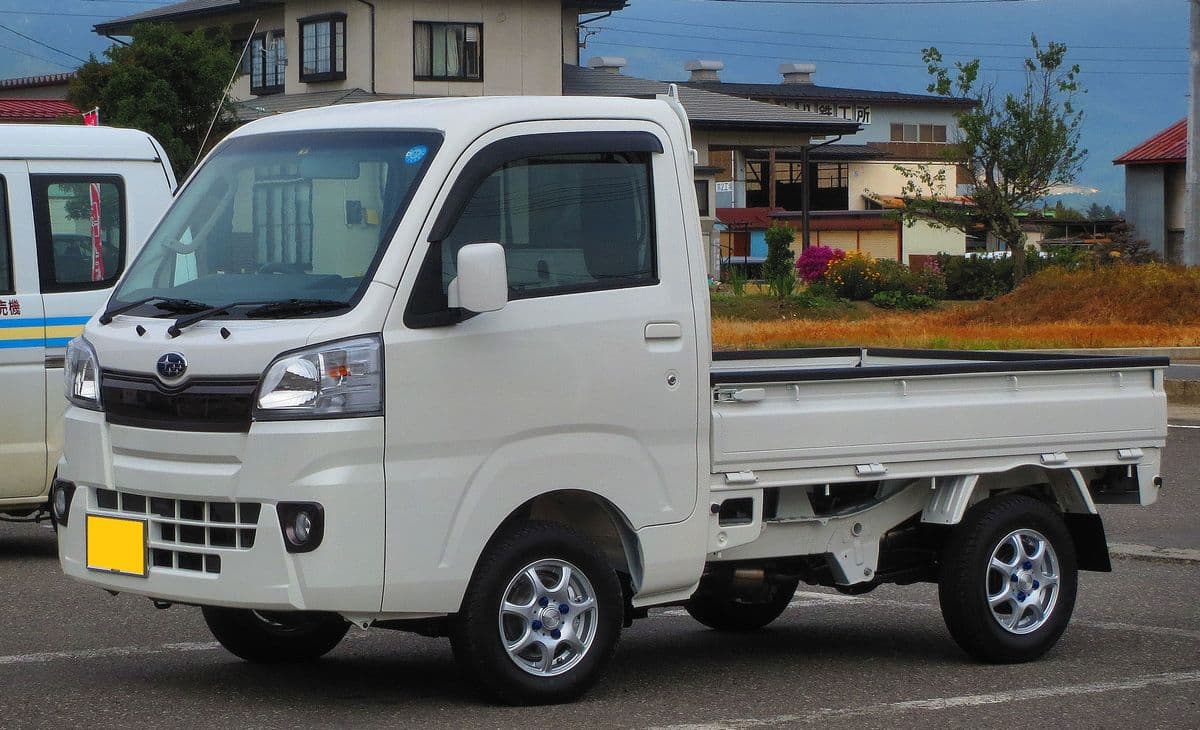
Subaru Sambar
1961-Present
The Sambar hangs its engine over the rear drive wheels, which is exactly what you want on packed snow and ice. Add the 4WD versions' low range and a set of studded tires and it out grips trucks three times its weight. Alaska winters are the Sambar's home turf.
Get the weekly kei truck brief
Law changes, price drops, new models, and build inspiration. One email a week.