Suzuki Carry: Complete Guide
Overview & History
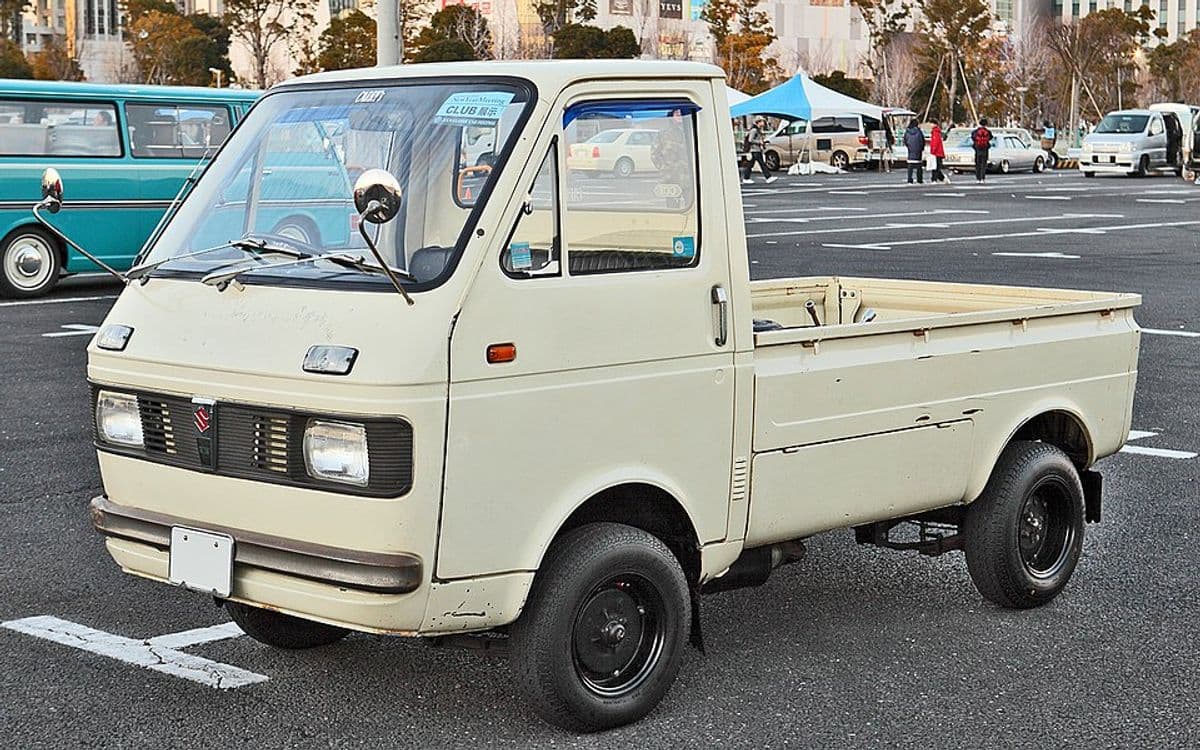
The Suzuki Carry is the undisputed king of kei trucks in the North American import market. First introduced in 1961 as the Suzulight Carry, this mini truck has evolved through eleven generations and remains in production today. For most American buyers, the Carry is the entry point into kei truck ownership, and for good reason: it is the most widely available, the most affordable, and has the largest aftermarket support network of any Japanese mini truck.
Suzuki's kei truck lineage traces back to the earliest days of Japan's kei vehicle regulations. The original Carry was rear engined and air cooled, but the platform matured significantly through the 1970s and 1980s. The tenth generation (1991-1998) and eleventh generation (1999-2013) are the models most commonly imported to the United States, as they fall within or are approaching the 25-year import threshold required by federal law. Check the import eligibility timeline to see exactly which Carry generations are legal to import right now.
The Carry's influence extends beyond Suzuki's own dealer network. The same truck is sold as the Mazda Scrum and (since 2013) the Nissan Clipper, all badge engineered variants with identical mechanicals and fully interchangeable parts. The 2026 Clipper facelift breakdown covers what changes when Nissan badges a Carry and why the rebadge costs about $1,000 more. If you find a Scrum at a lower price than an equivalent Carry, you are getting the same truck. Suzuki also builds the Suzuki Every, the van version of the Carry platform, which shares the same engine and drivetrain in a fully enclosed body. The Every is a popular choice for camper conversions, food truck builds, and other mobile businesses.
The Carry's reputation for reliability is well earned. Suzuki's engineering philosophy for this platform has always prioritized simplicity and durability over raw performance. In early 2026, Suzuki gave the Carry its first facelift in 12 years, bringing new LED headlights, a full safety suite, and the lifestyle-oriented X Limited trim, confirming the platform's long-term future. At the 2026 Japan Truck Show, Suzuki took the same X Limited and dressed it in factory Hard Cargo overlanding gear, signaling the kei truck's official pivot from work tool to lifestyle vehicle. For a video walkthrough of what changed and why the 12 year platform cycle benefits US importers, see our 2026 facelift coverage. Many Carries imported from Japan arrive with under 50,000 kilometers on the odometer, having spent their lives on Japanese farms or in light commercial duty.
Specifications
The most commonly imported Suzuki Carry models (DC51T and DA63T chassis codes) are powered by Suzuki's 660cc three cylinder engines. The earlier DC51T models from the 1990s use the F6A engine, a 657cc SOHC unit producing approximately 36-42 horsepower. Later models switched to the K6A engine, a more modern DOHC design that produces 46-50 horsepower in naturally aspirated form. Turbocharged variants of both engines exist, pushing output to around 64 horsepower (the legal maximum under kei regulations).
Transmission options include a 5-speed manual (by far the most common) and a 3-speed automatic. Four wheel drive is available on most models and is highly recommended for buyers intending to use the truck off road or on farms. The 4WD system is a part time setup engaged via a floor mounted lever, with selectable low range available on many models.
- Engine: 660cc F6A (SOHC) or K6A (DOHC) 3-cylinder
- Power: 36-50 hp (NA), up to 64 hp (turbo)
- Torque: 42-46 lb-ft
- Transmission: 5-speed manual or 3-speed automatic
- Drivetrain: RWD or part time 4WD with low range
- Payload capacity: 770 lbs (350 kg)
- Bed dimensions: Approximately 78" L x 54" W
- Curb weight: ~1,500-1,700 lbs
- Fuel economy: About 30 mpg real world (34 to 39 mpg on late 1990s Japanese ratings)
Pros & Cons
Pros
- Availability: The most commonly imported kei truck, meaning easier sourcing and lower prices. Duncan Imports and other major dealers always have Carries in stock.
- Parts support: Suzuki's parts network is excellent. Many mechanical components are shared across the Carry, Every, Alto, Jimny, and Alto Works platforms, and dedicated kei truck parts suppliers stock Carry specific components.
- Reliability: The F6A and K6A engines are proven workhorses with simple, serviceable designs.
- Aftermarket: The largest selection of lift kits, wheels, bumpers, and accessories of any kei truck. See our off road mods guide for the most impactful upgrades.
- Fuel economy: Plan on about 30 mpg in mixed driving, lower than the 34 to 39 mpg the late 1990s Japanese ratings suggest. Our kei truck MPG breakdown shows the sources and the cost math, and the kei truck vs pickup comparison covers the pickup matchup. See our best kei truck for farming guide for how the Carry stacks up against other models in agricultural use.
- Resale value: Strong demand keeps resale values stable. Check Bring a Trailer for recent auction results.
Cons
- Power: Even at 50 hp, the Carry struggles on steep grades when loaded. Highway driving at 60+ mph can feel strained. Read our honest take in daily driving a kei truck.
- Ride comfort: The leaf spring rear suspension is stiff when the bed is empty. Expect a bouncy ride without payload.
- Rust: Japanese salt belt trucks can have significant frame and body rust. Inspection before purchase is critical. See our pre purchase inspection checklist.
- Safety: No airbags, minimal crumple zones, and thin doors. These are not highway cruisers. Review NHTSA safety standards to understand what these trucks lack.
- Cabin size: Tall drivers over 6'1" will find the cab cramped, particularly with the manual transmission.
Common Modifications
The Suzuki Carry has the most developed aftermarket of any kei truck. Popular modifications include:
- Lift kits: 2-4 inch lift kits are widely available, improving ground clearance for off road use. Brands like Catuned and Kei Truck Garage offer bolt on solutions. A Suzuki Carry 2 inch lift kit runs $350 to $500.
- Tires and wheels: Upgrading from the stock 12 inch tires to 13 or 14 inch all terrain tires is one of the most impactful modifications. Many owners run 145/80R12 or 155/80R13 all terrain tires. See our complete kei truck tire guide for exact sizes, brands, and where to buy. A set of Yokohama Geolandar AT 145/80R12 runs $200 to $300 for four.
- Bumpers and brush guards: Steel front bumpers with integrated winch mounts are popular for farm and trail use. A steel front bumper with winch mount runs $250 to $450.
- LED lighting: The stock sealed beam headlights are dim. LED conversions dramatically improve nighttime visibility. An LED headlight conversion kit (H4) runs $40 to $80.
- Exhaust: Aftermarket exhaust systems can free up a few horsepower and improve the sound, though gains are modest on the small engines. For builders who want to go much further, one project is stuffing twin Tesla motors into a Carry for 550 HP with a full custom roll cage.
- Dump bed conversions: Hydraulic dump bed kits are available and transform the Carry into an even more capable work vehicle. Our kei truck dump bed guide covers factory dump vs aftermarket conversion in detail. A hydraulic dump bed kit runs $800 to $1,200.
- Heating upgrades: The stock heater is often inadequate in cold climates. Auxiliary heater installations are common.
For a complete guide to building an off road Carry, see our best kei truck mods for off road use.
Known Issues & Maintenance Tips
- Distributor failure (F6A engine): The distributor on F6A-equipped Carries is a known weak point. Carry a spare or convert to a distributorless ignition setup. Genuine replacement parts are available from OEM suppliers in Japan.
- Water pump weep: Both the F6A and K6A are prone to water pump weep holes leaking as the seals age. Replace the water pump proactively at 60,000 km.
- Clutch cable stretch: The manual transmission clutch cable stretches over time. Adjustment is simple but should be checked regularly.
- Rust inspection: Check the frame rails, cab corners, rocker panels, and bed floor thoroughly. Surface rust is manageable; structural rust is a deal breaker. Our pre purchase checklist covers exactly what to look for.
- Carburetor issues (pre-1995): Older carbureted models can develop idle and cold start issues after sitting. A carburetor rebuild or cleaning often resolves these problems.
- Oil changes: Use quality 5W-30 or 10W-30 oil and change every 3,000-5,000 km. These engines have small oil capacities (~2.5 liters) so clean oil matters. A 5 quart jug of 5W-30 synthetic runs $25 to $35 on Amazon.
- Timing belt: Replace the timing belt every 100,000 km. This is an interference engine on the K6A, so a snapped belt means bent valves. A K6A timing belt kit with water pump runs $80 to $120.
For help sourcing any of these parts, see our complete guide to finding kei truck parts.
Price Guide
Pricing for imported Suzuki Carries varies based on year, mileage, drivetrain, and condition. You can check Hagerty's valuation tools for current market data and track recent auction results for real world transaction prices.
- 1991-1998 models (2WD, higher mileage): $5,000 - $7,000
- 1991-1998 models (4WD, good condition): $7,000 - $10,000
- 1999-2001 models (4WD, low mileage): $10,000 - $15,000
- Turbo or dump bed equipped models: Add $1,000 - $3,000 premium
- Fully built/modified examples: $12,000 - $20,000+
Prices have climbed steadily since 2020 as demand has increased. Budget conscious buyers should focus on 2WD 1990s models, which remain the most affordable entry point. The Carry consistently undercuts the Honda Acty and Subaru Sambar on price for comparable configurations. For a detailed breakdown of how the Carry stacks up against its closest competitors, see our Carry vs Acty comparison and Carry vs Hijet comparison.
Insurance
Insuring a Suzuki Carry is straightforward once you find the right carrier. Hagerty specializes in collector and classic vehicles and is familiar with kei trucks, and their agreed value policies are popular with Carry owners. Standard carriers like Progressive and State Farm have also written policies for kei trucks with varying success. Expect to pay $200-$600 annually for liability coverage depending on your state and driving record. For a full breakdown of rates, providers, and the agreed value vs stated value debate, see our kei truck insurance guide.
Before purchasing, verify your Carry can be registered for road use in your state. Check our state by state legality guide for current regulations; the map keeps improving, and Alaska's newly legal Carry owners are the latest proof. The kei truck community on Reddit is also an excellent resource for state specific registration experiences.
Where to Buy
- Japanese auction importers: Companies like Duncan Imports and Japanese Classics specialize in sourcing and importing Carries directly from Japanese auctions. You can also browse Japanese inventory on Goo-net Exchange to see what's available.
- Facebook Marketplace and Craigslist: The secondary market for already imported Carries is active, particularly in rural areas of the Southeast and Pacific Northwest.
- Dealer networks: A growing number of small dealers across the US specialize exclusively in kei trucks and maintain rotating inventory. Check our dealer directory for options near you.
- Direct import: For hands on buyers, our complete import guide walks through the entire process from Japanese auction to US registration.
One market note for perspective: British buyers can now buy a brand new Carry in the UK from around £14,995 plus VAT. No equivalent path exists in the US, so the used import market above is the whole game for American buyers.
When buying, always request auction sheet translations, undercarriage photos, and a compression test if possible. The condition gap between a well maintained farm Carry and a salt corroded city truck is enormous. See our 5 things to check before buying for a detailed inspection guide.
Frequently Asked Questions
Frequently Asked Questions
Advertisement
Done Reading? Next Moves
Find verified dealers with Suzuki Carry inventory, or see how it stacks up against the alternatives.
Prices and Availability Change Weekly
Get new model guides, maintenance tips, and kei truck buying news. One email a week.
Related Articles

2026 Mazda Scrum Truck Gets the Carry's Facelift, Undercuts It on Price
Mazda just refreshed its Scrum Truck for the first time in 13 years. Same Suzuki Carry bones, sharper face, modern safety tech, and a lower starting price. Here's why the cheapest badge on the platform might be the smartest buy.

2026 Nissan Clipper Truck: Same Suzuki Carry, Bigger Price Tag, Fewer Options
Nissan refreshed the Clipper Truck for 2026 with LED headlights and modern safety tech. It is mechanically identical to the Suzuki Carry but costs $1,000 more and skips the best trims. Here is what changed and why the badge matters at auction.

2026 Suzuki Carry Facelift: First Redesign in 12 Years and Why It Matters Stateside
Suzuki finally gave the Carry its first real facelift in 12 years. New LED lights, safety tech, a bold X Limited trim, and the same bulletproof 658cc engine. Here's what changed and what it means for US kei truck fans.