How to Import a Kei Truck from Japan: A Step-by-Step Guide
A complete walkthrough of importing a kei truck from Japan to the US, covering the 25-year rule, auction buying, shipping, customs clearance, and registration.

Advertisement
TL;DR (updated July 2026): Import process in 8 steps: find vehicle at Japanese auction ($2,500-$4,500 for a solid mid 90s truck), ship via RoRo ($800-$1,500) or container ($1,500-$3,000), clear US Customs with Form HS-7 (Box 1) and EPA 3520-1, pay the 25% truck duty, transport to your state, title and register. Total landed cost: $5,650-$12,150 depending on vehicle and method. The yen is at its weakest since 1996, so your dollars go further at auction right now than they have in decades. Use a full service importer if it is your first time.
Importing a kei truck directly from Japan can save you money compared to buying from a US dealer, and it gives you access to the full range of models, trims, and conditions available at Japanese auctions. When you compare the total landed cost against a new pickup, the savings are staggering even after paying the Chicken Tax. With kei truck imports tripling since 2020, more buyers than ever are navigating this process. However, it involves multiple government agencies, strict compliance requirements, and logistical coordination. This guide walks through every step.
What Changed in 2025 and 2026
Three things moved since the first version of this guide, and two of them work in your favor.
The tariff whiplash is over. Between August 2025 and February 2026, imported classics got hit with additional reciprocal tariffs on top of normal duty rates. The Supreme Court struck those tariffs down in February 2026 and they terminated on February 24. The separate Section 232 auto tariffs explicitly exempt vehicles manufactured 25 or more years before entry, so a legal kei import owes exactly what it owed in 2024: the 25% truck duty and nothing stacked on top. If you imported during that August to February window and paid reciprocal duty, you can pursue a refund through CBP; a March 2026 Court of International Trade order directed CBP to process them, so raise it with your customs broker.
The yen collapsed. The dollar buys around 162 yen as of July 2026, the weakest yen since 1996. Auction prices in yen have crept up with American demand, but the exchange rate still hands US buyers their best purchasing power in decades. A truck that hammers for 500,000 yen costs you about $3,100 today versus roughly $3,600 at 2023 exchange rates.
The fuel injected generation is aging in. The 25 year window now reaches 2001, which unlocks EFI trucks like the DA52T Suzuki Carry, HA6 and HA7 Honda Acty, and S200P Daihatsu Hijet. These start easier in cold weather, run cleaner, and need less carburetor fiddling than the mid 90s trucks older guides steer you toward.
Step 1: Understand the 25 year Import Rule
The foundation of the entire kei truck import market is the US federal 25 year exemption. Under 49 USC 30112(b)(9), motor vehicles that are at least 25 years old are exempt from Federal Motor Vehicle Safety Standards (FMVSS). This means they do not need to meet modern US crash, lighting, or emissions standards.
The math is simple: Take the current year, subtract 25, and any vehicle manufactured in or before that year is eligible. As of 2026, vehicles from 2001 and earlier qualify. This threshold moves forward by one year annually, and you can check our import eligibility by year breakdown to see exactly which models unlock each January. The 2026 Suzuki Carry facelift is decades away from US eligibility, but its continued production keeps the parts pipeline healthy for older imports.
Important: The 25 year rule applies to the date of manufacture, not the model year. Verify the actual production date on the vehicle's Japanese registration documents.
The EPA also provides an exemption for vehicles over 21 years old (40 CFR 85.1511(b)(4)), so any vehicle old enough for the NHTSA exemption also clears EPA requirements.
Step 2: Research and Choose Your Vehicle
Before engaging with an exporter or auction service, know what you want:
- Model: Suzuki Carry, Honda Acty, Daihatsu Hijet, Subaru Sambar, or Mitsubishi Minicab. Research the strengths and weaknesses of each. Our best kei trucks to import in 2026 guide compares the fuel injected generation now eligible, with auction pricing and reliability notes for every model. Hagerty also publishes market value data on imported kei trucks.
- Drivetrain: 4WD with low range is highly recommended for property and farm use. 2WD trucks are cheaper but less capable.
- Transmission: 5-speed manual is the most common and preferred. Automatics are available but sap power from the small engines.
- Condition priorities: Low mileage, rust free frame, and documented maintenance history are the key factors. Japanese auction sheets provide detailed condition assessments if you can read them (or have them translated). Our auction sheet decoder breaks down the grade scale, damage diagram letter codes, and inspector phrases so you can read a sheet before you bid.
Step 3: Find a Vehicle at Auction
Japanese auto auctions are the primary source for kei trucks. The major auction houses include USS (Used car System Solutions), TAA (Toyota Auto Auction), CAA (Central Auto Auction), and HAA (Honda Auto Auction).
You cannot bid directly at Japanese auctions as a foreign individual. You need to work with either:
-
A full service import company that handles everything from auction bidding to US delivery. Companies like Duncan Imports, Japanese Classics, Kei Truck USA, and JDM Expo provide this end to end service. You pay a premium for the convenience, but they handle all logistics, paperwork, and compliance.
-
An auction agent/exporter that bids on your behalf and ships the vehicle, with you handling US side customs clearance and registration. Services like Japan Partner, STC Japan, and BE FORWARD fall into this category. This saves money but requires more work on your end.
When evaluating a vehicle at auction, key documents include:
- Auction sheet: A standardized condition report filled out by auction inspectors. It grades the vehicle's interior, exterior, engine, and undercarriage on a scale (typically 1-5 or S-R), and notes specific defects.
- Export certificate: Required for the vehicle to leave Japan.
- De registration certificate: Proves the vehicle has been legally removed from Japan's registration system.
Step 4: Shipping from Japan
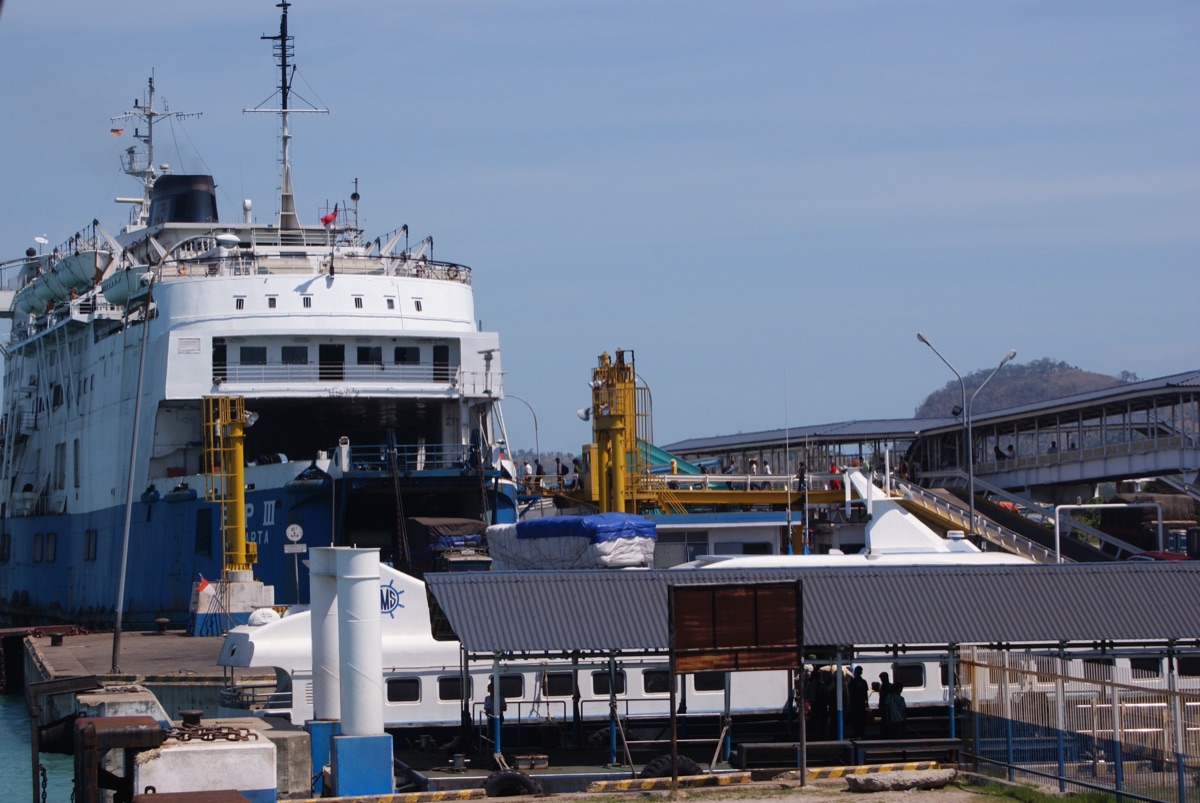
Most kei trucks are shipped via RoRo (Roll-on/Roll-off) or container shipping from major Japanese ports (Yokohama, Osaka, Nagoya, or Kobe) to US ports (Long Beach, Tacoma, Savannah, Jacksonville, Houston, or Newark).
RoRo shipping is cheaper ($800-$1,500) but the vehicle is driven onto a ship and exposed to salt air during transit. Insurance coverage is limited.
Container shipping is more expensive ($1,500-$3,000) but the vehicle is enclosed and protected. You can also share a container with other vehicles to split costs, or fill the container with parts and accessories.
Transit time from Japan to the US West Coast is typically 2-3 weeks. East Coast ports add another 1-2 weeks. End to end, budget six weeks to three months from auction win to driveway: expect around 45 days on the Japan side for export paperwork, deregistration, and inland transport before the ship even leaves.
Step 5: US Customs Clearance
When the vehicle arrives at the US port, it must clear customs. This involves:
CBP (Customs and Border Protection) entry: You or your customs broker files an entry with CBP declaring the vehicle. Required documents include:
- Bill of Lading (from the shipping company)
- Commercial invoice (purchase price documentation)
- Japanese Export Certificate
- EPA Form 3520-1 (declaring the vehicle is exempt under the 21-year rule, exemption code E)
- DOT/NHTSA Form HS-7 (declaring the vehicle is exempt under the 25 year rule, Box 1)
Customs duty: Kei trucks classify as light trucks under HTS code 8704.31.0000 and pay the 25% Chicken Tax on the declared value. Only kei passenger cars and vans classified under HTS 8703 get the 2.5% passenger rate. Your broker should also claim the Section 232 age exemption (HTS 9903.94.04) so no additional auto tariffs apply, and you will pay the standard merchandise processing fee (0.3464%) and harbor maintenance fee (0.125%). Tariff classifications shifted repeatedly through 2025 and 2026, so confirm the coding with your broker before entry.
Customs broker: You can file the customs entry yourself, but most importers use a licensed customs broker ($300-$800 all in, including bond and filing fees). The broker handles the paperwork, communicates with CBP, and ensures compliance. This is money well spent to avoid delays and errors.
Port fees and handling: Budget $200-$500 for port handling, storage, and release fees.
Step 6: EPA and DOT Compliance
For vehicles qualifying under the 25 year (NHTSA) and 21-year (EPA) exemptions, compliance is straightforward:
- EPA Form 3520-1: Filed at the time of customs entry. Check the box indicating the vehicle is exempt because it is over 21 years old. No testing, no modifications, no further EPA interaction required.
- DOT/NHTSA Form HS-7: Also filed at customs entry. Check Box 1, which declares the vehicle is at least 25 years old and exempt from FMVSS. No crash testing, no modification for US standards, no further NHTSA interaction required.
Critically important: If the vehicle is NOT 25 years old, it must either comply with all FMVSS (essentially impossible for a kei truck) or be imported under a show or display exemption (which does not apply to kei trucks). Do not attempt to import a vehicle that does not meet the 25 year threshold unless you have specific legal guidance. While there is growing political momentum to change these regulations, the 25 year rule remains the only viable import path as of early 2026.
Step 7: Transport from Port to Home
Once the vehicle clears customs and is released from the port, you need to get it home. Options include:
- Drive it: If you can get temporary transit plates in the port state, you can drive the kei truck home. This is usually only practical for shorter distances, though some owners go big: watch a freshly imported Subaru Sambar get driven 1,000 miles home straight from the port.
- Flatbed transport: Hire an auto transport service to flatbed the truck to your location. Cost varies by distance ($500-$1,500 for cross country).
- Enclosed transport: For additional protection during transport, though usually unnecessary for a utility vehicle.
Step 8: State Title and Registration
This is where the process varies most significantly based on your state of residence.
Kei truck friendly states (Alabama, Montana, New Hampshire, and many others) will title and register a 25 year exempt vehicle with minimal hassle. You typically need:
- The Japanese Export Certificate or de registration certificate
- CBP entry documentation proving legal import
- A bill of sale
- A VIN verification (some states require this for foreign vehicles)
- Standard title application and registration fees
Restrictive states may limit kei trucks to off road use only, require additional inspections, or decline to register them entirely. Check our state by state legality guide before importing.
The map is shifting fast, mostly in buyers' favor. Texas and Colorado passed SEMA backed legalization bills in 2025, and Alaska and Vermont both flipped to legal in mid 2026. On the other side, the AAMVA guidance that pushed several states to refuse kei registrations remains in effect, so a handful of states still say no outright. Verify your state's current status the week you plan to bid, not the status from a year old forum post.
Pro tip: Some buyers use Montana LLC registration to title their kei truck, particularly if their home state is restrictive. This is a legal gray area that varies by situation. Consult with a legal professional if considering this route.
Total Cost Breakdown
Here is a realistic cost estimate for a self managed import of a 1990s Suzuki Carry 4WD:
| Item | Cost |
|---|---|
| Vehicle purchase (auction) | $2,500 - $4,500 |
| Auction fees and agent commission | $500 - $1,000 |
| Japan inland transport to port | $200 - $400 |
| Ocean shipping (RoRo) | $800 - $1,500 |
| Marine insurance | $100 - $300 |
| Customs duty (25% Chicken Tax) | $650 - $1,150 |
| Customs broker, bond, and filing fees | $300 - $800 |
| Port fees and handling | $200 - $500 |
| US domestic transport | $300 - $1,500 |
| Title and registration | $100 - $500 |
| Total | $5,650 - $12,150 |
Use our import cost calculator to estimate your total landed cost based on your state's fees and taxes. Compare this to buying the same truck from a US dealer at $7,000-$12,000, and the savings on a self managed import are typically $1,000-$3,000. Whether the time and effort are worth the savings depends on your comfort level with the process. If you are buying for business use, the entire cost may be tax deductible under Section 179. If the upfront cost is a barrier either way, our kei truck financing guide covers LightStream, credit unions, and other options that work when banks will not.
Common Mistakes to Avoid
- Importing a vehicle that is not 25 years old. CBP will seize or force re export of non compliant vehicles.
- Skipping the auction sheet translation. Auction sheets contain critical condition information. Pay the small fee for a professional translation.
- Ignoring rust. A cheap truck with frame rust is not a bargain. Always request undercarriage photos before bidding. Browse Goo-net Exchange listings to get a feel for condition grading standards.
- Forgetting EPA and DOT forms. Missing these forms at customs entry causes delays and storage fees at the port.
- Not researching state laws. Importing a truck you cannot legally register in your state is an expensive mistake.
The import process is straightforward once you understand the steps, and the reward is getting exactly the truck you want at a price that is hard to beat on the domestic market. Once your truck is in the US, get your insurance sorted before driving it. If you prefer to skip the import process and buy domestically, browse kei trucks for sale to see current inventory with prices and specs, or check our dealer directory for verified kei truck dealers across the US. The r/keitruck community also maintains lists of recommended importers and regularly posts about their import experiences. For a detailed breakdown of the 25 year exemption and which models are currently eligible, see our 25 year import rule explainer. Once your truck arrives, use our delivery day checklist to verify condition and document everything before signing, then follow the complete maintenance guide for the Day One fluid flush every imported truck needs. For a visual overview of what an imported Carry looks like stateside, watch our Suzuki Carry walkaround video.
Advertisement


