What is a Kei Truck? The Complete Beginner's Guide
Everything you need to know about Japanese kei trucks: what they are, why they're exploding in popularity across the US, and whether one is right for you.

Advertisement
TL;DR: Kei trucks are Japanese mini trucks limited to 660cc engines, 63 hp, and 11 feet long. They cost $5,000-$12,000 imported. Best for: farm work, property hauling, short-distance utility. Legal to import at 25+ years old. Top models: Suzuki Carry (most popular), Honda Acty (mid-engine), Daihatsu Hijet (widest aftermarket), Subaru Sambar (4-cylinder). Check your state's registration laws before buying.
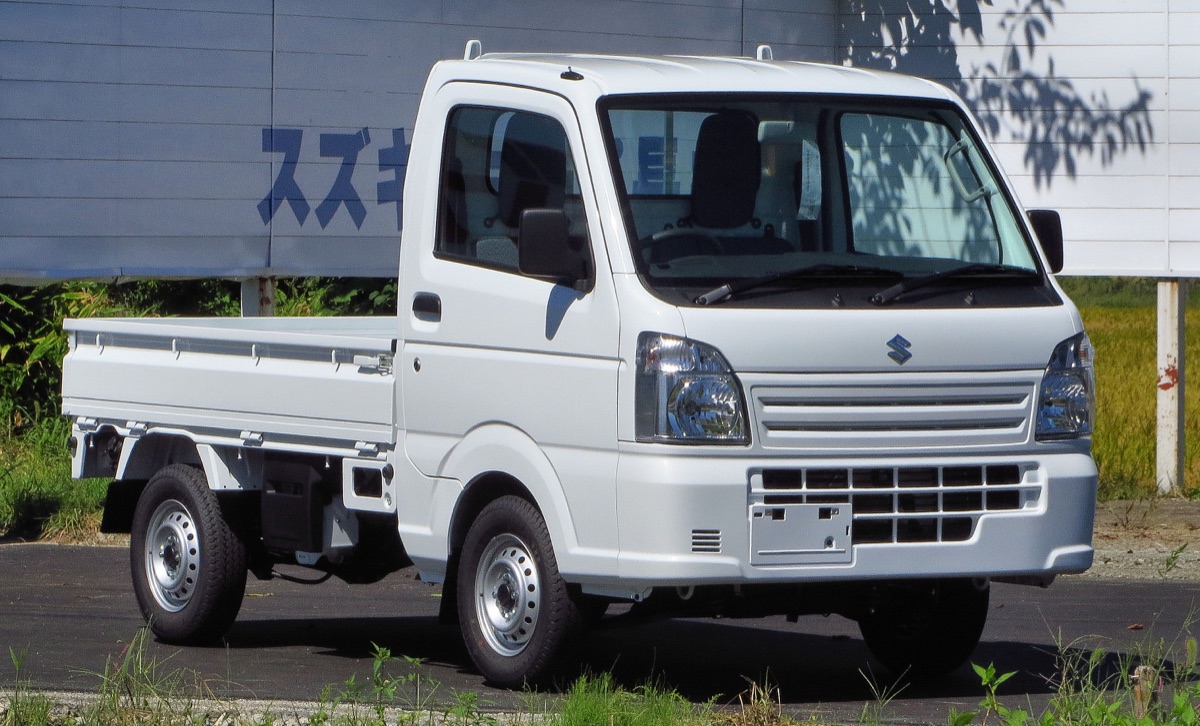
If you have spent any time on rural roads, at farm auctions, or scrolling through off road vehicle forums recently, you have probably seen them: tiny Japanese trucks with cab over designs, impossibly small beds, and a charm that is hard to ignore. These are kei trucks, and they are one of the fastest growing vehicle trends in the United States. Even Toyota's chairman got in on the fun, debuting a custom GR kei truck at Tokyo Auto Salon 2026 to a crowd of 270,000.
The Origin: Japan's Kei Vehicle Regulations
Kei trucks exist because of a specific set of Japanese government regulations called "keijidosha" (literally "light automobile") standards, which also govern the broader kei car category. After World War II, Japan needed affordable personal transportation for a population that largely could not afford full size cars. Our full history of the kei truck covers every era from 1949 to today. The government created a special vehicle class with strict size and engine displacement limits, paired with tax incentives and reduced insurance costs to encourage adoption.
The current kei regulations (in effect since 1998) limit vehicles to:
- Maximum length: 3,400 mm (133.9 inches)
- Maximum width: 1,480 mm (58.3 inches)
- Maximum height: 2,000 mm (78.7 inches)
- Maximum engine displacement: 660cc
- Maximum power output: 47 kW (63 horsepower)
Within these constraints, Japanese manufacturers have built an astonishing variety of vehicles: sedans, vans (including the Honda N-Box, the bestselling vehicle in all of Japan), two seat roadsters like the Honda Beat and Suzuki Cappuccino, gullwing sports cars like the Autozam AZ-1, modern mid engine roadsters like the Honda S660, supercharged hot hatches like the Subaru Vivio RX-R, and even single seat micro trucks like the Daihatsu Midget II. Most relevant to US buyers, though, are the trucks. The kei truck (also called a "mini truck" or "keitora" in Japanese) maximizes utility within the tiny footprint by using a cab over engine design that pushes the cabin as far forward as possible, leaving the maximum possible space for the bed.
What Makes Kei Trucks Special
Kei trucks are purpose built utility machines. Despite their small size, they are engineered to haul the full 350 kg (770 lb) payload allowed under kei regulations, and they do it with remarkable efficiency. Here is what sets them apart:
Compact dimensions with real capability. A kei truck is roughly half the width of a modern full size pickup and about two thirds the length. Yet the bed is large enough to carry pallets of supplies, landscaping materials, firewood, feed, or tools. You can park one in spaces that a side by side cannot reach and navigate trails that a full size truck cannot fit through.
Four wheel drive. Most kei trucks imported to the US are 4WD models with selectable low range. Combined with their light curb weight (typically 1,500-1,800 lbs), this makes them surprisingly capable off road. The Drive and other automotive outlets have covered the off road capability of these trucks extensively.
Fuel economy. The small 660cc engines deliver 30-45 mpg depending on the model and driving conditions. For a vehicle that hauls material around a property all day, the fuel savings over a full size truck or even a UTV are substantial.
Affordability. Imported kei trucks typically cost $5,000-$15,000 depending on age, condition, and configuration. You can browse current inventory on Duncan Imports or Minitrucks.net to see the range. That is a fraction of the cost of a new UTV, side by side, or full size truck. If you need to spread out the cost, our financing guide covers the options that actually work.
The Big Five: Kei Truck Manufacturers
Five Japanese manufacturers dominate the kei truck market:
- Suzuki Carry: The most popular and widely available, and freshly facelifted for 2026 with LED lights and modern safety tech. The default choice for most first time buyers.
- Honda Acty: Mid engine layout, Honda quality. The enthusiast's pick with a smoother driving experience.
- Daihatsu Hijet: The longest running nameplate, backed by Toyota's parts network. Available with a jumbo cab option and 26 factory configurations including dump trucks and freezer vans.
- Subaru Sambar: The only four cylinder kei truck, with a rear engine layout. Often called the "Porsche of kei trucks."
- Mitsubishi Minicab: The best value in the class, with an available rear differential lock for superior off road capability.
You will also encounter the Mazda Scrum and Nissan Clipper at auction and from importers. These are not separate trucks. The Scrum is a rebadged Suzuki Carry, and the Clipper is a rebadged Minicab (pre-2013) or Carry (2013+). Parts are fully interchangeable with the parent model, and Scrums in particular often sell for less at auction.
Each manufacturer has its strengths, and the "best" kei truck depends entirely on your priorities: budget, capability, ride quality, or parts availability. Use our interactive model comparison tool to compare specs side by side and narrow down your choice.
Beyond trucks, every manufacturer also builds a kei van on the same platform: the Suzuki Every, Honda Vamos, and Daihatsu Atrai are the most popular. These share the same engines and drivetrains as their truck counterparts but offer a fully enclosed cargo area, making them popular for camper conversions, mobile businesses, and all weather utility. Our one year kei van ownership review covers what daily life with one of these vans actually looks like. The kei class also includes purpose built off roaders like the Suzuki Jimny and Mitsubishi Pajero Mini, both compact 4WD SUVs that are now entering the US import market in growing numbers. The compact utility truck market is also expanding beyond Japan. Electric options like the Kia PV5 are bringing kei truck style practicality to a new generation of buyers.
Common Uses in the US
American kei truck owners put these vehicles to work in a wide variety of roles:
- Farm and ranch work: Hauling feed, fencing supplies, tools, and small equipment. The compact size lets them navigate between buildings, through gates, and along narrow paths that full size trucks cannot access.
- Property maintenance: Landscaping, brush removal, firewood transport, and general hauling around large properties.
- Hunting and recreation: Kei trucks make excellent hunting vehicles: quiet, fuel efficient, and capable of reaching remote locations. Japan is even building factory kei campers on these platforms.
- Neighborhood and community use: Golf courses, HOA maintenance, campgrounds, and resort properties use kei trucks as quiet, non threatening utility vehicles.
- Construction sites: Material transport around job sites, particularly in congested urban areas where a full size truck is impractical.
- Snow plowing: With a small plow attachment, kei trucks handle residential driveways and sidewalks efficiently.
- Mobile businesses: Kei trucks and vans are increasingly popular as food trucks and mobile coffee bars, turning heads at farmers markets and festivals while keeping startup costs low.
Legality: Where Can You Drive a Kei Truck?
This is the most important question for any prospective buyer, and the answer is nuanced.
Federal law: Under the 25 year rule, vehicles older than 25 years can be imported into the US without meeting federal safety and emissions standards. This is why most imported kei trucks are from the 1990s, because they have cleared the 25 year threshold. See our import eligibility guide for a year by year breakdown of which models are now legal.
State laws vary significantly. Some states allow kei trucks to be titled, registered, and driven on public roads with no restrictions. Others limit them to off road use only or restrict them to roads with speed limits under 35 or 55 mph. A handful of states have made registration difficult or impossible.
States that are generally kei truck friendly include: Alabama, Arkansas, Indiana, Kansas, Louisiana, Mississippi, Missouri, Montana, New Hampshire, North Carolina, Ohio, Oklahoma, South Carolina, Tennessee, Texas, Utah, Vermont, Virginia, and Wyoming.
Always check your specific state's current regulations before purchasing. Use our state by state legality guide for the latest information. Laws are changing rapidly as kei trucks grow in popularity, and some states are actively working to clarify or liberalize their registration rules.
Is a Kei Truck Right for You?
A kei truck is an excellent choice if:
- You need a utility vehicle for property, farm, or off road use
- You want something more capable and weather protected than a UTV
- You value fuel economy and low insurance costs
- You have tight spaces, narrow paths, or weight restricted bridges to navigate
- Your budget is $5,000-$15,000
A kei truck is probably not the right choice if:
- You need to drive on highways at 65+ mph regularly
- You need to haul loads over 770 lbs frequently
- You prioritize modern safety features (airbags, ABS, crumple zones)
- Your state does not allow road registration and you need street legal transportation
For a deeper look at every limitation, see the honest downsides of ownership covering speed, safety, insurance, and parts.
Getting Started
If you are ready to explore kei truck ownership, start by checking your state's registration laws, then browse the model guides on this site to find the truck that fits your needs and budget. When you are ready to buy, check out kei trucks for sale to browse listings from US dealers, use our import cost calculator to estimate your total landed cost, or check our dealer directory for trusted kei truck dealers and importers near you. Before buying, read our pre purchase inspection checklist and import guide. Wondering how kei trucks compare to other options? See our kei truck vs pickup and kei truck vs UTV comparisons. Want to see a kei truck in action? Watch our Toyota Pixis video review for a hands on look at what these trucks can do. The kei truck community on Reddit is welcoming, knowledgeable, and happy to help newcomers find their first truck. Publications like MotorTrend and Hagerty have been covering the kei truck trend extensively, which is a good sign for long term support and resale values. Welcome to the world of kei.
Advertisement


