Kei Truck & Kei Car Laws in Connecticut (2026)
UnclearNo specific kei truck statute. DMV approvals and denials happen at the same office in the same month.
Are Kei Trucks Legal in Connecticut?
The legal status of kei trucks in Connecticut is uncertain. While some sources indicate that kei trucks can be registered at your local Connecticut DMV for street legal use on public roads, other reports suggest that Connecticut has either no legal framework for kei truck registration or has outright banned them. This conflicting information creates a challenging situation for prospective kei truck owners in the Nutmeg State.
Connecticut law does not explicitly address Japanese mini trucks like the Suzuki Carry, Honda Acty, or Daihatsu Hijet. Without clear statutory guidance, registration decisions may vary by DMV location or depend on how individual clerks interpret existing vehicle codes.
Under federal law, all kei trucks must comply with the NHTSA 25-year import rule, meaning only vehicles 25 years or older are exempt from federal safety and emissions standards and eligible for import. For more details, check our complete guide to importing a kei truck from Japan. Once a kei truck reaches 25 years of age, it's reclassified as a classic or antique vehicle, which may improve registration prospects in Connecticut.
How to Register a Kei Truck in Connecticut
If you're attempting to register a kei truck in Connecticut, here's the general process based on Connecticut's standard vehicle registration requirements:
Step 1: Gather Required Documents
- Original vehicle title or Manufacturer's Certificate of Origin (MCO)
- Bill of sale showing purchase price and date
- Valid Connecticut driver's license or state ID
- Proof of Connecticut auto insurance
- Customs documentation (Form 3299 for imported vehicles 25+ years old)
Step 2: Visit a DMV Hub or Branch Office Connecticut requires in-person appointments for new vehicle registrations. Schedule an appointment at your nearest DMV hub or branch office.
Step 3: Complete Form H-13B Fill out the Connecticut Registration and Title Application (Form H-13B). This form captures vehicle details, ownership information, and registration type.
Step 4: Pay Registration Fees Connecticut registration fees vary by vehicle weight. Pickup trucks with a gross vehicle weight rating (GVWR) of 8,500 pounds or less can be registered as passenger vehicles if not used commercially. Most kei trucks weigh between 1,500-2,200 pounds, placing them in the lowest fee bracket.
Step 5: Obtain Emissions Testing (If Required) Vehicles model year 2000 and older are exempt from Connecticut emissions testing, which means most importable kei trucks (25+ years old) won't require emissions inspection.
Important Note: Given the conflicting reports about Connecticut's stance on kei trucks, call ahead to your local DMV office to confirm whether they will register your specific vehicle before making the trip.
Restrictions and Limitations
Because Connecticut lacks explicit kei truck legislation, any restrictions would likely fall under general vehicle equipment and safety requirements:
Equipment Requirements All motor vehicles in Connecticut must have:
- Working headlights, taillights, and turn signals
- Functioning brake lights
- Mirrors (at least one on driver's side)
- Windshield wipers
- Horn
- Seat belts for all occupants
Many imported kei trucks meet these requirements, though some older models may need minor modifications to comply with Connecticut standards.
Speed and Road Restrictions
If registered as a standard passenger vehicle, kei trucks would theoretically be allowed on all public roads, including highways. However, given their typical top speeds of 50-65 mph, many kei truck owners voluntarily avoid high-speed interstate travel for safety reasons.
Commercial vs. Personal Use Connecticut allows pickup trucks under 8,500 pounds GVWR to be registered as passenger vehicles if not used commercially. Kei trucks used for farm work, landscaping, or business purposes may require commercial registration and additional permits. See how they stack up in our kei truck vs UTV comparison.
Insurance Requirements
Connecticut requires all motor vehicles to carry liability insurance. Minimum coverage requirements include:
- $25,000 per person for bodily injury
- $50,000 per accident for bodily injury
- $25,000 per accident for property damage
Finding Insurance for Kei Trucks Most major insurance providers, including State Farm, Progressive, and Geico, will insure kei trucks for liability coverage. For more guidance, see our kei truck insurance guide. However, you may encounter challenges finding comprehensive or collision coverage due to the vehicles' unique nature and limited parts availability.
Specialty insurers like Hagerty and Grundy offer classic vehicle policies for qualifying kei trucks (typically 25+ years old with a minimum value of $3,500). These policies often provide agreed-value coverage but restrict daily commuting and mileage.
Expect to pay $300-800 annually for basic liability coverage, depending on your driving record, location, and the insurer's familiarity with kei trucks.
Inspection and Emissions
Connecticut has specific inspection and emissions requirements that affect kei truck owners:
Emissions Testing Connecticut requires biennial emissions testing for most vehicles. However, the following are exempt:
- Model year 2018 and newer
- Model year 2000 and older
- Electric vehicles (not hybrids)
- Vehicles weighing 10,001 pounds or more
Since importable kei trucks must be at least 25 years old to comply with federal import laws, most will fall under the "model year 2000 and older" exemption and won't require emissions testing.
Testing Process (If Required) If your kei truck somehow requires testing, bring the vehicle to a state-approved emissions test center with your $20 testing fee and test notice. Tests use OBD-based inspections for newer vehicles.
Safety Inspection
Connecticut does not currently mandate periodic safety inspections for most passenger vehicles, though commercial vehicles and school buses have different requirements.
Tips from Connecticut Kei Truck Owners
Based on available information and experiences from kei truck communities:
1. Call Ahead Before Visiting the DMV Given the unclear legal status, contact your local DMV office before attempting registration. Ask specifically about Japanese mini trucks or kei trucks and whether they've registered similar vehicles recently.
2. Have All Documentation Ready Bring comprehensive paperwork including customs forms, title history, and any compliance documentation. The more professional your presentation, the smoother the process.
3. Consider Neighboring States Some Connecticut residents have registered kei trucks in more permissive neighboring states, though this requires establishing residency or using alternative registration services. Research this option carefully to ensure compliance with Connecticut law. See our complete state-by-state guide for details.
4. Join Online Communities The r/keitruck subreddit and Japanese Mini Truck Forum have members who've navigated Connecticut registration. Their firsthand experiences can provide valuable insights.
5. Be Prepared for Possible Rejection Until Connecticut clarifies its position on kei trucks, there's no guarantee your registration attempt will succeed. Have a backup plan, such as off road-only use or resale to buyers in more permissive states.
Frequently Asked Questions
Q: Can I drive a kei truck on Connecticut highways? A: The legality of driving a kei truck on Connecticut roads, highways included, remains unclear. Even if registered successfully, many kei trucks have limited top speeds that may make highway driving unsafe.
Q: Do I need a special license to drive a kei truck in Connecticut? A: No special license is required. A standard Connecticut driver's license is sufficient for operating passenger vehicles, which would include kei trucks if successfully registered.
Q: Can I use a kei truck for commercial purposes in Connecticut? A: If you successfully register a kei truck in Connecticut, commercial use would likely require commercial registration and potentially additional permits, similar to any other commercial vehicle.
Q: Are there specific counties in Connecticut where kei truck registration is easier? A: There's no documented evidence of county-by-county variation, as Connecticut DMV policies generally apply statewide. However, individual DMV clerks may interpret regulations differently.
Q: What happens if I get pulled over while driving a kei truck in Connecticut? A: If your vehicle is properly registered, titled, and insured, you should have no legal issues. Carry all documentation with you to demonstrate compliance.
Q: Can I register a kei truck under 25 years old in Connecticut? A: Federal law prohibits importing kei trucks under 25 years old unless they meet DOT and EPA standards (which most don't). Connecticut registration would require federal import compliance first.
Q: Are there any bills pending in Connecticut to clarify kei truck laws? A: As of early 2026, there's no widely reported legislation specifically addressing kei truck registration in Connecticut. Check the Connecticut General Assembly website for updates.
Useful Links
- Connecticut DMV Official Website
- Connecticut Vehicle Registration Services
- Connecticut Emissions Testing Program
- NHTSA Vehicle Importation Guidelines
- Connecticut Registration and Title Application (Form H-13B)
- r/keitruck Community on Reddit
- Hagerty Insurance for Classic Vehicles
Bottom Line: Connecticut's kei truck laws remain frustratingly ambiguous as of 2026. Before purchasing a kei truck for Connecticut use, contact your local DMV directly to confirm registration eligibility. If Connecticut doesn't work out for you, explore our state guides to find more permissive jurisdictions. Many states offer clear paths to kei truck registration and enjoyment. If you're near the border, you may also want to check kei truck laws in New York, Massachusetts, and Rhode Island.
Connecticut clarifies, you hear it first.
DMV outcomes vary today. We watch state legislation and DMV guidance, and we email you when something actionable lands.
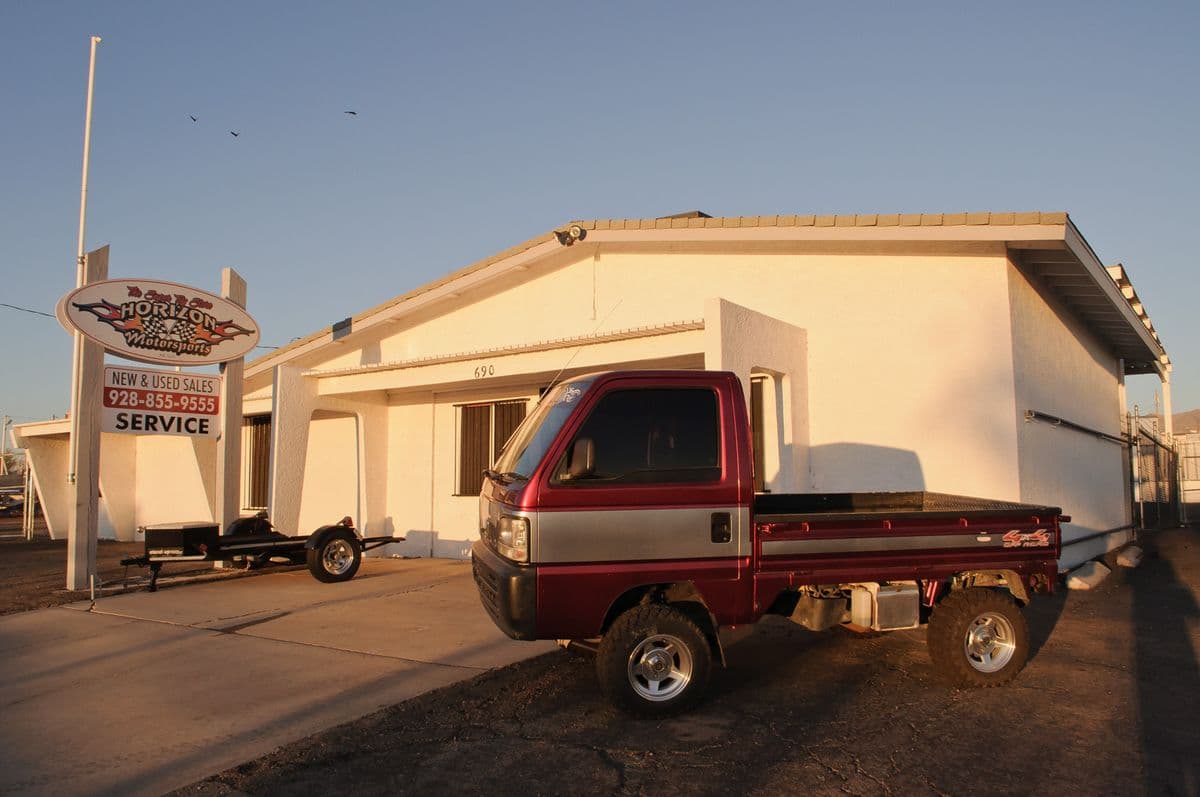
Honda Acty
1977-2021
If you are walking into a Connecticut DMV trying to register a kei truck, bring the model with the cleanest paperwork. Acty has the longest US import history, best parts pipeline, and best chance of DMV recognition compared to less common kei models.
Why "unclear" is the right answer for Connecticut
Connecticut has no statute targeting kei vehicles. Registrations have been approved and denied at the same DMV office in the same month. The r/keitruck community treats Connecticut as try and see, which is honest but not actionable. Vehicles model year 2000 and older skip emissions testing, which removes one major hurdle for most 25 year imports.