Kei Truck & Kei Car Laws in New York (2026)
Not LegalFMVSS proof is required and no kei truck can pass. State DMV does not register imported kei trucks for on road use.
Are Kei Trucks Legal in New York?
No, kei trucks are not street legal in New York. The Empire State maintains one of the nation's most restrictive positions on Japanese kei vehicles, completely prohibiting registration of kei trucks like the Suzuki Carry, Honda Acty, Daihatsu Hijet, and Mitsubishi Minicab for public road use.
According to the New York State Department of Motor Vehicles (NYS DMV), the state will not register or title any kei class vehicle unless the owner can prove it was manufactured to meet Federal Motor Vehicle Safety Standards (FMVSS) and EPA emission requirements that were in effect at the time of manufacture. This effectively creates an impossible compliance hurdle, as Japanese kei trucks were never designed or tested to meet US federal standards.
New York follows federal guidelines strictly, preventing registration unless you can bring your kei truck into full FMVSS and EPA compliance, an almost impossible and prohibitively expensive task. The contrast with the neighbors is getting embarrassing. Pennsylvania allows limited farm use, and Vermont went all the way: Governor Phil Scott signed S.326 on June 16, 2026, and as of July 1, 2026 Vermont registers kei trucks as regular motor vehicles with standard inspections and no special speed restrictions. Meanwhile New York's DMV ban stands unchanged as of mid 2026.
Even vehicles qualifying for the NHTSA 25-year import exemption face registration barriers in New York. For more details, check our complete guide to importing a kei truck from Japan. While the federal rule allows importation of 25+ year old vehicles without FMVSS compliance, this exemption doesn't override New York's state registration requirements.
Interestingly, some kei truck dealers operate in New York's Hudson Valley region, selling vehicles for out-of-state registration or off road use only. Find importers near you in our dealer directory. These dealers must explicitly warn buyers that New York State registration is not possible.
How to Register a Kei Truck in New York
There is no legal pathway to register a kei truck for public road use in New York. The NYS DMV has consistently denied kei truck registration applications. However, understanding standard registration requirements clarifies why kei trucks face insurmountable barriers.
Standard Vehicle Registration Process
For typical vehicle registration in New York, you would need:
- Proof of ownership: Vehicle title, Manufacturer's Statement of Origin (MSO), or properly assigned out-of-state title
- Proof of identity: Valid NYS driver's license or acceptable ID
- Proof of New York residency: Utility bill, mortgage statement, or lease agreement
- Proof of insurance: NY liability insurance meeting minimum requirements
- Application form: Form MV-82 (Vehicle Registration/Title Application)
- Payment: Registration fees, title fees, and sales tax (if applicable)
You must register your vehicle at a DMV office or authorized registration center within 180 days of the insurance effective date.
Registration Fees (For Reference)
New York's registration fees depend on vehicle weight and class. For light trucks:
- Vehicles under 6,000 lbs unladen weight registered as passenger class: $26-$130 (varies by county)
- Commercial vehicle registration: $24-$175+ depending on weight
Most kei trucks weigh 1,500-2,000 pounds, placing them in the lightest category, if they were registrable.
The Compliance Impossibility
The fundamental barrier is proving FMVSS and EPA compliance. The NYS DMV requires documentation that your vehicle:
Meets Federal Motor Vehicle Safety Standards:
- Passed federal crash testing requirements
- Has DOT-approved airbag systems
- Contains compliant lighting, bumpers, and safety glass
- Meets structural crashworthiness standards
- Has certified seat belt systems
Meets EPA Emissions Standards:
- Has EPA-certified catalytic converter
- Includes evaporative emissions controls
- Contains OBD-II diagnostics (1996+)
- Meets applicable model year emissions limits
Japanese kei trucks were never tested or certified to these standards. Retrofitting compliance would require:
- Engineering crash test data (cost: $100,000+)
- Airbag system installation and certification
- Complete emissions system overhaul
- DOT lighting and bumper modifications
- Professional certification and documentation
Total costs typically exceed $30,000-$60,000, far more than the vehicle's value.
Imported Vehicle Registration
New York has specific requirements for registering imported vehicles. You must provide:
- U.S. Customs and Border Protection Form 7501 (Entry Summary)
- DOT Form HS-7 (Declaration of Conformity)
- EPA Form 3520-1 (Declaration for Emissions)
- Original foreign registration
- Proof of compliance with FMVSS and EPA standards
Kei trucks cannot provide the required compliance documentation, leading to automatic registration denial.
Restrictions and Limitations
New York's restrictions on kei trucks are absolute and comprehensive:
Complete Public Road Ban
Kei trucks cannot be legally operated on:
- State highways and interstates (I-87, I-90, I-81, etc.)
- US routes
- State routes
- County roads
- Municipal streets
- Any publicly maintained roadway
There is no speed limit exception, no farm vehicle classification, and no low speed vehicle (LSV) pathway that would allow even limited use. Wondering how they compare to a side-by-side? Read our kei truck vs UTV comparison.
No Local or Municipal Exemptions
Some New York municipalities allow golf carts or LSVs on specific roads with posted speed limits under 25-35 mph. However, these allowances do not extend to kei trucks, which the state classifies as non-compliant motor vehicles rather than LSVs.
Individual counties, cities, or towns cannot override state registration requirements.
Dealership Sales Restrictions
New York has implemented restrictions on kei truck sales within the state. Dealers like HVNY Imports in Goshen, NY sell kei trucks but must explicitly warn customers:
- The vehicle cannot be registered for New York road use
- Buyers must register in another state or use off road only
- No financing is available through traditional auto lenders
- Insurance options are extremely limited
This "special rule" about selling kei trucks in New York creates legal liability for dealers who don't properly disclose the registration impossibility.
Private Property Use Only
The only legal use for kei trucks in New York is on private property:
- Farms and agricultural operations
- Large private estates and rural properties
- Commercial/industrial campuses
- Off road recreational properties
- Vineyards and orchards
New York has significant agricultural areas, particularly in the Hudson Valley, Finger Lakes, and Western New York, where kei trucks serve practical off road roles despite being prohibited from public roads.
Vehicle Modification Restrictions
New York's vehicle modification laws are among the strictest nationally. Even if you attempted to modify a kei truck to meet FMVSS standards:
- Modifications must be certified by DOT-approved manufacturers
- Aftermarket safety equipment may not be accepted
- The vehicle's registration class can change based on modifications
- Extensive documentation is required
The state's scrutiny makes compliance retrofitting impractical.
Insurance Requirements
New York has mandatory insurance requirements, but they're irrelevant for kei trucks since registration is prohibited. For more guidance, see our kei truck insurance guide.
Standard Insurance Requirements
New York requires all motor vehicles have minimum liability insurance:
- $25,000 per person for bodily injury
- $50,000 per accident for bodily injury when two or more people are injured
- $10,000 for property damage
- $25,000/$50,000 for uninsured motorist coverage (required since 2011)
Drivers must carry proof of insurance and present it during traffic stops, accidents, or vehicle registration.
The Insurance Catch-22
Standard auto insurance companies will not provide coverage for vehicles without valid titles and registration. This creates an impossible situation:
- You can't register without insurance
- You can't get insurance without a title
- You can't get a title without proving FMVSS compliance
- You can't prove FMVSS compliance for kei trucks
Private Property Insurance Options
For off road use on private property, limited insurance options exist:
Farm Insurance Policies: Agricultural insurers like Nationwide Agribusiness, Farm Bureau Insurance, and Grange Insurance offer riders covering utility vehicles used exclusively on farm property.
Commercial Liability Insurance: Businesses using kei trucks on their premises can include coverage under general liability policies. Consult commercial insurance brokers.
Off road Vehicle Policies: Some insurers treat kei trucks like ATVs, offering limited physical damage and liability coverage for recreational off road use.
Specialty Insurers: Hagerty specializes in unique and imported vehicles but requires legal registration, which is not possible in New York for kei trucks.
Inspection and Emissions
New York has comprehensive vehicle inspection and emissions requirements that further reinforce the kei truck ban.
Annual Safety Inspection
New York requires annual safety inspections for all registered vehicles at licensed inspection stations. Inspections check:
- Brakes (including emergency brake)
- Steering and suspension
- Lighting and signals
- Tires and wheels
- Windshield and glass
- Mirrors
- Horn
- Exhaust system
- Safety restraints (seat belts)
Annual Emissions Inspection
Most New York vehicles also require annual emissions inspections using OBD-II diagnostic testing (1996+ vehicles) or tailpipe testing (older vehicles). This includes:
- OBD-II system functionality check
- Emissions control system verification
- Readiness monitor status
- Malfunction indicator light (check engine light) status
Why Kei Trucks Would Fail
Even if somehow registered, kei trucks would fail New York inspections on multiple grounds:
Safety Failures:
- Lack of required airbag systems
- Non-compliant JDM lighting (wrong color temperatures, positioning)
- Right-hand drive configuration issues (mirror visibility concerns)
- Inadequate bumper protection
- Non-DOT certified seat belts
Emissions Failures:
- Missing or non-compliant catalytic converter
- No OBD-II port (pre-1996 models)
- Evaporative emissions system deficiencies
- High hydrocarbon and NOx emissions
- Check engine light or trouble codes
No Exemptions for Kei Trucks
New York offers inspection exemptions for:
- Brand new vehicles (first registration year exempt from emissions)
- Electric vehicles
- Motorcycles
- Some historical vehicles (25+ years with special registration)
None of these exemptions apply to kei trucks. Even 25+ year old kei trucks cannot receive the historical vehicle exemption because they can't be titled and registered in the first place.
Tips from New York Kei Truck Owners
Despite the registration ban, some New York residents own kei trucks for private property use. Here's practical advice:
Legitimate Private Property Uses
Agricultural Operations: New York has over 33,000 farms where kei trucks excel at:
- Orchard and vineyard maintenance (Finger Lakes wine country)
- Dairy farm operations (feed distribution, equipment transport)
- Produce farming (Hudson Valley vegetable farms)
- Maple syrup production (moving collection equipment)
- Livestock management (fence repair, water tank maintenance)
Rural Property Management: Perfect for large estates in the Adirondacks, Catskills, and Southern Tier regions where extensive acreage doesn't require public road access.
Commercial/Industrial Use: Manufacturing facilities, distribution centers, and business campuses with large private road networks use kei trucks for on-site logistics.
Transport and Access Strategies
Trailer Transport: The only legal way to move a kei truck across public roads is via trailer. Invest in a quality utility trailer with adequate tie-down points.
Property Access Planning: When purchasing rural property, minimize public road frontage requirements. Properties with extensive private road networks are ideal for kei truck operations.
Gateway Properties: Some owners maintain properties near public road access points and use trailers to shuttle kei trucks to more remote work areas.
Questionable Approaches (Not Recommended)
Some owners attempt creative but legally dubious solutions:
Out-of-State Registration: Registering in Montana, South Dakota, or Vermont using LLC structures or relative's addresses. This violates New York's residency requirements, as residents must register vehicles in-state. If caught, you face substantial fines, registration revocation, and potential criminal charges for insurance fraud.
Neighboring State Registration: Some try registering in Pennsylvania or Vermont and claiming they're "visiting" New York. Vermont's 2026 legalization makes a legitimate Vermont kei registration easier to obtain than ever, but it changes nothing about New York residency rules. Law enforcement can cite you for operating an out-of-state registered vehicle while being a New York resident beyond the allowed timeframe.
We strongly advise against these approaches. The legal and financial risks far outweigh any perceived benefits.
Community and Advocacy
Connect with other New York kei truck enthusiasts:
- r/keitruck subreddit: National community with New York members discussing challenges
- Local farm bureaus: Network with agricultural community members using kei trucks off road
- Japanese vehicle clubs: Connect with importers and enthusiasts who understand the legal landscape
The advocacy picture changed in mid 2026. The Albany Times Union reported on June 29, 2026 that David McChristian of Lone Star Kei, the organizer behind the Texas legalization and the Vermont assist, has named New York as his next target, arguing that what Texas, California, and New York do, other states follow. No kei bill has been filed in the Legislature as of late July 2026, but organized advocacy plus statewide press coverage is the exact sequence that preceded every recent state win. We cover the full New York legalization fight in detail.
At the federal level, President Trump announced in December 2025 that the administration would direct the Secretary of Transportation to explore changes to regulations affecting kei vehicles. However, no federal safety or emissions regulations have actually changed as of March 2026. Even if federal rules were relaxed for new kei vehicle production, New York's state level FMVSS compliance requirements for registration would likely remain a separate barrier until the legislature acts.
Find verified kei truck dealers in New York in our dealer directory.
Frequently Asked Questions
Can I register a 25-year-old kei truck in New York?
No. While the federal 25-year rule allows importation without FMVSS compliance, New York state law still requires vehicles meet safety and emissions standards for registration. The NYS DMV denies kei truck registration regardless of age.
What if I already have a title from another state?
An out-of-state title doesn't guarantee New York registration. The NYS DMV conducts its own compliance review. If you establish New York residency, you must surrender your out-of-state registration and apply for New York registration, which will be denied for kei trucks.
Can I drive my kei truck on private roads that connect to public roads?
Only if those roads are genuinely private (owned by you or with owner permission) and don't cross public roadways. If your route requires any public road access, even briefly, operation is illegal.
Are there any New York counties or towns that allow kei trucks?
No. Vehicle registration is a state-level function. Counties and municipalities cannot override NYS DMV requirements or create alternative registration pathways.
What are the penalties for driving a kei truck on New York roads?
Penalties are severe:
- Operating an unregistered vehicle: Up to $300 fine, possible 15 days jail
- Operating an uninsured vehicle: $150-$1,500 fine, license suspension, possible imprisonment
- Vehicle impoundment: Recovery costs $100-$500+
- Court appearances: Additional fees and potential criminal record
- SR-22 requirement: High-risk insurance mandate
Can I get a collector or antique registration?
New York offers historic vehicle registration for vehicles 25+ years old. However, this still requires the vehicle be legally titlable in New York, which kei trucks are not. Historic registration doesn't create an exemption from compliance requirements.
Will New York legalize kei trucks in the future?
As of late July 2026, there are no active bills in the New York State Legislature addressing kei truck legalization, but the advocacy that precedes legislation has arrived. Lone Star Kei, the group with wins in Texas and Vermont, is now organizing in New York, and the effort drew statewide press coverage in June 2026. A bill, a sponsor, and a committee fight still stand between here and legal plates, so treat any change as a 2027 possibility rather than a promise.
What are my legal alternatives?
For street legal compact utility vehicles in New York, consider:
- Electric LSVs: Some qualify for limited road use under 25 mph
- Compact American trucks: Ford Maverick, Hyundai Santa Cruz
- Standard UTVs with LSV certification: Limited municipal road access in some areas
- Golf carts: Allowed on specific low speed roads in some townships
Useful Links
Here are essential resources for understanding New York's kei truck regulations:
- New York State DMV - Official DMV website
- Register and Title a Vehicle - Standard registration process
- Register an Imported Vehicle - Import registration requirements
- Vehicle Registration Types - Classification information
- Form MV-82 (PDF) - Vehicle Registration/Title Application
- NHTSA Importing a Vehicle - Federal import regulations
- The Special Rule About Selling Mini Trucks in New York - Dealer disclosure requirements
- r/keitruck Reddit - Community discussions and experiences
New York's prohibition on kei trucks reflects the state's commitment to strict vehicle safety and emissions standards. While this prevents public road use of these practical vehicles, kei trucks continue to serve valuable roles on New York's farms, vineyards, and large private properties. If you're considering a kei truck and need road access, research states permissive regulations in our complete state-by-state guide. If you're near the border, you may also want to check kei truck laws in Vermont, fully legal for kei vehicles since July 1, 2026, along with Massachusetts, Connecticut, New Jersey, and Pennsylvania. Regulations differ dramatically between neighboring states.
When New York changes, we tell you first.
One email. No newsletter. Only when the law actually moves. SEMA and state-level reform groups are pushing legalization bills across the country.
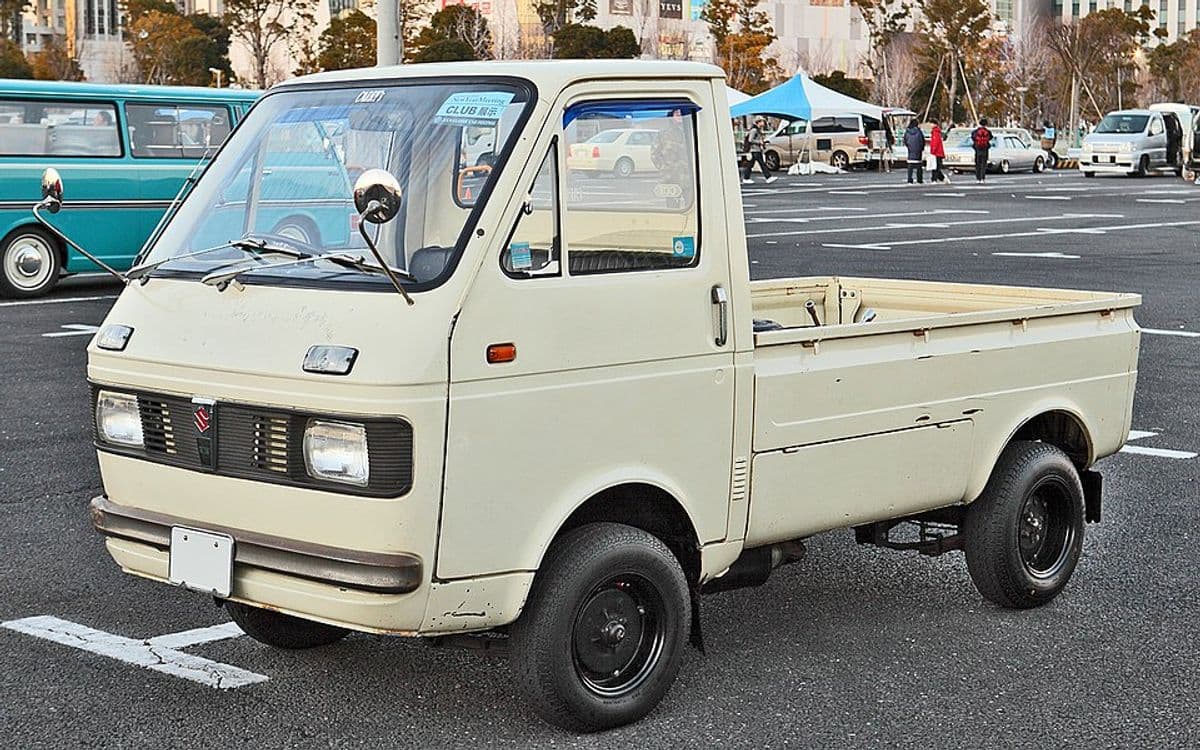
Suzuki Carry
1969-Present
Hudson Valley farms and Finger Lakes vineyards run kei trucks year round on private land. Carry is cheapest to feed parts to, has the deepest dealer pipeline, and the dump bed factory option is what most working farms want. 4WD only if you are east of the Hudson.
What you CAN do in New York
Private property use is fully legal across New York. Finger Lakes vineyards, Hudson Valley farms, and Adirondack estates run kei trucks daily. Trailer transport between properties is the only public road move that stays clean.