Kei Truck & Kei Car Laws in Massachusetts (2026)
LegalMassachusetts reversed its 2024 ban in September of the same year, and the RMV now registers any kei vehicle that meets the federal 25 year rule.
Are Kei Trucks Legal in Massachusetts?
Yes, kei trucks are legal in Massachusetts! After a brief and controversial ban in mid-2024, Massachusetts reversed course and fully legalized kei vehicles 25 years or older for on road use. As of September 18, 2024, the Massachusetts Registry of Motor Vehicles (RMV) allows owners to register and title kei trucks, including popular models like the Suzuki Carry, Honda Acty, and Daihatsu Hijet.
This reversal came after significant public pressure and advocacy from groups like the Massachusetts JDM Imports Advocates. The RMV initially announced it would stop registering kei vehicles, sparking outrage from owners who had legally imported and registered their vehicles. For more details, check our complete guide to importing a kei truck from Japan. The state quickly reconsidered, announcing in September 2024 that kei vehicles would continue to be registrable.
Massachusetts now joins the growing list of states recognizing these Japanese mini trucks as legitimate on road vehicles. The state honors the federal NHTSA 25-year import rule, which allows vehicles 25 years or older to be imported regardless of U.S. safety standards.
However, there's an important nationwide restriction: kei trucks are not authorized to travel on interstate highways in any state, including Massachusetts. This limits their use to state highways, county roads, and local streets.
How to Register a Kei Truck in Massachusetts
Registering a kei truck in Massachusetts follows a similar process to standard vehicles, with a few specific requirements:
Required Documents:
- Certificate of title or manufacturer's certificate of origin (for newly imported vehicles)
- Bill of sale showing purchase price
- Federal customs clearance documents (Form 3520-1 and HS-7 declaration)
- Proof of Massachusetts residency
- Valid Massachusetts driver's license or ID
- Proof of insurance (must be obtained before registration)
Registration Process:
-
Obtain Insurance: You must have an active Massachusetts auto insurance policy before registering. Minimum coverage requirements are:
- $20,000 bodily injury per person
- $40,000 bodily injury per accident
- $5,000 property damage
-
Complete Safety Inspection: Take your kei truck to a licensed Massachusetts inspection station. The vehicle must pass safety inspection before registration.
-
Visit an RMV Service Center: You cannot register a newly imported kei truck online. Visit your local RMV office with all required documents.
-
Complete Form RMV-1: Fill out the Registration and Title Application form. Indicate whether you'll use passenger or commercial plates based on your intended use.
-
Pay Fees and Taxes: Massachusetts charges registration fees and excise tax based on vehicle value.
-
Receive Plates and Registration: You'll receive either passenger or commercial plates, a registration certificate, and a title.
Costs Breakdown:
- Title fee: $75
- Registration fee: $60 for two years (passenger plates)
- Sales tax: 6.25% of purchase price (may vary for used imports)
- Excise tax: Varies by municipality and vehicle value
- Safety inspection: $35
- Emissions inspection: $35 (if required in your area)
Total estimated first-year cost: $300-$600 depending on vehicle value and location.
Important Notes:
- Kei vehicles already registered before the 2024 ban may continue their existing registration without interruption
- Newly imported vehicles need full documentation proving 25+ year age and legal importation
- Commercial plates are required if you plan to use the truck for business purposes
Restrictions and Limitations
While Massachusetts allows kei trucks on most roads, there are important restrictions:
Highway Restrictions:
- No interstate highway use (federal restriction applying nationwide)
- State highways and Route 2, Route 9, and similar roads are generally permitted
- Local roads and streets are fully accessible
Speed Considerations:
- Most kei trucks have a top speed of 50-65 mph
- Avoid roads where minimum speed limits exceed your vehicle's capability
- Be cautious on high-speed state routes where traffic moves significantly faster
Equipment Requirements:
Massachusetts requires all registered vehicles to have:
- Working headlights and taillights
- Turn signals (front and rear)
- Brake lights
- Horn
- Windshield with functioning wipers
- Rearview mirrors (at least one on driver's side)
- Seat belts for all passengers
- License plate lights
Many imported kei trucks require modifications to meet these standards, particularly:
- Adding or upgrading turn signals to meet U.S. standards
- Installing DOT-compliant lighting
- Ensuring all lights are amber (front) and red (rear) as required
Use Classification:
- Passenger plates: Personal use, commuting, recreation
- Commercial plates: Business use, hauling goods, contractor work
RMV Ongoing Review:
The Massachusetts RMV has stated it will continue reviewing the safety implications of kei vehicles on public roadways and plans to conduct a formal study. While this doesn't affect current registrations, owners should stay informed about potential future regulatory changes.
Pending Legislation (H.4053):
In January 2025, Massachusetts legislators filed House Bill 4053 ("An Act to legalize Kei vehicles in the Commonwealth"), sponsored by Reps. Arriaga of Chicopee and Ramos of Springfield. This bill would formally codify kei vehicle registration into state law, removing the RMV's discretion to reverse its policy again. The bill defines kei vehicles by their specifications (660cc or smaller engine, 130 inches or less in length, 60 inches or less in width) and would mandate the RMV accept registration applications. H.4053 was reported favorably by committee and referred to House Ways and Means on July 28, 2025, where it has sat without action through June 2026. For the full procedural story, read our Massachusetts H.4053 explainer.
Insurance Requirements
Massachusetts has mandatory auto insurance requirements, and kei trucks are no exception. For more guidance, see our kei truck insurance guide.
Minimum Required Coverage:
- $20,000 bodily injury liability per person
- $40,000 bodily injury liability per accident
- $5,000 property damage liability per accident
- Personal injury protection (PIP) as required by Massachusetts no-fault law
Finding Insurance:
Not all insurance companies are familiar with kei trucks. Based on owner experiences and industry knowledge:
Companies That May Cover Kei Trucks:
- Hagerty - Specializes in collector and specialty vehicles; frequently mentioned by kei truck owners
- Progressive - Some owners report success; requires agent contact
- State Farm - Hit or miss; depends on local agent familiarity
- Safety Insurance - Massachusetts-based company that may be more flexible
- Arbella Insurance - Another Massachusetts insurer worth trying
Tips for Getting Insurance:
- Call and speak with an agent rather than using online quotes
- Explain that your vehicle is a legally imported Japanese utility truck
- Have your VIN/chassis number, import documents, and photos ready
- Mention that it's federally legal under the 25-year rule
- Be prepared to get "specialty vehicle" or "collector car" coverage
Expected Costs:
Insurance for kei trucks typically runs $300-$800 per year, depending on:
- Your driving record
- Location (urban vs. rural)
- Coverage limits beyond minimum requirements
- Declared value of the vehicle
Some insurers may require an agreed value appraisal for higher-value kei trucks or rare models.
Inspection and Emissions
Massachusetts requires annual safety inspections for all registered vehicles. Depending on your location, emissions testing may also be required.
Annual Safety Inspection:
- Cost: $35
- Required annually
- Must be performed at a licensed inspection station
- Results in a color-coded sticker displayed on windshield
Inspection Checklist:
Massachusetts inspectors will check:
- Brake system (function and condition)
- Steering and suspension
- Tires (tread depth, condition, proper size)
- Windshield (no cracks in driver's vision area)
- Wipers and washer fluid
- Horn
- All lights (headlights, taillights, brake lights, turn signals, license plate light)
- Mirrors
- Seat belts
- Exhaust system (no excessive noise or leaks)
- Frame and body (structural integrity, no sharp edges)
Emissions Testing:
Massachusetts requires emissions testing in certain areas. However:
- Vehicles 15 years or older may be exempt from emissions testing
- Since most kei trucks entering the U.S. are 25+ years old, they typically qualify for exemption
- Check with your inspection station to confirm your vehicle's exemption status
Common Inspection Issues:
Based on owner experiences, kei trucks may fail inspection for:
- Turn signals not meeting U.S. standards: Japanese turn signals may be wrong color or location
- Lighting issues: Bulbs out or wiring problems from age
- Windshield cracks or chips: Common in older imports
- Tire condition: Imported tires may be aged or non-compliant
Preparation Tips:
- Have a mechanic familiar with imports check your truck before inspection
- Replace any questionable lighting components
- Ensure all bulbs are working
- Fix any windshield damage before inspection
- Check tire date codes (tires older than 6-10 years should be replaced)
Tips from Massachusetts Kei Truck Owners
Massachusetts has a growing kei truck community. Here's what local owners recommend:
Finding Inspection Stations:
- Not all inspection stations are familiar with kei trucks
- Ask around in local Facebook groups or r/keitruck for recommendations
- Independent garages and import specialists are often more accommodating than chains
Winter Driving:
- Kei trucks handle Massachusetts winters surprisingly well, especially 4WD models
- Lightweight design means less traction than full size trucks
- Use winter tires for best performance
- The heaters are adequate but not powerful; dress warmly
Local Acceptance:
- Urban areas (Boston, Cambridge, Somerville) have embraced kei trucks
- Rural western Massachusetts is generally kei friendly
- Some towns have active kei truck owner communities
Modifications and Parts:
- Join Massachusetts-based JDM import groups for local mechanics
- Many parts are available through online retailers like Amayama Trading
- Some standard Japanese parts fit multiple kei truck brands
Advocacy Success:
- Massachusetts reversed its ban due to organized advocacy
- This shows the power of community action and contacting legislators
- Stay engaged with local JDM import groups to defend your rights
Best Uses:
- Urban delivery and small business operations
- Farm and property maintenance
- Beach and outdoor recreation (avoid sand without proper prep)
- Farmers markets and mobile vending
- Campus and facility maintenance
Before you buy, run through our pre-purchase checklist to catch common import issues early. And if you're still deciding whether a kei truck fits your needs, our kei truck vs UTV comparison lays out the tradeoffs clearly.
Frequently Asked Questions
Can I drive my kei truck on the Mass Pike or I-95?
No. Federal restrictions prohibit kei trucks from interstate highways nationwide. This includes I-90 (Massachusetts Turnpike), I-95, I-91, I-93, and all other interstate routes. You can use state routes like Route 2, Route 9, Route 20, and similar roads, but avoid interstates.
Do I need a special license to drive a kei truck?
No. A standard Massachusetts Class D driver's license is sufficient. Kei trucks are four wheeled motor vehicles, so no special endorsements or commercial licenses are required for personal use.
Can I use a kei truck for my landscaping or construction business?
Yes. You'll need to register with commercial plates and ensure your insurance covers commercial use. Many Massachusetts landscapers, contractors, and small business owners use kei trucks for local work. Just remember you can't take interstate highways to job sites.
What if I get pulled over?
As long as your registration, insurance, and inspection are current, you shouldn't have issues. Some police officers may be unfamiliar with kei trucks, so keep your import documentation and registration in the vehicle. Be polite and explain that the vehicle is legally registered with the Massachusetts RMV.
Are older kei trucks easier to register?
Age doesn't matter for registration eligibility as long as the vehicle is 25+ years old (meeting federal import requirements). However, older vehicles may have more difficulty passing safety inspection due to wear, outdated lighting, or rust.
Can I register a kei truck I bought from another state?
Yes. If you're bringing a kei truck from another state, you'll need to re-register it in Massachusetts. Bring the out-of-state title, bill of sale, and all import documentation to the RMV. You'll need to pass Massachusetts inspection and obtain local insurance.
What's the difference between passenger and commercial plates?
Passenger plates are for personal use (commuting, errands, recreation). Commercial plates are required if you use the vehicle for business purposes (delivering goods, hauling equipment, contractor work). Commercial registration may have different fee structures and insurance requirements.
Useful Links
- Massachusetts RMV - Official registration and titling authority
- RMV Kei Vehicle Policy Update - September 2024 announcement
- House Bill 4053 - Pending bill to formally legalize kei vehicles in Massachusetts
- Find a Vehicle Inspection Station - Locate licensed inspectors
- Massachusetts Auto Insurance Requirements - Coverage details
- NHTSA Vehicle Importation Guidelines - Federal import regulations
- Hagerty Insurance - Specialty vehicle insurance
- The Autopian: Massachusetts Kei Truck Update - News coverage of reversal
- r/keitruck Reddit Community - Owner discussions and advice
Massachusetts has become one of the more kei friendly states in the Northeast after initially moving to ban them. If you're exploring kei truck ownership in New England, compare our guides for Connecticut, Rhode Island, and New Hampshire. If you're near the border, you may also want to check kei truck laws in New Hampshire, Vermont, New York, Connecticut, and Rhode Island.
Where to actually buy one in Massachusetts
No verified kei truck dealers in Massachusetts yet. The best buyers ship from nearby states or import directly from Japan.
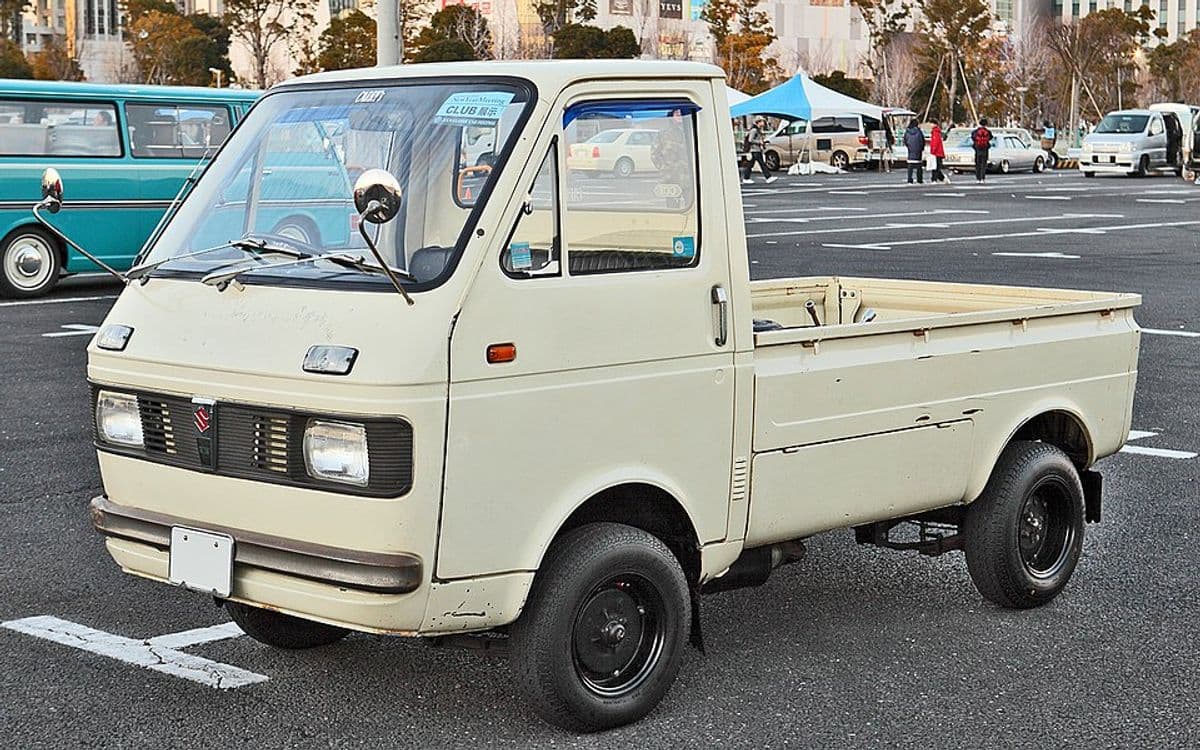
Suzuki Carry
1969-Present
After the 2024 reversal, RMV clerks know the Carry better than any other kei truck because it had the most existing registrations to reinstate. Walking in with the most paper trailed model means the fastest registration and the easiest reinspection if policy shifts again.
Across the state line
Get the weekly kei truck brief
Law changes, price drops, new models, and build inspiration. One email a week.