Kei Truck & Kei Car Laws in Delaware (2026)
UnclearNo kei statute, and the Superior Court upheld the DMV's refusal to title a kei truck in 2023. A 2024 unique vehicle law is untested for kei trucks. OHV is the path the DMV offers.
Are Kei Trucks Legal in Delaware?
The legal status of kei trucks in Delaware is highly uncertain. Delaware has no specific state laws regarding the use of mini trucks or kei trucks on public streets and highways, creating a regulatory gray area that leaves prospective owners without clear guidance.
There is no kei statute on the books, but the question has been tested in court, and the result was not good for owners. In Baron 4th v. Division of Motor Vehicles (decided December 18, 2023), a Kent County farmer imported a 1997 Mitsubishi Minicab and applied for a special farm vehicle registration. The DMV refused, stating on the record that it "has not and does not" title or register mini trucks for road use because they were not built to Federal Motor Vehicle Safety Standards, and it offered off highway vehicle (OHV) registration instead. The Delaware Superior Court affirmed the refusal, holding that the DMV's Certificate of Compliance regulation (2 Del. Admin. C. 2278) applies even to vehicles imported under the federal 25 year exemption. That ruling did not create a statewide statute, and DMV offices still handle unusual imports case by case, but it means models like the Suzuki Carry, Honda Acty, and Daihatsu Hijet face a DMV whose stated policy, backed by a court, is refusal.
Under federal regulations, all imported kei trucks must comply with the NHTSA 25-year rule. For more details, check our complete guide to importing a kei truck from Japan, meaning only vehicles manufactured 25 or more years ago are exempt from federal safety and emissions standards. Once a kei truck reaches this age threshold, it qualifies as a classic vehicle for import purposes, but state registration remains a separate challenge.
One thing changed after that ruling. Delaware's HB 409, signed July 17, 2024, amended Title 21 to create a "unique vehicle" category for vehicles that were not built to meet the federal safety standards for their model year. The Delaware DMV's unique vehicle page describes the category as vehicles more than 25 years old that were not originally manufactured for import into the United States, and says the DMV may register and brand them, with special restrictions set by the Division. The law never uses the word kei, and the DMV page does not mention kei trucks, but a 1997 Minicab built only for the Japanese market appears to fit that description. Whether the DMV will actually title and register a kei truck for road use under this category, and on what conditions, is not documented anywhere we could find, so put that question to the DMV in writing before you buy.
Given the regulatory ambiguity, we strongly recommend contacting the Delaware Division of Motor Vehicles directly before purchasing a kei truck for Delaware road use. Be sure to review our pre-purchase inspection checklist. Local DMV offices may interpret existing vehicle codes differently, and getting written confirmation of registration eligibility could save you significant time and money.
How to Register a Kei Truck in Delaware
If you're attempting to register a kei truck in Delaware, you'll follow the general process for registering an out-of-state or imported vehicle. However, success is not guaranteed given the unclear legal status.
Step 1: Verify Registration Eligibility Before proceeding, contact your local Delaware DMV office and ask specifically about kei truck or Japanese mini truck registration. Request written confirmation if they indicate registration is possible.
Step 2: Gather Required Documents
- Original vehicle title or Manufacturer's Certificate of Origin
- Bill of sale with vehicle details and purchase price
- U.S. Customs Form 3299 (for imported vehicles)
- Valid Delaware driver's license or state ID
- Proof of Delaware auto insurance
- VIN verification (if required for imported vehicles)
Step 3: Complete Vehicle Inspection Delaware requires vehicle inspections for most registrations. Bring your kei truck to a Delaware DMV inspection facility. Inspections are performed free of charge and can occur up to 90 days before your intended registration date.
The inspection covers:
- Safety equipment (brakes, tires, lights, windows)
- Emissions testing (for vehicles with MGVWR of 14,000 pounds or less)
- VIN verification
Vehicles in the six newest model years weighing less than 10,000 pounds are exempt from inspection. However, since importable kei trucks must be 25+ years old, this exemption won't apply.
Step 4: Submit Registration Application Visit a Delaware DMV office with your completed application, inspection certificate, and required documents. Delaware DMV staff will process your registration if the vehicle qualifies.
Step 5: Pay Registration Fees Delaware registration fees vary by vehicle weight and type. Most kei trucks weigh between 1,500-2,200 pounds, placing them in the lower fee brackets.
Step 6: Receive License Plates If approved, you'll receive Delaware license plates and a registration certificate valid for one year. Delaware requires annual registration renewal.
Restrictions and Limitations
Without specific kei truck legislation, any restrictions would fall under Delaware's general vehicle equipment and safety requirements:
Equipment Requirements Delaware requires all motor vehicles to have:
- Functioning headlights, taillights, brake lights, and turn signals
- Windshield wipers in working condition
- Mirrors providing adequate rear view
- Working horn
- Seat belts for all seating positions
- Adequate tire tread depth (minimum 2/32 inch)
Most kei trucks manufactured for the Japanese domestic market meet these requirements, though some older models may need minor equipment upgrades.
Road and Speed Restrictions
Delaware does not appear to have specific road restrictions for kei trucks. If registered as a standard motor vehicle, kei trucks would theoretically be allowed on all public roads, including highways and interstates.
However, kei truck owners should consider practical limitations. Most kei trucks have top speeds of 50-65 mph, making high-speed interstate travel potentially unsafe, especially in heavy traffic or inclement weather.
Commercial Use Considerations If using a kei truck for commercial purposes (such as landscaping, farm work, or business deliveries), you may need commercial registration and appropriate business permits. See how they stack up in our kei truck vs UTV comparison. Contact the Delaware Division of Revenue for guidance on commercial vehicle requirements.
Insurance Requirements
Delaware requires all motor vehicles to carry minimum liability insurance. The minimum coverage includes:
- $25,000 per person for bodily injury
- $50,000 per accident for bodily injury
- $10,000 per accident for property damage (15/30/10 coverage)
Finding Kei Truck Insurance in Delaware Most major insurance providers will offer liability coverage for kei trucks if they're properly titled and registered. For more guidance, see our kei truck insurance guide. Companies known to insure kei trucks include:
- State Farm
- Progressive
- Geico
- Allstate
Specialty insurers like Hagerty and Grundy offer classic vehicle policies for kei trucks 25+ years old. These policies typically provide:
- Agreed-value coverage (not actual cash value)
- Lower premiums than standard policies
- Restrictions on daily commuting and annual mileage
- Minimum value requirements (often $3,500+)
Expect to pay $300-900 annually for liability coverage, depending on your driving record, location, coverage limits, and the insurer's familiarity with kei trucks. Comprehensive and collision coverage may be harder to obtain and more expensive.
Pro Tip: When obtaining insurance quotes, describe your kei truck by its make and model (e.g., "1995 Suzuki Carry") rather than as a "kei truck," which some agents may not recognize.
Inspection and Emissions
Delaware has specific vehicle inspection requirements that apply to most vehicles, including potentially kei trucks:
Annual Inspection Requirement Most vehicles registered in Delaware must pass an annual safety and emissions inspection. The inspection is free and can be performed at any of Delaware's four DMV facilities.
Emissions Testing Delaware requires emissions testing on trucks with a manufacturer's gross vehicle weight rating (MGVWR) of 14,000 pounds or less. Since kei trucks typically weigh 1,500-2,200 pounds, they fall under this requirement.
The emissions test analyzes:
- Exhaust emissions
- Fuel system integrity and leaks
- Evaporative emissions control systems
Safety Inspection Components Delaware's safety inspection covers:
- Brakes (including emergency brake)
- Tires and wheels
- Steering and suspension
- Lights (headlights, taillights, brake lights, turn signals)
- Windows and windshield wipers
- Horn
- Mirrors
- Seat belts
- Exhaust system
Most well maintained kei trucks should pass these inspections without issues, though some modifications may be needed for older or poorly maintained vehicles.
Inspection Timeline You can have your vehicle inspected up to 90 days before the registration expiration date. Delaware DMV facilities perform inspections by appointment. Visit the Delaware DMV website or call your local DMV to schedule.
Tips from Delaware Kei Truck Owners
Due to Delaware's unclear legal status, firsthand owner experiences are limited. However, here are recommendations based on general mini truck ownership patterns:
1. Document Everything Keep detailed records of all communications with the DMV, inspection results, customs paperwork, and registration attempts. If you successfully register a kei truck, your documentation could help other Delaware owners.
2. Join Kei Truck Communities Connect with other kei truck owners on the r/keitruck subreddit and Japanese Mini Truck Forum. While Delaware-specific experiences may be rare, owners in similar "gray area" states can offer valuable insights.
3. Consider Professional Registration Services Companies like Dirt Legal specialize in titling and registering hard-to-register vehicles, including kei trucks. While these services charge fees ($500-1,500+), they may successfully navigate Delaware's unclear regulations where individual owners struggle.
4. Prepare for Rejection Without clear legal authority for kei truck registration, Delaware DMV offices may decline your application. Have a backup plan, such as registering in a more permissive state, limiting use to private property, or reselling to buyers in kei truck friendly jurisdictions.
5. Monitor Legislative Developments As kei trucks gain popularity, states are clarifying their positions, some permitting them and others banning them. Monitor Delaware legislative activity for any bills addressing mini truck or kei truck registration.
Frequently Asked Questions
Q: Can I drive a kei truck on Delaware highways? A: The legal status for highway use remains unclear. Even if you successfully register a kei truck, safety considerations may discourage highway driving given most kei trucks' 50-65 mph top speeds.
Q: Do I need a special license to drive a kei truck in Delaware? A: No. A standard Delaware driver's license is sufficient for operating passenger vehicles, which would include kei trucks if registered as such.
Q: Can I register a right-hand-drive kei truck in Delaware? A: Delaware does not prohibit right-hand-drive vehicles. If kei truck registration is possible, right-hand drive should not be a disqualifying factor. However, verify with your local DMV.
Q: Are there counties in Delaware where registration is easier? A: Delaware is a small state with centralized DMV operations. Registration policies should be consistent statewide, though individual clerks may interpret unclear regulations differently.
Q: What if I get pulled over in a kei truck in Delaware? A: If your vehicle is properly registered, titled, and insured, you should face no legal issues. Always carry registration documents, proof of insurance, and your driver's license.
Q: Can I import and register a kei truck newer than 25 years in Delaware? A: Federal law prohibits importing vehicles under 25 years old unless they meet DOT and EPA standards. Most kei trucks don't meet these standards, making importation illegal regardless of Delaware state law.
Q: Are electric kei trucks legal in Delaware? A: Electric kei trucks face the same unclear legal status as gas-powered models. The 25-year import rule still applies unless the vehicle meets modern safety standards.
Useful Links
- Delaware Division of Motor Vehicles
- Delaware Vehicle Inspection Information
- Delaware Vehicle Registration Services
- NHTSA Vehicle Importation Requirements
- Delaware Vehicle Inspection Manual (PDF)
- Delaware Legislature (Track Bills)
- r/keitruck Community
- Hagerty Classic Vehicle Insurance
Bottom Line: Delaware's lack of specific kei truck legislation creates significant uncertainty for prospective owners. Before investing in a kei truck for Delaware use, contact the Delaware DMV directly and request written confirmation of registration eligibility. If Delaware proves unworkable, check out our other state guides to find jurisdictions with clearer, more permissive kei truck laws. If you're near the border, you may also want to check kei truck laws in Maryland, Pennsylvania, and New Jersey.
Delaware clarifies, you hear it first.
DMV outcomes vary today. We watch state legislation and DMV guidance, and we email you when something actionable lands.
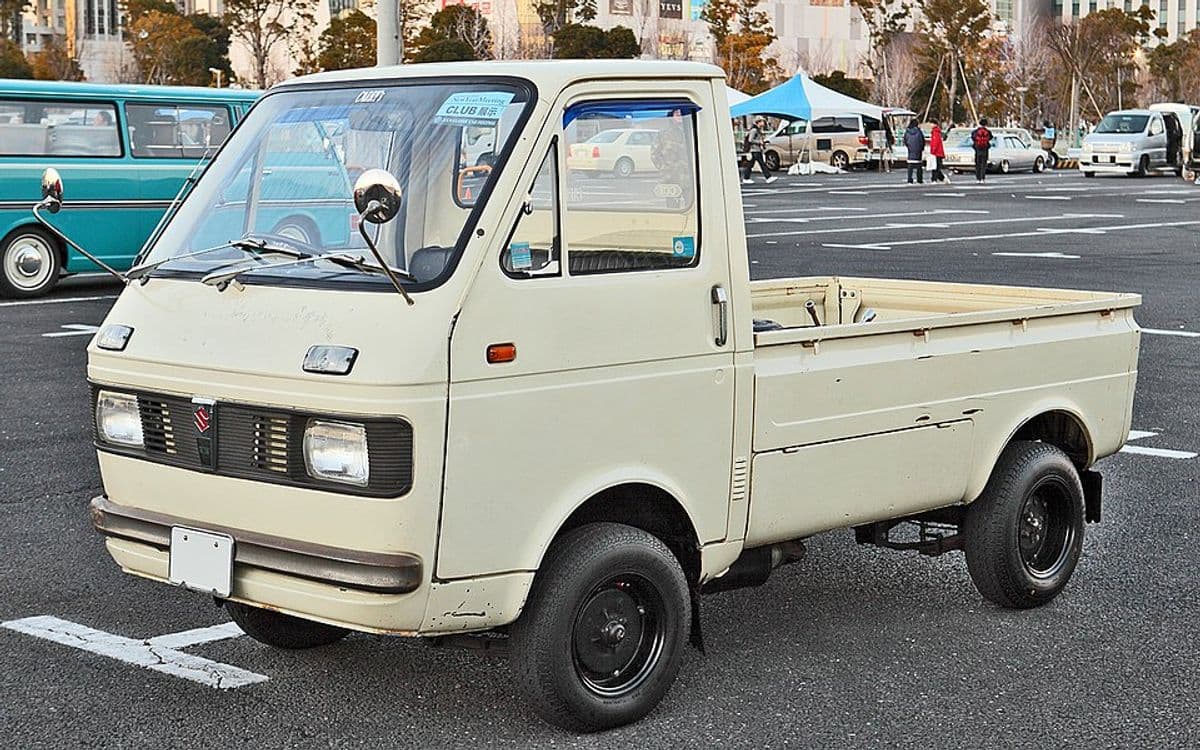
Suzuki Carry
1969-Present
Delaware is a small state with limited DMV inventory experience on kei. Walk in with the most common model in the US import market. Carry has the deepest parts pipeline, the most US precedent, and the best paperwork trail for a DMV clerk to recognize and approve.
Why "unclear" is the right answer for Delaware
Delaware has no statute mentioning kei vehicles, but the one documented registration attempt failed: the DMV refused to title a 1997 Minicab, said it does not register mini trucks for road use, and the Superior Court affirmed in December 2023. OHV registration for private property is the path the DMV offers. Get written confirmation from your DMV office before buying for road use.