Kei Truck & Kei Car Laws in New Jersey (2025)
Not LegalNew Jersey MVC enforces full FMVSS and EPA proof for registration. No kei truck can produce it, so no road plate gets issued.
Are Kei Trucks Legal in New Jersey?
No, kei trucks are not street legal in New Jersey for public road use. New Jersey is one of the most restrictive states in the nation when it comes to kei vehicles, maintaining strict adherence to Federal Motor Vehicle Safety Standards (FMVSS) and EPA regulations that effectively prohibit registration of Japanese kei trucks like the Suzuki Carry, Honda Acty, and Daihatsu Hijet.
According to the New Jersey Motor Vehicle Commission (MVC), all vehicles operated on public roads must meet specific safety and environmental standards that kei trucks typically cannot satisfy without extensive, often cost-prohibitive modifications. Unlike states such as Texas or Montana that have created pathways for kei truck registration, New Jersey follows federal guidelines strictly, making registration nearly impossible unless you can demonstrate full FMVSS and EPA compliance.
As of mid 2026, there have been no legislative changes or court rulings that would alter this restrictive stance. New Jersey remains alongside New York and Maryland as states that outright prohibit kei trucks from public roads, while Connecticut sits in a gray zone with no clear rule and case by case DMV outcomes. Vermont used to belong on that list, but not anymore: S.326 (Act 153) passed both chambers in May 2026, got Governor Phil Scott's signature, and opened kei vehicle registration in Vermont effective July 1, 2026. That leaves New Jersey looking even more isolated in the Northeast.
The NHTSA 25-year import rule exempts vehicles 25 years or older from FMVSS compliance for import purposes, but this federal exemption does not override New Jersey's state registration requirements. For more details, check our complete guide to importing a kei truck from Japan. Even classic kei trucks meeting the 25-year threshold face significant registration barriers in the Garden State.
How to Register a Kei Truck in New Jersey
Unfortunately, there is no straightforward path to register a kei truck for road use in New Jersey. However, understanding what would theoretically be required helps clarify why registration is so challenging.
Theoretical Registration Requirements
If you were attempting to register a kei truck, you would need to provide:
- Vehicle title: Original manufacturer's certificate of origin or properly assigned title
- Proof of insurance: Meeting New Jersey's minimum liability requirements, which rose to $35,000/$70,000/$25,000 on January 1, 2026
- Valid driver's license: New Jersey driver's license or valid out-of-state license
- Social Security number: Required for all vehicle registrations
- Odometer reading: Current mileage documentation
- Registration fees: Based on vehicle age, weight, and type
- Sales tax payment: 6.625% of purchase price
You would complete Form BA-49 (Application for Vehicle Registration) and submit it to the MVC.
The Compliance Barrier
The insurmountable challenge is proving FMVSS and EPA compliance. The New Jersey MVC requires documentation showing your kei truck meets:
- Federal Motor Vehicle Safety Standards: Crash test ratings, airbag systems, structural integrity, lighting standards
- EPA emissions standards: Catalytic converters, evaporative emissions controls, OBD-II diagnostic systems
- DOT equipment requirements: Approved bumpers, safety glass, seat belt systems
Most kei trucks were never designed or tested to meet these standards. Retrofitting a Suzuki Carry or Honda Acty to full compliance would require:
- Engineering crash-test data (prohibitively expensive)
- Installing and certifying airbag systems
- Comprehensive emissions control system upgrades
- Structural reinforcement and bumper modifications
- Professional certification of all modifications
The cost of such modifications typically exceeds $20,000-$50,000, far more than the vehicle's value.
Registration Fees (If It Were Possible)
For reference, New Jersey's registration fees for light trucks are based on vehicle age and weight:
- Vehicles under 3,500 lbs: Approximately $60-$80 annually
- Commercial registration: Additional $30-$50 depending on use
However, these fees are moot given the inability to prove compliance.
Restrictions and Limitations
Since kei trucks cannot be legally registered in New Jersey, the restrictions are absolute:
Zero Public Road Access
New Jersey law prohibits operation of kei trucks on:
- All state highways and interstates
- County and municipal roads
- City streets
- Any publicly maintained roadway
There is no speed limit threshold, no limited-use registration category, and no workarounds through low speed vehicle (LSV) classifications. Unlike New Hampshire's 35 mph restriction or Texas's farm vehicle exemptions, New Jersey offers no legal pathway. Wondering how they compare to a side-by-side? Read our kei truck vs UTV comparison.
Inspection Failure Guarantee
New Jersey requires all vehicles to pass mandatory safety inspections. Kei trucks will fail these inspections because they:
- Lack federally required safety equipment (airbags, advanced restraint systems)
- Don't meet crashworthiness standards
- Fail emissions testing (most lack catalytic converters meeting EPA standards)
- Have incompatible lighting systems (JDM lighting doesn't meet DOT standards)
No Title Issuance
The MVC typically will not issue a New Jersey title for a kei class vehicle without proof of FMVSS compliance. This means you cannot:
- Register the vehicle under your name
- Obtain New Jersey license plates
- Purchase New Jersey vehicle insurance (most insurers won't cover untitled vehicles)
- Legally transfer ownership within the state
Private Property Use Only
The only legal use for kei trucks in New Jersey is on private property. If you own a:
- Farm or agricultural operation
- Large private estate
- Business campus or industrial facility
- Off road recreational property
You can operate a kei truck without registration, insurance, or inspection as long as it never enters public roadways. Many New Jersey farmers and vineyard owners use kei trucks extensively on their property but transport them via trailer when moving between locations.
Insurance Requirements
New Jersey has strict insurance requirements, but they're irrelevant for kei trucks since you cannot legally register them. For more guidance, see our kei truck insurance guide.
Standard Requirements (For Reference)
If kei trucks were registrable, they would need:
- Liability coverage: $35,000 per person for bodily injury, $70,000 per accident for bodily injury, $25,000 for property damage. These limits kicked in January 1, 2026 under the second phase of P.L. 2022, c.35, implemented by Department of Banking and Insurance Bulletin No. 25-06. The old $25,000/$50,000 bodily injury minimums are history
- Personal Injury Protection (PIP): New Jersey is a no-fault state requiring PIP coverage
- Uninsured motorist coverage: Required in New Jersey, with UM/UIM minimums that must match the new $35,000/$70,000 bodily injury limits
Insurance Reality
Most major insurance companies will not provide coverage for vehicles lacking proper titles and registration. Even companies known for insuring specialty vehicles, like Hagerty or Progressive, cannot write policies for vehicles the state deems unregistrable.
If you're using a kei truck exclusively on private property, you might obtain:
- Farm insurance riders: Coverage through agricultural insurance policies
- General liability insurance: Business liability policies that cover on-premises vehicle use
- Off road vehicle insurance: Limited coverage similar to ATV policies
Contact a commercial insurance broker specializing in agricultural or business operations for options.
Inspection and Emissions
Mandatory Inspection Program
New Jersey operates one of the nation's most comprehensive vehicle inspection programs. All vehicles must pass inspections that check:
- Safety systems: Brakes, steering, suspension, tires, lights
- Emissions: Tailpipe emissions, evaporative emissions, OBD-II diagnostics
- Security: VIN verification, odometer fraud prevention
Inspections occur at state-run facilities or licensed private inspection centers. The inspection process is computerized and standardized.
Why Kei Trucks Fail
Kei trucks will fail New Jersey inspections on multiple grounds:
Safety failures:
- Lack of required airbag systems
- Non-compliant lighting (JDM specifications don't match DOT requirements)
- Inadequate bumper protection
- Missing or non-compliant seat belt systems
- Structural deficiencies per FMVSS
Emissions failures:
- No catalytic converter or non-EPA-compliant unit
- Lack of OBD-II diagnostic port (pre-1996 models)
- Evaporative emissions system deficiencies
- High tailpipe emissions exceeding New Jersey standards
No Exemptions Apply
New Jersey offers inspection exemptions for:
- Vehicles with Manufacturer's Statement of Origin (MSO) less than five model years old
- Diesel-powered vehicles under 8,500 lbs
- Electric vehicles
- Motorcycles
None of these exemptions apply to kei trucks. Even 25+ year old kei trucks qualifying for federal import exemptions must still pass state inspection for registration, which they cannot do.
Tips from New Jersey Kei Truck Owners
While public road use is prohibited, some New Jersey residents still own kei trucks for private property use. Here's their advice:
Alternative Approaches
Out of State Registration: Some owners attempt to register kei trucks in more permissive states (Montana, South Dakota) using LLC structures or relative's addresses. This is legally dubious and New Jersey law enforcement can cite you for operating an out of state registered vehicle while being a New Jersey resident. We do not recommend this approach.
Private Property Investment: If you own substantial acreage, kei trucks excel at farm work, property maintenance, and off road tasks. Many New Jersey horse farms, vineyards, and nurseries use kei trucks extensively without ever needing road access.
Trailer Transport: Owners transport their kei trucks via trailer to different private properties or off road recreational areas. This keeps the vehicle legal (it's cargo, not operating on public roads) while maximizing utility.
Best Use Cases in New Jersey
Despite registration challenges, kei trucks serve valuable roles on:
- Agricultural operations: New Jersey has over 9,000 farms where kei trucks handle irrigation, crop transport, and equipment hauling
- Equestrian facilities: Perfect for barn-to-paddock work and feed distribution
- Vineyards and orchards: Southern New Jersey wineries use them for harvest and maintenance
- Landscaping businesses: On-site work at large commercial properties
- Industrial campuses: Moving parts and supplies within private business parks
Community Advocacy
The Japanese Mini Truck Forum has discussions about New Jersey registration challenges. Some owners advocate for legislative changes to create a farm vehicle or LSV classification similar to neighboring Pennsylvania's approach.
Find verified kei truck dealers in New Jersey in our dealer directory.
Frequently Asked Questions
Can I register my 25-year-old kei truck in New Jersey?
Probably not. While the federal 25-year rule allows importation without FMVSS compliance, New Jersey state law still requires vehicles meet safety and emissions standards for registration. The MVC has consistently denied registration to kei trucks regardless of age.
What if I already have a title from another state?
New Jersey will not issue plates or registration without conducting their own compliance review. An out-of-state title alone doesn't guarantee New Jersey registration, especially for vehicles that don't meet FMVSS standards.
Can I drive my kei truck if it's registered in Pennsylvania?
No. New Jersey residents must register their vehicles in New Jersey. Operating a vehicle with out-of-state registration while residing in New Jersey is illegal after 60 days of establishing residency. Additionally, if stopped, officers can cite you for operating a non-compliant vehicle on New Jersey roads.
Are there any pending bills to legalize kei trucks?
As of 2026, there are no active bills in the New Jersey Legislature specifically addressing kei truck legalization. Unlike states like Massachusetts which have debated the issue, New Jersey lawmakers have not taken up the cause.
Can I insure a kei truck for off road use only?
Yes, but coverage is limited. Some farm insurance providers and commercial insurance brokers offer liability coverage for off road utility vehicles used on private property. Contact providers specializing in agricultural insurance.
What are my legal alternatives to kei trucks?
If you want a street legal compact utility vehicle in New Jersey, consider:
- UTVs registered as LSVs: Some side-by-sides qualify for limited road use
- Small American pickup trucks: Ford Maverick, Hyundai Santa Cruz
- Golf carts on approved roads: Some municipalities allow golf carts on specific low speed roads
What happens if I get caught driving a kei truck on public roads?
Penalties include:
- Traffic citations for operating an unregistered/uninsured vehicle
- Fines ranging from $300-$1,000+
- Possible vehicle impoundment
- Court appearance requirements
- Points on your driving record
New Jersey takes vehicle compliance seriously, and penalties are not trivial.
Useful Links
Here are essential resources for understanding New Jersey's position on kei trucks:
- New Jersey Motor Vehicle Commission - Official MVC website
- Vehicle Registration Forms - Registration requirements and forms
- NJ Vehicle Inspection Program - Inspection requirements and locations
- Inspection FAQs (PDF) - Common inspection questions
- NHTSA Importing a Vehicle - Federal import regulations
- MVC Commercial Vehicles - Commercial registration information
- Japanese Mini Truck Forum - NJ Discussion - Owner experiences and challenges
- r/keitruck Reddit - Community discussions about state regulations
New Jersey's restrictive stance on kei trucks reflects the state's commitment to strict vehicle safety and emissions standards. While this prevents public road use of these practical vehicles, kei trucks can still serve valuable roles on private property for agricultural and commercial operations. If you're considering a kei truck and need road access, research states permissive regulations in our complete state-by-state guide. If you're near the border, you may also want to check kei truck laws in New York, Pennsylvania, and Delaware.
When New Jersey changes, we tell you first.
One email. No newsletter. Only when the law actually moves. SEMA and state-level reform groups are pushing legalization bills across the country.
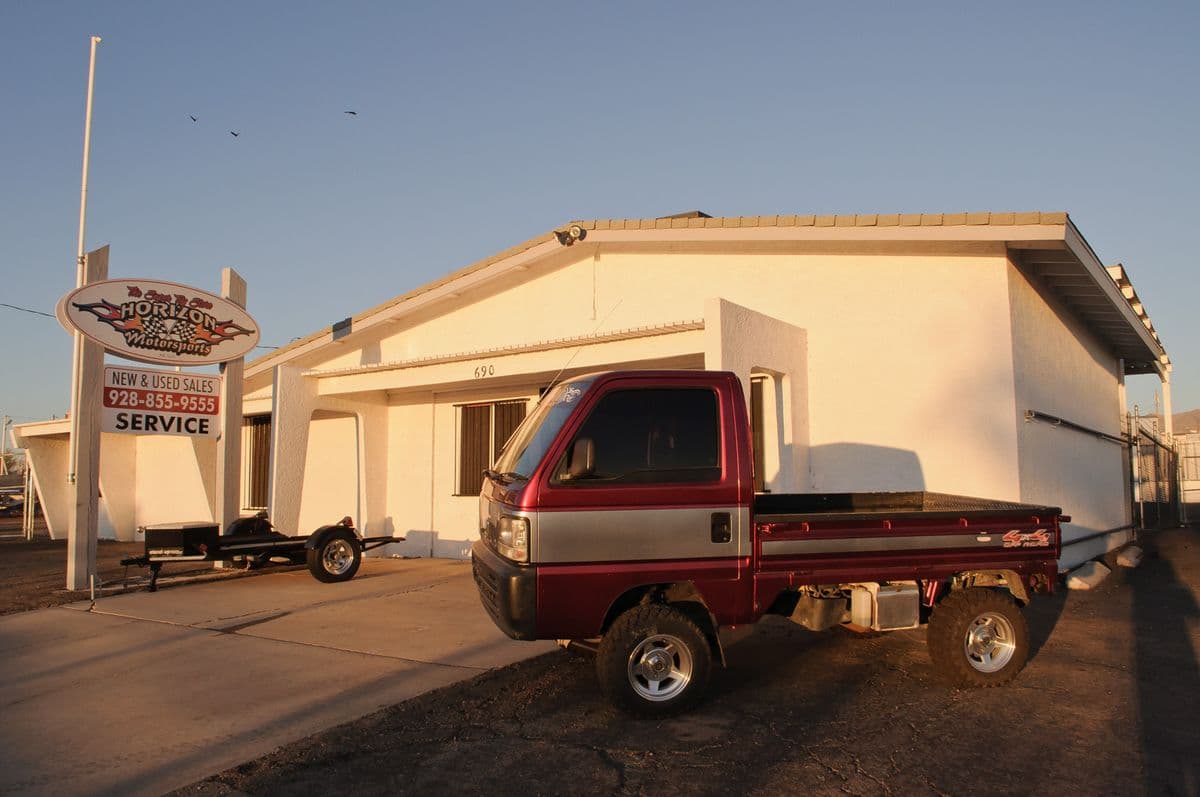
Honda Acty
1977-2021
New Jersey horse farms in Hunterdon and Sussex counties want a kei truck that runs forever and has dealer support nearby. Acty has the longest US import history, parts are everywhere on the East Coast, and the 4WD models handle muddy paddock work without complaint. Best truck for an estate.
What you CAN do in New Jersey
Private property use is fully legal across New Jersey. Hunterdon and Sussex County horse farms, Pinelands hunting properties, and large estates run kei trucks daily. Trailer transport between properties is the only clean public road move. Some kei dealers operate in state but must disclose that NJ registration is impossible.