Kei Truck & Kei Car Laws in Pennsylvania (2026)
RestrictedPennDOT closed unrestricted on road registrations in December 2021, leaving only off road, farm, or antique paths until HB 1205 changes the law.
Pennsylvania is one of the more restrictive states for kei vehicle owners. As of December 2021, PennDOT stopped issuing unrestricted on road registrations for mini trucks. Models like the Suzuki Carry and Mitsubishi Minicab can now only be registered in three ways: as an off road vehicle (private property only), as a farm vehicle, or as an antique vehicle with limited use. Owners who received a grandfathered status letter from PennDOT dated December 1, 2021 can keep unrestricted registration, but that status does not transfer when the vehicle is sold.
Disclaimer: Laws and regulations change frequently. Always verify current requirements with your local PennDOT office or the Pennsylvania Department of Transportation before purchasing or registering a kei vehicle. Be sure to review our pre-purchase inspection checklist.
Overview
Pennsylvania's December 2021 policy change significantly restricted kei truck road use. Before 2021, some owners successfully registered kei trucks for general on road use, particularly in rural counties. PennDOT closed that door, limiting new registrations to three categories.
The good news is that pending legislation (House Bill 1205, introduced April 2025) could reopen general road access for mini trucks. For a detailed comparison of kei trucks to alternatives, see our kei truck vs UTV guide.
Registration Process and Requirements
Since December 2021, PennDOT only allows mini truck registration through three pathways. For more details on importing, check our complete guide to importing a kei truck from Japan.
Option 1: Off Road Title
An off road title allows you to own the vehicle but limits operation to private property only. No public road use is permitted.
- One time title fee
- No annual safety or emissions inspection required
- Vehicle cannot be driven on any public roadway
Option 2: Farm Vehicle Exemption
Pennsylvania law allows farm vehicles used exclusively on farms owned or operated by the vehicle's owner to obtain a farm vehicle registration.
- Complete Form MV-77 (Application for Farm Vehicle Registration Plate)
- Attach portions of your most current income tax return demonstrating you are engaged commercially in farming
- Two year certificate of exemption from annual registration
- Lower registration fees than commercial vehicles
- Vehicle must be used exclusively on your farm(s)
Option 3: Antique Vehicle Registration
If your kei truck is at least 25 years old, you can register it as an antique vehicle with limited road use.
- Vehicle must be at least 25 years old
- One time registration fee
- No annual safety or emissions inspection required
- Limited use only: cannot be used for general daily transportation or commercial purposes
- Permitted for occasional transportation, club activities, exhibits, tours, parades, and similar uses (no more than one day per week)
Grandfathered Status
Owners who received a letter of grandfathered status dated December 1, 2021 from PennDOT can maintain unrestricted on road registration. However, once the vehicle is sold and ownership transfers, that vehicle loses grandfathered status and cannot get unrestricted registration again.
General Registration Documents
For any registration pathway, you will need:
- Title: A valid title from another U.S. state or, for first time titling, the Japanese export certificate with certified English translation along with customs documentation. Pennsylvania uses Form MV-1 for title applications.
- Bill of Sale: Showing the purchase price, vehicle details, and buyer/seller information.
- Customs Documentation: CBP Form 7501, EPA Form 3520-1, and DOT Form HS-7 demonstrating the 25 year exemption (for imported vehicles).
- Proof of Insurance: Pennsylvania requires minimum liability insurance of 15/30/5 ($15,000 per person, $30,000 per accident for bodily injury, $5,000 for property damage), plus $5,000 in medical benefits coverage and $5,000 in first party benefits.
- VIN Verification: May be required for vehicles not previously titled in the U.S. PennDOT or law enforcement can perform this verification.
Restrictions
- No unrestricted road registration: Since December 2021, PennDOT does not issue standard on road registrations for mini trucks. Off road, farm, and antique are the only options (unless grandfathered).
- Antique use limitations: Antique registered kei trucks can only be used occasionally (no more than one day per week), not for daily transportation or commercial purposes.
- Farm use limitations: Farm registered kei trucks must be used exclusively on farms owned or operated by the owner.
- Equipment Standards: Pennsylvania requires DOT compliant headlights, taillights, and turn signals. Kei vehicles with JDM spec lighting may need upgrades to meet PA standards. See our best off road mods guide for popular upgrades.
- No Specific Kei Vehicle Classification: Pennsylvania does not have a dedicated classification for kei vehicles, which means they are evaluated under the same standards as full size vehicles.
Cost Breakdown
| Item | Estimated Cost |
|---|---|
| Title | $55.00 |
| Registration (annual) | $38.00 |
| License Plate | Included in registration |
| Safety Inspection | $35.00 - $85.00 (varies by station) |
| Emissions Inspection (if applicable) | $35.00 - $50.00 |
| Sales Tax (6%) | Varies by purchase price |
| Local Sales Tax (up to 2%) | Philadelphia and Allegheny County only |
| Insurance (annual) | $400 - $1,000 (varies) |
First year costs excluding insurance and the purchase price typically range from $200 to $500. Pennsylvania's fees are moderate, but the sales tax can add up.
Recent Legislative Changes
PennDOT Policy Change (December 2021)
PennDOT stopped issuing unrestricted on road registrations for mini trucks effective December 1, 2021. Vehicles registered before that date received grandfathered status letters allowing continued unrestricted use. New registrations are limited to off road, farm, or antique categories.
House Bill 1205 (April 2025, Pending)
House Bill 1205, introduced by Rep. David Zimmerman (R-Lancaster) on April 15, 2025, would allow mini trucks to be registered as passenger vehicles with some restrictions:
- Mini trucks could operate on roads with speed limits up to 55 mph
- Local authorities could ban mini trucks on specific municipal roads
- Mini trucks would be exempt from safety inspection and emissions inspection requirements
- Owners would still need to maintain vehicles in safe operating condition
The bill was referred to the House Transportation Committee on April 15, 2025. As of June 2026, it has sat there with no committee vote, no hearing, and no procedural movement (25 percent progression on the LegiScan tracker). Pennsylvania bills carry across the two year session, so HB 1205 remains technically alive through November 30, 2026, but a year of inaction makes 2025-2026 passage extremely unlikely. If passed, HB 1205 would significantly improve kei truck access in Pennsylvania.
Legislative Timeline
Legislative Timeline
- Legalized
Unrestricted Registration Available
PennDOT allowed mini trucks to be registered for general on road use, though experiences varied by county. Rural counties were more accommodating than urban ones.
- Restricted
PennDOT Stops Unrestricted Registration
PennDOT stopped issuing new unrestricted registrations for mini trucks. Existing owners received grandfathered status letters. New registrations limited to off road, farm, or antique only.
- Pending
HB 1205 Introduced
Rep. Zimmerman introduced House Bill 1205 to allow mini truck registration as passenger vehicles with a 55 mph speed limit and inspection/emissions exemptions. Referred to Transportation Committee.
Tips from Local Owners
- Understand your registration options. Since December 2021, unrestricted on road registration is no longer available for new purchases. Know whether off road, farm, or antique registration fits your use case before you buy a Honda Acty, Daihatsu Hijet, or other kei truck.
- Antique registration is the best option for occasional road use. If your kei truck is 25+ years old (which most imports are), antique registration gives you limited road access without annual inspections. Just remember the one day per week limitation.
- Farm registration works if you actually farm. You will need to prove commercial farming activity with tax returns. This is not a loophole for non-farmers.
- Check for grandfathered vehicles. If you're buying a kei truck that is already registered in Pennsylvania with unrestricted plates, that grandfathered status does not transfer to you. The vehicle reverts to restricted registration options upon sale.
- Use a messenger service. Pennsylvania's licensed messenger services (also called tag services) can handle the PennDOT paperwork on your behalf. An experienced messenger service that has processed kei vehicle titles before can save you significant time and frustration.
- Insurance is available but shop around. For more tips, see our kei truck insurance guide. Hagerty, Progressive, and some specialty insurers are commonly recommended. Get quotes from multiple providers.
- Watch HB 1205. If House Bill 1205 passes, it would reopen general road access with a 55 mph speed limit and no inspection requirements. Track the bill at the Pennsylvania General Assembly website.
- Connect with PA kei owners. The Pennsylvania kei community is active and growing. Facebook groups, forums like Mini Truck Talk, and local car meets are excellent resources. The community around the Lancaster and central PA region is particularly active.
If you're near the border, you may also want to check kei truck laws in New York, New Jersey, Delaware, Maryland, West Virginia, and Ohio.
What you can do in Pennsylvania
Kei trucks are legal here under specific limits. Here are the three moves that matter.
Where you can drive
Restrictions vary by road class. See the quick facts above for the specifics.
Read the rule →Find a nationwide dealer
No verified dealers in state yet. Browse importers who ship nationwide.
Browse dealers →When the rules change
Restrictions shift. We email you when Pennsylvania updates.
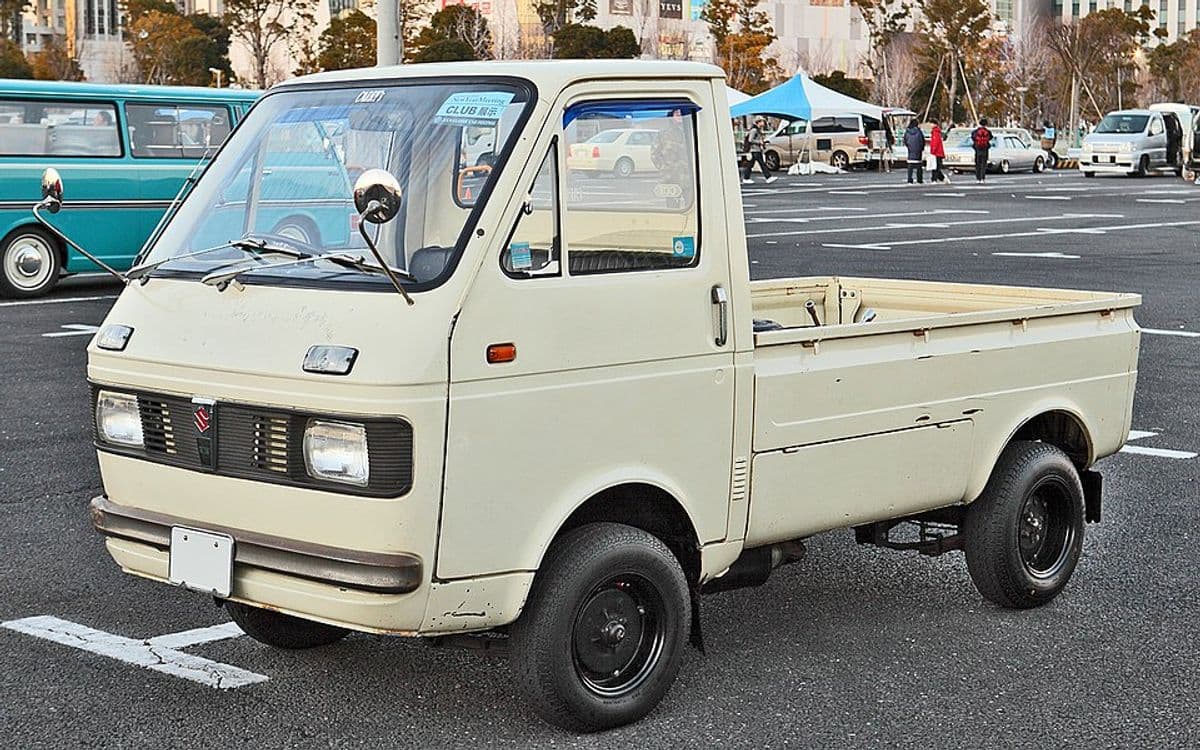
Suzuki Carry
1969-Present
Pennsylvania farm registration is the cleanest path right now, and the Carry is the kei truck PennDOT clerks have seen the most. Cheapest factory dump bed makes the farm plate easier to justify, and the 4WD variant handles Pennsylvania mud and dairy farm conditions without complaint.