Kei Truck & Kei Car Laws in Illinois (2026)
RestrictedIllinois Secretary of State began revoking plates and branding kei truck titles Not Eligible For Registration starting April 2025, even for vehicles registered years earlier.
Are Kei Trucks Legal in Illinois?
The situation in Illinois has gotten significantly worse. Starting in April 2025, the Illinois Secretary of State began actively revoking license plates and branding titles as "Not Eligible For Registration" for kei trucks and other legally imported Japanese vehicles. This isn't just a policy of refusing new registrations. The state is going after vehicles that were previously registered and plated, stripping road legal status from owners who followed every rule.
For years, Illinois treated kei cars, vans, and trucks like any other imported vehicle, issuing regular, unrestricted license plates for models like the Suzuki Carry and Honda Acty. For more details on the import process, check our complete guide to importing a kei truck from Japan. That changed in 2025 when the Secretary of State's office began mass revocations, citing IVC Section 3-401(c-1), which states a vehicle may not be registered unless it was originally manufactured for operation on highways. The state's position is that kei trucks do not qualify.
The Secretary of State has explicitly stated: unless legislation is passed that specifically allows kei trucks to be registered in Illinois, they are not eligible for registration. Owners who have had their plates revoked have been appealing through administrative hearings since June 2025, but outcomes have not been favorable. The state has even allegedly threatened to crush vehicles at the owners' expense.
Under federal law, kei trucks imported under the NHTSA 25-year import rule are legal to bring into the country. But Illinois does not recognize this federal exemption as sufficient grounds for state registration.
Where local ordinances still nominally permit kei trucks, they are restricted to roads with speed limits of 30 to 35 mph or lower. However, the state level crackdown has made even these local arrangements unreliable.
We strongly recommend against purchasing a kei truck for Illinois road use until the legal situation is resolved. If you already own one in Illinois, consult an attorney. Be sure to review our pre-purchase inspection checklist if you are considering a purchase for off road use only.
How to Register a Kei Truck in Illinois
Registering a kei truck in Illinois is challenging and success is not guaranteed. However, some owners have succeeded using antique or special-use vehicle classifications. Here's the general approach:
Step 1: Verify Local Ordinances Illinois leaves kei truck decisions to municipalities and counties. Before attempting registration:
- Contact your city or county clerk's office
- Ask about local ordinances regarding mini trucks, low speed vehicles, or kei trucks
- Request written confirmation of permissibility
Step 2: Determine Registration Classification If local ordinances permit kei trucks, you may register under:
Antique Vehicle Registration:
- Vehicle must be 25+ years old
- Used primarily for exhibitions, club activities, parades, and occasional pleasure driving
- May have mileage and use restrictions
- Often exempt from emissions testing
Special-Use Vehicle Registration:
- Limited to specific road types and speeds
- May require additional equipment or modifications
Step 3: Gather Required Documents
- Application for Vehicle Transaction (Form VSD190)
- Original foreign ownership documents with certified English translation
- Bill of sale detailing year, model, make, VIN, and purchase price
- U.S. Customs Form 3299 (for imported vehicles)
- Federal Certification Label (FCL) or Registered Importer (RI) label showing U.S. compliance
- Valid Illinois driver's license or state ID
- Proof of Illinois auto insurance
Step 4: Complete Safety Equipment Modifications (If Needed) Illinois may require modifications to meet safety standards:
- Seat belts for all seating positions
- Adequate lighting (headlights, taillights, brake lights, turn signals)
- Functional horn and windshield wipers
- Mirrors providing adequate rear visibility
- Compliance with Illinois equipment standards
Step 5: Pay Required Taxes Complete Motor Vehicle Tax Forms:
- Form RUT-25 or RUT-50: Required to calculate and pay necessary vehicle taxes
- Illinois charges tax based on purchase price or fair market value
Step 6: Visit Secretary of State Facility Schedule an appointment at an Illinois Secretary of State facility. Bring all documentation and be prepared to explain your vehicle's classification.
Step 7: Pay Registration Fees Illinois registration fees vary by vehicle classification. Antique vehicle registration typically costs less than standard registration.
Step 8: Receive License Plates (If Approved) If approved, you'll receive Illinois license plates appropriate to your registration classification (antique plates, special-use plates, etc.). Illinois requires annual registration renewal.
Important Warning: Many Illinois Secretary of State facilities may decline kei truck registration applications. Be prepared for possible rejection and have alternative plans.
Restrictions and Limitations
Illinois imposes significant restrictions on kei trucks where they're permitted:
Speed and Road Restrictions Kei trucks in Illinois are generally restricted to roads with posted speed limits of 30-35 mph or lower. This prohibition includes:
- Interstate highways (I-55, I-57, I-80, I-90, I-94, etc.)
- Major state highways with speed limits above 35 mph
- Expressways and tollways
- Urban arterial roads with higher speed limits
These restrictions significantly limit kei truck utility in Illinois, particularly in the Chicago metropolitan area and other urban regions where higher-speed roads are necessary for most travel.
Local Ordinance Variations Because Illinois delegates kei truck decisions to municipalities, regulations vary:
- Some cities may prohibit kei trucks entirely
- Others may permit them on specific roads or for specific purposes
- Enforcement and interpretation differ by jurisdiction
Always verify local regulations in your specific city or county.
Equipment Requirements All Illinois motor vehicles must meet basic equipment standards:
- Headlights, taillights, brake lights, and turn signals
- Windshield wipers in good working condition
- Mirrors (driver's side minimum)
- Functional horn
- Seat belts for all occupants
- Adequate tire tread
Commercial Use Restrictions Using kei trucks for commercial purposes may require:
- Commercial vehicle registration
- Business operating authority
- Additional insurance coverage
- Compliance with commercial vehicle regulations
Contact the Illinois Secretary of State Commercial Services for guidance.
Insurance Requirements
Illinois requires all motor vehicles to carry minimum liability insurance:
- $25,000 per person for bodily injury
- $50,000 per accident for bodily injury
- $20,000 per accident for property damage
Finding Kei Truck Insurance in Illinois If you successfully register a kei truck, most major insurance providers will offer liability coverage:
- State Farm
- Progressive
- Geico
- Allstate
- Country Financial (strong Illinois presence)
Expect to pay $400-900 annually for basic liability coverage on a Mitsubishi Minicab or similar kei truck, depending on location (Chicago area vs. rural Illinois), driving record, and coverage limits.
Classic Vehicle Insurance If registered as an antique vehicle, specialty insurers may offer favorable policies:
- Hagerty
- Grundy
- American Collectors Insurance
Classic policies typically:
- Require minimum vehicle value ($3,500+)
- Provide agreed-value coverage
- Restrict daily commuting and annual mileage
- Offer lower premiums ($300-600 annually)
Important Note: Some specialty insurers have stopped offering kei truck coverage in certain states due to regulatory uncertainty. For more guidance, see our kei truck insurance guide. Verify coverage availability with your chosen insurer.
Inspection and Emissions
Illinois does not require periodic safety inspections for most passenger vehicles, but commercial vehicles face different requirements:
No Passenger Vehicle Inspection Illinois does not mandate annual safety inspections for standard passenger cars and light trucks. Once registered, your kei truck won't require recurring safety inspections (unless registered commercially).
Commercial Vehicle Inspections If registered as a commercial vehicle or exceeding 8,000 pounds GVWR, annual safety inspections are required at authorized IDOT stations. Inspections cover:
- Brakes
- Lights
- Tires
- Steering components
- Suspension systems
- Exhaust emissions
Most kei trucks weigh well under 8,000 pounds and wouldn't trigger commercial inspection requirements unless registered commercially.
Rebuilt Salvage Inspection If your kei truck has a rebuilt or salvage title, Illinois requires a special inspection before registration. Contact the Illinois Secretary of State for rebuilt vehicle inspection requirements.
No Emissions Testing for Antique Vehicles Vehicles registered as antiques are typically exempt from Illinois emissions testing programs (where applicable in certain counties).
Legislative Timeline
Legislative Timeline
- Restricted
Local Ordinances Allowed Registration
Illinois treated kei trucks like other imported vehicles. Some owners registered under antique or special use classifications. Municipal ordinances governed where kei trucks could operate, typically on roads with speed limits of 35 mph or lower.
- Banned
Secretary of State Begins Revoking Plates and Titles
The Illinois Secretary of State began sending letters to owners of kei trucks and other legally imported Japanese vehicles, revoking their license plates and branding titles as "Not Eligible For Registration" under IVC Section 3-401(c-1).
- Banned
Administrative Hearings Begin
Vehicle owners began appealing revocations through administrative hearings at the Secretary of State's office. Early hearings revealed the state had limited understanding of imported vehicle regulations but maintained its ban.
- Banned
No Legislative Fix Introduced
As of the 2026 legislative session, no bill has been introduced to specifically legalize kei truck registration in Illinois. The ban remains in effect with no clear path to resolution.
Tips from Illinois Kei Truck Owners
Illinois' hostile regulatory environment makes kei truck ownership extremely challenging. Here's practical advice:
1. Research Local Ordinances Thoroughly Before purchasing, investigate your specific municipality's regulations:
- Contact city clerk and police department
- Review local vehicle ordinances
- Ask about enforcement history with mini trucks
2. Consider Rural Areas Rural Illinois counties and small towns may be more accommodating than urban areas. If you have flexibility in where you register, rural locations may offer better success rates.
3. Document Everything Keep detailed records of all communications with Secretary of State facilities, local officials, and law enforcement. If you successfully register, your documentation helps other Illinois owners.
4. Join Advocacy Efforts Connect with other Illinois kei truck owners to advocate for clearer, more permissive regulations. Organized advocacy can influence state and local policy.
5. Have Alternative Use Plans Given registration uncertainty, consider alternative uses:
- Private property / off road use only
- Farm equipment exemptions (if applicable)
- Registration in more permissive neighboring states (if you have residency options)
6. Monitor Legislative Developments Illinois kei truck regulations are evolving. Monitor the Illinois General Assembly website for bills addressing kei trucks or imported vehicles.
7. Connect with Online Communities The r/keitruck subreddit and Japanese Mini Truck Forum include Illinois owners who share experiences, registration successes, and workarounds.
Frequently Asked Questions
Q: Can I drive a kei truck on Illinois highways? A: No. Even if registered, kei trucks are generally restricted to roads with speed limits of 30-35 mph or lower, prohibiting highway use.
Q: Do I need a special license to drive a kei truck in Illinois? A: No. A standard Illinois driver's license is sufficient for vehicles permitted on public roads.
Q: Can I register a kei truck as a farm vehicle in Illinois? A: Potentially. Illinois offers farm vehicle registrations with different requirements. Contact the Illinois Secretary of State to explore farm vehicle classification eligibility.
Q: What cities in Illinois are most kei-truck friendly? A: Rural municipalities and small towns generally show more flexibility than Chicago and suburbs. However, each municipality sets its own policies, requiring individual research.
Q: What happens if I get pulled over driving an unregistered kei truck in Illinois? A: Driving an unregistered or improperly registered vehicle can result in tickets, fines, vehicle impoundment, and legal complications. Always ensure proper registration before operating on public roads.
Q: Is Illinois considering legislation to clarify kei truck laws? A: As of early 2026, no legislation specifically addressing kei truck legalization has been introduced. The Secretary of State's office has made clear that without new legislation, kei trucks remain ineligible for registration. Monitor the Illinois General Assembly for any future bills.
Q: Can I register a kei truck in another state and drive it in Illinois? A: Illinois law generally requires Illinois residents to register vehicles in Illinois. Out-of-state registration while residing in Illinois may violate state law. Consult a legal professional before pursuing this option.
Useful Links
- Illinois Secretary of State - Vehicle Services
- Illinois Title and Registration Information
- Illinois Commercial and Farm Trucks
- Illinois General Assembly (Track Legislation)
- NHTSA Vehicle Importation Guidelines
- Illinois Vehicle Inspections - IDOT
- r/keitruck Community
- Hagerty Classic Vehicle Insurance
Bottom Line: Illinois is one of the worst states for kei truck ownership as of 2026. The Secretary of State is actively revoking plates and titles for previously registered vehicles, and no legislation is in the pipeline to fix the situation. Do not purchase a kei truck for road use in Illinois. If you already own one, consult an attorney and consider registering in a neighboring state if you have legitimate residency options. Explore our other state guides our complete state-by-state guide. If you're near the border, you may also want to check kei truck laws in Wisconsin, Iowa, Missouri, Kentucky, and Indiana.
What you can do in Illinois
Kei trucks are legal here under specific limits. Here are the three moves that matter.
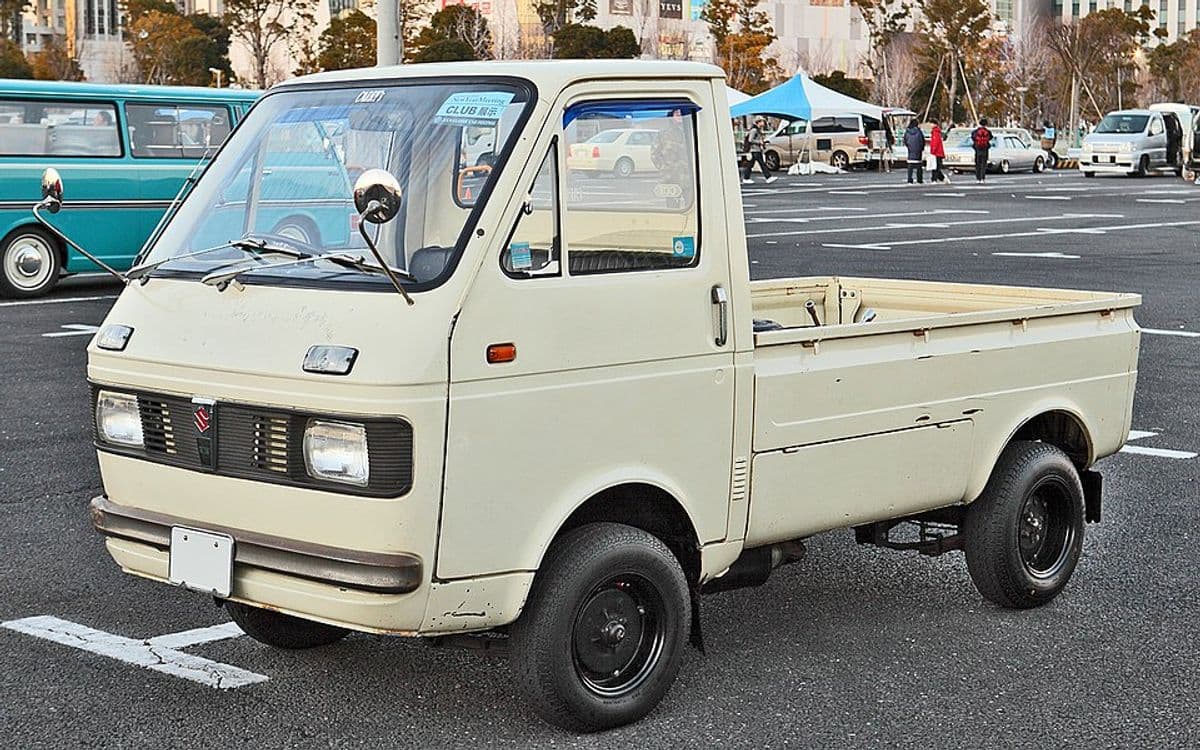
Suzuki Carry
1969-Present
If you are putting money into a kei truck in Illinois, buy the one with the deepest secondary market. The Carry holds resale across state lines, so if Illinois finishes off road use entirely, you can move it to Indiana or Wisconsin collector plates without losing your shirt.