Kei Truck & Kei Car Laws in Kentucky (2026)
RestrictedKentucky SB 63 created a special purpose vehicle class in June 2025 with $10 registration, a 20 mile highway cap, and a county opt in requirement for local roads.
Are Kei Trucks Legal in Kentucky?
Yes, with restrictions. Kentucky's Senate Bill 63, sponsored by Senator Brandon Storm (R-London), became law without the Governor's signature on March 26, 2025. It created a new "street-legal special purpose vehicle" classification that includes minitrucks, ATVs, and UTVs. The law took effect on June 27, 2025, and represents a significant expansion of kei truck access in Kentucky compared to the previous crossing-only restriction under KRS 189.517.
However, SB 63 uses a county opt-in model. Your county or city must pass an ordinance explicitly allowing special purpose vehicles on local roads before you can legally operate a kei truck on public highways. If your jurisdiction has not opted in, kei trucks remain restricted to private property and farm use.
This is a big step forward for owners of Suzuki Carry, Honda Acty, and Daihatsu Hijet models in Kentucky. The Kentucky Association of Counties (KACO) has been actively educating local governments about the new law to facilitate adoption.
What Changed with SB 63
Before SB 63, Kentucky Revised Statute 189.517 only allowed minitrucks to cross state roads where local ordinances permitted. The law was vague and restrictive, essentially limiting kei trucks to perpendicular crossings of state highways.
SB 63 replaces this framework with a much clearer system:
- New vehicle classification: "Street-legal special purpose vehicle" covers minitrucks, ATVs, UTVs, pneumatic-tired military vehicles, and custom-built vehicles
- County opt-in: Counties and cities can pass ordinances allowing these vehicles on all eligible roads or designate specific permitted routes
- Registration path: The county clerk issues a motorcycle registration plate after a $25 certified inspection at the sheriff's office
- Safety standards: Specific equipment requirements must be met
For more details on the federal import process, check our complete guide to importing a kei truck from Japan.
The 2026 Update: SB 110 Smooths Out the Rough Edges
Kentucky didn't stop tinkering after SB 63. Senate Bill 110, a motor vehicles omnibus sponsored by Senator Jason Howell, was signed by the Governor on April 13, 2026 as Acts Chapter 135. Two pieces matter for kei truck owners.
First, Section 16 amended KRS 186.077 effective July 15, 2026. When you renew your street-legal special purpose vehicle registration, the renewal itself now counts as your certification that the truck still meets all the equipment requirements. Under the original SB 63 language you had to actively certify compliance each year. Now it's automatic: pay your $10, and you're deemed to have certified. The equipment still has to actually be on the truck and working, so don't pull the turn signals off after year one. If you get stopped, the burden is on you.
Second, SB 110 amended KRS 186.020 to explicitly require proof of insurance with your special purpose vehicle registration application. In practice most county clerks were already asking for it, but now it's black letter law. Have your insurance card ready when you register or renew.
There's also a money change coming. SB 110 added an exemption under KRS 132.096 that makes street-legal special purpose vehicles registered under KRS 186.020 exempt from state and local ad valorem taxes starting January 1, 2028. Kentucky bills that property tax every year at registration renewal, so once the exemption kicks in, your annual cost drops to basically the $10 registration fee. More on that in the cost breakdown below.
How to Register a Kei Truck in Kentucky Under SB 63
Step 1: Verify Your County Has Opted In
Check with your county clerk or fiscal court to confirm your jurisdiction has passed an ordinance allowing street-legal special purpose vehicles. The Kentucky League of Cities (KLC) has published guidance for cities considering adoption. If your county hasn't opted in, contact your county judge-executive to advocate for an ordinance.
Step 2: Schedule a Certified Inspection
Your kei truck must pass an inspection through your county sheriff's office. The inspection verifies:
- VIN matches ownership documents
- All required safety equipment functions properly
- Vehicle is in safe operating condition
Inspection fee: $25
Step 3: Required Safety Equipment
Your kei truck must be equipped with:
- Headlamps and tail lamps
- Brake lamps
- Reflectors
- Turn signals
- Working muffler
- Rearview mirrors
- Speedometer
- Roll bar or roll cage
- Seat belts for all passenger positions (multi-passenger vehicles)
- Tires with at least 2/32-inch tread depth
Most imported kei trucks already meet these requirements, though you may need to upgrade mirrors or add turn signals to older models.
Step 4: Obtain Insurance
Kentucky requires all registered vehicles to carry minimum liability insurance:
- Bodily injury: $25,000 per person / $50,000 per accident
- Property damage: $25,000 per accident
- Personal injury protection (PIP): $10,000 per person
For more guidance, see our kei truck insurance guide. Companies that insure kei trucks include Hagerty, State Farm, Progressive, and Farm Bureau.
Step 5: Register the Vehicle
Registration goes through your county clerk's office, not the sheriff. The sheriff's only role is the $25 certified inspection in Step 2; under KRS 186.077(7) the clerk processes the registration under KRS 186.020 and issues the plate. The Jefferson County Clerk's SLSPV guidance walks through the exact sequence: sheriff inspection first, then the clerk's counter. Bring:
- Proof of ownership (title, bill of sale, or import documentation)
- Sheriff's inspection certificate
- Proof of insurance (explicitly required with the application since SB 110 amended KRS 186.020)
- Kentucky driver's license or ID
You will receive a motorcycle registration plate for your kei truck. At renewal time, paying the fee automatically certifies the truck still meets equipment requirements under the July 15, 2026 amendment to KRS 186.077.
Annual registration fee: $10
Restrictions and Limitations
SB 63 imposes specific operating restrictions:
Road Use Restrictions
Permitted:
- Highways within jurisdictions that have opted in via ordinance
- Crossing state roads
- County and local roads where allowed
- Farm use (exempt from street-legal classification requirements)
Prohibited:
- Interstate highways
- Parkways
- Traveling more than 20 miles on highways with centerline pavement markings
- Operating in jurisdictions that have not passed an opt-in ordinance
Farm Exemption
Vehicles primarily used for agricultural purposes are exempt from the street-legal classification requirements. This means farm-use kei trucks don't need to meet all the safety equipment requirements or go through the special registration process. See our kei truck vs UTV comparison for how these vehicles compare to UTVs on the farm.
Speed Limitations
SB 63 does not specify a maximum speed limit for special purpose vehicles. However, the 20-mile limit on centerline highways and the prohibition on interstates and parkways effectively limit kei trucks to local roads in most situations. Standard Kentucky traffic laws apply.
Legislative Timeline
Legislative Timeline
- Restricted
KRS 189.517, Crossing Only
Kentucky law only allowed minitrucks to cross state roads where local ordinances permitted. No on-road operation, no formal registration path.
- Pending
SB 63 Introduced in Legislature
Senate Bill 63 proposed a new "street-legal special purpose vehicle" classification covering minitrucks, ATVs, and UTVs with a county opt-in model.
- Restricted
SB 63 Takes Effect
SB 63 became law, allowing kei truck registration and road use in counties that pass opt-in ordinances. $10 annual registration, $25 inspection, 20-mile centerline highway limit.
- Pending
Counties Evaluating Opt-In
KACO and KLC are actively educating county officials. Rural counties with agricultural economies are leading adoption. Check with your county clerk for local status.
- Restricted
SB 110 Signed into Law
Senator Jason Howell's motor vehicles omnibus became Acts Chapter 135. Effective July 15, 2026, renewing a special purpose vehicle registration automatically certifies equipment compliance under KRS 186.077, and KRS 186.020 now explicitly requires proof of insurance with the registration application.
- Pending
Ad Valorem Tax Exemption Takes Effect
SB 110 added KRS 132.096(13), exempting registered street-legal special purpose vehicles from state and local ad valorem taxes. Annual ownership cost drops to the $10 registration fee plus insurance.
Cost Breakdown
| Item | Estimated Cost |
|---|---|
| Sheriff's Inspection | $25 |
| Annual Registration | $10 |
| Title Fee | $9 |
| Usage Tax (6% of value) | Varies |
| Ad Valorem Property Tax (annual) | Varies by county, exempt starting January 1, 2028 |
| Insurance (annual) | $400 - $800 |
One line item is on its way out. Kentucky normally bills ad valorem property tax on your vehicle every year when you renew registration, and kei trucks registered as special purpose vehicles have been no exception. Thanks to SB 110's addition of KRS 132.096(13), street-legal special purpose vehicles become exempt from state and local ad valorem taxes on January 1, 2028. On an $8,000 kei truck that can save you a meaningful chunk each year depending on your county's rate. Until then, budget for the tax at renewal.
Which Counties Have Opted In?
SB 63 is still relatively new (effective June 2025), and counties are in the process of evaluating and passing ordinances. Be sure to review our pre-purchase inspection checklist before purchasing. The Kentucky Association of Counties is hosting webinars to educate county officials about the implementation process.
Contact your county clerk or fiscal court to ask about the status of a special purpose vehicle ordinance in your area. Rural counties with agricultural economies have been among the first to adopt.
Tips from Kentucky Kei Truck Owners
Advocate for opt-in in your county. If your jurisdiction hasn't passed an ordinance yet, attend a fiscal court meeting and present the case. Point to neighboring counties that have adopted and share the KACO guidance materials.
Keep the 20-mile limit in mind. Plan your routes to stay within the centerline highway distance limit. For daily errands and farm runs, this is usually sufficient, but long-distance travel requires careful route planning on non-centerline roads.
Document everything. Keep copies of your county's opt-in ordinance, registration, inspection certificate, and insurance in the vehicle at all times. Not all law enforcement officers are familiar with SB 63 yet.
Join the community. Kentucky kei truck groups on Facebook and the r/keitruck subreddit have active members tracking which counties have opted in and sharing registration experiences.
Frequently Asked Questions
Do I need a special driver's license?
No. A standard Kentucky Class D driver's license is sufficient. No commercial license or special endorsement is required.
What if my county hasn't opted in?
You cannot legally operate a kei truck on public roads in that jurisdiction. Your options are private property/farm use only, or advocating with your county fiscal court to pass an opt-in ordinance.
Can I drive from one opted-in county to another through a non-opted-in county?
This is a gray area under SB 63. The safest interpretation is that you should not operate on public roads in any jurisdiction that has not passed an ordinance. Plan routes accordingly.
Are kei vans and kei cars covered by SB 63?
SB 63 specifically covers "minitrucks" along with ATVs, UTVs, and other vehicle types. Kei vans may qualify depending on their classification, but kei passenger cars might not fit the minitruck definition. Consult your county clerk.
What's the difference between SB 63 and the old KRS 189.517?
KRS 189.517 only allowed minitrucks to cross state roads. SB 63 creates a broader framework that allows operation on local highways (not just crossing), includes a formal registration process, and establishes clear safety equipment standards.
Useful Links
- Kentucky SB 63 Full Text
- KACO - Special Purpose Vehicles Now Legal
- KLC - Street-Legal Special Purpose Vehicles and Cities
- Kentucky Transportation Cabinet - Vehicle Titling
- NHTSA Vehicle Importation Guidelines
- Hagerty Insurance
- r/keitruck Reddit Community
Kentucky's kei truck landscape improved significantly with SB 63 in June 2025. While the county opt-in model means access varies by jurisdiction, the law provides a clear legal framework that was previously missing. Check whether your county has opted in, and if not, advocate for adoption. For kei truck laws in other states, visit our complete state-by-state guide. If you're near the border, check kei truck laws in Indiana, Ohio, Tennessee, West Virginia, Virginia, Missouri, and Illinois.
What you can do in Kentucky
Kei trucks are legal here under specific limits. Here are the three moves that matter.
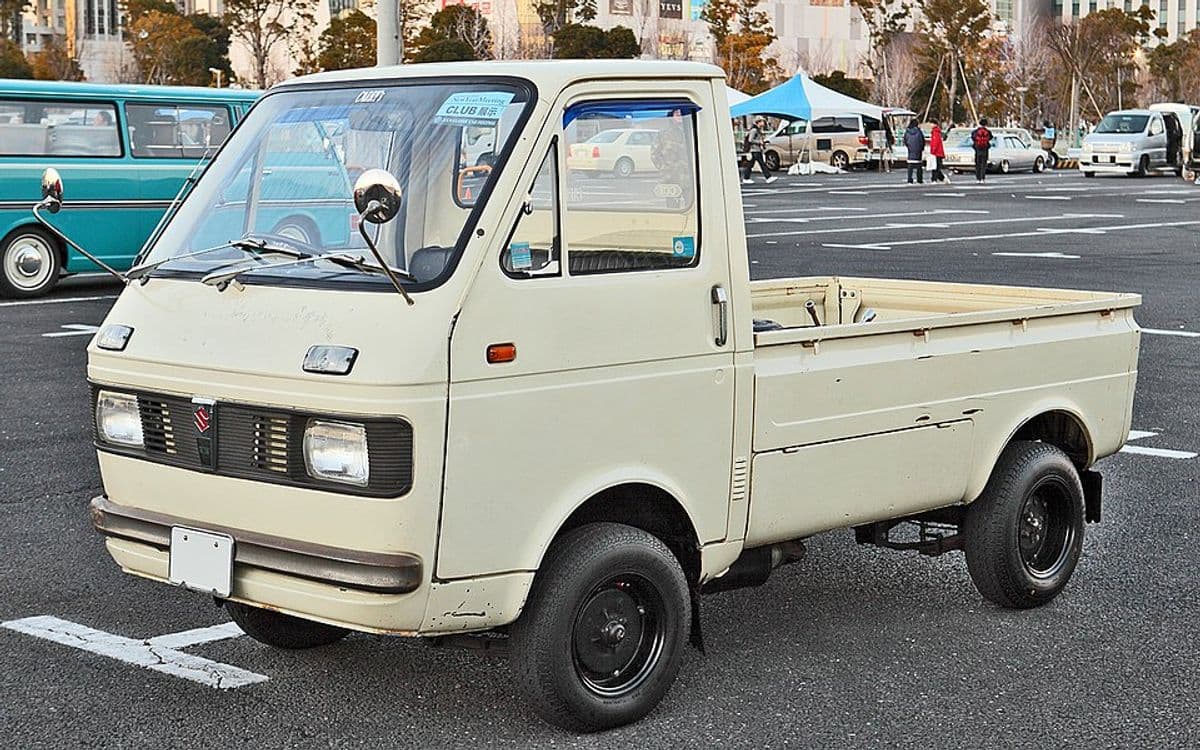
Suzuki Carry
1969-Present
Bluegrass farm country and the county opt in model mean you want the Carry. Cheapest factory dump bed in kei, deepest parts pipeline, and the 20 mile highway limit suits a truck built for farm to feed store runs rather than long distance commuting.