Kei Truck & Kei Car Laws in Wisconsin (2026)
RestrictedWisconsin Statute 341.10 blocks standard kei registration, but vehicles 20 years or older with unaltered bodies qualify for collector or hobbyist plates with full road access.
Are Kei Trucks Legal in Wisconsin?
Wisconsin has a complicated relationship with kei trucks. Standard registration for on road use is prohibited under Wisconsin Statute 341.10, which states that the DMV shall refuse registration of vehicles manufactured after 1969 that don't meet federal manufacturer certification requirements or are classified as Kei class vehicles.
Update June 2026: Wisconsin's DOT Vehicle Research Unit has started enforcing 341.10(6) directly against new kei truck registrations, even ones that historically went through under the collector plate exemption. Owners who already have plates are still grandfathered, but fresh imports are getting denial letters. The full story and what mid import owners should do is covered in Wisconsin's new kei truck ban enforcement.
However, Wisconsin provides an important exemption: kei trucks that are at least 20 years old with unaltered bodies can be registered with collector or hobbyist plates. This exemption allows legal road use, including highways and interstates, making Wisconsin more permissive than many states that either ban kei trucks entirely or restrict them to low speed roads.
The key requirements are:
- Vehicle must be 20+ years old
- Body must be unaltered from original specifications
- Must qualify for and maintain collector plate registration
Since most kei trucks imported to the U.S. are 25+ years old (to meet the federal NHTSA 25-year import rule), the age requirement is typically not a barrier. For more details, check our complete guide to importing a kei truck from Japan. The federal rule exempts vehicles 25+ years old from current Federal Motor Vehicle Safety Standards (FMVSS), which is why most kei trucks in America fall into this category.
How to Register a Kei Truck in Wisconsin
Registering a kei truck in Wisconsin requires using the collector or hobbyist plate system. Here's the complete process:
Eligibility Requirements
Before beginning registration, verify your kei truck meets these criteria:
- Age: At least 20 years old from the year of manufacture
- Body condition: Original body with no alterations (repairs and maintenance are acceptable, but custom modifications disqualify the vehicle)
- Other vehicle ownership: You must own or lease at least one other vehicle with current, valid Wisconsin registration for regular transportation
- Not daily driver: Collector vehicles cannot be used as your primary transportation
Required Documents
- Proof of ownership: Bill of sale, previous title, or Manufacturer's Certificate of Origin (MCO)
- Import documentation: U.S. Customs Entry Documents (Form 7501) and Japanese export certificate with English translation
- Proof of other vehicle: Registration or lease documents for your primary vehicle
- Valid driver's license: Wisconsin driver's license or valid out-of-state license
- Proof of insurance: Policy meeting Wisconsin minimum liability requirements
Registration Process
- Verify eligibility: Confirm your kei truck is 20+ years old and has an unaltered body
- Obtain insurance: Secure liability insurance meeting Wisconsin minimums
- Complete Form MV2323: Download and complete the Collector License Plate Application
- Visit a DMV service center: Bring all documents to a Wisconsin DMV office
- Submit documentation: Provide all ownership documents, import paperwork, insurance proof, and evidence of your other registered vehicle
- Pay fees: Collector registration is twice the standard annual fee, plus a one-time $50 plate fee
- Receive collector plates: You'll get permanent collector plates that don't expire as long as you own the vehicle
Registration Fees
Wisconsin collector plate fees are calculated as follows:
- Initial plate fee: $50 (one-time)
- Registration fee: Twice the regular annual registration fee for the vehicle type
- Title fee: $164.50 for new titles, $62 for title transfers
For a typical kei truck:
- Regular truck registration (under 4,500 lbs): Approximately $85 annually
- Collector registration (2x regular): Approximately $170
- Total first-year cost: $220-$385 depending on title status
Important: Collector registration does not expire for as long as you own the vehicle. After the initial registration, you won't need to renew annually, making it more economical over time.
Assigned Collector Number
When you register your first collector vehicle, WisDOT assigns you a unique collector license number. If you register additional collector vehicles later, they'll receive the same number with letter suffixes (e.g., ABC 123, ABC 123A, ABC 123B).
Collector numbers cannot be personalized or customized.
Timeline
Registration typically takes one DMV visit if you have all required documentation. Processing is usually immediate for in-person applications. Some DMV service centers may need to consult with supervisors if they're unfamiliar with kei trucks, so allow extra time for questions.
Restrictions and Limitations
Wisconsin's collector plate system has specific restrictions that apply to kei trucks:
Operational Restrictions
- No January driving: Collector plates are not valid for operation during the month of January (intended to prevent winter salt exposure to collectible vehicles)
- Primary vehicle required: You must maintain registration on at least one other vehicle for "regular transportation"
- Weight limit for hauling: Truck-type vehicles with collector plates cannot haul materials exceeding 500 pounds (except former military vehicles)
- Not for daily use: While the law doesn't explicitly limit mileage or use frequency, collector plates are intended for occasional use, not daily commuting
Road Access
The good news: Unlike some states that restrict kei trucks to low speed roads, Wisconsin collector plates permit operation on all roads, highways, and interstates. The speed restriction concerns that affect other states don't apply to collector-plated vehicles in Wisconsin.
This makes Wisconsin significantly more permissive than states like Washington (35 mph limit) or West Virginia (federal highway ban).
Equipment Requirements
Your kei truck must maintain all required safety equipment:
- Headlights and tail lights
- Brake lights
- Turn signals (amber front, red or amber rear)
- At least one rearview mirror
- Windshield wipers (if equipped with windshield)
- Functional horn
- Seat belts for all seating positions
- Adequate tires with sufficient tread
Body Alterations Prohibited
The "unaltered body" requirement is significant. What counts as an alteration?
Disqualifying alterations:
- Custom body panels or modifications
- Lift kits that alter body position
- Removal of original body components
- Custom beds or cargo areas that change original design
Acceptable modifications:
- Mechanical repairs and maintenance
- Tire and wheel changes within reasonable limits
- Paint and cosmetic restoration
- Interior updates that don't affect body structure
If you're uncertain whether a modification disqualifies your vehicle, consult with the Wisconsin DMV before applying for collector plates.
Insurance Requirements
Wisconsin requires all registered vehicles, including those with collector plates, to carry liability insurance. The state's minimum coverage requirements are:
- $25,000 bodily injury per person
- $50,000 bodily injury per accident (two or more people)
- $10,000 property damage per accident
Finding Insurance for Kei Trucks
Despite collector plate status, many standard insurers are unfamiliar with or unwilling to insure kei trucks. For more guidance, see our kei truck insurance guide. Here are your best options:
Specialty collector vehicle insurers:
- Hagerty - Specializes in collector and classic vehicles, familiar with kei trucks
- Grundy - Another collector vehicle specialist
- American Collectors Insurance - Covers vintage imports
Standard carriers with some success:
- State Farm - Some Wisconsin owners report obtaining coverage
- Progressive - Occasionally writes policies for kei trucks
- American Family Insurance - Wisconsin-based, may be more familiar with local regulations
Requirements for collector insurance:
- Vehicle stored in enclosed garage when not in use (often required)
- Limited annual mileage (typically 2,500-5,000 miles)
- Owner must have another vehicle for daily use (which you already need for Wisconsin registration)
- Clean driving record
Insurance Costs
Collector vehicle insurance is often more affordable than standard policies because of limited use. Typical costs in Wisconsin:
- Agreed value coverage: $200-$400 annually for full coverage
- Liability only: $150-$300 annually
Agreed value policies are common for collector vehicles. You and the insurer agree on the vehicle's value upfront, and that's what you receive if totaled (rather than depreciated actual cash value).
Inspection and Emissions
Wisconsin has specific inspection and emissions requirements that vary by location:
Safety Inspections
Wisconsin does not have a statewide periodic safety inspection program for passenger vehicles. Once your kei truck is registered, you won't need to pass annual safety inspections.
However, if titling a vehicle from out-of-state or one with unclear history, a VIN verification may be required to confirm the vehicle identification number matches your documentation.
Emissions Testing Requirements
Wisconsin requires emissions testing only in specific southeastern counties. The Wisconsin Vehicle Inspection Program (WIVIP) applies to vehicles customarily kept in:
- Kenosha County
- Milwaukee County
- Ozaukee County
- Racine County
- Sheboygan County
- Washington County
- Waukesha County
Important: The statute specifically states that "emission test inspections are required on all collector qualifying vehicles 1996 and newer" in these counties.
Emissions Testing Details
For kei trucks 1996 or newer registered in the seven-county region:
- Test frequency: Every two years at registration renewal
- Test type: OBD-II (On-Board Diagnostics) inspection for 1996+ vehicles
- Test locations: WIVIP North (Brown Deer) or WIVIP South (Oak Creek)
- Hours: Tuesday-Saturday, 10am-6pm (self-service kiosks 24/7 for 2007+ vehicles)
- Cost: Approximately $15-$20
Exemptions from Emissions Testing
Most kei trucks are exempt because they're older than 1996. Specifically:
- Vehicles manufactured before 1996 are exempt
- Vehicles outside the seven-county southeastern region are exempt
- Collector vehicles pre-1996 are automatically exempt
Since the federal 25-year import rule means most kei trucks in the U.S. were manufactured in the 1990s or earlier, the vast majority qualify for exemption based on age.
Failing Emissions
If your 1996+ kei truck fails emissions testing:
- Repairs must be completed by a certified technician
- Vehicle must be retested
- Waivers may be available if repairs exceed a certain cost threshold and the vehicle still doesn't pass
Tips from Wisconsin Kei Truck Owners
Wisconsin has a growing kei truck community, particularly in rural areas and among automotive enthusiasts. If you're considering a kei truck for farm or property work, see how they compare in our kei truck vs UTV comparison. Here's practical advice from owners:
Best Areas for Operation
- Rural Wisconsin: Counties outside the southeastern emissions region have no testing requirements
- Door County: Popular with seasonal residents, lower-speed tourism areas
- Western Wisconsin: La Crosse and surrounding areas have supportive automotive communities
- Northern Wisconsin: Rural character and enthusiast-friendly environment
Areas with Emissions Challenges
If you live in Milwaukee, Kenosha, Racine, Waukesha, Ozaukee, Washington, or Sheboygan counties and have a 1996-1998 kei truck, you'll need emissions testing. Most kei trucks pass easily if well maintained, but it's an additional requirement to consider.
The January Restriction Reality
The prohibition on January operation is rarely enforced actively, but it's still the law. Most owners:
- Store vehicles during January anyway (Wisconsin winter protection)
- Use it as an excuse to perform winter maintenance
- Don't risk citations by operating during the prohibited month
Collector Plate Benefits Beyond Registration
- No annual renewal: Once registered, plates remain valid indefinitely
- Historic vehicle status: Some insurance companies offer better rates
- Car show eligibility: Collector plates facilitate entry to automotive events
- Community recognition: Signals to law enforcement and others that your vehicle is legally registered
DMV Experiences
Wisconsin DMV staff familiarity with kei trucks varies by location. Tips for smooth registration:
- Bring comprehensive documentation, including customs paperwork
- Print out Wisconsin Statute 341.10 and the collector plate guidance document if needed
- Be prepared to explain that your vehicle qualifies under the collector plate exemption
- Larger DMV service centers (Madison, Milwaukee) tend to have more experienced staff
Find verified kei truck dealers in Wisconsin in our dealer directory.
Frequently Asked Questions
Q: Can I daily drive my kei truck with collector plates?
While technically possible during February-December, collector plates are intended for occasional use. The requirement to maintain another registered vehicle for "regular transportation" suggests the state doesn't intend collector vehicles as primary transportation. Insurance companies typically limit annual mileage on collector policies.
Q: What if my kei truck is modified?
If the body has been altered from original specifications, it doesn't qualify for collector plates, and therefore cannot be registered in Wisconsin. Mechanical modifications are generally acceptable, but body alterations disqualify the vehicle.
Q: Do I need collector plates, or can I get regular plates?
Kei trucks don't qualify for standard registration in Wisconsin. Collector plates are the only legal pathway for registering these vehicles for road use.
Q: What happens if I drive during January?
You could be cited for operating with invalid registration. While enforcement is inconsistent, the risk exists. Most owners simply avoid January operation.
Q: Can I use my kei truck for business purposes?
This is a gray area. Collector plates are meant for occasional personal use, not commercial operations. Using a collector-plated vehicle for business (landscaping, deliveries, etc.) may violate the spirit of collector registration and could affect your insurance coverage.
Q: How do I prove my kei truck's body is unaltered?
Photos of the vehicle, import documentation showing original configuration, and comparison with factory specifications can help. The DMV will make the determination based on visual inspection and your documentation.
Q: What if I move to Wisconsin with a kei truck already registered in another state?
You'll need to re-register it in Wisconsin using the collector plate process. Your previous state's standard registration doesn't transfer. You have 60 days from establishing Wisconsin residency to complete registration.
Useful Links
- Wisconsin Department of Transportation - Official WisDOT website
- Collector License Plates Information - WisDOT collector plate page
- Collector Plate Application Form MV2323 - Official application PDF
- Wisconsin Vehicle Inspection Program - Emissions testing information
- Emissions Testing Requirements - WisDOT emissions page
- NHTSA Importing a Vehicle - Federal import regulations
- Hagerty Insurance - Collector vehicle insurance
- r/keitruck Reddit Community - Owner discussions and advice
Conclusion
Wisconsin's collector plate exemption provides a practical legal pathway for kei truck ownership, making it one of the more permissive Midwestern states. The key advantages are full highway access and permanent registration without annual renewal. The trade-offs (the January prohibition, 500-pound hauling limit, and requirement to own another vehicle) are manageable for most enthusiasts.
If you're a Wisconsin resident interested in a Suzuki Carry, Honda Acty, Daihatsu Hijet, or other kei truck, the collector plate route is straightforward provided your vehicle is 20+ years old with an unaltered body. This requirement is easily met by most imported kei trucks, which are typically 25+ years old to satisfy federal import regulations.
The seven-county emissions testing requirement is a minor complication for 1996-1998 vehicles in southeastern Wisconsin, but most kei trucks predate this requirement and are automatically exempt.
Overall, Wisconsin offers kei truck owners more freedom than many neighboring states, with full road access and a clear registration path. For information about how Wisconsin compares to other states' kei truck laws, check out our complete state-by-state guide. If you're near the border, you may also want to check kei truck laws in Michigan, Minnesota, Iowa, and Illinois.
What you can do in Wisconsin
Kei trucks are legal here under specific limits. Here are the three moves that matter.
Where you can drive
Restrictions vary by road class. See the quick facts above for the specifics.
Read the rule →Find a dealer in Wisconsin
Verified importers who know your state's registration process.
Browse dealers →When the rules change
Restrictions shift. We email you when Wisconsin updates.
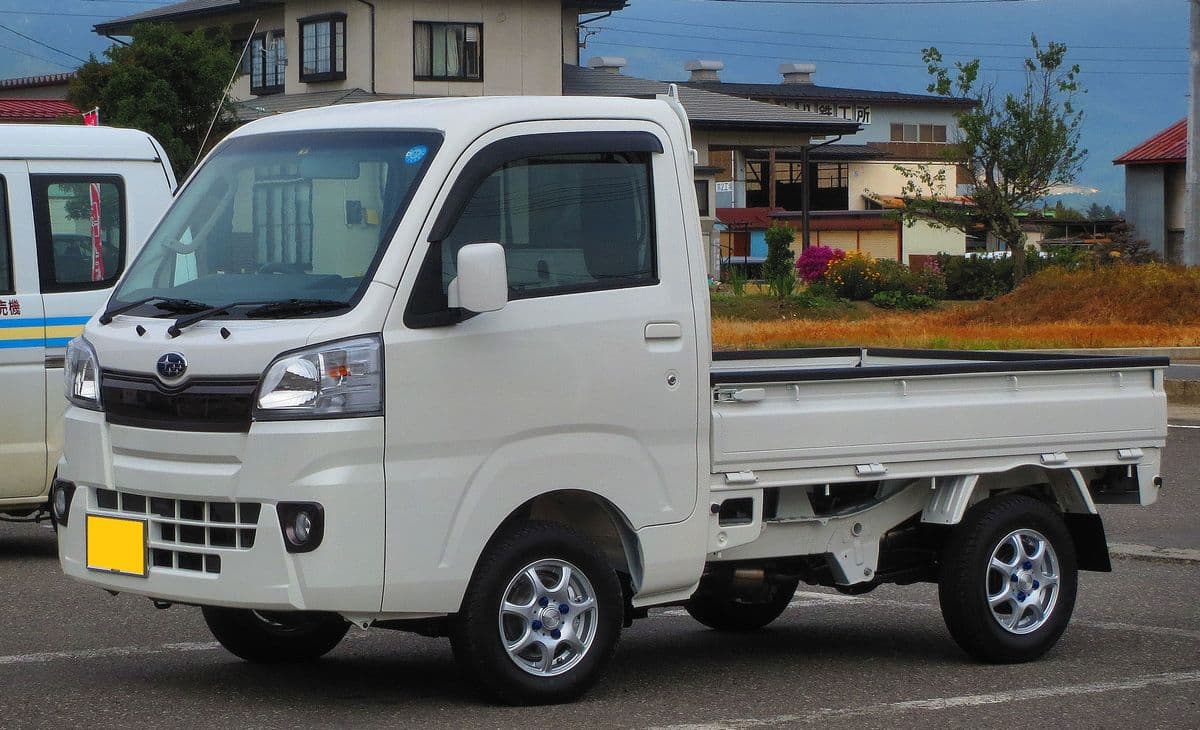
Subaru Sambar
1961-Present
Wisconsin lake effect snow, Northwoods winters, and the collector plate path reward an original condition Sambar. The 4WD supercharged variant has the rear engine traction for Door County weather, and Subaru is a Wisconsin cultural fit. Snow rig with the right paperwork story.