Kei Truck & Kei Car Laws in Louisiana (2026)
RestrictedLouisiana registers kei trucks as off road vehicles and allows them on roads posted 55 mph or less, with interstates and elevated highways off limits.
Are Kei Trucks Legal in Louisiana?
Yes, kei trucks are legal in Louisiana with specific restrictions. The state permits mini-trucks to operate on highways where the posted speed limit is 55 mph or less, but they're prohibited from interstates, controlled-access highways, and multi-lane divided highways with partial or no access control. This makes Louisiana moderately kei truck friendly, allowing your Suzuki Carry, Honda Acty, or Daihatsu Hijet on most local roads while restricting them from high-speed thoroughfares.
Louisiana law specifically addresses mini-trucks in Louisiana Revised Statutes Title 32, Section 299.2. The statute defines a mini-truck as "any four wheeled, reduced dimension truck that may not have a National Highway Safety Administration classification, with a top speed of sixty-five miles per hour, equipped with a truck bed or compartment for hauling, and having an enclosed passenger cab."
Important distinction: Louisiana requires mini-trucks to be registered as off road vehicles rather than standard passenger vehicles. This classification affects registration fees, insurance requirements, and legal operation parameters.
For federal compliance, the NHTSA 25-year exemption rule allows kei trucks over 25 years old to be imported without meeting modern FMVSS standards. For more details, check our complete guide to importing a kei truck from Japan. Louisiana accepts these imports if they meet state-specific equipment requirements.
How to Register a Kei Truck in Louisiana
Louisiana has a well-defined process for registering mini-trucks, but it differs from standard vehicle registration.
Step-by-Step Registration Process
1. Verify Vehicle Qualifications
Ensure your kei truck meets Louisiana's definition:
- Four wheeled reduced dimension truck
- Top speed of at least 65 mph (most kei trucks qualify)
- Equipped with a truck bed for hauling
- Enclosed passenger cab
- Engine displacement of at least 660cc
2. Prepare Required Safety Equipment
Before registration, your mini-truck must have:
- Head lamps (low and high beam)
- Front and rear turn signal lamps
- Tail lamps
- Stop lamps (brake lights)
- Exterior mirror on driver's side
- Either a passenger-side exterior mirror OR interior mirror
- Parking brake
- Windshield wiper
- Speedometer
- Odometer
- Braking system for each wheel
- Seat belt assembly at each designated seating position
- Vehicle identification number (VIN)
3. Obtain Notarized Statement
Prepare a notarized statement certifying that your mini-truck meets all safety requirements listed in Louisiana Revised Statutes 32:299.2. This document is critical for registration.
4. Get Liability Insurance
Secure insurance meeting Louisiana's minimum requirements (see Insurance Requirements section below). Bring proof of insurance to registration.
5. Gather Documentation
- Vehicle title (with certified English translation if foreign)
- Bill of sale
- Proof of ownership
- Notarized safety equipment statement
- Proof of Louisiana liability insurance
- Louisiana driver's license or ID
- Payment for fees
6. Visit Louisiana Office of Motor Vehicles
Bring all documents to your local OMV office or authorized private title agent.
7. Register as Off road Vehicle (Class Code 906)
Louisiana registers mini-trucks under class code 906 as off road vehicles. The OMV will:
- Process your title application
- Issue off road vehicle registration
- Provide a decal for display on your mini-truck
8. Pay Registration Fees
Louisiana mini-truck registration costs:
- Title fee: $68.50
- Registration/License: $20-$40 (off road vehicle rate)
- Local fees: Varies by parish
- Total estimated cost: $100-$150
Annual Registration Renewal
Mini-truck registration in Louisiana must be renewed annually. You can renew:
- Online via Louisiana Express Lane
- By mail
- In person at OMV offices
Restrictions and Limitations
Louisiana's restrictions balance kei truck utility with safety considerations.
Road Access Restrictions
Permitted Roads:
- Highways with posted speed limits of 55 mph or less
- Parish (county) roads
- City streets
- Rural highways
Prohibited Roads:
- Interstate highways (I-10, I-12, I-20, I-49, I-55, I-59, I-110, I-220, I-310, I-510, I-610)
- Controlled-access highways
- Multi-lane divided highways with partial or no access control
- Any highway with posted speed limit exceeding 55 mph
State and Local Authority to Restrict
Louisiana law grants significant discretion to transportation authorities:
Louisiana Department of Transportation and Development (DOTD) may prohibit mini-truck operation on any state highway under its jurisdiction if it determines such prohibition is necessary for public safety.
Parish and municipal governments may prohibit mini-truck operation on parish or municipal roads if they determine prohibition is necessary for public safety.
Before operating your kei truck, verify that your parish and city permit them. Some municipalities may have additional restrictions beyond state law.
Practical Operating Limitations
While Louisiana allows operation on 55 mph roads, kei trucks have practical limitations:
- Small engines (660cc) work hard at sustained high speeds
- Light weight reduces stability in wind or highway traffic
- Limited crash protection compared to modern vehicles
Most owners report kei trucks perform best at speeds below 45 mph, making them ideal for local use rather than long-distance travel.
Insurance Requirements
Yes, liability insurance is mandatory. Louisiana requires mini-trucks to carry the same minimum liability insurance as standard passenger vehicles. For more guidance, see our kei truck insurance guide.
Minimum Required Coverage
Louisiana auto insurance minimums (per R.S. 32:900(B)):
- Bodily injury: $15,000 per person / $30,000 per accident
- Property damage: $25,000 per accident
Note: Louisiana has some of the lowest minimum insurance requirements in the United States. However, higher coverage limits are strongly recommended given Louisiana's high rate of uninsured motorists.
Finding Insurance for Kei Trucks
Insuring kei trucks in Louisiana can be challenging since they're registered as off road vehicles, which some insurers treat differently than standard vehicles.
Insurers Known to Cover Kei Trucks:
Standard Auto Insurers:
- State Farm (coverage varies by agent; call ahead)
- Progressive (may require photos and detailed vehicle information)
- Farm Bureau (particularly good for rural/agricultural use)
Specialty Insurers:
- Hagerty (excellent for classic kei trucks over 25 years old, with agreed value coverage)
- American Modern Insurance
- National General
Getting Coverage Tips:
- Explain your vehicle is registered as an off road vehicle under Louisiana class code 906
- Provide your OMV registration documents
- Have photos of your vehicle ready
- Emphasize safety equipment and intended use
- Get quotes from multiple insurers, because rates vary widely
Insurance Costs
Expect to pay $400-$900 annually for minimum liability coverage, depending on:
- Your driving record
- Parish (urban vs. rural)
- Vehicle value
- Coverage limits
- Insurer's risk assessment of kei trucks
Inspection and Emissions
Big news here: Louisiana just killed its inspection sticker program. If you bought your kei truck expecting the old $18 biennial safety inspection routine, forget it. That system is dead for most personal vehicles.
HB 1085 Ends the Inspection Sticker
HB 1085, authored by Rep. Larry Bagley and signed by Gov. Jeff Landry on June 2, 2026, abolishes the state vehicle safety inspection sticker program for most personal vehicles in 59 of Louisiana's 64 parishes. Here's the timeline:
- Since June 30, 2026: A grace period is already in effect. Law enforcement cannot issue citations for failing to display an inspection sticker. If your kei truck's sticker is expired right now, nobody can write you up for it.
- Starting January 1, 2027: The old sticker gets replaced by a $6 QR code sticker tied to your vehicle registration. No inspection station visit, no checklist, no reinspection hassle.
Who still needs safety inspections: Commercial vehicles, school buses, and certain farm vehicles remain subject to safety inspection requirements. A kei truck registered as a personal off road vehicle under class code 906 falls outside those categories, but if you run yours commercially, check with the OMV before assuming you're exempt.
Emissions Testing
Still required in specific parishes. HB 1085 did not touch emissions testing because it's mandated under federal law. Louisiana requires emissions testing for gasoline powered vehicles weighing less than 10,000 lbs registered in:
- Ascension Parish
- East Baton Rouge Parish
- Iberville Parish
- Livingston Parish
- West Baton Rouge Parish
If your mini-truck is registered in one of these five Baton Rouge area parishes:
- Emissions testing must be performed annually
- Testing includes OBD-II inspection (1996+ vehicles), visual anti-tampering check, and gas cap integrity test
Outside these parishes: No emissions testing, and with the safety inspection sticker program abolished, no recurring inspection requirement at all for personal vehicles. Louisiana maintains a list of authorized emissions testing stations for the affected parishes.
Tips from Louisiana Kei Truck Owners
Louisiana kei truck enthusiasts share these practical insights:
Get familiar with parish rules. Louisiana's parish system means regulations can vary significantly across jurisdictions. Call your parish government to verify mini-truck policies before purchasing. Be sure to review our pre-purchase inspection checklist.
Inspection costs just got cheaper. The old $18 biennial safety inspection is gone thanks to HB 1085. Starting January 1, 2027, you'll pay $6 for a QR code sticker with your registration. If you register in one of the five Baton Rouge area emissions parishes, budget for annual emissions testing (around $30). Everyone else pockets the difference.
New Orleans area is kei friendly. The greater New Orleans metro area reportedly has several mini-truck owners and shops familiar with kei vehicle maintenance and modifications.
Join Louisiana mini-truck groups. The r/keitruck subreddit has Louisiana members who share parish-specific experiences, insurance recommendations, and inspection station suggestions.
Avoid interstates even if convenient. I-10 runs the length of Louisiana, and I-12 provides north shore access, but they're strictly off-limits to kei trucks. Plan routes using US highways and state routes.
Consider agricultural use benefits. Louisiana has a strong agricultural economy. If you're using your kei truck for farm work, emphasize this when dealing with insurance companies and local officials, because it can facilitate approvals. See how they stack up in our kei truck vs UTV comparison.
Keep all paperwork in the vehicle. Given the off road vehicle registration classification, carry:
- Registration certificate with decal displayed
- Insurance proof
- Notarized safety equipment statement
- Copy of Louisiana Revised Statutes 32:299.2
Rural parishes may be more accommodating. Parishes with lower population density and more agricultural activity tend to be more familiar with utility vehicles and may process registrations more smoothly.
Frequently Asked Questions
Can I drive my kei truck on I-10 through Louisiana?
No. Interstate highways are specifically prohibited under Louisiana law, regardless of speed limit. Use US highways and state routes instead.
Do I need a special driver's license?
No. A standard Louisiana Class D or E driver's license is sufficient. Kei trucks don't require commercial licenses or special endorsements.
What's the difference between registering as an off road vehicle vs. a standard vehicle?
Louisiana mini-trucks must register as off road vehicles (class code 906). This classification:
- Permits operation on approved roads (55 mph or less)
- Requires special decal display
- May affect insurance rates
- Costs less than standard vehicle registration
Can I use my kei truck commercially?
Yes, provided it's properly registered and insured. If you're operating commercially, ensure your insurance policy covers business use. You may need a commercial auto policy depending on your activities.
What if I get pulled over?
Keep your registration, insurance, and a copy of LA R.S. 32:299.2 in the vehicle. Explain that your vehicle is legally registered as a mini-truck under Louisiana law. Most officers will verify your documentation and allow you to proceed.
Do mini-trucks need to pass emissions testing in all parishes?
No. Only mini-trucks registered in Ascension, East Baton Rouge, Iberville, Livingston, and West Baton Rouge parishes require emissions testing. In all other parishes there's no recurring inspection requirement for personal vehicles now that HB 1085 has abolished the safety inspection sticker program.
Can I register a kei van or passenger vehicle?
Louisiana statute specifically defines mini-trucks as vehicles "equipped with a truck bed or compartment for hauling," which suggests cargo bed configurations. Kei vans may not qualify. Consult your local OMV office with your specific vehicle's specifications.
What happens if my parish prohibits mini-trucks?
While Louisiana state law permits mini-trucks, individual parishes can prohibit them. If your parish has such restrictions, you cannot legally operate your kei truck on parish roads, though state highways passing through may still be accessible. Consider advocating with parish officials to allow mini-truck operation.
Useful Links
- Louisiana Revised Statutes 32:299.2 - Mini-Truck Law
- Louisiana Office of Motor Vehicles
- Louisiana Vehicle Inspection Information
- Louisiana Emissions Testing FAQs
- NHTSA Vehicle Importation Guidelines
- Hagerty Insurance
- r/keitruck Community
Louisiana provides a clear legal framework for kei truck operation, balancing utility with reasonable safety restrictions. The 55 mph speed limit keeps mini-trucks on appropriate roadways while the off road vehicle registration classification acknowledges their unique status. With proper registration and insurance, kei trucks can serve as practical utility vehicles throughout most of Louisiana, and thanks to HB 1085 you no longer even need a safety inspection sticker for personal use. For information on kei truck regulations in other states, explore our complete state-by-state guide. If you're near the border, you may also want to check kei truck laws in Texas, Arkansas, and Mississippi.
What you can do in Louisiana
Kei trucks are legal here under specific limits. Here are the three moves that matter.
Where you can drive
Posted 55 mph or under. No interstates, no high speed arterials.
Read the rule →Find a dealer in Louisiana
Verified importers who know your state's registration process.
Browse dealers →When the rules change
Restrictions shift. We email you when Louisiana updates.
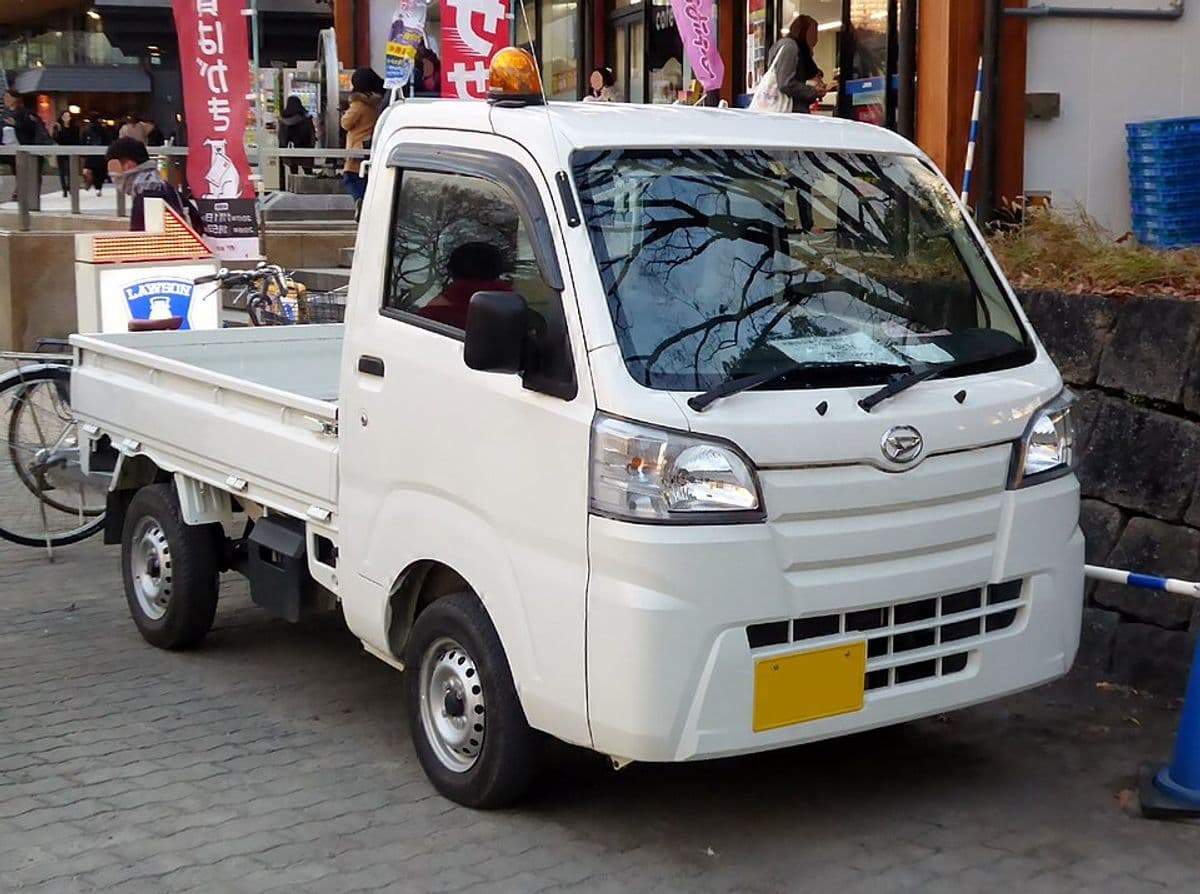
Daihatsu Hijet
1960-Present
Louisiana humidity, Gulf salt air, and bayou parish roads mean you want the truck with the strongest AC and the simplest driveline. The Hijet handles tropical conditions better than the Honda models, and the 4WD variant runs sugarcane fields and crawfish ponds without complaint.