Kei Truck & Kei Car Laws in Arkansas (2026)
RestrictedArkansas registers kei trucks as farm vehicles and allows them on roads posted 55 mph or less, with interstates and higher speed routes off limits.
Are Kei Trucks Legal in Arkansas?
Yes, kei trucks are street legal in Arkansas with restrictions. Arkansas allows mini trucks (including kei trucks) to be registered and operated on public roads with speed limits of 55 mph or less. However, they must be registered as Class Eight farm vehicles and cannot be used on interstate highways. Wondering how they compare to a side-by-side? Read our kei truck vs UTV comparison.
According to Arkansas Code § 27-14-726, mini trucks can be licensed and registered for operation on public roads provided they meet specific requirements. The key restrictions are:
- Speed limit restriction: Mini trucks shall not be operated on roads with speed limits exceeding 55 mph
- Interstate prohibition: Mini trucks cannot be operated on interstate highways
- Registration requirement: Must be registered as a Class Eight farm vehicle
- Driver's license: Driver must have a valid Arkansas driver's license
Popular kei truck models like the Suzuki Carry, Honda Acty, Daihatsu Hijet, and Mitsubishi Minicab can be registered under this framework, making Arkansas relatively friendly to kei truck owners compared to states with complete prohibitions.
The NHTSA 25-year import rule exempts vehicles 25 years or older from EPA emissions and DOT safety standards, which applies to most kei trucks currently being imported. For more details, check our complete guide to importing a kei truck from Japan. Arkansas recognizes these federal exemptions and has created a specific legal pathway for farm vehicle registration.
How to Register a Kei Truck in Arkansas
Registering a kei truck in Arkansas requires following the Class Eight farm vehicle registration process. Here's the complete guide:
Step 1: Verify Eligibility Your kei truck must meet Arkansas's definition of a mini-truck:
- Designed for off road use
- 660cc engine or smaller (typical for kei trucks)
- Used for farm purposes or farm-adjacent activities
- Meets basic safety equipment requirements
Step 2: Gather Required Documents
- Original title or Manufacturer's Certificate of Origin
- Bill of sale with purchase price
- U.S. Customs and Border Protection Entry Summary (CBP Form 7501) if imported
- Valid Arkansas driver's license with Arkansas address
- Proof of insurance meeting Arkansas minimum requirements
- Affidavit stating the vehicle is used exclusively for farm purposes (required by Arkansas Code § 27-14-726)
Step 3: Complete the Affidavit Arkansas law requires an affidavit stating:
- The vehicle is being used exclusively for farm purposes
- The mini-truck meets the requirements of § 27-14-726
- You understand the operational restrictions (no interstates, 55 mph roads only)
Step 4: Obtain Insurance Get insurance coverage meeting Arkansas minimum requirements before visiting the Revenue Office. Not all insurers cover kei trucks, so call ahead. For more guidance, see our kei truck insurance guide.
Step 5: Visit a State Revenue Office Take your documents to your local Arkansas Department of Finance and Administration Revenue Office. Inform them you're registering a mini-truck as a Class Eight farm vehicle.
Step 6: Pay Registration Fees The fees for registering and licensing a mini-truck are the same as for registering a Class Eight farm vehicle:
- Title fee: $10
- Class Eight farm vehicle registration: $15-$20 annually
- County fees: Varies by county (typically $1-$5)
Total registration costs typically range from $26 to $35 annually.
Step 7: Receive License Plate You'll receive a standard Arkansas farm vehicle license plate. This must be displayed on the rear of your kei truck at all times.
Renewal: Arkansas farm vehicle registrations must be renewed annually. Renewal can typically be done by mail or online through MyDMV Arkansas once initially registered.
Important Note: While the law requires farm use affidavit, enforcement varies by county. Some rural counties are more lenient about the "farm purposes" requirement, while others strictly enforce it. Contact your local Revenue Office for clarification on local interpretation.
Restrictions and Limitations
Arkansas imposes specific restrictions on mini truck operation. Understanding these limitations is critical to avoid citations:
Speed Limit Restriction: Mini trucks shall not be operated on roads with speed limits exceeding 55 mph. This means:
- ✓ City streets (typically 25-45 mph)
- ✓ Rural roads (typically 45-55 mph)
- ✓ State highways with 55 mph limits
- ✗ Highways with 60+ mph limits
- ✗ Any interstate (regardless of speed limit)
Interstate Highway Ban: According to Arkansas Code § 27-14-726, "a mini-truck shall not be operated on an interstate highway." This is an absolute prohibition regardless of speed limit or other factors.
Controlled Access Highways: Beyond interstates, mini trucks face restrictions on controlled-access highways. These are limited-access roads designed for high-speed travel.
Farm Use Requirement: Technically, registration requires an affidavit stating farm use. While enforcement varies, you should be prepared to demonstrate agricultural, horticultural, or farm-related purposes if questioned.
Safety Equipment Required: Your kei truck must have:
- Working headlights and taillights
- Turn signals (front and rear)
- Brake lights
- Mirrors (rearview and side)
- Windshield and windshield wipers
- Horn
- Seat belts
- Proper tires in good condition
Most imported kei trucks meet these requirements, but verify everything is functional before registration.
Driver's License: A valid Arkansas Class D driver's license is required. No special endorsement is needed.
Insurance: Arkansas requires minimum liability insurance (see Insurance Requirements section below).
Insurance Requirements
Arkansas requires all motor vehicles operated on public roads to carry minimum liability insurance, including kei trucks registered as farm vehicles.
Minimum Coverage Required:
- $25,000 bodily injury liability per person
- $50,000 bodily injury liability per accident
- $25,000 property damage liability
Insurance Companies That May Cover Kei Trucks:
Finding insurance for kei trucks can be challenging. These companies have been reported to provide coverage:
- State Farm: Sometimes covers kei trucks registered as farm vehicles
- Progressive: May offer coverage for specialty vehicles
- American Modern: Specializes in unusual and collector vehicles
- Hagerty: Known for classic and imported vehicle coverage, though may have usage restrictions
- Farm Bureau Insurance: May cover if you have a farm policy
Getting Insured: When calling for quotes, emphasize:
- The vehicle is legally registered in Arkansas as a Class Eight farm vehicle
- It's over 25 years old (if applicable) and NHTSA-exempt
- It meets all Arkansas safety requirements
- You understand the 55 mph road restriction
Insurance Challenges: Some insurers decline kei trucks due to:
- Right-hand drive configuration
- Lack of modern safety features
- Unfamiliarity with the vehicle type
- Concerns about parts availability for repairs
Insurance Costs: Expect to pay $400-$900 annually for basic liability coverage, depending on your driving record, location, and whether you bundle with other policies.
Proof of Insurance: You must provide proof of insurance when registering and must carry proof at all times while operating your kei truck on Arkansas roads.
Inspection and Emissions
Arkansas is one of the most lenient states regarding vehicle inspections, which benefits kei truck owners.
No Annual Safety Inspection: Arkansas does not require annual vehicle safety inspections. According to Act 974 of 1997, the state removed mandatory vehicle inspection requirements. This means once your kei truck is registered, you don't need periodic inspections to renew registration.
No Emissions Testing: Arkansas does not require emissions testing for any vehicles, including kei trucks. This is a significant advantage since many kei trucks would struggle to meet strict emissions standards found in states like California.
Initial VIN Verification: For vehicles with out-of-state titles (including imported vehicles), Arkansas requires VIN verification to ensure the vehicle hasn't been stolen or reported as salvage. This is a one-time requirement during initial registration.
Salvage/Branded Title Inspection: If your kei truck has a salvage, rebuilt, or branded title, Arkansas requires inspection and certification before it can be registered. Most imported kei trucks come with clean titles and avoid this requirement.
Border Inspection for Imports: When importing a kei truck through U.S. Customs, federal inspection occurs at the port of entry. Once you have your CBP Form 7501 and the vehicle is released, Arkansas doesn't require additional inspection beyond VIN verification.
Ongoing Compliance: While Arkansas doesn't require inspections, your kei truck must remain in compliance with safety equipment requirements. Law enforcement can cite you for non-functional lights, missing mirrors, bald tires, or other safety violations.
Advantages for Kei Truck Owners: The lack of annual inspection requirements means:
- Lower ongoing costs
- Less hassle at renewal time
- No worries about older vehicles failing emissions tests
- Easier maintenance schedules
Tips from Arkansas Kei Truck Owners
Arkansas has a growing kei truck community, especially in rural areas. Here's what experienced owners recommend:
Farm Use Interpretation Varies by County: Some rural Arkansas counties interpret "farm use" broadly (including property maintenance, hauling supplies to rural homes, etc.), while others are stricter. Ask your local Revenue Office how they interpret the requirement before registering.
Know Your Road Speed Limits: Download a GPS app that displays speed limits, or use Google Maps to check routes before driving. Accidentally driving on a 60 mph highway can result in citations.
Popular in Northwest Arkansas: The Northwest Arkansas region (Bentonville, Fayetteville, Rogers) has a thriving kei truck community with good parts and service availability.
Join Arkansas Kei Truck Groups: Connect with other owners on Facebook groups and the r/keitruck subreddit to share experiences, find mechanics, and learn about local enforcement practices.
Plan Routes Carefully: Use mapping software to avoid interstates and high-speed highways. Many Arkansas back roads and scenic routes are perfect for kei trucks and stay within the 55 mph restriction.
Consider Them for Homestead Use: Arkansas kei truck owners often use them for homesteading, small farms, firewood hauling, and property maintenance. Their compact size and utility make them ideal for these purposes.
Parts and Service: Finding mechanics familiar with kei trucks can be challenging in Arkansas. Many owners learn basic maintenance or connect with Japanese vehicle specialists in nearby larger cities.
Load Capacity: Don't exceed your kei truck's rated capacity (typically 770-1,100 lbs depending on model). Arkansas roads include many hills, and overloading affects braking and handling safety.
Find verified kei truck dealers in Arkansas in our dealer directory.
Frequently Asked Questions
Can I drive my kei truck on Arkansas interstate highways?
No. Arkansas Code § 27-14-726 explicitly prohibits mini trucks from operating on interstate highways. This is a clear restriction regardless of other factors.
What counts as "farm purposes" for registration?
Arkansas law requires an affidavit stating farm use, but interpretation varies. Generally accepted uses include agricultural operations, livestock care, timber management, property maintenance on rural land, and similar activities. Contact your local Revenue Office for guidance.
Can I use my kei truck for daily commuting in Little Rock?
As long as your route stays on roads with 55 mph or lower speed limits and avoids interstates, yes. Many city streets and local roads fall within this restriction, making kei trucks viable for urban and suburban use.
Do I need a special license to drive a kei truck in Arkansas?
No. A standard Arkansas Class D driver's license is sufficient. No special endorsement or commercial driver's license is required.
What if I get pulled over in my kei truck?
If properly registered with current tags, valid insurance, and you're operating within the restrictions (no interstates, roads 55 mph or less), you should have no issues. Keep your registration and insurance documentation accessible.
Can I register a kei truck if I don't own a farm?
The law technically requires an affidavit of farm use, but enforcement varies significantly by county. Some Revenue Offices interpret "farm purposes" broadly, while others are strict. Your best option is to contact your local Revenue Office to understand their specific requirements.
Are there any cities in Arkansas that have banned kei trucks?
As of 2026, no Arkansas cities have enacted specific bans on properly registered kei trucks. However, always check local ordinances, and be aware that some private communities or HOAs may have restrictions.
Useful Links
- MyDMV Arkansas - Official DMV website
- Arkansas Code § 27-14-726 - Mini-truck statute
- Arkansas Vehicle Registration Guide - Registration information
- Arkansas Department of Finance and Administration - State revenue office
- NHTSA Vehicle Importation Guidelines - Federal import rules
- Hagerty Insurance - Specialty vehicle insurance
- r/keitruck Community - Owner discussions and advice
Arkansas offers a reasonable middle ground for kei truck enthusiasts, allowing road use with sensible restrictions. The 55 mph speed limit and interstate prohibition are manageable for most owners, especially those in rural areas or using kei trucks for property maintenance and local hauling. The lack of emissions testing and annual inspections also makes Arkansas more accessible than many states. If you're comparing state laws or planning to relocate, check out our complete state-by-state guide. If you're near the border, you may also want to check kei truck laws in Missouri, Oklahoma, Tennessee, Mississippi, Louisiana, and Texas, because each state has different rules for kei vehicles.
What you can do in Arkansas
Kei trucks are legal here under specific limits. Here are the three moves that matter.
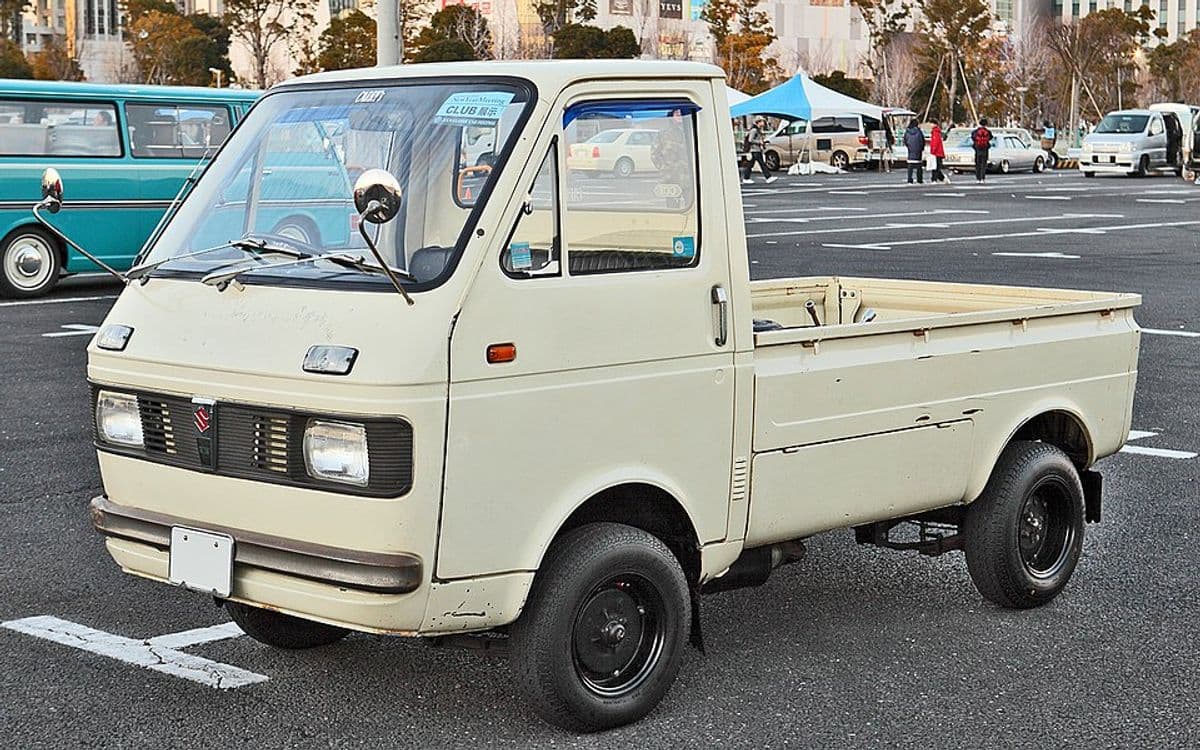
Suzuki Carry
1969-Present
Ozark farms, Delta heat, and the 55 mph cap suit the Carry exactly. Cheapest factory dump bed in kei, deepest parts pipeline for AC and cooling parts, and the 4WD variant earns its keep on red dirt and gravel. Farm plate friendly truck for a farm plate state.