Kei Truck & Kei Car Laws in Michigan (2026)
LegalMichigan Department of State reversed its ORV only policy in November 2024 and now issues on road titles to kei truck owners statewide.
Are Kei Trucks Legal in Michigan?
Yes, kei trucks are legal in Michigan as of November 2024! The Michigan Department of State reversed its previous restrictive policy, now allowing mini trucks and kei vehicles to receive on road titles and registrations. This represents a major victory for Michigan kei truck owners who had previously been forced to register their vehicles as off road vehicles (ORVs).
In November 2024, Michigan joined Massachusetts and other states in recognizing that legally imported kei trucks deserve street legal status. See our complete state-by-state guide for details. For more details, check our complete guide to importing a kei truck from Japan. The state had previously classified mini trucks and kei vehicles as ORVs, issuing off road titles only. Now, Michigan determines that these vehicles qualify for standard on road registration.
The Michigan Department of State has proactively mailed new on road titles to affected owners, along with instructions to return previously issued ORV titles. If you had a mini truck with a previous street legal registration through Michigan, your registration validity period has been restored.
This policy aligns with the federal NHTSA 25-year import rule, which allows vehicles 25 years or older to be imported and registered regardless of their compliance with U.S. safety standards. Popular models like the Suzuki Carry, Honda Acty, and Daihatsu Hijet are now fully legal for Michigan roads.
However, like all states, Michigan cannot override the federal restriction prohibiting kei trucks from interstate highway use.
How to Register a Kei Truck in Michigan
Registering a kei truck in Michigan now follows the standard vehicle registration process through the Michigan Secretary of State.
Required Documents:
- Certificate of title or manufacturer's certificate of origin
- Bill of sale showing purchase price
- Federal customs clearance documents (Form 3520-1 and HS-7 declaration for imports)
- Proof of Michigan auto insurance (no-fault coverage required)
- Valid Michigan driver's license or state ID
- Proof of Michigan residency
Registration Process:
-
Obtain Insurance: Michigan requires no-fault auto insurance before you can register any vehicle. For more guidance, see our kei truck insurance guide. You must provide proof of coverage meeting state minimum requirements.
-
Complete Application: Fill out the Application for Vehicle Title (Form TR-11L for assigned vehicles, or appropriate form for your situation).
-
Visit Secretary of State Office: Bring all documents to your local Secretary of State branch office. Some services may be available online for renewals, but initial kei truck registrations typically require in-person processing.
-
Pay Fees and Taxes: Michigan registration fees vary based on vehicle weight and value.
-
Receive Title and Plates: You'll receive a Michigan certificate of title, registration, and license plates.
If You Previously Had an ORV Title:
Michigan has been mailing new on road titles to owners who previously received ORV titles. If you're in this situation:
- Watch for mail from the Michigan Department of State
- Return your old ORV title using the pre-addressed, stamped envelope provided
- If your vehicle had a previous street legal registration, it automatically reverts to the previous validity period
- Contact the Secretary of State if you haven't received your new title
Costs Breakdown:
- Title fee: $15
- Registration fee: Varies based on vehicle value and weight (typically $100-$150)
- Sales tax: 6% of purchase price
- Plate fee: $5 (transfer) or $10 (new)
Important Notes:
- Michigan does not require safety inspections for passenger vehicles
- No emissions testing for vehicles 25+ years old
- Kei trucks are typically registered as passenger vehicles unless used commercially
Restrictions and Limitations
While Michigan now allows kei trucks on most roads, there are important restrictions to understand:
Highway Restrictions:
- No interstate highway use (I-75, I-94, I-96, I-69, etc.) - federal restriction
- US highways (US-23, US-131, US-127) are generally permitted
- State routes (M-roads) are accessible
- Local roads and streets fully permitted
Speed Considerations:
- Most kei trucks have a top speed of 50-65 mph
- Use caution on highways where traffic regularly exceeds your vehicle's capabilities
- Michigan's rural highways often have 55-70 mph speed limits
- Consider using parallel county roads for safer travel
Equipment Requirements:
Michigan law requires all registered vehicles to have:
- Working headlights and taillights
- Turn signals (amber front, red rear)
- Brake lights
- Horn
- Windshield with functioning wipers
- At least one rearview mirror (driver's side)
- Seat belts for driver and all passengers
- License plate light
Many Japanese kei trucks require modifications to meet Michigan standards:
- Turn signal upgrades (Japanese signals may not meet U.S. color/position requirements)
- DOT-compliant lighting
- Ensure all required safety equipment functions properly
Vehicle Classification:
Under Michigan Compiled Law 257.217i, mini trucks are defined and regulated. Your kei truck will typically be registered as:
- Passenger vehicle - personal use
- Commercial vehicle - business use (requires commercial plates)
Winter Considerations:
Michigan winters are harsh. Kei truck considerations:
- 4WD models (Suzuki Carry 4WD, Honda Acty 4WD) handle snow well
- Lightweight design means less traction than full size vehicles
- Factory heaters are adequate but not as powerful as U.S. trucks
- Use winter tires for best performance
- Consider rust protection, because Michigan's road salt is aggressive
Insurance Requirements
Michigan has unique auto insurance requirements, including mandatory no-fault coverage. Kei trucks must comply with these laws.
Minimum Required Coverage:
- Personal Injury Protection (PIP) - Michigan's no-fault coverage (amount varies based on choice)
- Property Protection Insurance (PPI) - $1 million minimum
- Residual bodily injury and property damage liability - $50,000/$100,000/$10,000
Michigan No-Fault Reform:
As of 2019, Michigan allows drivers to choose their PIP coverage level:
- Unlimited PIP (traditional coverage)
- $500,000 PIP
- $250,000 PIP
- $50,000 PIP (if you have qualified health insurance)
- PIP opt-out (only if you have Medicare)
Finding Insurance:
Insuring a kei truck in Michigan can be more challenging than standard vehicles:
Companies That May Cover Kei Trucks:
- Hagerty - Specialty and collector vehicle insurance; frequently mentioned by kei truck owners
- Progressive - Some agents handle kei trucks
- State Farm - Success varies by local agent
- Farm Bureau Insurance - Michigan-based, may be flexible for rural/farm use
- Auto-Owners Insurance - Another Michigan company worth contacting
Tips for Getting Coverage:
- Call agents directly rather than using online quotes
- Explain that the vehicle is federally legal under the 25-year import rule
- Have your VIN/chassis number, import documentation, and photos ready
- Be prepared to provide a vehicle appraisal for specialty coverage
- Consider stated value or agreed value policies
Expected Costs:
Michigan auto insurance rates are among the highest in the nation. Expect:
- $600-$1,500+ per year depending on coverage choices
- Lower PIP limits reduce costs
- Rural areas typically have lower rates than Detroit metro
- Your driving record and location significantly impact rates
Inspection and Emissions
Michigan does not require periodic safety inspections or emissions testing for passenger vehicles, which simplifies kei truck ownership.
No Safety Inspections:
- Unlike Massachusetts or Maine, Michigan doesn't mandate annual inspections
- Vehicle safety is the owner's responsibility
- Law enforcement can cite you for equipment violations if stopped
No Emissions Testing:
- Michigan discontinued mandatory emissions testing in 2012
- Vehicles 25+ years old were always exempt when testing existed
- No smog check required for registration or renewal
Equipment Compliance:
While there's no formal inspection, your kei truck must still comply with Michigan equipment laws:
- All lights must function properly
- Brakes must be in good working order
- Tires must have adequate tread (2/32" minimum)
- Windshield cannot have cracks in driver's vision area
- Horn must be functional
- Exhaust system cannot be excessively loud or modified illegally
Self-Inspection Tips:
Since Michigan doesn't inspect, responsible owners should:
- Regularly check all lights and signals
- Monitor tire condition and pressure
- Test brakes frequently
- Keep windshield in good condition
- Maintain exhaust system
- Ensure seat belts function properly
Import Compliance:
When importing a kei truck to Michigan, ensure:
- Federal importation paperwork is complete and accurate
- Vehicle meets 25-year age requirement
- Customs forms (3520-1 and HS-7) are properly filed
- VIN or chassis number is verifiable
Tips from Michigan Kei Truck Owners
Michigan has a growing kei truck community, particularly in rural areas and the Upper Peninsula. Here's what local owners recommend:
Finding Mechanics:
- Independent import shops are more familiar with kei trucks than dealerships
- Japanese auto specialists can handle maintenance and repairs
- Many parts are interchangeable with Japanese market models
- Online parts sources like Amayama Trading ship to Michigan
Winter Driving:
- 4WD kei trucks handle Michigan winters surprisingly well
- Use quality winter tires, because all-seasons aren't enough
- Lightweight means you can get stuck easier than full size trucks
- Keep recovery gear (shovel, traction mats) in the truck
- Remote starters are a worthwhile addition for cold mornings
Rural Michigan:
- Upper Peninsula residents love kei trucks for hunting, camping, and property work
- Northern Michigan farms use them for chores and field work
- Kei trucks excel on two-tracks and forest trails (legally, since they're road-registered)
- Great for maple syrup operations, Christmas tree farms, and orchards
Urban Use:
- Detroit and surrounding cities have active JDM import communities
- Ann Arbor and East Lansing (college towns) embrace kei trucks
- Grand Rapids has a growing enthusiast scene
- Parking is incredibly easy compared to full size trucks
Advocacy Success:
- Michigan reversed course due to community pressure and advocacy
- Shows the value of contacting legislators and organizing
- Join Michigan JDM import groups to stay informed about regulatory changes
Best Uses in Michigan:
- Farm and property maintenance
- Hunting and outdoor recreation
- Small business delivery and service work
- Campus and facility operations
- Snow plowing (with appropriate attachments)
- Off-grid cabin transportation
Find verified kei truck dealers in Michigan in our dealer directory.
Frequently Asked Questions
Can I drive my kei truck on I-75 or other Michigan interstates?
No. Federal law prohibits kei trucks from interstate highways nationwide. This includes I-75, I-94, I-96, I-69, and all other interstates. You can use US highways (US-23, US-131) and state roads (M-routes), but avoid interstates.
Do I need a special license to drive a kei truck?
No. A standard Michigan operator's license (Class D) is sufficient. Kei trucks are four wheeled motor vehicles similar to cars, so no special endorsements or commercial licenses are needed for personal use.
Can I use a kei truck for my business?
Yes. Register with commercial plates if you're using the truck for business purposes (landscaping, contracting, delivery, etc.). Ensure your insurance covers commercial use. Many Michigan small business owners use kei trucks for local operations.
What if I still have an ORV title for my kei truck?
Contact the Michigan Secretary of State immediately. The state has been mailing new on road titles to affected owners. If you haven't received yours, visit your local Secretary of State office with your current ORV title and request an on road title conversion.
Are kei trucks good in Michigan snow?
4WD models handle snow remarkably well due to their lightweight design and good weight distribution. However, they're not heavy enough to plow through deep snow like full size trucks. Use winter tires, drive cautiously, and keep recovery gear handy. Many Upper Peninsula residents swear by their kei trucks for winter use.
Can I register a kei truck I bought from another state?
Yes. If you're bringing a kei truck from another state, re-register it in Michigan. Bring the out-of-state title, bill of sale, and import documentation to the Secretary of State. You'll need Michigan no-fault insurance before registration.
Do I need to modify my kei truck to make it legal?
Most kei trucks need minor modifications to meet Michigan equipment requirements, particularly lighting. Ensure your turn signals, headlights, and taillights meet U.S. standards (proper colors and positions). Some owners add DOT-compliant light assemblies. Since Michigan doesn't inspect, modifications aren't verified unless you're stopped by law enforcement.
Useful Links
- Michigan Secretary of State - Vehicle registration and titling authority
- Michigan Vehicle Registration Information - Registration processes and requirements
- Michigan No-Fault Insurance Guide - Auto insurance requirements
- Michigan Compiled Law 257.217i - Mini truck statutory definition
- NHTSA Vehicle Importation Guidelines - Federal import regulations
- Dirt Legal: Michigan Kei Update - Policy change details
- Hagerty Insurance - Specialty vehicle insurance
- r/keitruck Reddit Community - Owner discussions and advice
Michigan's reversal on kei truck restrictions makes it one of the Midwest's most kei friendly states. If you're exploring ownership in the Great Lakes region, compare our guides for Ohio, Indiana, and Wisconsin. If you're near the border, you may also want to check kei truck laws in Ohio, Indiana, and Wisconsin.
Where to actually buy one in Michigan
2 verified kei truck dealers in Michigan. Most handle import, titling, and delivery.
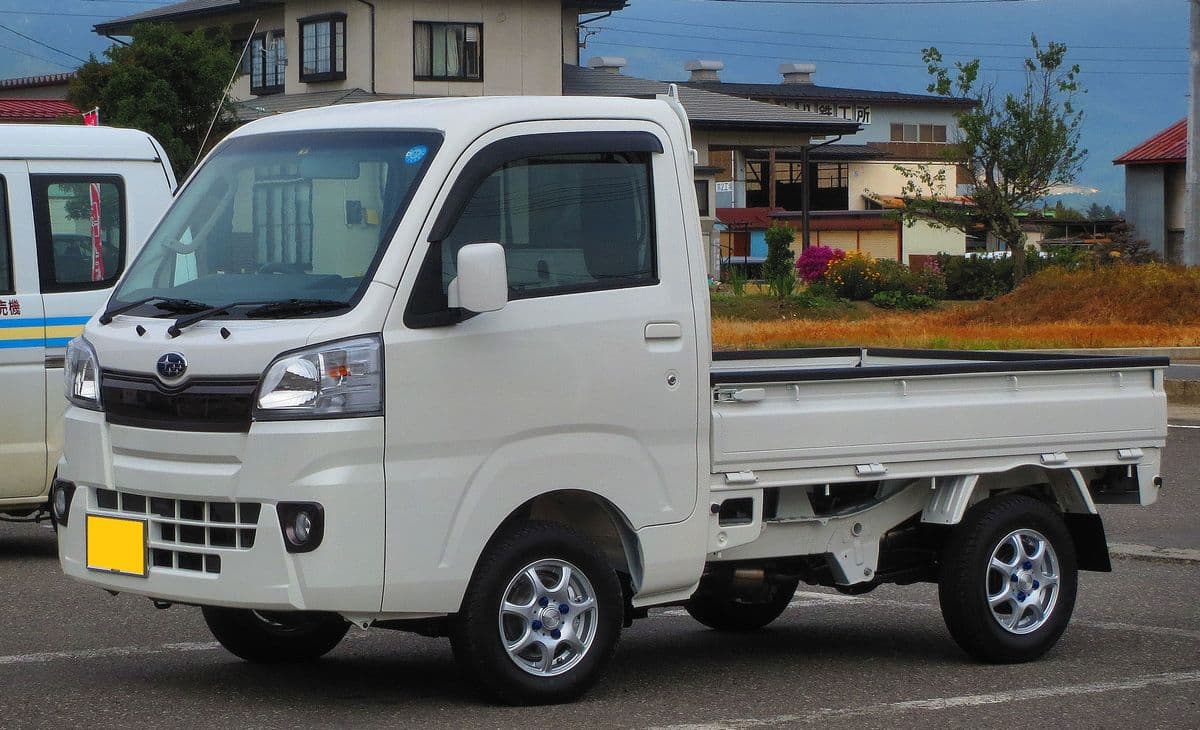
Subaru Sambar
1961-Present
Michigan road salt, Upper Peninsula winters, and lake effect snow demand 4WD with proper weight bias. The Sambar 4WD rear engine layout plants the drive tires when the road turns slick, and the supercharged variant has the torque for snow climb. Best snow rig in the kei lineup.
Across the state line
Get the weekly kei truck brief
Law changes, price drops, new models, and build inspiration. One email a week.