The 25-Year Import Rule Explained: Which Kei Trucks You Can Import and When
Everything you need to know about the federal 25-year import exemption: how it works, which kei trucks are eligible now, and what becomes legal each year.

Advertisement
TL;DR: Vehicles 25+ years old are exempt from US crash safety standards (FMVSS) and can be legally imported. The EPA gives a parallel exemption at 21 years. In 2026, that means any kei truck built before January 1, 2001 is eligible. You need Form HS-7 (NHTSA) and Form 3520-1 (EPA), plus a customs broker. Total import cost: $3,000-$6,000 on top of the vehicle price.
What Is the 25 year Import Rule?
Under United States federal law, specifically 49 USC Section 30112, any motor vehicle must comply with all applicable Federal Motor Vehicle Safety Standards (FMVSS) before it can be legally imported and registered for road use. Japanese kei trucks were never built to meet these standards. They lack side impact protection, airbags, and crash test ratings that FMVSS demands. Under normal circumstances, that would make them permanently ineligible for import.
But there is an exemption. Vehicles that are at least 25 years old from their date of manufacture are exempt from all FMVSS requirements. The logic behind this carve out is straightforward: the federal government treats vehicles of that age as collector or historical items rather than daily transportation. Once a vehicle crosses the 25 year threshold, NHTSA no longer requires it to meet any safety standard, and it can be lawfully imported into the United States without modifications or the involvement of a Registered Importer.
This single exemption is the legal foundation that has made the entire kei truck import market possible. It has driven a 300% surge in kei truck imports since 2019, with over 30,000 units now operating on American roads. Without it, bringing Japanese market minitrucks into the country for road use would require prohibitively expensive crash testing and engineering modifications.
How the Rule Works: Date of Manufacture vs. Model Year
One of the most common points of confusion is whether the 25 year clock starts from the model year or the actual date of manufacture. The answer is the date of manufacture, not the model year.
This distinction matters because Japanese manufacturers frequently begin production of a new model year months before the calendar year changes. A truck with a model year of 2001 may have actually been manufactured in October 2000. In that case, the vehicle becomes eligible for import 25 years from October 2000, not from January 2001.
The date of manufacture is typically stamped on the vehicle's compliance plate or recorded in the Japanese export certificate. When importing from Japan, the export certificate (known as the Export Certificate of Cancellation, or ECC) will list the month and year of first registration in Japan, which closely tracks manufacture date. NHTSA uses the manufacture date printed on the vehicle itself as the definitive reference.
This means that eligibility does not flip on January 1 each year for an entire model year. Instead, individual vehicles become eligible on a rolling basis as each one hits its 25th anniversary. A truck built in March 2001 becomes eligible in March 2026. One built in November 2001 becomes eligible in November 2026.
What's Eligible Right Now (2025-2026)
As of early 2025, any kei vehicle manufactured in or before early 2000 is eligible for import under the 25 year exemption. By the end of 2025, vehicles manufactured through December 2000 will all be clear. Throughout 2026, vehicles manufactured in 2001 will progressively become eligible on a month by month basis.
This is a particularly interesting window for kei truck buyers. The late 1990s and early 2000s saw significant updates across all the major kei truck platforms. Many of the trucks now becoming eligible feature fuel injection, improved suspension geometry, and updated cab designs compared to the earlier models that dominated imports over the past several years. Our 2026 buying guide to the best fuel injected kei trucks covers specs, auction pricing, and which models suit different use cases. If you are considering a purchase, also review our guide on things to check before buying to make sure you know what to look for.
The EPA 21-Year Exemption
NHTSA is not the only federal agency with jurisdiction over vehicle imports. The EPA also regulates imported vehicles and engines, enforcing emissions compliance under the Clean Air Act. However, the EPA's exemption threshold is shorter: vehicles that are 21 years or older from their date of manufacture are exempt from EPA emissions requirements.
In practical terms, this means a vehicle becomes EPA exempt before it becomes NHTSA exempt. A truck manufactured in 2001 clears the EPA at 21 years (2022) but does not clear NHTSA until 25 years (2026). The EPA exemption alone is not sufficient to legally import and title a vehicle for road use. You need both exemptions, and since the NHTSA 25 year rule is the longer waiting period, it is the binding constraint in nearly every case.
That said, the EPA paperwork is still required at the time of import. When your vehicle clears US Customs and Border Protection, you will need to file EPA Form 3520-1 declaring the vehicle exempt under the 21-year provision. This is a separate form from the NHTSA HS-7 declaration, and both must be submitted at the port of entry.
Year by Year Eligibility Chart
The following table shows which vehicles become eligible under the 25 year rule each calendar year, along with notable kei truck models from those production years.
| Calendar Year | Eligible: Manufactured In or Before | Notable Kei Trucks Becoming Eligible |
|---|---|---|
| 2024 | 1999 | Suzuki Carry (DC51T/DD51T), Honda Acty (HA3/HA4), Daihatsu Hijet (S110P), Subaru Sambar (KS3/KS4) |
| 2025 | 2000 | Suzuki Carry (DA52T), Daihatsu Hijet (S200P/S210P), Mitsubishi Minicab (U61T/U62T) |
| 2026 | 2001 | Honda Acty (HA6/HA7), Suzuki Carry (DA63T early production), Subaru Sambar (TT1/TT2) |
| 2027 | 2002 | Daihatsu Hijet (S200P/S210P late), Suzuki Carry (DA63T), Mitsubishi Minicab (U61T/U62T), Daihatsu Copen (L880K, first year) |
| 2028 | 2003 | Subaru Sambar (TT1/TT2), Honda Acty (HA6/HA7), Daihatsu Hijet (S200P) |
| 2029 | 2004 | Suzuki Carry (DA63T), Mitsubishi Minicab (U71T/U72T), Daihatsu Hijet (S200P/S210P) |
| 2030 | 2005 | Daihatsu Hijet (S200P/S210P), Honda Acty (HA6/HA7), Subaru Sambar (TT1/TT2) |
Keep in mind that the table simplifies by calendar year. In reality, as discussed above, eligibility is determined by the exact month and year of manufacture for each individual vehicle.
Which Kei Truck Models Are Newly Eligible
The 2000 and 2001 model years represent a sweet spot for kei truck imports. Here is a brief look at the major models entering eligibility during 2025 and 2026.
Suzuki Carry (DA52T/DA62T): The early 2000s Carry models are among the most popular kei trucks worldwide. These trucks benefited from Suzuki's updated F6A and K6A engines, offering better fuel economy and reliability compared to their predecessors. Learn more about the full Carry lineup on our Suzuki Carry model page.
Honda Acty (HA6/HA7): The sixth generation Acty, produced from 1999 to 2009, is now entering its eligibility window. These are mid engine, rear wheel drive trucks with Honda's E07Z engine, and they have earned a strong reputation for build quality and driving dynamics. See our detailed breakdown on the Honda Acty model page.
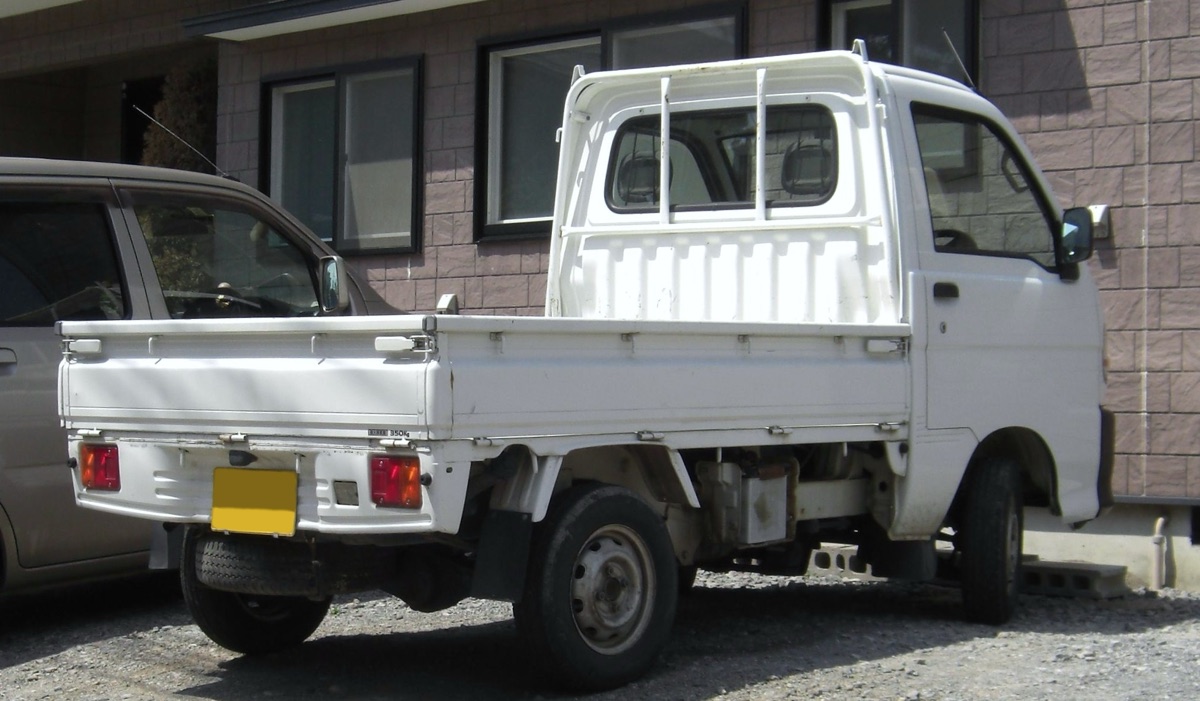
Daihatsu Hijet (S200P/S210P): The S200-series Hijet launched in 1999 and brought meaningful improvements in cab space, payload, and ride comfort. The S210P variant adds four wheel drive. Details on these models are available on our Daihatsu Hijet page. The same generation includes the S200W and S210W Deck Van, a four seat crew cab variant that clears the 25 year line month by month through 2029, covered in our Hijet Deck Van buying guide.
Subaru Sambar (TT1/TT2): The Sambar is the only kei truck with a rear engine, rear wheel drive layout (or all wheel drive in TT2 form), giving it a unique weight distribution that many owners prefer. The TT1/TT2 generation is well regarded for its supercharged EN07 engine option. Read more on our Subaru Sambar page.
Mitsubishi Minicab (U61T/U62T): Mitsubishi's entry in the kei truck segment is often overlooked, but the U61T/U62T generation is a competent and affordable option. These trucks are widely available in Japanese vehicle inventory at competitive prices. Our Mitsubishi Minicab page covers the full model history.
How to Verify a Vehicle's Age
Before purchasing a kei truck for import, you must confirm its date of manufacture to ensure it qualifies under the 25 year rule. There are several ways to do this.
Japanese Export Certificate (ECC): When a vehicle is deregistered in Japan for export, the Japanese government issues an Export Certificate of Cancellation. This document lists the date of first registration, vehicle identification number, engine number, and other identifying details. Any reputable Japanese vehicle importer will provide this document as part of the sale.
Vehicle Identification Number (VIN) Decoding: Japanese kei trucks use a chassis number rather than a 17-digit VIN. The chassis number encodes the model code and a production serial number, but it does not directly encode the month and year of manufacture the way a standard North American VIN does. You will need to cross reference the chassis number with manufacturer records or rely on the compliance plate.
Compliance Plate / Build Plate: Most kei trucks have a metal plate on the firewall or door jamb that lists the date of manufacture. This is the date NHTSA will reference.
Auction Sheet Records: If the vehicle was purchased through a Japanese auction, the auction sheet will typically include the year of first registration. While this is not the same as the manufacture date, they are usually within a few months of each other.
When in doubt, work with a kei truck import service that can verify eligibility before you commit to a purchase. Getting this wrong means your vehicle could be seized at the port of entry.
The Import Process Overview
Once you have confirmed that a kei truck is eligible under the 25 year rule, the actual import process involves several steps: purchasing the vehicle in Japan, arranging ocean freight shipping, clearing US Customs, filing EPA and NHTSA declarations, and handling state level registration.
We have written a comprehensive walkthrough of every step in our how to import a kei truck guide. That guide covers documentation, shipping logistics, customs brokerage, and port pickup in detail. For a full breakdown of the Chicken Tax and how tariffs affect kei truck import costs in 2026, including the impact of the US Japan trade deal, see our tariff guide. You can also use our import cost calculator to estimate your total landed cost including shipping, duties, and state specific fees.
After clearing federal customs, you will need to register and title the vehicle at the state level, and arrange insurance for your new truck. Each state has different rules about kei truck registration, and some states are significantly easier than others. A dozen states still ban kei trucks from public roads entirely, even for 25 year old imports. Our state by state registration guide breaks down the requirements for all 50 states.
Common Mistakes
Importing a kei truck under the 25 year rule is legal and well established, but there are mistakes that trip people up repeatedly.
Miscalculating the date. The most expensive mistake is importing a vehicle that has not yet reached its 25th anniversary. NHTSA does not round up. If your truck was manufactured in June 2001, it is not eligible until June 2026. Importing it in May 2026 puts you in violation of federal law. The vehicle can be seized and you will be required to export it at your own expense.
Confusing model year with manufacture date. As discussed above, these are not the same thing. A 2001 model year truck built in late 2000 is eligible sooner than you might expect. Conversely, a 2000 model year truck actually manufactured in early 2001 would not be eligible until 2026.
Ignoring state requirements. Federal eligibility does not guarantee you can register the vehicle in your state. Some states require emissions testing, safety inspections, or restrict vehicles under certain weight or speed thresholds. Always check state level laws before purchasing.
Skipping the EPA paperwork. Even though the vehicle is exempt, you still need to file the EPA declaration form. Failing to do so will hold up your shipment at customs.
Buying without inspection. A 25 year old truck from Japan may have rust, worn components, or undisclosed damage. Before committing, read our guide on things to check before buying a kei truck.
What About Vehicles Under 25 Years?
If a kei truck is less than 25 years old, it cannot be imported under the age exemption. Your only legal options at that point are extremely limited.
You could attempt to import it through a Registered Importer (RI) who would modify the vehicle to meet all applicable FMVSS standards and have it tested. In practice, this is cost prohibitive for kei trucks. The engineering and testing costs would far exceed the value of the vehicle.
Some states allow off highway registration for vehicles that do not meet federal standards, permitting use on private land, farms, or certain rural roads. This is a state level provision and does not involve NHTSA at all. However, vehicles registered this way cannot legally be driven on public highways.
There is no workaround, no loophole, and no "show or display" exemption that applies to standard kei trucks. The 25 year rule is the pathway, and patience is the only strategy for newer models. If you are eyeing a truck manufactured in 2005, mark your calendar for 2030. That said, the political landscape is shifting. Trump's December 2025 announcement about approving kei trucks for US production has raised the possibility of a new regulatory classification, though as our video breakdown explains, meaningful change is still years away.
The good news is that the window moves forward every year, and the pool of eligible, high quality kei trucks continues to grow. The early 2000s models now entering eligibility are newer, better maintained, and more capable than the trucks that first kicked off the import trend. Browse our dealer directory to find importers near you, or check r/keitruck for community recommendations on trustworthy import services. It is a great time to be in the market.
Advertisement


