Subaru Sambar: Complete Guide
Overview & History
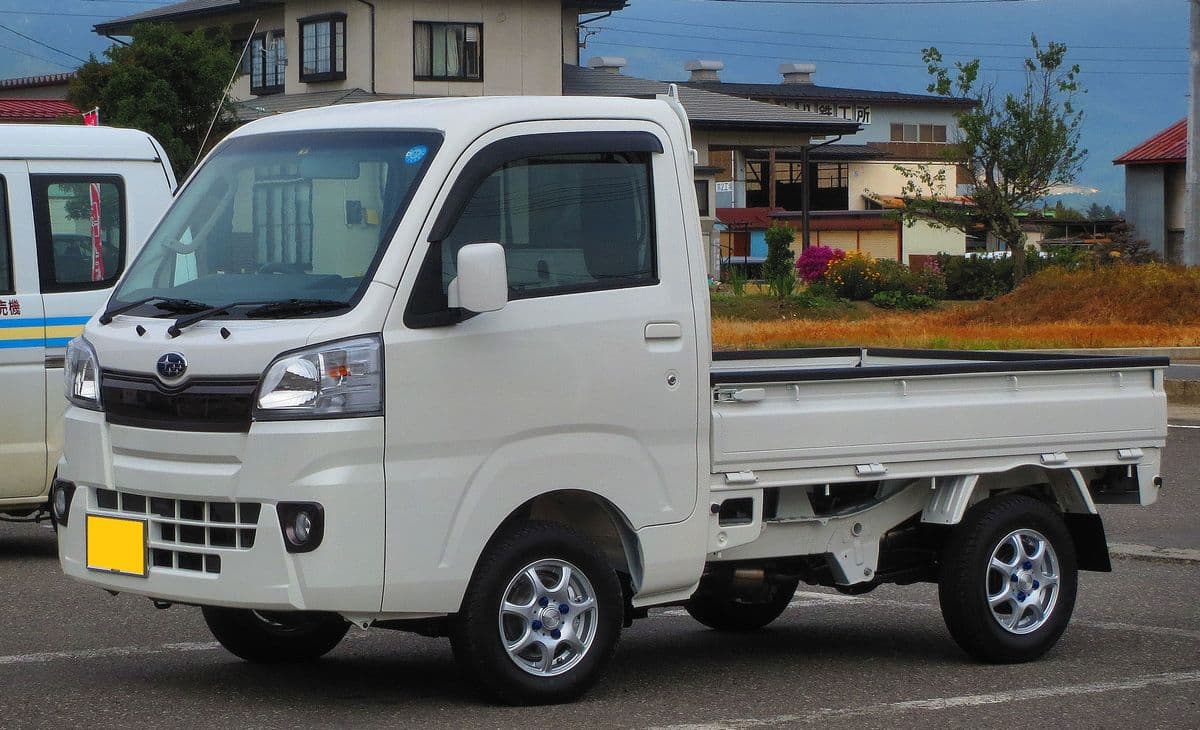
The Subaru Sambar stands apart from every other kei truck on the market for one reason: it is the only kei truck ever built with a four cylinder engine. While its competitors all use three cylinder powerplants, Subaru equipped the Sambar with the EN07 series inline four, giving it a smoothness and character that no other mini truck can match. Combined with a rear engine, rear wheel drive layout and fully independent suspension on supercharged models, the Sambar is often called the "Porsche of kei trucks" by enthusiasts, and the comparison is not entirely tongue in cheek.
Subaru introduced the first Sambar in 1961, and the nameplate ran through six generations of Subaru's own design before the company ended in house kei vehicle production in 2012. From 2012 onward, the Sambar name continues but on a rebadged Daihatsu Hijet platform, losing the four cylinder engine and rear engine layout that made the original special. The Sambar was designed to comply with Japan's kei vehicle regulations, which cap engine displacement at 660cc and restrict overall vehicle dimensions.
For US importers, the fifth generation (KS3/KS4, 1990-1998) and sixth generation (TT1/TT2, 1999-2012) are the relevant models. The fifth generation trucks are currently the most commonly imported, as they have passed the 25-year federal import threshold. Sixth generation trucks are just beginning to become eligible and represent an exciting opportunity for buyers willing to wait or source from states with less restrictive title laws.
Specifications
The Subaru Sambar's defining feature is its EN07 engine, a 658cc inline four cylinder unit. In naturally aspirated form, the EN07 produces 40-46 horsepower. The supercharged variant (EN07Y with a Roots type supercharger) produces 55-58 horsepower, making it one of the most powerful naturally breathing kei truck options available (the supercharged Sambar sits just below the 64 hp kei limit).
The rear engine layout places the EN07 behind the rear axle, beneath the bed. This gives the Sambar a unique rear weight bias that provides excellent traction on loose surfaces, particularly when the bed is unloaded. Combined with the available four wheel drive, the Sambar is arguably the most capable kei truck off road.
- Engine: 658cc EN07 inline-4-cylinder (SOHC)
- Power: 40-46 hp (NA), 55-58 hp (supercharged)
- Torque: 40-54 lb-ft
- Transmission: 5-speed manual or 3-speed automatic (ECVT on some later models)
- Drivetrain: RWD or part time 4WD with selectable low range
- Payload capacity: 770 lbs (350 kg)
- Bed dimensions: Approximately 77" L x 53" W
- Curb weight: ~1,600-1,850 lbs
- Fuel economy: 30-40 mpg
- Wheelbase: 73.4"
The supercharged Sambar models also featured fully independent rear suspension (four link independent versus the standard leaf springs), providing a markedly better ride quality that further distinguishes the Sambar from its competitors.
Pros & Cons
Pros
- Four cylinder smoothness: The EN07 revs smoother, produces less vibration, and sounds better than any three cylinder kei truck engine. The difference is immediately noticeable. The same EN07 engine family powered the Subaru Vivio RX-R, a supercharged kei hot hatch that proved just how much performance Subaru could extract from this four cylinder platform.
- Supercharged option: The factory supercharged models offer meaningfully more power than the naturally aspirated competition without the turbo lag associated with turbocharged alternatives.
- Rear engine traction: Excellent weight over the driven wheels, especially beneficial when driving unloaded on loose or slippery surfaces. This makes the Sambar a compelling option for farm work on hilly or muddy terrain.
- Independent rear suspension (supercharged models): A genuine ride quality advantage over the leaf spring setups on competitors like the Suzuki Carry and Honda Acty.
- Enthusiast appeal: The Sambar has a passionate fan base. Ownership is a community experience, with dedicated forums, meetups, and an active kei truck community on Reddit.
Cons
- Fuel economy: The four cylinder engine is slightly less fuel efficient than the three cylinder competition, particularly the supercharged models.
- Engine access: Like the Honda Acty's mid engine layout, the Sambar's rear engine placement makes routine maintenance less convenient. Accessing the engine requires working from under the truck or removing bed panels.
- Complexity: Four cylinders means more spark plugs, more valves, and a slightly more complex engine than three cylinder alternatives. The supercharger adds another maintenance item.
- Price premium: Sambar trucks, especially supercharged 4WD models, command significant premiums. They are among the most expensive kei trucks to buy. See our kei truck vs. pickup comparison for context on value.
- Parts sourcing: Subaru ceased in house kei production in 2012. While parts remain available through Subaru Japan and aftermarket suppliers, the pipeline is not as robust as Suzuki's.
- Weight: The four cylinder engine and additional equipment make the Sambar the heaviest kei truck, which partially offsets its power advantage.
Common Modifications
For a broader overview, see our guide to the best kei truck mods for off road use.
- Lift kits: 2-3 inch lift kits are available, though the rear engine layout requires careful attention to CV joint angles on 4WD models. Suppliers like Catuned offer Sambar specific kits. A Subaru Sambar 2 inch lift kit runs $400 to $600. For a full trail build walkthrough, see Forged 4x4's Sambar build.
- Exhaust upgrades: The four cylinder EN07 responds well to header and exhaust upgrades. The sound of a tuned Sambar at full song is genuinely enjoyable.
- Supercharger pulley swap: On supercharged models, a smaller supercharger pulley increases boost pressure and power output. This is a popular and relatively simple modification. A supercharger pulley upgrade kit runs $150 to $250.
- Tire and wheel upgrades: 13 to 14 inch all terrain tires are popular. The Sambar's rear weight bias means aggressive tread patterns work particularly well on the rear axle. Check our kei truck tire guide for the Sambar's exact stock sizes and upgrade recommendations. A set of all terrain tires in 145/80R12 runs $180 to $280 for four.
- Intercooler addition: Adding an air to air intercooler to the supercharged models reduces intake air temperatures and improves power consistency in hot weather.
- EV conversion: The Sambar's rear engine layout makes it one of the better kei trucks for an electric conversion. The BigTime crew swapped the EN07 for a NetGain Hyper9 making 120 HP and 162 lb ft of torque, with 80 to 120 miles of range from a 32.9 kWh battery pack.
- Subframe and skid plates: For off road use, aftermarket skid plates protect the exposed rear mounted engine from rock strikes and trail debris. A subframe and skid plate set runs $200 to $350.
Known Issues & Maintenance Tips
Before purchasing any Sambar, review our pre purchase inspection checklist for a full rundown of what to look for. For help tracking down replacement components, see our kei truck parts sourcing guide. For a real world long term ownership perspective, watch Peter Heng's 18 month, 30,000 mile Sambar KS4 review covering everything that breaks (and what does not) at daily driver mileage in the US.
- EN07 head gasket: This is the Sambar's Achilles heel. The EN07 engine is known for head gasket failures, a trait shared with Subaru's larger boxer engines. Watch for white exhaust smoke, coolant loss, and overheating. Replacement is labor intensive due to the engine location. OEM gasket sets from Amayama are a reliable source for genuine Subaru parts.
- Supercharger belt and bearings: The supercharger belt should be inspected every 20,000 km and replaced every 50,000 km. Supercharger bearing noise (whine at idle) indicates impending failure. Kei truck parts suppliers like Oiwa Garage stock replacement belts and rebuild kits.
- Rust: The Sambar is no more or less rust prone than its competitors, but the rear engine layout means the engine compartment collects road spray and salt. Inspect the rear subframe, engine bay, and bed floor carefully.
- ECVT transmission (avoid): Some later model Sambars were equipped with an ECVT (electronically controlled CVT). These units are fragile and expensive to repair. Strongly prefer the 5-speed manual or 3-speed conventional automatic.
- Valve adjustment: The EN07 uses mechanical lifters. Valve lash check and adjustment is due every 40,000 km.
- Oil changes: The EN07 holds approximately 2.8 liters of oil. Use 5W-30 and change every 5,000 km. Supercharged models benefit from more frequent changes (every 3,000-4,000 km). A 5 quart jug of 5W-30 synthetic runs $25 to $35 on Amazon.
- Cooling system: The rear engine layout means long coolant hose runs to the front mounted radiator. Inspect all hoses and clamps carefully, and replace any that show age cracking.
- Timing belt: The EN07 is an interference engine, meaning a broken timing belt will cause valve damage. Replace the timing belt every 100,000 km without exception. A Subaru EN07 timing belt kit runs $100 to $150.
Use parts diagrams on Megazip to look up part numbers before ordering. This ensures you get the exact component for your chassis code and model year.
Price Guide
Subaru Sambars carry a premium, particularly the desirable supercharged 4WD models:
- 1990-1998 naturally aspirated (2WD): $6,000 - $8,500
- 1990-1998 naturally aspirated (4WD): $8,500 - $12,000
- 1990-1998 supercharged (4WD): $12,000 - $18,000
- 1999-2001 models (any configuration): $14,000 - $20,000+
- Dump bed models: Add $2,000 - $4,000 premium
For a detailed head to head with its closest rival, see our Acty vs Sambar comparison. The "Porsche of kei trucks" label has driven up Sambar prices faster than any other model. Supercharged 4WD examples in clean condition regularly sell for $15,000+ and continue to appreciate. Cross-reference asking prices against Hagerty's valuation tools and recent auction results on Bring a Trailer to make sure you are paying a fair price. For a broader cost perspective, our kei truck vs. pickup comparison breaks down total ownership costs.
Insurance
Insurance for imported kei trucks like the Sambar can be tricky to arrange through standard carriers, since many mainstream insurers are unfamiliar with 660cc Japanese mini trucks. Hagerty specializes in collector and specialty vehicle coverage and is the most commonly recommended insurer in the kei truck community. They offer agreed value policies, which is important for a vehicle that is actively appreciating. Our kei truck insurance guide covers all the providers, costs, and policy types you need to know about.
Rates vary by state, so make sure you understand your state's registration and insurance requirements before purchasing. Our state by state registration and legality guide covers what you need to know.
Where to Buy
- Specialist importers: Companies like Japanese Classics, Sambar specific importer Rising Sun Imports, and Duncan Imports source Sambars regularly. Supercharged 4WD models sell quickly, so sign up for alerts. Browse our dealer directory for additional importers.
- Subaru enthusiast community: The Sambar has crossover appeal with the broader Subaru enthusiast community. Forums like NASIOC and Subaru specific Facebook groups occasionally list Sambars for sale.
- Japanese auctions: Search for chassis codes KS3, KS4 (fifth gen) and TT1, TT2 (sixth gen). Filter for "supercharged" or "SC" in the auction descriptions for the desirable blown models. You can also browse Japanese inventory on Goo-net Exchange to get a sense of what is available before committing to auction.
- Domestic resale: The secondary market for Sambars is smaller but active. Prices tend to be higher on the secondary market because sellers know the demand.
If you are considering importing directly from Japan, our how to import a kei truck guide walks through every step of the process from auction purchase to US delivery.
When purchasing a Sambar, a cooling system pressure test and compression test are essential. Head gasket issues are common enough that verifying engine health before purchase should be non negotiable.
Frequently Asked Questions
Frequently Asked Questions
Advertisement
Done Reading? Next Moves
Find verified dealers with Subaru Sambar inventory, or see how it stacks up against the alternatives.
Prices and Availability Change Weekly
Get new model guides, maintenance tips, and kei truck buying news. One email a week.
Related Articles

2026 Subaru Sambar Update: Smarter Safety, Same Hijet Under the Badge
Subaru updated the Sambar with expanded Smart Assist safety tech and a 9 inch infotainment screen. But it still skips the turbo the Hijet and Pixis get, and the real Sambars with the legendary EN07 four cylinder are just now becoming import eligible.

Best Kei Trucks to Import in 2026: The Fuel Injected Generation Has Arrived
2001 model year kei trucks are now import eligible, and they are the best generation yet. Fuel injection, power steering, AC, and timing chains. Here is every model worth buying at auction right now.

Honda Acty vs Subaru Sambar: Which Kei Truck Should You Buy?
The two most unique kei trucks go head to head. Honda's mid engine Acty versus Subaru's supercharged four cylinder Sambar. We compare specs, pricing, and which one deserves your money.