Kei Truck Auction Prices Fall 2026: What 1,948 Real Japanese Sales Reveal
The median kei truck hammered for ¥124,000 at Japanese auction this summer. That's about $810. Fresh data from 1,948 recorded sales shows what every model actually sells for, why the Sambar is two markets in one, and how the weak yen is quietly cutting your price.

Advertisement
TL;DR: A newly published dataset of 1,948 recorded Japanese auction sales from June 30 through July 27, 2026 puts the median kei truck hammer price at ¥124,000, roughly $810 at today's exchange rate. The Daihatsu Hijet commands the highest median at ¥147,000, the Subaru Sambar the lowest at ¥100,000, and the Suzuki Carry trades in the tightest, most predictable band of the five major makes. Meanwhile the yen has slipped almost 4 percent against the dollar in a year, which means every one of those numbers costs you less than it did last September. Here's what the data actually says, and how to use it when a dealer quotes you five figures.
The median kei truck sold at Japanese auction this summer for about the price of a used riding mower. Let that sink in the next time you're staring at a $9,500 listing on a US dealer lot. The gap between those two numbers is not a scam, most of it is freight, fees, compliance, and honest margin, but you should know exactly where the starting line is before you negotiate. This fall, for the first time in a while, we have real numbers instead of forum folklore.
The Dataset: 1,948 Trucks Sold in Four Weeks
Japanese exporter Mirai Trading published a normalized dataset of 1,948 recorded kei truck auction sales covering June 30 through July 27, 2026. Every row is a completed sale with a recorded hammer price, not an asking price, not a listing, not a dealer's wishful thinking. The batch spans five makes, 52 chassis codes, and includes sale date, registration year, auction grade, odometer, and transmission for each truck.
The headline figures: the all record median is ¥124,000, the middle 50 percent of sales landed between ¥69,000 and ¥185,250, and the median odometer reading across the whole batch is 89,000 km. In dollars at this week's rate, that's a median around $810 with the middle half of the market spanning roughly $450 to $1,210.
Three caveats before you get excited. First, these are yen prices at the hammer in Japan. They exclude every cost that follows: auction fees, inland transport, export prep, ocean freight, duty, port handling, and compliance. Second, a median mixes 1994 farm beaters with 2021 garage queens, and the whole batch skews toward exactly the high mileage working stock that drags medians down. Third, the trucks American importers actually target, meaning clean grade 3.5 and up four wheel drive examples from the newly eligible years, consistently trade in the ¥300,000 and up territory you'll see in the individual sales below, not at the batch median. The value of this data isn't "kei trucks cost $810," it's the relative picture: what each model trades for, how wide the quality spread runs, and what condition actually does to price.
Model by Model: What Each Truck Hammers For
Here's the breakdown across the five major platforms, converted at about ¥153 to the dollar:
| Model | Sales | Median price | Middle 50% | Median odometer |
|---|---|---|---|---|
| Daihatsu Hijet | 302 | ¥147,000 (~$960) | ¥119,250 to ¥171,750 | 88,500 km |
| Mitsubishi Minicab | 414 | ¥130,500 (~$850) | ¥63,000 to ¥219,750 | 85,000 km |
| Suzuki Carry | 306 | ¥117,000 (~$765) | ¥93,000 to ¥150,000 | 73,000 km |
| Honda Acty | 426 | ¥114,500 (~$750) | ¥56,000 to ¥210,750 | 96,500 km |
| Subaru Sambar | 500 | ¥100,000 (~$655) | ¥50,750 to ¥210,500 | 95,000 km |
The Daihatsu Hijet sitting on top surprises nobody in Japan. It's the default work truck of an entire country, with over 4.58 million sold since 1960, and demand from both domestic buyers and exporters keeps its floor high. The interesting detail is the tight band: half of all Hijets sold between ¥119,250 and ¥171,750, the narrowest spread relative to median of any high volume model. You pay more, but you know what you're getting.
The Suzuki Carry tells a similar consistency story with a cheaper entry point. Its middle 50 percent runs just ¥93,000 to ¥150,000, and its median odometer of 73,000 km is the lowest in the dataset by a wide margin. Lower miles, predictable pricing, and the deepest parts support in the segment: that's why demand trackers like JPM's August 2026 market report keep ranking the Carry as the platform buyers chase first.
The Honda Acty and Mitsubishi Minicab are where medians get misleading. Both show enormous spreads, with the Acty's middle half stretching from ¥56,000 all the way to ¥210,750. Honda ended Acty production in 2021, so the fleet skews old and tired at the bottom while clean late examples of the mid engine layout pull serious money at the top. The Minicab's ¥130,500 median is sneaky high for a truck most American buyers overlook, partly because clean four wheel drive examples are scarcer than their Suzuki and Daihatsu equivalents.
The Sambar Is Two Markets Wearing One Badge
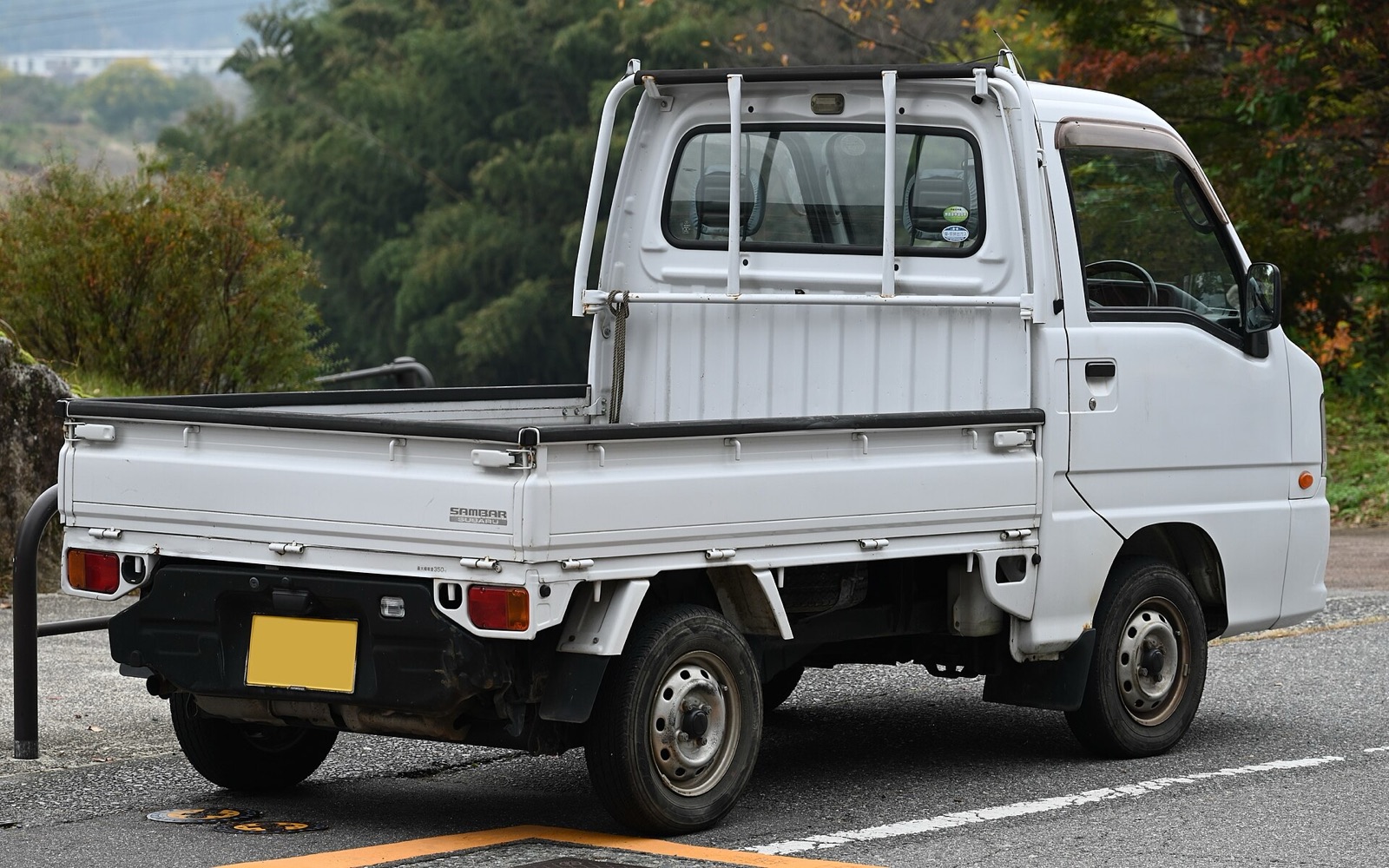
The Subaru Sambar posted the lowest median in the dataset at ¥100,000, and if you stopped reading there you'd conclude it's the bargain of the segment. Look at the individual sales and a different picture emerges. On a single day, July 25, the recorded results included a 2005 TT2 with 270,000 km selling for ¥41,000 and a 2007 TT2 with 59,000 km selling for ¥390,000. Same generation, same chassis code, nearly ten times the price.
That's the Sambar market in one snapshot. High mileage delivery fleet survivors are nearly free because nobody wants a rear engine truck with 270,000 km of stop and go abuse on it. But clean, low mileage TT2s from the final Subaru built generation are collector adjacent now, because the rear engine, four wheel independent suspension layout died when production moved to rebadged Hijets in 2012 and enthusiasts know it. A 2012 TT2 with 45,000 km brought ¥310,000 even with a repair history grade. The lesson: on a Sambar, condition and mileage matter more than they do on any other kei truck, and the median tells you almost nothing about the truck you should actually buy.
For ceiling context, a brand new 2026 Hijet starts at ¥1,094,500 in Japan, about $7,200, per Carscoops' coverage of the March refresh. So the entire used auction market, from beater to near collector, lives below the price of one base model new truck.
The 2001 Effect Is Showing Up in the Data
One sale in the batch deserves its own paragraph: a 2001 Hijet S210P with 165,000 km and a repair history grade hammered for ¥234,000, more than double the model's median, despite being objectively rough. Why? Because 2001 trucks crossed the 25 year import eligibility line this year, and exporters serving the American market are bidding them up.
The 2001 model year matters because it's the best equipped generation ever to qualify for US import: electronic fuel injection, power steering, and factory air conditioning as standard equipment rather than lucky options. American demand is real and growing, with kei truck exports from Japan to the US having more than tripled over five years according to Japan Used Motor Vehicle Export Association data cited by NBC News. When a high mileage repair grade truck outsells clean older stock purely on its birth year, you're watching that demand hit the auction floor in real time. Expect newly eligible model years to carry this premium every year going forward.
The Yen Is Quietly Handing You a Discount
As of this week the dollar buys about ¥153, up from roughly ¥148 a year ago, per the Federal Reserve's H.10 exchange rate data. That's close to a 4 percent slide in twelve months, and it applies to every yen denominated number in this article. The ¥147,000 median Hijet that cost about $995 last September costs about $960 today, before you've negotiated anything.
Four percent sounds small on a $960 hammer price, but remember it also applies to auction fees, exporter service charges, and inland Japan costs, which are all billed in yen. On a fully loaded import budget the currency move alone can cover your first set of tires. Currency cuts both ways, obviously. If the yen strengthens back toward the low 140s, today's prices will look like the deal you missed.
Hammer Price Is Not Landed Cost, Not Even Close
Here's where every first time buyer gets sticker shock in reverse. You cannot multiply ¥124,000 by the exchange rate and conclude your truck should cost $810. The hammer price is the starting line of a long receipt: auction house fees, the exporter's service charge, transport from the auction yard to the port, export paperwork, ocean freight across the Pacific, import duty, port handling, customs brokerage, state titling, and whatever mechanical attention a 25 year old truck needs after a month in a shipping container. Our complete cost breakdown walks through every line item with current numbers, and the import guide covers the process end to end, including the federal paperwork the NHTSA requires for 25 year old vehicles.
The point of knowing auction prices isn't to expect an $810 truck. It's leverage and sanity checking. When a US dealer quotes $11,000 for a grade 3 Acty with 120,000 km, you now know the underlying asset traded for maybe $600 at auction and the other $10,400 is logistics, compliance, and margin. Some of that margin is earned. All of it is negotiable. And if you're buying direct through a proxy service like Japan Car Direct or browsing fixed price stock on Goo-net Exchange, these medians tell you instantly whether a listing is priced against the market or against your ignorance. One practical tip for when the truck finally lands: budget for a fresh battery, because a month at sea kills marginal ones.
Reading Grades Without Getting Burned
The dataset confirms what the grading system implies. Grade 4 and above stock consistently clears above the medians, grade 3 and 3.5 trucks make up the working middle, and R or RA trucks, meaning repair history, trade at discounts that vary wildly depending on what was actually repaired. A 1997 Carry DC51T with an R grade and 142,000 km still brought ¥126,000, right at the model median, which tells you the market shrugged at whatever that repair was.
The auction grade is a screening tool, not a verdict. The written inspector remarks and the damage diagram matter more than the number, and two grade 4 trucks can be very different animals once you read the fine print about corrosion and repaint work. We've covered how to decode all of it in our auction sheet guide, and if you want a reality check on a specific sheet before bidding, the folks at r/keitruck have collectively read thousands of them and will happily tell you why your "minor scratch" is actually a rusted bed floor.
The Bottom Line
The fall 2026 auction market sorts into a clear hierarchy: Hijet at a premium with predictable pricing, Carry as the low mileage consistency play, Minicab as the sleeper, Acty and Sambar as wide spread markets where condition is everything and the median is a trap. The overall median of ¥124,000 is your mental anchor, the middle half runs ¥69,000 to ¥185,250, and a nearly 4 percent yen slide over the past year means dollars stretch further than they did last fall.
If you've been on the fence, the math currently favors moving: newly eligible 2001 trucks are the best equipped ever to qualify for import, the yen is weak, and demand keeps climbing with exports having tripled in five years. Auction hammer prices will not stay this detached from American retail forever, because transparency like this dataset is exactly what closes that gap. Know the medians, read the auction sheet, budget the real landed cost, and cross check what other buyers actually paid in the landed price threads on r/minitrucks. Then negotiate like someone who has seen the numbers. Because now you have.
Advertisement


