2026 Mitsubishi Minicab Facelift: What It Means for US Kei Truck Fans
Mitsubishi just refreshed the Minicab Truck for 2026 with new safety tech, sharper styling, and the same 4WD system that makes older models so popular on American farms. Here's why that matters even if you can't buy one new.

Advertisement
TL;DR: Mitsubishi refreshed the Minicab Truck for 2026 with LED headlights, autonomous emergency braking, and lane departure warning. The 658cc 3G83 engine and 4WD with hi/lo range carry over unchanged. Starting at ~$8,300 in Japan. For US owners, this signals continued platform investment and parts availability for the older models you are importing.
Mitsubishi just gave the Minicab Truck its first real facelift in years, and the most important thing about it has nothing to do with the new headlights. The fact that Mitsubishi is still investing in this platform, updating safety systems, tweaking the design, and keeping it on dealer lots in Japan, tells you something: kei trucks are not going anywhere. For the growing army of American owners running 1990s Minicabs on farms, ranches, and backroads, that is very good news.
The 2026 Mitsubishi Minicab went on sale in Japan in March 2026, as first reported by Carscoops, with refreshed exterior styling, a suite of modern active safety features, and the same 658cc three cylinder engine and available 4WD with high/low range transfer case that has made this platform a workhorse for decades. Pricing starts at ¥1,311,200 and tops out at ¥1,677,500, roughly $8,300 to $10,600 at the current exchange rate of about 158 yen to the dollar.
That price range is worth sitting with for a moment. A brand new, factory fresh 4WD pickup truck with a bed, air conditioning, and a warranty, all for the price of a used Toyota Corolla. Japan gets this. America does not. And that tension is what makes the kei truck import market so fascinating.
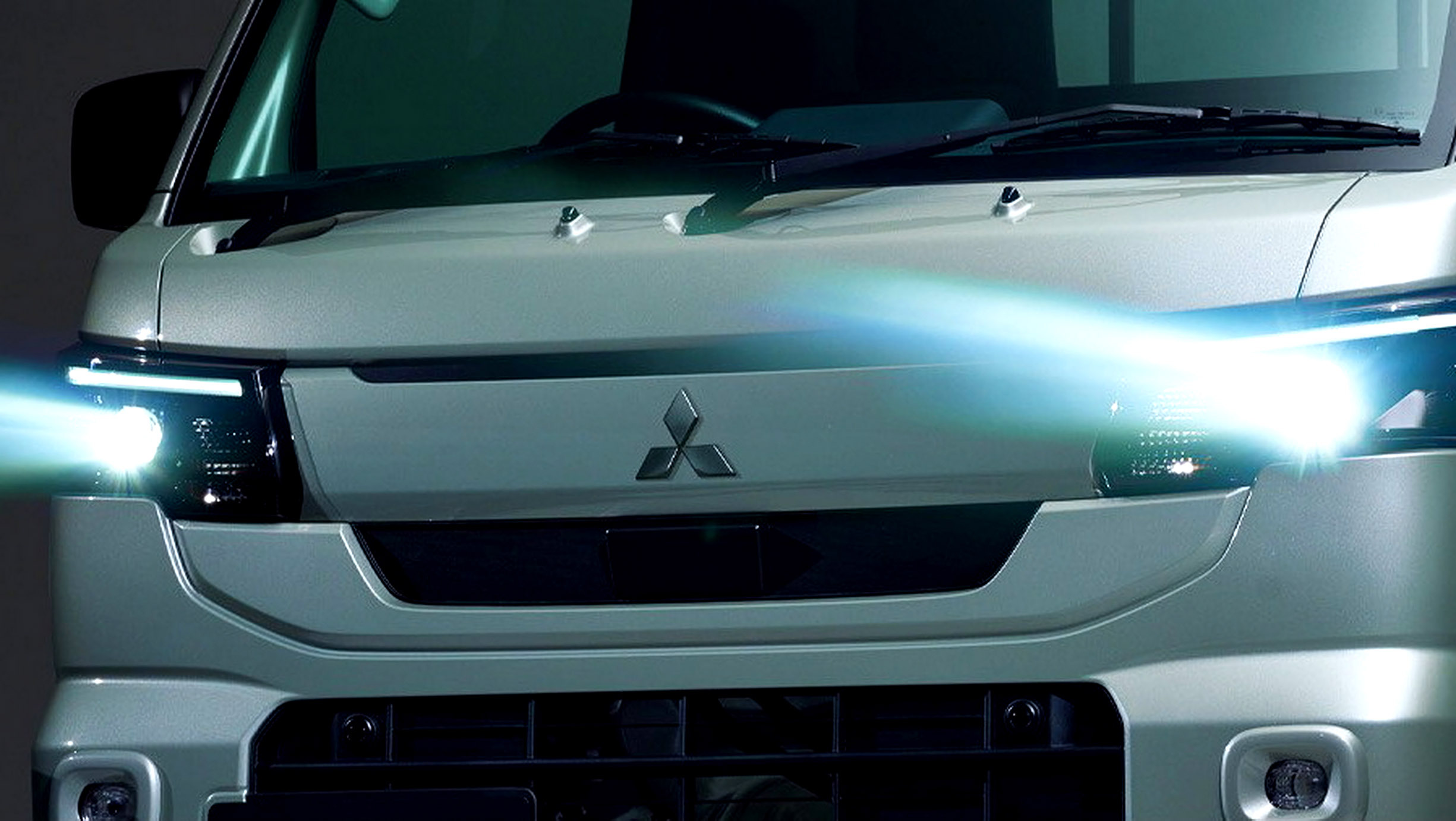
What Actually Changed for 2026
The visual updates are subtle but effective. New headlights (LEDs are now standard across the lineup) pair with a redesigned split grille and a revised front bumper that gives the Minicab a slightly more aggressive face. The G trim adds fog lights and chrome door handles, which counts as luxury in the kei truck world.
Inside, the two seater cabin remains as utilitarian as ever. There is no touchscreen infotainment, no Bluetooth, no backup camera. The mid spec trim gets a radio. You get a digital instrument cluster, manual air conditioning, a sliding driver seat, and two USB sockets. That is the whole list. Mitsubishi is not pretending this is anything other than a work truck, and that honesty is refreshing in an industry that puts 15-inch screens in vehicles destined for construction sites.
The real substance of the 2026 update is the safety technology. Mitsubishi has added Forward Collision Mitigation with pedestrian detection, Lane Departure Prevention, High Beam Assist, traffic sign recognition, and a false start prevention system. Ten years ago, none of this existed on kei trucks. Today, the Minicab has a more comprehensive active safety suite than many full size pickups sold in the developing world.
The mechanicals are unchanged and did not need changing. The 658cc three cylinder engine puts out 50 horsepower and 44 lb ft of torque. Transmission choices are a 5-speed manual or a 4-speed automatic. The bed hauls up to 350 kg (772 lbs) on a body that measures just 3,395mm (133.7 inches) long, rolling on 12-inch steel wheels. Four wheel drive remains available with a proper high/low range transfer case and Mitsubishi's Mud Escape Assist function.
The Kei Truck Quartet
Here is the part most American buyers do not realize: the 2026 Minicab is not a Mitsubishi designed truck. Since 2014, the Minicab has been a rebadged Suzuki Carry. Suzuki gave that platform its own major facelift for 2026, and Mitsubishi stopped manufacturing its own kei trucks that year and began sourcing them from Suzuki under an OEM supply agreement. The same arrangement applies to the Nissan Clipper Truck and the Mazda Scrum Truck. Four brands, one truck, built in Suzuki's factory.
This is not a criticism. It is how the economics of low volume commercial vehicles work in Japan. Suzuki builds the base platform, and each partner brand applies its own front end styling, badging, and trim details. The underlying chassis, engine, drivetrain, and bed are identical across all four. If you own a Carry, a Clipper, a Scrum, or a post-2014 Minicab, you own the same truck with a different face.
For American kei truck owners, this platform consolidation is a net positive. It means the Suzuki Carry platform, the same architecture underneath those older Minicabs and Clippers showing up at US importers, continues to receive investment and development from four separate manufacturers. That translates to sustained parts production, continued engineering refinement, and a deeper pool of interchangeable components. When Suzuki updates the Carry platform, every rebadged variant benefits, and the parts catalogs for all four brands overlap almost completely.
Why Americans Cannot Buy This Truck (And What They Can Buy)
Federal law is clear: under the 25 year import rule, only vehicles manufactured 25 or more years ago can be imported without meeting FMVSS safety standards and EPA emissions requirements. In 2026, that threshold is model year 2001 and older. The shiny new 2026 Minicab is decades away from eligibility.
What Americans can buy right now are fifth generation Minicabs (U41T/U42T, 1991-1999) and the earliest sixth generation trucks (U61T/U62T, 1999-2001). These older Minicabs were powered by Mitsubishi's own 3G83 engine, a 660cc three cylinder that predates the Suzuki OEM era, and came with Mitsubishi's in house 4WD system, including the much loved available rear differential lock.
The pricing comparison between old and new is revealing. A brand new 2026 Minicab costs $8,300 to $10,600 in Japan. A used 1990s Minicab imported to the United States runs $5,000 to $12,000 depending on condition, mileage, and whether it has 4WD. At the top of the used market, Americans are paying more for a 30-year old truck than the Japanese pay for a brand new one. That gap reflects import costs, shipping, customs duties, and the reality that demand for these trucks in the US has been climbing steadily since 2020. If you are considering an import, our pre purchase inspection checklist is essential reading before you commit.
Parts Availability: The Real Story
This is where the 2026 facelift actually matters to US owners, even though they will never drive one. As long as the Carry based platform remains in production in Japan (and the 2026 refresh confirms it will be for the foreseeable future), Suzuki and its partners will continue manufacturing parts for the current architecture. Many mechanical components (suspension, brakes, drivetrain pieces, engine internals) have remained fundamentally similar across Carry generations, which means new production parts often fit or adapt to older models.
For pre-2014 Minicabs running the 3G83 engine, the parts situation is slightly different since those trucks are genuinely Mitsubishi designed. But the 3G83 was used across multiple Mitsubishi kei platforms (the Minica, Pajero Mini, and Bravo van), so the parts ecosystem is broad. OEM components are available through Amayama and Megazip, and aftermarket suppliers like Oiwa Garage stock Minicab specific items including lift kits, lighting, and maintenance parts.
The broader point is that Japan's continued investment in kei trucks as a vehicle category, adding modern safety tech, refreshing designs, and keeping four brands in the game, ensures the supply chain stays healthy. Compare this to the Honda Acty, which Honda discontinued in 2021. Acty parts are already getting harder to source and more expensive. A living, actively produced platform is always better for parts than a dead one, and the 2026 Minicab refresh is proof of life.
The 4WD System That Sells These Trucks
The 4WD system on the 2026 Minicab, with its high/low range transfer case and Mud Escape Assist, is functionally the same system that makes older Minicabs and Carries so popular for American agricultural and off road use. Selectable low range in a vehicle weighing under 1,800 lbs creates a capability to weight ratio that larger trucks cannot match. These trucks crawl over terrain that would leave a full size pickup spinning its tires, and they do it while fitting through gates, between buildings, and on trails where width matters.
American farmers running kei trucks as property vehicles (and there are a lot of them, based on the activity in the r/keitruck and r/minitrucks communities) already know this. The Minicab's available rear differential lock on pre-2014 models adds another layer of capability that the Carry based versions do not offer from the factory. If you are shopping specifically for off road ability, a 4WD Minicab with the diff lock is one of the most capable kei trucks you can import. Check our off road mods guide for the most impactful upgrades.
Whether your state allows you to drive a kei truck on public roads depends entirely on where you live. Our state by state legality guide covers the current rules for all 50 states. If you are in a kei truck friendly state like Montana, New Hampshire, or Tennessee, road registration is straightforward. Other states restrict kei trucks to off road use or limit them to roads under certain speed thresholds.
Japan Is Betting on Kei Trucks. That Should Reassure You.
Step back from the specs for a moment and look at what the 2026 Minicab facelift signals about the broader kei truck market. Mitsubishi, a company that has largely exited kei vehicle manufacturing, is still paying Suzuki to build and badge these trucks. Nissan and Mazda are doing the same. Four major automakers are actively maintaining kei truck product lines in 2026, adding pedestrian detection and lane departure warning systems to a $8,300 pickup truck.
This is not the behavior of companies winding down a product category. This is the behavior of companies that see long term demand. Japanese agriculture, construction, and delivery businesses depend on kei trucks. The domestic market is stable, and the vehicles keep getting better. For American buyers who worry about whether the kei truck ecosystem will dry up and leave them with unsupported orphan vehicles, the 2026 Minicab is a strong counterargument.
The Daihatsu Hijet continues in production under Toyota's umbrella and just received its own 2026 platform upgrade. The Suzuki Carry is the platform underneath three other brands. Honda killed the Acty, but that is the exception, not the trend. The kei truck as a vehicle type is evolving, not dying. Publications like The Drive and MotorTrend continue to cover the growing American interest in these vehicles, and auction sites like Goo-net Exchange show healthy Japanese inventory levels.
If you are new to kei trucks entirely, start with our complete beginner's guide to kei trucks for the full rundown on what these vehicles are, what they can do, and whether one makes sense for your needs. If you are ready to buy, our dealer directory lists vetted importers across the country.
The Bottom Line
The 2026 Mitsubishi Minicab Truck facelift is a modest update: new face, better safety tech, same proven mechanicals. Americans cannot buy it new, and that is not changing anytime soon. But the fact that it exists at all is the point.
Continued production means continued parts availability, continued platform development, and continued proof that the kei truck is not a fad in Japan. For the American owners running 25 year old Minicabs on their properties, that matters more than any new headlight design. The supply chain stays alive, the aftermarket stays invested, and the Subaru Sambar owners can keep being jealous of the Minicab's rear diff lock. The Nissan Clipper, which is a rebadged Minicab, also benefits from this continued investment.
A brand new 4WD pickup for $8,300. In Japan, that is just a Tuesday. In the US, we will keep happily paying $7,000 for a truck that rolled off the line in 1996, and honestly, we are getting a pretty good deal too.
Advertisement


