Scion KEI-01: Toyota's 25 MPH Kei Truck Explained
The Scion KEI-01 is a real Toyota kei truck, assembled in Indiana and sold in the US from late 2027. The catch: it tops out at 25 mph, it's right hand drive, and fleets get it first. Here is what Toyota announced, what it left out, and how it stacks up against an imported kei truck.
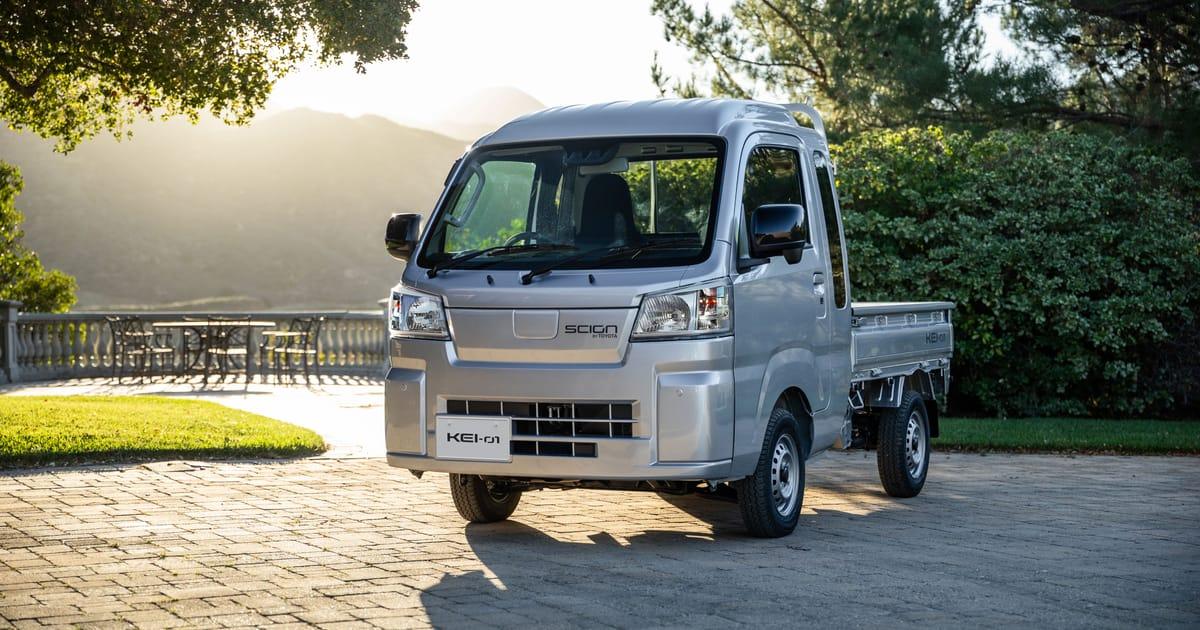
TL;DR: The Scion KEI-01 is a Toyota kei truck that will be assembled in Indiana and sold in the US starting in the second half of 2027. It has a 660cc three cylinder, a CVT, selectable four wheel drive, and a 600 pound payload. It is also capped at 25 mph, because Toyota is selling it as a low speed vehicle instead of crash testing it like a regular truck. It's right hand drive, it goes to fleet customers first through a pilot program, and Toyota hasn't announced a price.
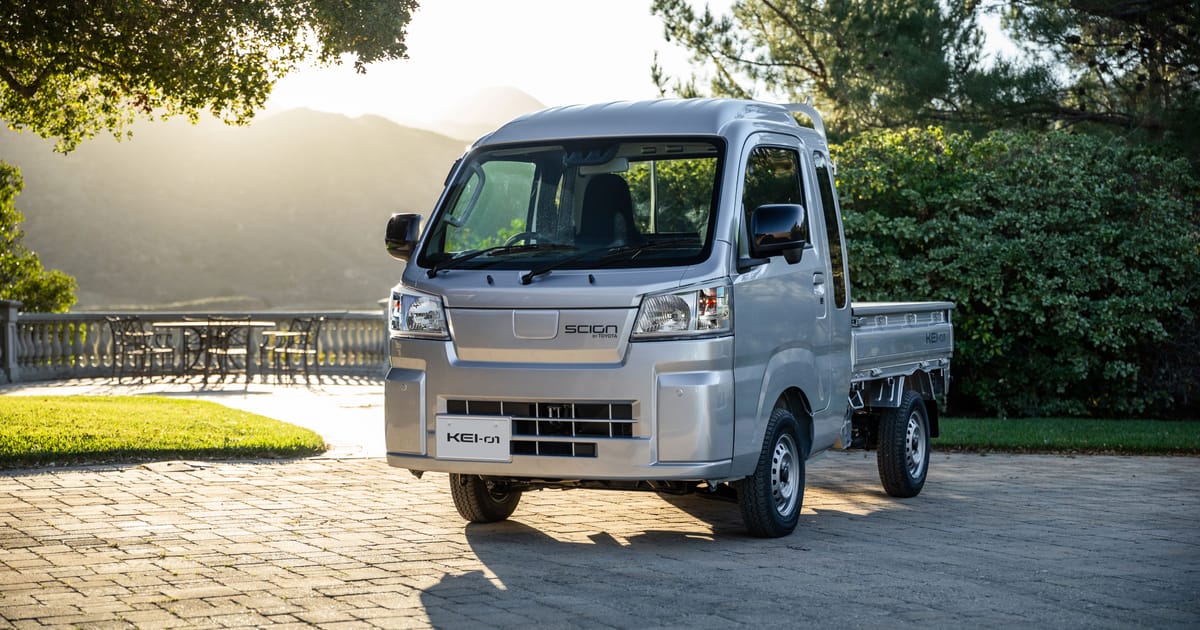
Photo: Toyota Motor North America press material.
Americans have spent years asking a Japanese automaker to just sell them a new kei truck. On November 9, Toyota finally said yes, with an asterisk the size of a speed limit sign. At simultaneous events in Ypsilanti Township, Michigan, and Frisco, Texas, Toyota revived the Scion name as "Scion by Toyota" and showed its first vehicle, the KEI-01. Scion has been dead since Toyota killed it for the 2017 model year, as Carscoops noted in its launch story, and the brand's comeback act is a truck that a fit cyclist can keep up with.
That sounds like a joke. It isn't. This is Toyota, not a startup, putting its name on a kei truck built for American buyers, and the way it got the truck past federal safety rules tells you exactly where this market is headed. Last week we covered Toyota's Scion Kei trademark filing and argued no full speed kei truck could clear US crash standards. Toyota's answer was to not try.
What Toyota Actually Announced
Here is everything in Toyota's "Okei" press release, dated November 10. Toyota will assemble the KEI-01 at its Indiana plant starting in the second half of 2027, backed by a $34 million investment that Toyota says will add about 50 jobs.
| Spec | Scion KEI-01 |
|---|---|
| Engine | 660cc three cylinder |
| Transmission | Continuously variable (CVT) |
| Drive | Selectable four wheel drive, auto mode and push button lock |
| Top speed | 25 mph |
| Payload | Up to 600 lb in the bed |
| Towing | "Small trailers and equipment," no published rating |
| Size | Just over 11 feet long, under 5 feet wide |
| Steering | Right hand drive |
| Bed | Three way fold down sides |
| Cab | Extended cab, raised roof, sliding and reclining seats, heat and A/C |
| Assembly | Toyota Motor Manufacturing Indiana, from the second half of 2027 |
| Price | Not announced |
Toyota also didn't publish horsepower or torque. Jalopnik points out that the 660cc three cylinder makes about 50 horsepower in other applications. Whatever the number, it doesn't matter much on a truck that stops accelerating at 25 mph.
Toyota showed two concepts alongside it: the SxS Concept, a hybrid side by side with more than 300 horsepower that first appeared at SEMA in 2025, and the BKE Concept, a small personal mobility device. Neither is confirmed for production. Toyota's chief branding officer, Simon Humphries, framed the whole brand as an experiment: "The future of mobility will not be defined by one vehicle, one technology or one way of thinking."
It's a Hijet Under the Scion Badge
Read Toyota's release twice and you won't find the words Daihatsu, Hijet, or Pixis. The press doesn't share Toyota's shyness. Jalopnik reports the truck is sold as the Daihatsu Hijet and Toyota Pixis in other markets, and The Autopian goes further, identifying it as the tenth generation S500 Hijet Jumbo cab, whose common configuration makes 46 horsepower.
The photos back that up. The extended cab with a gap behind the seats, the raised roofline, the grille, and the bed all match the Toyota Pixis Truck, which Toyota has sold in Japan since 2011 as a rebadged Daihatsu Hijet. Daihatsu has been wholly owned by Toyota since 2016, so this is Toyota selling its own kei truck under a new badge, not borrowing someone else's.
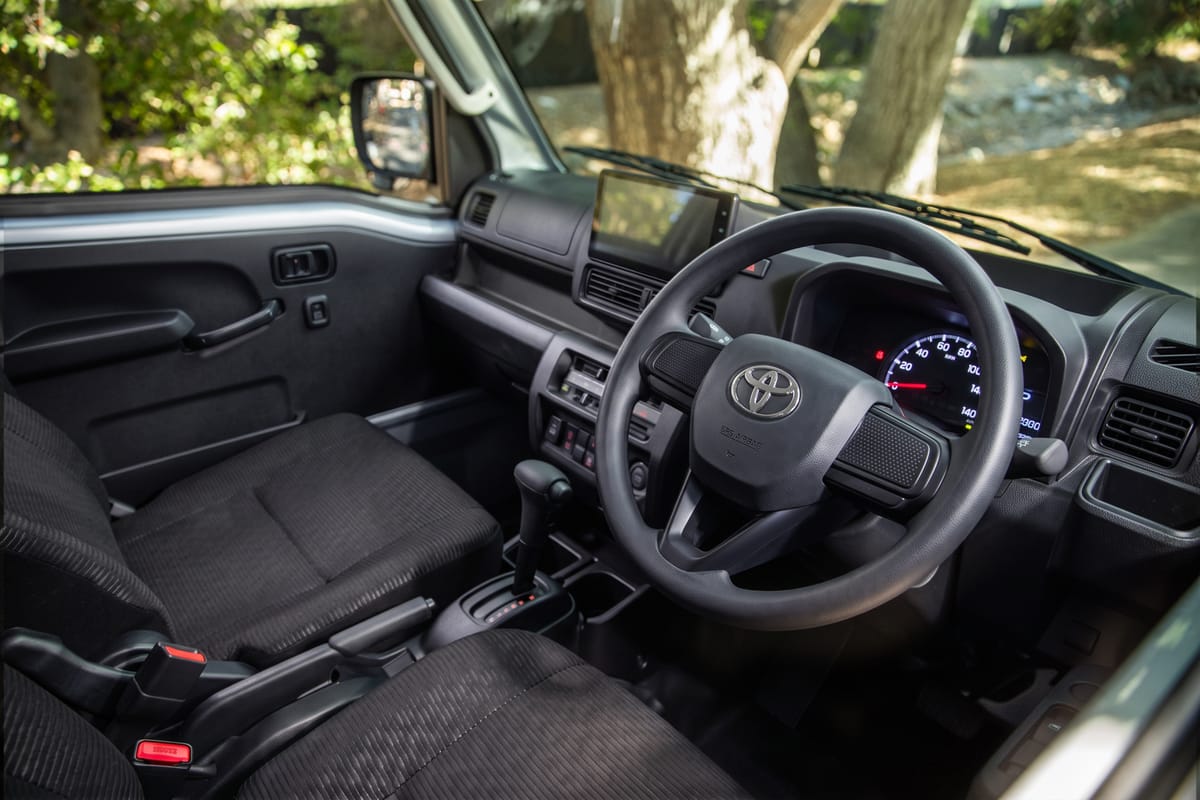
Photo: Toyota Motor North America press material. The steering wheel sits on the right.
One number stands out. Japanese kei trucks carry a 350 kg rating, about 770 pounds, and that is what our Hijet and Pixis spec pages list. Toyota rates the KEI-01 at 600 pounds. Toyota hasn't explained the gap, so treat 600 as the number that matters for an American buyer, not the Japanese one.
Why 25 MPH: The Low Speed Vehicle Route
The 25 mph cap is the whole trick. A new vehicle sold in the US normally has to meet every Federal Motor Vehicle Safety Standard, which for a kei truck means crash structures, airbags, and testing it was never designed for. That's why nobody sells a new Hijet here and why imports have to age past the 25 year import rule first.
Low speed vehicles get a different deal. Under 49 CFR 571.3, an LSV is a four wheeled motor vehicle that can go more than 20 mph but not more than 25 mph, with a gross vehicle weight rating under 3,000 pounds. Instead of the full crash standards, LSVs meet a short equipment list in FMVSS No. 500: headlamps, turn signals, taillamps, stop lamps, reflectors, mirrors, a parking brake, a windshield that meets the glazing standard, a VIN, seat belts, rear visibility, and an alert sound. Toyota says the KEI-01 is designed to comply with that standard.
Most of that list is basic equipment any modern kei truck already carries. Toyota doesn't have to engineer new crumple zones or airbags for an American market version; it has to cap the speed and meet that list. When we broke down what has to happen for kei trucks to be sold new after President Trump's December 2025 push, the low speed vehicle rule was the model for a brand new kei class that NHTSA would still have to write. Toyota skipped that wait. Nobody wrote a new kei category; Toyota just used the one that already existed for golf carts and neighborhood electric vehicles.
Where You Could Actually Drive One
Federal rules decide what Toyota can sell. States decide where you can drive it. LSVs are generally kept off highways and limited to slower roads, and the rules vary by state. Florida is a typical example: the Florida Highway Safety and Motor Vehicles LSV page says LSVs may only be driven on streets posted 35 mph or less, and they have to be registered, titled, and insured.
That's a different legal box from an imported kei truck. States regulate 25 year old imports under their own mini truck or motor vehicle rules, and those range from fully legal to flat out banned. The KEI-01 will follow your state's LSV rules instead. Depending on the state, that can work for or against you compared with a plated import that runs at road speed. Check your own state in our state legality guide before assuming either one works where you live.
Who Can Buy One
Not you, at least not at first. Toyota calls the KEI-01 an "intentionally low volume, niche vehicle" and says it will be sold first through a fleet focused pilot program, with fleet sales handled by Scion by Toyota dealers chosen from existing Toyota stores. Toyota says it "may consider" limited retail sales later, depending on demand and market conditions. The Drive's Joel Feder summed up that retail promise well: "That's not a no, but it's far from a yes."
Toyota's pitch is small business owners and ranchers, and Carscoops adds municipalities, corporate campuses, and universities to the target list. That's the right audience for a 25 mph truck. Think groundskeeping crews, resort maintenance, farm stands, and any job site where the truck never leaves a property or a slow town street.
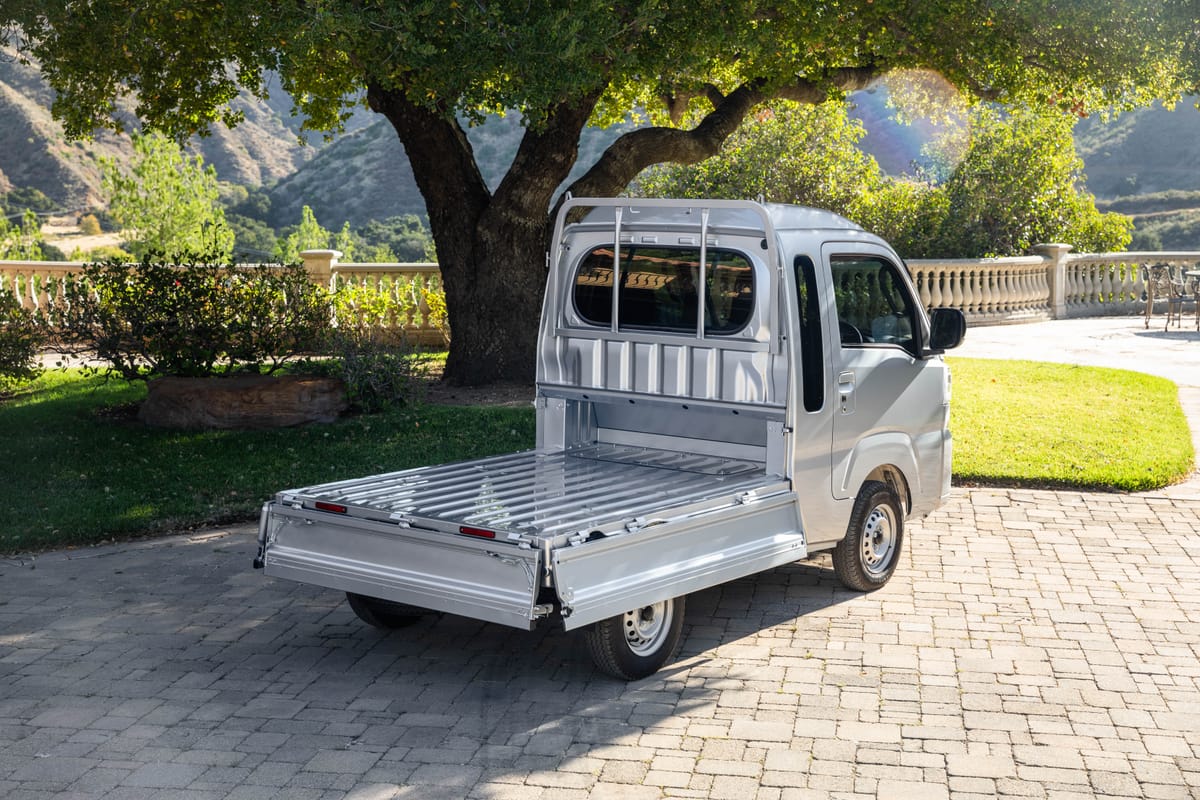
Photo: Toyota Motor North America press material.
Scion KEI-01 vs an Imported Kei Truck
If you already own an imported Hijet or Carry, nothing about the KEI-01 should make you sell it. Here is how the two compare on what matters.
| Scion KEI-01 | Imported 25 year old kei truck | |
|---|---|---|
| Top speed | 25 mph | Full road speed for its engine |
| Age | New | 25 years or older |
| Legal basis | Federal LSV standard, then state LSV rules | Federal 25 year exemption, then state mini truck rules |
| Steering | Right hand drive | Right hand drive |
| Where you buy it | Scion by Toyota dealers (fleets first) | Importers and dealers |
| Price | Not announced | Set by the import market |
Speed is the dealbreaker for most enthusiasts. A healthy old Carry or Hijet will run well past 25 mph, and our guide to how fast a kei truck can go covers real numbers by model. The import also costs what the market says it costs today, while the KEI-01's price is a mystery; our kei truck cost guide breaks down what imports actually run, from auction to plates.
The case for the KEI-01 is everything around the truck. It's new, it comes from a Toyota dealer instead of an importer you've never heard of, and it's designed to meet the federal LSV standard straight from the factory. The Autopian's Mercedes Streeter makes the same split: the KEI-01 is for buyers who want factory support and live where an LSV works, like farms, campuses, and gated communities, while anyone who needs real road speed should keep importing.
The Bottom Line
The Scion KEI-01 is a genuine kei truck, very likely a Hijet with a new badge, and it's coming to the US with Toyota's name behind it. That part is a big deal. For years the answer to "will anyone sell a new kei truck here?" was no, and Toyota just found a legal way to say yes.
The way it did that also limits the truck. A 25 mph cap keeps the KEI-01 out of the crash test fight, and it also keeps it off most roads people actually drive. Fleets get it first, retail may never come, and nobody knows the price. If you run a ranch, a campus, or a business that lives on private property and slow streets, put your name in with a Toyota dealer when the pilot opens. If you want a kei truck that can run with traffic on a county road, the imported trucks on r/keitruck are still the answer, and they will be for a long time.


