Kei Truck & Kei Car Laws in Alabama (2026)
RestrictedAlabama issues mini truck plates but mandates a 25 mph speed governor under Code 32-6-59, which restricts kei trucks to short local errands.
Alabama allows kei trucks to be titled and registered with a mini truck license plate, but with a significant restriction: vehicles must be equipped with a speed governor limiting them to 25 mph. Under Alabama Code Section 32-6-59, mini trucks can operate on all public roads except interstate highways, but the 25 mph cap makes them practical only for local errands and property use. The state does not require a safety or emissions inspection, and the registration process is straightforward.
Disclaimer: Laws and regulations change frequently. Always verify current requirements with your local Alabama county probate judge's office or revenue commissioner's office before purchasing or registering a kei vehicle. Be sure to review our pre-purchase inspection checklist.
Overview
Alabama classifies kei trucks as "mini trucks" under state law, a specific vehicle category with its own requirements. For more details on importing, check our complete guide to importing a kei truck from Japan. The Alabama Department of Revenue handles mini truck plates, and the registration process is managed at the county level by the probate judge's office or revenue commissioner's office.
To qualify for a mini truck plate, your vehicle must meet the definition in Alabama law: a four wheeled reduced dimension truck that is not less than 48 inches wide, with an unladen weight of not less than 1,500 pounds, an enclosed metal cab, and critically, an installed speed governor preventing speeds above 25 mph. The vehicle must also have headlamps, stop lamps, turn signals, taillamps, reflex reflectors, parking brake, rearview mirrors, windshield, and seat belts.
The absence of a safety inspection requirement is a plus for kei vehicle owners. Alabama also has no emissions testing program. See our complete state-by-state guide for comparisons with other states.
Registration Process and Requirements
To register a kei vehicle in Alabama, you will need:
- Title: A valid title from another U.S. state or, for first-time titling, the Japanese export certificate with certified English translation along with customs documentation.
- Bill of Sale: Showing the purchase price, vehicle details, and buyer/seller information. Alabama requires the bill of sale to be notarized in some counties.
- Customs Documentation: CBP Form 7501, EPA Form 3520-1, and DOT Form HS-7 demonstrating the 25-year exemption (for imported vehicles).
- Proof of Insurance: Alabama requires minimum liability insurance of 25/50/25 ($25,000 per person, $50,000 per accident for bodily injury, $25,000 for property damage).
- VIN Verification: May be required for vehicles not previously titled in the U.S. This can be performed by a law enforcement officer or the county title office.
- Alabama Title Application: Complete the appropriate Alabama title application form available at your county office.
Step-by-Step Registration
- Gather all import and customs documentation.
- Obtain Alabama auto insurance meeting state minimums.
- Visit your local county probate judge's office or revenue commissioner's office with all documents.
- Complete a VIN verification if required.
- Submit the title application with supporting documents.
- Pay applicable fees and taxes.
- Receive your Alabama title and license plate.
The process is typically completed in a single visit. Many Alabama Suzuki Carry and Daihatsu Hijet owners report the entire process taking under an hour.
Restrictions
- 25 mph Speed Governor Required: Alabama law requires mini trucks to have an installed speed governor preventing speeds above 25 mph. This is the most significant restriction and means kei trucks are limited to very low speed use on public roads.
- Mini Truck Plate Only: Kei trucks can only be issued a mini truck license plate. They cannot receive a standard passenger vehicle plate.
- No Interstate Use: Mini trucks are prohibited from operating on interstate highways.
- No Safety Inspection: Alabama does not require an annual safety inspection for private vehicles.
- No Emissions Inspection: Alabama does not have an emissions testing program.
- Standard Equipment Required: Vehicles must have functioning headlamps, stop lamps, turn signals, taillamps, reflex reflectors, parking brake, rearview mirrors, windshield, and seat belts.
Cost Breakdown
| Item | Estimated Cost |
|---|---|
| Title | $18.00 |
| Registration (annual) | $23.00 - $51.00 (varies by county and vehicle type) |
| License Plate | Included in registration |
| Sales/Use Tax (2% state + county) | Varies by purchase price and county |
| County-specific fees | $5.00 - $25.00 (varies) |
| Insurance (annual) | $300 - $700 (varies) |
Alabama is one of the most affordable states for vehicle registration. First-year costs excluding insurance and the purchase price typically range from $100 to $300. The state's low sales tax rate (2% state, with county additions varying) keeps the overall cost manageable.
Recent Legislative Changes
Alabama has not passed specific new legislation targeting kei vehicles in recent years. The state's mini truck registration framework under Alabama Code Section 32-6-59 has remained stable. The 25 mph speed governor requirement and mini truck plate classification have been in effect since the original mini truck statute was enacted.
As of March 2026, there have been no legislative proposals to change Alabama's mini truck requirements. At the federal level, President Trump announced in December 2025 that the administration would direct the Secretary of Transportation to explore changes to kei vehicle regulations, but no federal rules have actually changed yet.
If you're near the border, you may also want to check kei truck laws in Mississippi and Tennessee.
Tips from Local Owners
- The 25 mph limit is the main drawback. Alabama's speed governor requirement means your kei truck is practical for local roads, neighborhoods, and short trips, not for highway commuting. Many owners accept this tradeoff for the easy registration process.
- County offices are generally helpful. Alabama's county-level registration system means you deal with local offices that tend to be more personal and accommodating than large state DMV offices. Most county clerks have seen kei vehicles before or are willing to process them.
- Bring everything on the first visit. Organize all your documents before visiting the county office. Having the title (or export certificate), bill of sale, customs forms, insurance proof, and ID ready will help ensure a one-trip process.
- Insurance is straightforward. Alabama's minimum insurance requirements are standard, and most major insurance companies (Progressive, State Farm, Hagerty, Geico) will write kei vehicle policies without difficulty. For more tips, see our kei truck insurance guide. Wondering how they compare to a side-by-side? Read our kei truck vs UTV comparison.
- Great for farm and rural use. Alabama's rural landscape makes kei trucks like the Honda Acty ideal for farm work, hunting, timber management, and property maintenance. Many owners split use between on road errands and off road work.
- Watch for rust. Alabama's humid climate can accelerate rust, especially on vehicles that arrived from Japan with existing corrosion. Inspect the frame, bed, and undercarriage thoroughly before purchasing, and consider rust prevention treatment after purchase.
- Growing community in the Southeast. Alabama is part of the broader Southeastern kei vehicle community, with connections to groups in Georgia, Tennessee, and the Carolinas. Regional meetups, Facebook groups, and online forums are excellent resources for finding parts, mechanics, and advice.
- Consider it a gateway vehicle. Many Alabama kei truck owners start with one and end up with a collection. The low cost of ownership makes it easy to justify, and the versatility of these vehicles means there is always another use case to explore.
Browse kei truck dealers in Alabama to find importers near you. If you're near the border, check kei truck laws in Georgia, Florida, Mississippi, and Tennessee, because regulations can differ significantly between neighboring states.
What you can do in Alabama
Kei trucks are legal here under specific limits. Here are the three moves that matter.
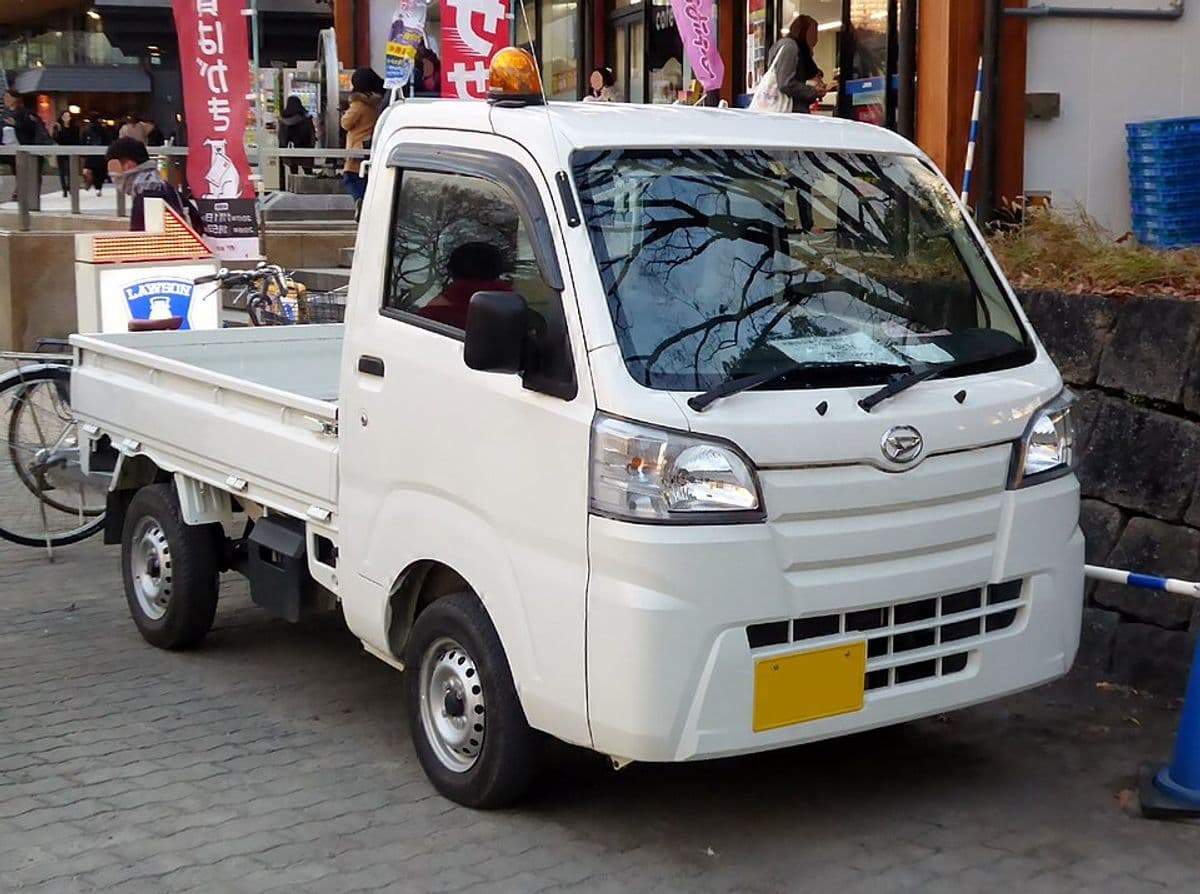
Daihatsu Hijet
1960-Present
If a governor caps you at 25 mph, you want the truck with the strongest AC and the lowest running costs. The Hijet runs the most reliable factory climate control of any kei, and at neighborhood speeds in Alabama summers, that matters more than power. Short loops, easy ownership.