Kei Truck & Kei Car Laws in Arizona (2026)
LegalArizona titles kei trucks as OHVs with a Primary On road Use checkbox, and that single line on the form unlocks full highway access.
Are Kei Trucks Legal in Arizona?
Yes, kei trucks are fully street legal in Arizona, including on highways and interstates. Arizona is one of the most kei truck friendly states in the country, allowing these compact Japanese vehicles on all public roads without speed restrictions when properly registered.
Arizona titles all kei trucks as Off-Highway Vehicles (OHVs), and once you declare "Primary On road Use" on your registration form, your kei truck is fully street- and highway-legal. This includes use on freeways, city roads, and rural highways throughout the state. There is no speed restriction in Arizona if your kei truck is titled as an OHV with primary on road use selected.
Popular models like the Suzuki Carry, Honda Acty, Daihatsu Hijet, and Mitsubishi Minicab can all be legally registered and driven on Arizona roads, provided they meet basic safety requirements.
According to the Arizona Department of Transportation, as long as your kei truck is under 2,500 pounds and meets basic safety requirements (headlights, taillights, turn signals, mirrors, seat belts, and horn), it qualifies for street legal use under Arizona's current OHV system.
The NHTSA 25-year import rule exempts vehicles 25 years or older from EPA emissions and DOT safety standards, which applies to most kei trucks currently being imported. For more details, check our complete guide to importing a kei truck from Japan. Arizona recognizes these federal exemptions and has created a pathway for registration.
How to Register a Kei Truck in Arizona
Registering a kei truck in Arizona is straightforward through the Off-Highway Vehicle registration system with primary on road use designation. Here's the step-by-step process:
Step 1: Obtain Required Documents
- Original title or Manufacturer's Certificate of Origin (MCO)
- Bill of sale with purchase price
- U.S. Customs and Border Protection Entry Summary (CBP Form 7501) if imported
- Valid Arizona driver's license and proof of Arizona residency
- Proof of insurance meeting Arizona minimum requirements
Step 2: Complete OHV Safety Course (Required as of 2025) Beginning January 1, 2025, Arizona requires completion of the OHV Safety Course, a free online course that must be completed once per owner. You'll need the completion certificate when registering or renewing your kei truck. This is a one-time requirement per owner, not per vehicle.
Step 3: Pass Emissions Testing (If Required) If you live in or commute to Maricopa County (Phoenix area) or Pima County (Tucson area), your kei truck must pass emissions testing. Testing costs $25 at myAZcar.com locations.
- Phoenix area: Vehicles 1981 and newer require testing every 2 years
- Tucson area: Vehicles 1996 and newer require testing every 2 years
- Vehicles 5 model years old and newer are exempt
- Vehicles 1967 and older are exempt
Most kei trucks over 25 years old will fall into the older vehicle category and may face annual testing requirements.
Step 4: Visit an MVD Office or Authorized Third Party Provider Take your documents to any Arizona MVD office or authorized third-party provider. Inform them you're registering an OHV for primary on road use.
Step 5: Pay Registration Fees Arizona OHV registration fees for on road use typically include:
- Title fee: $4
- Registration fee: $8-$108 depending on vehicle value (VLT - Vehicle License Tax)
- Air quality research fee: $1.50 (in emissions areas)
- OHV decal: $25 annually, plus a small processing fee when purchased through MVD or Game and Fish, per ADOT's OHV registration page
- Insurance: Required before registration
Total registration costs typically range from $50 to $175 depending on your vehicle's assessed value and county of residence.
Step 6: Display Your OHV Decal You'll receive an OHV decal that must be displayed on your kei truck, along with a standard license plate. Both must be visible.
Renewal: Arizona requires annual OHV decal renewal, which can be done online through AZ MVD Now once initially registered. Standard vehicle registration may be for 1, 2, or 5 years depending on emissions requirements.
Restrictions and Limitations
While Arizona is kei truck friendly, there are some requirements and best practices to follow:
Safety Equipment Required: Your kei truck must have functional:
- Headlights and taillights
- Turn signals (front and rear)
- Brake lights
- Rearview mirrors
- Windshield and windshield wipers
- Horn
- Seat belts
- DOT-approved tires
Most imported kei trucks already have this equipment, but verify everything works properly and meets U.S. standards.
Weight Limit: Kei trucks must weigh under 2,500 pounds to qualify for OHV registration with on road use in Arizona.
Insurance Required: Arizona requires minimum liability insurance of:
- $25,000 bodily injury per person
- $50,000 bodily injury per accident
- $15,000 property damage
Driver's License: A standard Arizona driver's license (Class D) is sufficient. No special endorsement or motorcycle license is required.
No Speed Restrictions: When registered for primary on road use, there are no speed restrictions. You can legally drive on all roads including interstates, though most kei trucks have top speeds of 55-75 mph depending on the model and year.
Local Ordinances: While state law permits kei trucks, always check if your HOA or specific municipality has additional restrictions on vehicle types, though these are rare.
Insurance Requirements
Arizona requires all on road vehicles to carry minimum liability insurance, and kei trucks are no exception. For more guidance, see our kei truck insurance guide. Here's what you need to know:
Minimum Coverage Required:
- $25,000 bodily injury liability per person
- $50,000 bodily injury liability per accident
- $15,000 property damage liability per accident
Insurance Companies That Cover Kei Trucks: Several major insurers will provide coverage for properly registered kei trucks in Arizona:
- State Farm: Typically covers kei trucks registered as OHVs with on road use
- Progressive: Offers coverage for specialty and imported vehicles
- American Modern: Specializes in unusual and collector vehicles
- Hagerty: Known for classic and imported vehicle coverage, though may have mileage restrictions
Getting Insured: When calling for quotes, be clear that your kei truck is:
- Legally registered in Arizona as an OHV with primary on road use
- Over 25 years old (if applicable) and NHTSA-exempt
- Meets all Arizona safety equipment requirements
Insurance Costs: Expect to pay $300-$800 annually for basic liability coverage, depending on your driving record, location, and coverage limits. Comprehensive and collision coverage may be harder to obtain but is available through specialty insurers.
Proof of Insurance: You must show proof of insurance when registering your kei truck and must carry proof at all times while driving. Arizona participates in interstate insurance databases, so your coverage is verifiable electronically.
Inspection and Emissions
Emissions Testing Required in Urban Areas: Arizona requires emissions testing for vehicles in Maricopa County (Phoenix metro) and Pima County (Tucson metro). According to Arizona Department of Environmental Quality, here's what applies to kei trucks:
Phoenix Area Requirements:
- Vehicles 1981 and newer with GVWR less than 8,500 lbs: Testing every 2 years
- Vehicles 1967-1980, GVWR over 8,500 lbs, or diesel: Annual testing
- Vehicles 5 model years old and newer: Exempt
- Vehicles 1967 and older: Exempt
Tucson Area Requirements:
- Gasoline vehicles 1996 and newer weighing less than 8,500 lbs: Every 2 years
- Older vehicles: May be exempt
Testing Process:
- Visit any myAZcar.com emissions testing station
- Cost: $25 per test
- Testing must be completed no more than 90 days before registration/renewal
- Tests typically take 15-20 minutes
Important: Your kei truck will fail emissions testing if the check engine light is on. Ensure all systems are functioning properly before testing.
Rural Area Exemption: If you live outside Maricopa and Pima counties, your kei truck is exempt from emissions testing, making registration even simpler.
Safety Inspections: Arizona does not require periodic safety inspections for passenger vehicles or OHVs. Once registered, you don't need annual safety inspections unless you're applying for a rebuilt/salvage title.
Tips from Arizona Kei Truck Owners
Arizona has a thriving kei truck community. Here's practical advice from owners:
Complete the OHV Course First: Don't wait until renewal time. Complete the free online OHV safety course as soon as you purchase your kei truck. It takes about 30 minutes and is valid indefinitely for you as an owner.
Work with Knowledgeable Third-Party Providers: Some Arizona MVD third-party providers are more familiar with kei truck registration than others. Ask local kei truck owners or check the r/keitruck subreddit for recommendations in your area.
Get Insurance Before Going to MVD: You cannot register without proof of insurance. Call several insurers before your MVD appointment to ensure coverage is in place.
Join Local Groups: Arizona has active kei truck groups on Facebook and at local car meets. These communities share maintenance tips, parts sources, and registration experiences.
Highway Performance: Most kei trucks can maintain 60-65 mph comfortably, but they're not designed for extended high-speed freeway driving. Many Arizona owners use them for city driving, short trips, and light hauling rather than long interstate journeys.
Parts and Service: Phoenix and Tucson have growing numbers of mechanics familiar with kei trucks. However, many owners learn to do basic maintenance themselves and order parts from specialized importers.
Consider Climate: Arizona's extreme summer heat can stress kei truck cooling systems. Regular coolant maintenance and ensuring your radiator is clean and functioning is essential.
Popular in Rural Arizona: Kei trucks are particularly popular in rural Arizona communities for ranch work, exploring off road areas, and navigating narrow mountain roads. See how they stack up in our kei truck vs UTV comparison.
Find verified kei truck dealers in Arizona in our dealer directory.
Frequently Asked Questions
Can I drive my kei truck on Arizona highways and interstates?
Yes, absolutely. When registered as an OHV with primary on road use, there are no road restrictions in Arizona. You can legally drive on interstates, highways, city streets, and any public road.
Do I need a special license to drive a kei truck?
No. A standard Arizona Class D driver's license is sufficient. No motorcycle license or special endorsement is required.
What if my kei truck is less than 25 years old?
Kei trucks under 25 years old face challenges being imported into the U.S. due to NHTSA regulations. Most kei trucks in Arizona are over 25 years old and benefit from the 25-year import exemption. If you somehow have a newer kei truck, consult with an import specialist.
Can I use my kei truck for business purposes?
Yes. Many Arizona businesses use kei trucks for landscaping, delivery, property maintenance, and light commercial hauling. Ensure your insurance policy covers commercial use if applicable.
What happens if I get pulled over?
As long as your kei truck is properly registered with current tags, you have valid insurance, and you're following traffic laws, being pulled over should be no different than with any other vehicle. Keep your registration and insurance proof accessible.
Do HOAs allow kei trucks?
Most HOAs don't have specific rules against kei trucks, but some have general restrictions on "commercial vehicles" or "unusual vehicles." Check your HOA's CC&Rs if you live in a deed-restricted community.
Can I modify my kei truck?
Yes, but modifications must maintain compliance with Arizona safety equipment requirements. Popular modifications include lift kits, larger tires, and upgraded suspension, but ensure lights, mirrors, and safety equipment remain functional and legal.
Useful Links
- Arizona Department of Transportation MVD - Official MVD website
- AZ MVD Now - Online registration renewal
- OHV Safety Course - Required free online course
- myAZcar.com Emissions Testing - Emissions testing locations and info
- Arizona Emissions Testing Information - Official emissions info
- NHTSA Vehicle Importation Guidelines - Federal import rules
- Arizona Kei Truck Legal Guide - Community resource
- Hagerty Insurance - Specialty vehicle insurance
- r/keitruck Community - Owner discussions and advice
Arizona's kei truck friendly laws make it one of the best states in the country for owning and operating these versatile Japanese vehicles. With straightforward registration through the OHV system and no road restrictions, Arizona owners enjoy full access to these practical and fun trucks. If you're considering a kei truck or comparing state laws, explore our complete state-by-state guide. If you're near the border, you may also want to check kei truck laws in California, Nevada, Utah, and New Mexico, because regulations vary widely across the Southwest.
Where to actually buy one in Arizona
1 verified kei truck dealer in Arizona. Most handle import, titling, and delivery.
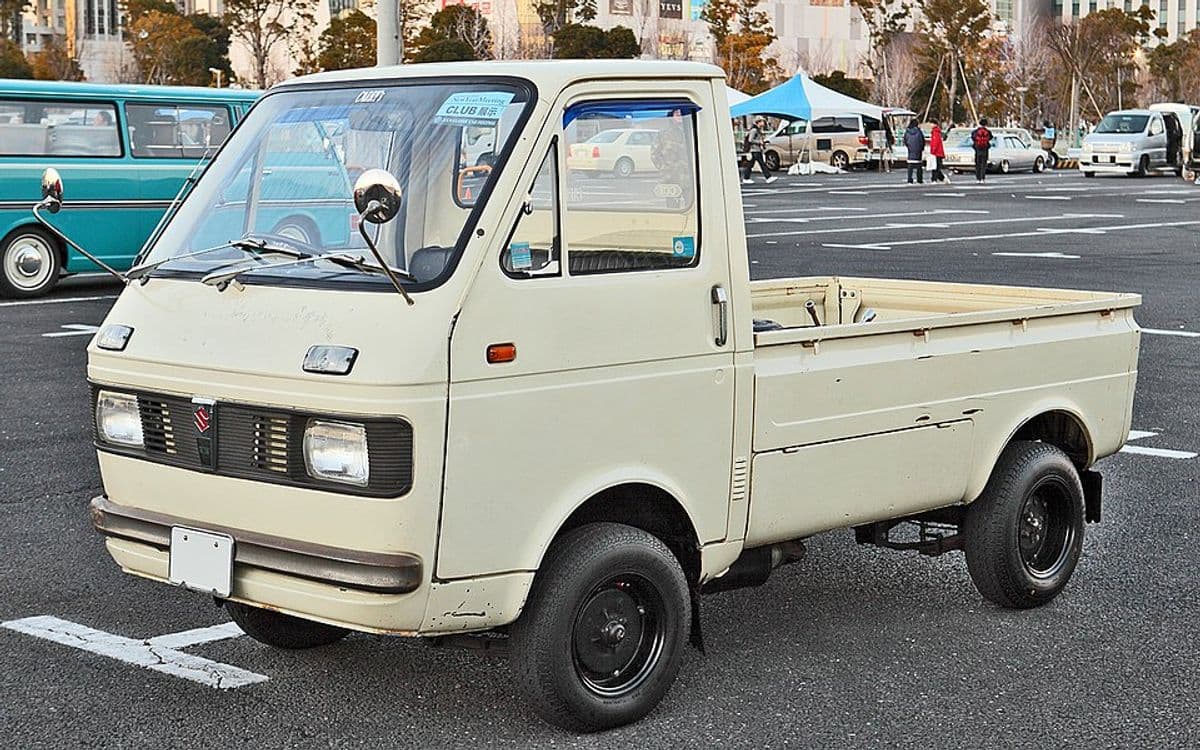
Suzuki Carry
1969-Present
Arizona heat punishes weak cooling systems, so go with the model that has the deepest parts pipeline. The Suzuki Carry is the most common kei truck on US soil, AC compressors and radiators are easy to source, and highway access in Arizona rewards a truck you can keep running cheaply.
Across the state line
Get the weekly kei truck brief
Law changes, price drops, new models, and build inspiration. One email a week.