Kei Truck & Kei Car Laws in California (2026)
Not LegalCARB blocks on road registration for any kei truck. Only path forward is OHV use on private property.
Are Kei Trucks Legal in California?
No, kei trucks are not street legal in California for on road use. California maintains one of the strictest stances in the nation against kei trucks, effectively prohibiting them from public roads due to stringent emissions and safety requirements that these vehicles cannot meet.
Unlike states such as Colorado and Arizona that have enacted legislation to legalize kei trucks with reasonable restrictions, California has yet to take similar steps, continuing to restrict general street use of these vehicles. The majority of kei trucks cannot be registered for on road use in California due to two primary regulatory barriers:
1. CARB Emissions Standards: The California Air Resources Board (CARB) enforces some of the strictest emissions standards in the country. CARB certification is mandatory for vehicles to be registered for street use, and nearly all kei trucks fail to meet these requirements, especially models that don't comply with California's specifications.
2. Federal and State Safety Standards: Kei trucks were manufactured to Japanese safety regulations, not U.S. Federal Motor Vehicle Safety Standards (FMVSS). They typically lack the braking systems, lighting, crashworthiness standards, and other safety equipment required by California and federal law.
While the NHTSA 25-year import rule exempts vehicles 25 years or older from EPA emissions and DOT safety standards for importation purposes, this exemption does not override California's state-level requirements. For more details, check our complete guide to importing a kei truck from Japan. California still requires CARB certification and FMVSS compliance for road registration.
Popular models like the Suzuki Carry, Honda Acty, Daihatsu Hijet, and Mitsubishi Minicab cannot be legally driven on California public roads, though they can be registered as Off-Highway Vehicles (OHVs) for use on private property or designated off road areas.
How to Register a Kei Truck in California
For On road Use: Not Possible
California does not provide a pathway to register kei trucks for on road use. The California DMV requires all street legal vehicles to meet FMVSS and have CARB certification, which kei trucks cannot satisfy.
For Off-Highway Use: OHV Registration
You can register a kei truck as an Off-Highway Vehicle for use on private property or designated OHV areas. Here's how:
Step 1: Gather Required Documents
- Original title or proof of ownership
- Bill of sale
- Valid California driver's license or ID
- U.S. Customs paperwork if imported (CBP Form 7501)
Step 2: Complete Application
- Fill out Application for Title or Registration (REG 343)
- Check the box for Off-Highway Vehicle registration
- Provide vehicle identification and specifications
Step 3: Pay Fees
- OHV identification fee: $26 (2-year registration)
- Additional fees may apply based on specific circumstances
Step 4: Submit to DMV
- Visit a California DMV office or mail your application
- Processing time: 4-8 weeks for mail submissions
What OHV Registration Allows:
- Use on private property
- Use on designated OHV trails and recreation areas
- Transportation on public roads only when loaded on a trailer
What OHV Registration Does NOT Allow:
- Driving on any California public roads, streets, or highways
- Parking in public parking lots or streets
- Any on road transportation under the vehicle's own power
Failed On road Registration Attempts:
Some owners have attempted to register kei trucks for street use by:
- Obtaining a BAR (Bureau of Automotive Repair) label after emissions inspection
- Registering through specialty vehicle channels
- Claiming historic or collector vehicle status
However, these attempts typically fail because kei trucks cannot pass CARB emissions testing with their original engines and emissions equipment designed for Japanese standards. The California Highway Patrol (CHP) actively enforces these regulations, and owners have encountered citations, fines, and vehicle impoundments.
Restrictions and Limitations
California's restrictions on kei trucks are among the most stringent in the nation:
Complete Public Road Ban: Kei trucks registered as OHVs cannot be operated on any California public roads, including:
- City streets
- County roads
- State highways
- Interstates
- Any public parking areas
CARB Emissions Barrier: California requires CARB certification for all vehicles manufactured after 1967. Kei trucks were manufactured to Japanese emissions standards that differ substantially from California's specifications. Obtaining CARB certification for an imported kei truck is effectively impossible without:
- Complete engine replacement with a CARB-certified engine
- Extensive emissions control system modifications
- Professional testing and certification (costs exceeding $5,000-$10,000)
Even with modifications, success is not guaranteed, and the California Bureau of Automotive Repair (BAR) has strict requirements.
Safety Equipment Deficiencies: Beyond emissions, kei trucks typically fail to meet:
- FMVSS crash test standards
- Headlight and lighting specifications for U.S. roads
- Side-impact protection requirements
- Modern braking performance standards
Right-Hand Drive Concerns: California has additional concerns about right-hand drive vehicles on roads designed for left-hand drive traffic, citing safety issues with visibility, passing, drive-throughs, and toll booths.
Active Enforcement: The California Highway Patrol actively enforces vehicle compliance. Owners caught operating unregistered or improperly registered kei trucks face:
- Citations for operating an unregistered vehicle
- Citations for lack of insurance
- Vehicle impoundment
- Fines ranging from $500 to $2,000+
- Court appearances
No Local Exceptions: Unlike vehicle regulations in some states where local jurisdictions have flexibility, California's vehicle codes are enforced statewide. No cities, counties, or local areas can create exceptions for kei trucks.
Insurance Requirements
For On road Use (Not Applicable): Since kei trucks cannot be registered for on road use in California, standard auto insurance is not obtainable or required.
For Off-Highway Use: If you register a kei truck as an OHV for private property use, insurance is not legally required but is highly recommended:
Property Insurance: Consider coverage through your homeowner's or property insurance policy for:
- Theft
- Fire damage
- Weather damage
- Vandalism
OHV Liability Insurance: Some insurance companies offer specialty OHV liability coverage:
- Progressive: Offers OHV and recreational vehicle insurance
- American Modern: Specializes in specialty vehicles
- Hagerty: May cover collector/specialty vehicles for off road use
Costs for OHV Insurance: Expect to pay $100-$300 annually for basic OHV liability coverage, significantly less than on road auto insurance.
If Caught Operating Illegally: Without proper registration and insurance, operating a kei truck on California roads can result in:
- Personal liability for any accidents or injuries
- Criminal charges for uninsured motorist violations
- Civil liability with no insurance protection
- Vehicle impoundment and storage fees
Alternative for Importers: Some California residents who frequently travel to Arizona, the only neighboring state where kei trucks are fully street legal, have attempted out-of-state registration. See our complete state-by-state guide for the current legality map. However, California residency laws require vehicles owned by California residents to be registered in California within 20 days of establishing residency. Using out-of-state registration while residing in California is illegal and can result in penalties.
Inspection and Emissions
California's emissions requirements create an insurmountable barrier for kei truck owners seeking on road registration.
CARB Certification Requirement: The California Air Resources Board mandates that all vehicles manufactured after 1967 demonstrate emissions compliance through CARB certification. This is a separate requirement from federal EPA standards and is significantly more stringent.
Smog Check Requirements: Nearly all vehicles manufactured after 1967 must pass a smog check and demonstrate compliance. For kei trucks, this presents multiple challenges:
- Kei trucks use Japanese emissions equipment not compatible with California's testing equipment
- Original engines and catalytic converters don't meet CARB specifications
- Testing stations may refuse to test vehicles without proper certification
Bureau of Automotive Repair (BAR) Process: To register a non-certified vehicle, owners must obtain a BAR label by:
- Submitting the vehicle to a Smog Check Referee
- Passing comprehensive inspection and emissions testing
- Demonstrating compliance with the vehicle's model year requirements
According to California DMV imported vehicle requirements, obtaining BAR certification is often the most challenging and time-consuming part of the registration process. For kei trucks, the non-U.S.-spec engine and emissions components were not designed to interface with California's testing equipment, making certification effectively impossible.
Testing Costs:
- Standard smog check: $50-$80
- BAR Referee inspection: $35-$50
- Required modifications: $3,000-$10,000+ (often unsuccessful)
Biennial Smog Checks: Even if somehow certified initially, California requires smog checks every two years for most vehicles, creating an ongoing compliance burden.
Exemptions:
- Vehicles 1975 and older are exempt from smog checks
- Vehicles 4 years old or newer are exempt (doesn't apply to imports)
Most kei trucks fall between these ranges and would require testing.
Safety Inspections: California requires VIN verification and potentially brake, lamp, and safety inspections for imported vehicles. These are conducted during initial registration attempts.
Recent Legislative Changes
SB 1069 (2026): CARB process reform, not kei legalization. In February 2026, Sen. Tim Grayson (D, Concord) introduced SB 1069 with backing from the Specialty Equipment Market Association (SEMA). It began as a set of CARB review deadlines for aftermarket emissions product applications, then picked up a significant amendment in the Assembly that adds a conditional approval pathway. The Assembly Transportation Committee passed the amended bill unanimously, 15 to 0, on June 29, 2026. Governor Newsom signed it on September 16, 2026, and it was chaptered as Chapter 244. The enacted bill adds Health and Safety Code section 43019.4: a manufacturer with at least 10 prior CARB Executive Orders can request conditional approval to sell qualifying aftermarket emissions parts while CARB's full review is still running. CARB gets 30 days to respond, and silence counts as approval. A conditional approval lasts two years or until CARB issues its final decision. With no urgency clause, the law takes effect January 1, 2027.
To be clear: SB 1069 does not legalize kei trucks in California. The text has no language about imported or nonconforming vehicles, the 25 year rule, or DMV registration, so it creates no registration pathway for vehicles without CARB certification. It is a structural reform of how CARB processes aftermarket emissions approvals, and a faster CARB turnaround would matter for any future kei approval effort. No bill aimed specifically at kei trucks has been introduced in the 2025-2026 California session.
Tips from California Kei Truck Owners
Despite the restrictions, some California residents own kei trucks for off road or private property use. Here's what they've learned:
Use for Private Property Only: Ranches, large properties, vineyards, and farms can legally use kei trucks on private land. Wondering how they compare to a side-by-side? Read our kei truck vs UTV comparison. They're excellent for property maintenance, hauling supplies, and navigating tight spaces.
Consider Neighboring States: Arizona is the only state bordering California where kei trucks are fully street legal. California residents who own property in Arizona sometimes register their kei trucks there for use on that property. Nevada and Oregon both prohibit on-road kei truck registration, so they are not viable options despite being closer for some California residents. Always verify current registration and residency laws before pursuing this path.
Join Advocacy Efforts: Organizations like SEMA (Specialty Equipment Market Association) are working on legislation to create pathways for kei truck legalization. Contact your California state legislators to voice support for regulatory changes.
Alternative: Golf Carts and LSVs: If you need a small utility vehicle for community use, consider Low speed Vehicles (LSVs) or golf carts, which have legal pathways for limited street use in some California communities.
Off Road and Private Property Use: A kei truck registered for off road use only is a legitimate path in California. Vineyards in Napa and Sonoma, ranches in the Central Valley, and large estates throughout the state run kei trucks daily without ever putting them on a public road. Trailer transport between properties is the only public-road move that stays clean. For the off road buyer, the Suzuki Carry and Daihatsu Hijet with selectable 4WD are the dealer picks for California terrain.
Parts and Off road Modifications: California has a strong car culture and some specialty shops familiar with imported vehicles. For off road kei trucks, modifications like lift kits, off road tires, and suspension upgrades are popular.
Connect with Communities: The r/keitruck subreddit has California owners discussing creative legal uses, advocacy efforts, and experiences with enforcement.
Watch for Legal Changes: Colorado passed kei truck legalization in 2025, effective 2027-2028. California legislation could follow if there's enough public interest and advocacy.
Find verified kei truck dealers in California in our dealer directory.
Frequently Asked Questions
Why are kei trucks illegal in California but legal in other states?
California has uniquely strict emissions standards through CARB that exceed federal requirements. Kei trucks manufactured to Japanese standards cannot meet these California-specific requirements. States without CARB-equivalent agencies have more flexibility to register imported vehicles.
Can I register my kei truck in Nevada and drive it in California?
If you're a California resident, California law requires you to register vehicles in California within 20 days of establishing residency. Using out-of-state registration while residing in California is illegal. However, if you legitimately own property and reside in Nevada, you can register there and drive your kei truck when in Nevada.
What if my kei truck is over 25 years old?
The 25-year import rule exempts vehicles from federal EPA and DOT requirements for importation, but it doesn't override California's state-level CARB certification requirements. Age alone doesn't grant road legality in California.
Have any kei trucks been successfully registered for street use in California?
Successful on road registrations are extremely rare and typically involve extensive modifications including complete engine swaps to CARB-certified engines, full emissions system upgrades, and professional BAR certification. The cost typically exceeds $10,000 and isn't guaranteed to succeed.
What happens if I get caught driving a kei truck on California roads?
You'll likely receive citations for operating an unregistered vehicle and driving without insurance. Your kei truck may be impounded, resulting in towing and storage fees. Fines can range from $500 to $2,000 or more, plus court fees.
Can I drive my kei truck from my property to a nearby trail?
No. Even short distances on public roads are illegal without proper registration. You must transport your kei truck on a trailer to reach OHV trails or other private properties.
Are there any California cities considering allowing kei trucks?
As of 2026, no California cities have moved to allow kei trucks. Vehicle registration and road use are governed by state law, limiting local jurisdictions' ability to create exceptions.
Useful Links
- California Department of Motor Vehicles - Official DMV website
- California Air Resources Board - CARB emissions information
- California OHV Registration - Off-highway vehicle info
- NHTSA Vehicle Importation Guidelines - Federal import rules
- California Bureau of Automotive Repair - BAR certification information
- SEMA Action Network - Automotive legislation advocacy
- Hagerty Insurance - Specialty vehicle insurance
- r/keitruck Community - Owner discussions and advocacy
California's strict prohibition on kei trucks is disappointing for enthusiasts, but understanding the regulatory landscape helps you make informed decisions. While on road use isn't currently possible, kei trucks can still provide value for off road recreation, private property use, and agricultural applications. If California's restrictions are deal-breakers, the states where kei trucks are fully street legal include Arizona, Texas, Utah, Idaho, Montana, South Dakota, Massachusetts, Indiana, Michigan, and South Carolina. Colorado is slated to allow kei trucks starting 2027. If you're near California's borders, Arizona is the only adjacent state with full road legality.
When California changes, we tell you first.
One email. No newsletter. Only when the law actually moves. SEMA and state-level reform groups are pushing legalization bills across the country.
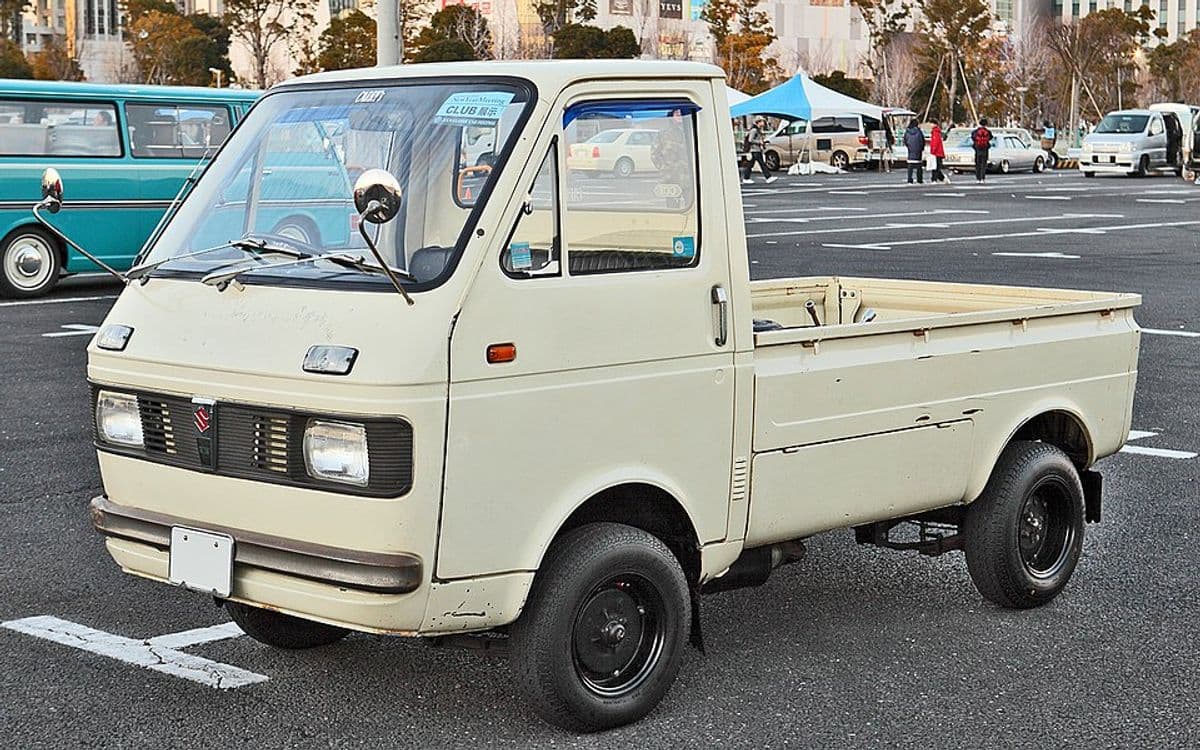
Suzuki Carry
1969-Present
California vineyards in Napa and ranches in the Central Valley run Carrys daily for off road work. Cheapest to feed parts to, dump bed variant is what working agriculture wants, 4WD is non negotiable for hills.
What you CAN do in California
Private property use is fully legal. Napa and Sonoma vineyards, Central Valley ranches, and large estates statewide run kei trucks on private land daily. Trailer transport between properties is the only clean public road move.