Kei Truck & Kei Car Laws in Colorado (2026)
RestrictedColorado passed a 2025 law clearing kei trucks for roads posted 55 mph or less, but the rules take effect in stages through 2027 and 2028.
Are Kei Trucks Legal in Colorado?
Yes, kei trucks will be fully legal in Colorado starting July 1, 2027, with registration available beginning January 1, 2028. Colorado passed groundbreaking legislation in 2025 that officially legalizes kei vehicles for use on roads with speed limits of 55 mph or less, making it one of the most progressive states for these Japanese imports.
Colorado Governor Jared Polis signed House Bill 25-1281 into law on May 9, 2025, after it passed unanimously in the state legislature. This landmark legislation, backed by SEMA (Specialty Equipment Market Association), establishes a clear legal framework for kei vehicles in Colorado. For a deeper look at how SEMA pushed both this bill and Texas SB 1816 across the finish line in 2025, see our breakdown of the SEMA kei truck wins.
Key points of the new law:
- Effective Date for Sales: Licensed dealers can sell kei vehicles starting July 1, 2027
- Registration Opens: Owners can register kei vehicles starting January 1, 2028
- Road Use: Legal on roadways with speed limits of 55 mph or less
- Interstate Ban: Prohibited on limited-access highways and interstates
- No Special Inspections: Kei vehicles cannot be declared non roadworthy solely due to their design or manufacturing parameters
This makes popular models like the Suzuki Carry, Honda Acty, Daihatsu Hijet, and Mitsubishi Minicab street legal in Colorado with reasonable restrictions that balance safety concerns with vehicle access.
The law aligns with the NHTSA 25-year import rule, which exempts vehicles 25 years or older from EPA emissions and DOT safety standards. For more details, check our complete guide to importing a kei truck from Japan. Colorado's legislation recognizes these federal exemptions while establishing state-level operational guidelines.
Current Status (Before 2027): If you currently own a kei truck in Colorado, it cannot yet be legally registered for on road use. You must wait until the registration window opens on January 1, 2028.
How to Register a Kei Truck in Colorado
Registration for kei vehicles will open on January 1, 2028. Here's what to expect based on the new legislation:
Eligibility Requirements:
Colorado's law defines a kei vehicle as one that meets these specifications:
- Powered by an internal combustion engine with displacement of 1,000 cubic centimeters or less, or an electric motor of 56,000 watts or less
- Four wheeled car or truck
- Less than 140 inches in length
- 67 inches or less in width
- Top speed of at least 50 mph
- Enclosed passenger cab
- Meets the 25-year import requirement under federal law
Registration Process (Starting January 2028):
Step 1: Verify Your Kei Truck Meets Requirements
- Measure dimensions: under 140 inches long, 67 inches wide
- Confirm top speed capability (at least 50 mph)
- Verify 25+ year age (most kei trucks being imported qualify)
- Ensure enclosed passenger cab (all standard kei trucks have this)
Step 2: Complete Emissions Testing (If Required) If you live in the Colorado emissions testing area (Denver metro, Boulder, Ft. Collins, parts of northern Front Range), your kei truck must pass emissions testing:
- Vehicles 7 model years old and newer are exempt
- Most kei trucks are old enough to require biennial testing
- Cost: $25 at AirCare Colorado stations
Step 3: Gather Required Documents
- Original title or proof of ownership
- Bill of sale with purchase price
- U.S. Customs and Border Protection Entry Summary (CBP Form 7501) for imported vehicles
- Valid Colorado driver's license with Colorado address
- Proof of Colorado vehicle insurance
Step 4: Visit a County Motor Vehicle Office Take your documents to your local Colorado DMV office. Starting January 1, 2028, DMV systems will be updated to process kei vehicle registrations.
Step 5: Pay Registration Fees Colorado registration fees are based on vehicle weight and type. Expected costs:
- Title fee: $7.20
- Registration fee: $29-$60+ (based on empty weight and age)
- Plate fee: $7.55 (new plates) or $0.60 (transfer)
- County fees: Varies by county
- Emissions fee: $2 (in emissions areas)
Total registration costs will likely range from $50 to $150 depending on your county and vehicle specifics.
Step 6: Receive License Plates and Registration You'll receive standard Colorado license plates and registration documentation. Display plates according to Colorado requirements (rear plate required, front plate may be required depending on vehicle year).
Renewal: Colorado vehicle registration is typically for 1 year, renewable annually through Colorado DMV online services.
Important Timeline:
- Now - July 1, 2027: Cannot register or legally drive kei vehicles on Colorado roads
- July 1, 2027: Licensed dealers can begin selling kei vehicles
- January 1, 2028: Registration opens for owners; kei vehicles become street legal
Restrictions and Limitations
Colorado's new law authorizes kei vehicles with specific restrictions designed to balance access and safety:
Speed Limit Restriction: Kei vehicles are prohibited from operating on roadways with speed limits greater than 55 mph. This means:
- ✓ Most city streets (typically 25-45 mph)
- ✓ County roads (typically 35-55 mph)
- ✓ State highways posted at 55 mph
- ✗ Highways with 60+ mph limits
- ✗ Any limited-access highways (regardless of speed limit)
Limited-Access Highway Ban: According to HB 25-1281, driving a kei vehicle on a limited-access highway is prohibited. This includes:
- Interstate highways (I-25, I-70, I-76, etc.)
- US highways with limited access
- Controlled-access portions of state routes
No Discriminatory Inspections: The law explicitly states that the Colorado Department of Revenue, Colorado State Patrol, and their agents or contractors may not:
- Require special inspections because a vehicle is a kei vehicle
- Declare a kei vehicle non roadworthy due to its design or manufacturing parameters
This protection prevents arbitrary enforcement and ensures kei vehicles are treated like other registered vehicles.
Required Safety Equipment: While kei vehicles can't be discriminated against for their design, they must still meet Colorado's general vehicle equipment requirements:
- Working headlights and taillights
- Turn signals
- Brake lights
- Mirrors (rearview and at least one side mirror)
- Windshield and windshield wipers
- Horn
- Seat belts
- Adequate brakes
- Proper tires
Most imported kei trucks already meet these requirements.
Driver's License: A standard Colorado Class R driver's license is sufficient. No special endorsement or motorcycle license is required.
Insurance Required: Colorado requires minimum liability insurance (see Insurance Requirements section).
Local Ordinances: While state law governs registration and road use, local jurisdictions may have parking restrictions or HOA rules. Always check local regulations.
Insurance Requirements
Colorado requires all motor vehicles operated on public roads to carry minimum liability insurance, and kei vehicles will be no exception starting in 2028. For more guidance, see our kei truck insurance guide.
Minimum Coverage Required:
- $25,000 bodily injury liability per person
- $50,000 bodily injury liability per accident
- $15,000 property damage liability
Insurance Companies Likely to Cover Kei Vehicles:
Several insurers are expected to provide coverage for legally registered kei vehicles in Colorado:
- State Farm: Has covered specialty and imported vehicles in other states
- Progressive: Offers coverage for unusual and specialty vehicles
- American Modern: Specializes in collector and imported vehicles
- Hagerty: Known for classic and imported vehicle coverage
- Grundy Insurance: Specialty vehicle coverage with potential mileage restrictions
Getting Insured:
When the registration period opens in 2028, contact insurers and emphasize:
- Your kei vehicle is legally registered in Colorado under HB 25-1281
- The vehicle is over 25 years old and NHTSA-exempt
- It meets all Colorado safety requirements
- You understand the 55 mph road restriction
Expected Insurance Costs: Based on similar specialty vehicles, expect to pay $400-$900 annually for basic liability coverage, depending on:
- Your driving record
- Location (urban vs. rural)
- Coverage limits chosen
- Whether you bundle with other policies
Proof of Insurance: You must provide proof of insurance when registering and must carry proof at all times while operating your kei vehicle on Colorado roads.
Current Kei Truck Owners: If you currently own a kei truck in Colorado (before 2028), standard auto insurance isn't available since the vehicle can't be registered for road use. Consider specialty off road vehicle insurance or property insurance for theft and damage protection.
Inspection and Emissions
Colorado's new kei vehicle law explicitly prohibits discriminatory inspections while maintaining standard emissions requirements for applicable vehicles.
No Special Kei Vehicle Inspections: HB 25-1281 states that kei vehicles may not be required to have inspections because they are kei vehicles or have the design or manufacturing parameters of a kei vehicle. This is a crucial protection that prevents arbitrary regulatory barriers.
Standard Emissions Testing (Where Applicable):
Colorado requires emissions testing in specific counties: Boulder, Broomfield, Denver, Douglas, Jefferson, and portions of Adams, Arapahoe, Larimer, and Weld counties.
Emissions Requirements:
- Gasoline vehicles are exempt for the first 7 model years
- Diesel vehicles are exempt for the first 4 model years
- Vehicles 1975 and older are exempt
- Most kei trucks are older than 7 years and will require biennial testing
Testing Process:
- Visit an AirCare Colorado emissions testing station
- Cost: $25 (cash, check, Visa, MasterCard, or Discover)
- Frequency: Biennial (every 2 years) for most vehicles
- Timing: Required before registration/renewal
Testing Type:
- Vehicles 8-11 years old: OBD (On-Board Diagnostics) test
- Vehicles 12+ years old (1982 and newer): I/M 240 dynamometer test
- Vehicles 1981 and older: Annual testing
- Kei vehicles specifically: HB 25-1281 requires kei vehicles to undergo a two-speed idle test rather than the standard dynamometer emissions test, which is a significant advantage since the idle test is simpler and easier to pass
Exemptions: Kei vehicles registered in counties outside the emissions testing area are exempt from emissions testing entirely, making registration simpler in rural Colorado.
VIN Verification: New registrations may require VIN verification to confirm the vehicle identification number matches documentation. This is standard for all vehicles and isn't a special kei vehicle requirement.
Safety Equipment Compliance: While Colorado won't impose special inspections on kei vehicles, law enforcement can still cite you for non-functional safety equipment (lights, brakes, mirrors, etc.). Ensure all equipment is operational.
Tips from Colorado Kei Truck Enthusiasts
Colorado's kei truck community has been active in advocacy efforts and is excited about the upcoming legalization. Here's advice from enthusiasts:
Mark Your Calendar:
- July 1, 2027: Dealers can sell kei vehicles
- January 1, 2028: Registration opens for owners
Join the Colorado Kei Community: Connect with other enthusiasts through Facebook groups, local car meets, and the r/keitruck subreddit. Colorado owners are sharing preparation tips and celebration plans for the 2028 rollout.
Plan Your Routes: Download a GPS app that displays speed limits to help plan routes that stay within the 55 mph restriction. Colorado's extensive network of scenic back roads is perfect for kei trucks.
Consider Mountain Use: Colorado's mountain towns and rural areas are ideal for kei trucks. For a detailed comparison, see our kei truck vs UTV guide. Their compact size, tight turning radius, and utility make them perfect for mountain property access and small-town driving. For a real world look at what a kei truck can do at altitude, watch a 657cc Suzuki Carry climb the Alpine Loop to 12,800 feet.
Winter Preparation: Colorado winters can be harsh. If using your kei truck year-round, consider:
- Winter tires or all-season tires with good snow ratings
- Engine block heater for cold starts
- Upgraded battery for cold weather
- Checking that heating system works adequately
Parts and Service: Colorado has a growing number of mechanics familiar with Japanese imports, especially in Denver, Boulder, Colorado Springs, and Fort Collins. Connect with local owners to find recommended shops.
Advocate and Educate: Thank state legislators who supported HB 25-1281. Educating the public about kei trucks helps build positive awareness and prevents future restrictive legislation.
Watch for Implementation Details: As January 2028 approaches, monitor the Colorado DMV website for specific guidance on kei vehicle registration procedures, required forms, and any additional details.
Find verified kei truck dealers in Colorado in our dealer directory.
Frequently Asked Questions
Can I register my kei truck in Colorado right now?
No. While the law was signed in May 2025, registration doesn't open until January 1, 2028. This delay gives Colorado DMV time to update their systems and develop processing procedures.
Can I drive my kei truck on Colorado highways?
Yes and no. You can drive on highways posted at 55 mph or less, but not on limited-access highways (interstates) or highways with speed limits above 55 mph. Many Colorado highways in rural areas are posted at 55 mph and will be accessible.
What if my kei truck is less than 25 years old?
Colorado's law requires kei vehicles to meet the 25-year import requirement under federal law. Vehicles under 25 years old typically cannot be imported to the U.S. under NHTSA regulations, so they wouldn't be available to register in Colorado.
Do I need a special license?
No. A standard Colorado Class R driver's license is sufficient. No special endorsement, motorcycle license, or commercial driver's license is required.
Can I use my kei truck for commercial purposes?
Yes, if your business activities comply with the road restrictions (55 mph roads only, no interstates). Many businesses are considering kei trucks for landscaping, property maintenance, and local deliveries.
What happens if I get pulled over on a road with a 60 mph speed limit?
You could be cited for violating the operational restrictions. Penalties would likely be similar to other vehicle operation violations. Stick to roads with 55 mph or lower speed limits.
Can I drive my kei truck on I-25 or I-70?
No. Interstate highways are limited-access highways and are explicitly prohibited regardless of speed limit. You must use alternate routes on state highways and county roads.
Will dealerships stock kei trucks starting in 2027?
Some licensed dealers are expected to begin importing and selling kei trucks once the law takes effect on July 1, 2027. The market will determine availability, but Colorado's legalization creates strong commercial incentives for dealerships.
Useful Links
- Colorado Department of Motor Vehicles - Official DMV website
- House Bill 25-1281 - Full text of the kei vehicle law
- Colorado Emissions Testing - Emissions requirements and locations
- AirCare Colorado - Emissions testing stations
- NHTSA Vehicle Importation Guidelines - Federal import rules
- SEMA Action Network - Automotive legislation advocacy (backed HB 25-1281)
- Hagerty Insurance - Specialty vehicle insurance
- r/keitruck Community - Owner discussions and advice
- Colorado Kei Truck News - Media coverage of the law
Colorado's passage of HB 25-1281 represents a major victory for kei truck enthusiasts and sets a precedent that other states may follow. The 55 mph road restriction is reasonable and still allows access to the vast majority of Colorado's road network, particularly in rural and mountain areas where kei trucks excel. While the wait until 2028 is frustrating, it gives prospective owners time to research, find the perfect kei truck, and prepare for registration. Colorado is positioned to become one of the premier states for kei vehicle ownership. For comparisons with other states' kei truck laws, check out our complete state-by-state guide. If you're near the border, you may also want to check kei truck laws in Wyoming, Nebraska, Kansas, Oklahoma, New Mexico, and Utah.
What you can do in Colorado
Kei trucks are legal here under specific limits. Here are the three moves that matter.
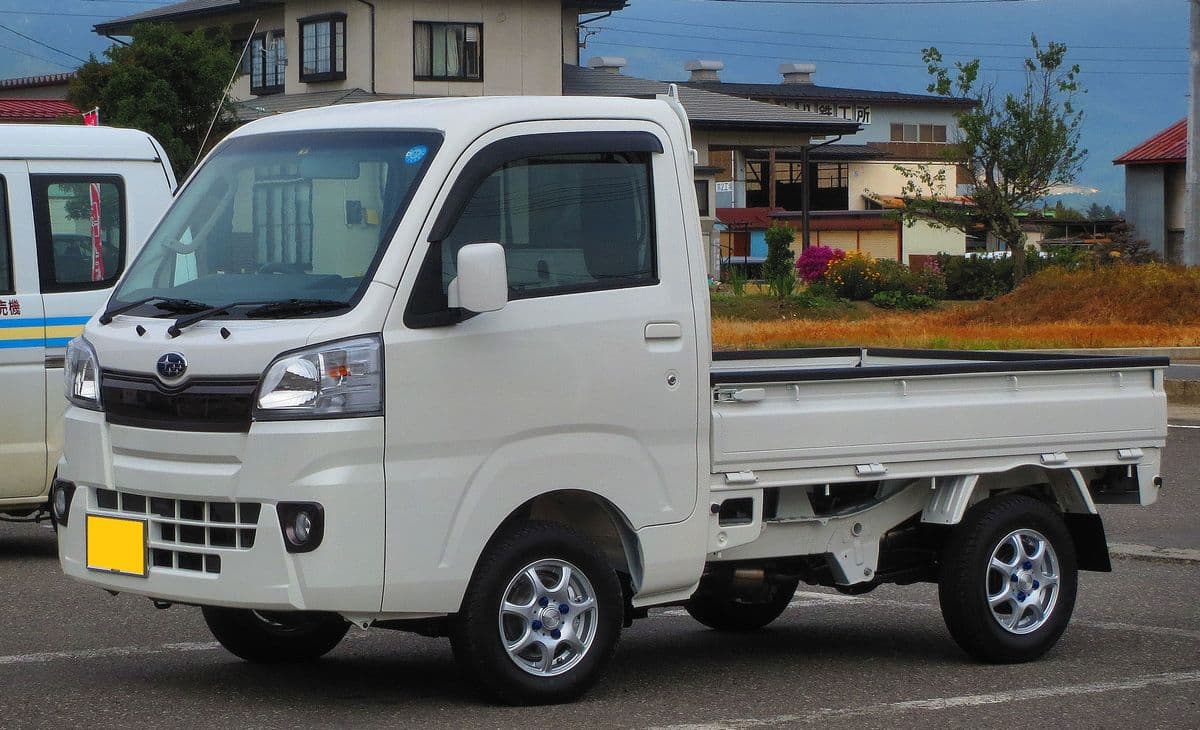
Subaru Sambar
1961-Present
Colorado means front range snow, mountain grades, and altitude. The Sambar 4WD supercharged variant keeps making power above 8,000 feet where naturally aspirated kei engines wheeze, and the rear engine traction handles I-70 corridor snow days. Best altitude pick in kei.