Kei Truck & Kei Car Laws in Kansas (2026)
RestrictedKansas leaves kei truck road access to counties and cities, with most rural counties allowing operation but Wichita and Kansas City taking different positions.
Are Kei Trucks Legal in Kansas?
Yes, but with restrictions. Kansas permits kei trucks (classified as "micro utility trucks") on certain public roads, but they're prohibited from interstate, federal, and state highways. Within city limits, they can only operate where the city has passed an ordinance specifically authorizing them. This means your Suzuki Carry, Honda Acty, or Daihatsu Hijet will primarily be legal on county roads and in cities that have opted in.
Kansas addresses these vehicles through K.S.A. 8-15,106, which governs operation of "micro utility trucks." For a full walkthrough on importing, see our complete guide to importing a kei truck from Japan. Under this statute, micro utility trucks are prohibited from interstate highways, federal highways, and state highways. They are also prohibited from public highways or streets within city limits unless the city has passed an ordinance authorizing their use. This means county roads outside city limits are generally the most accessible roads for kei truck owners.
Importantly, local ordinances matter in Kansas. Even if state law permits kei trucks, individual cities can restrict or prohibit their use within city limits. Before driving your mini truck on city streets, verify that your municipality allows them. County roads outside city limits typically follow state guidelines.
The federal NHTSA 25-year rule applies in Kansas as elsewhere: kei trucks over 25 years old are exempt from FMVSS compliance, simplifying importation and registration.
How to Register a Kei Truck in Kansas
Registering a kei truck in Kansas requires meeting standard vehicle registration procedures, with additional attention to safety equipment and vehicle classification.
Step-by-Step Registration Process
1. Verify Local Ordinances
Before beginning registration, confirm that your city or county permits kei trucks on local roads. Contact your city clerk's office or check municipal codes online.
2. Complete a VIN Inspection
Kansas requires a VIN inspection for all out-of-state vehicles, reconstructed vehicles, and vehicles where proper identification is in doubt. You'll need to visit a Kansas Highway Patrol office or authorized inspection station.
Required for VIN inspection:
- The physical vehicle
- Bill of sale or previous title
- Proof of identity (driver's license)
- $20 inspection fee (cash preferred)
The KHP verifies that the VIN on your vehicle matches your ownership documents.
3. Gather Required Documents
- Completed Application for Title and Registration (Form TR-12)
- Proof of ownership (bill of sale, foreign title with certified English translation, or manufacturer's certificate of origin)
- VIN inspection certificate
- Proof of Kansas insurance
- Kansas driver's license or state ID
- Payment for fees and taxes
4. Visit Your County Treasurer's Office
Kansas vehicle registration is handled by county treasurer motor vehicle departments. Find your local county treasurer and schedule an appointment if required.
5. Vehicle Classification
Your kei truck will typically be registered as either:
- Passenger Vehicle: If it has enclosed seating and limited cargo capacity
- Utility Vehicle: If it has an open cargo bed and meets utility specifications
Most kei trucks register as utility vehicles. The treasurer will determine appropriate classification based on your vehicle's configuration.
6. Pay Registration Fees
Registration fees in Kansas vary based on vehicle type, weight, and county. Expect to pay:
- Registration fee: $30-$50 (varies by county)
- Title fee: $10
- VIN inspection: $20
- Vehicle property tax: Based on vehicle value (varies by county)
- Total estimated cost: $100-$200
Kansas assesses annual vehicle property tax based on the vehicle's value, which can significantly affect your total cost.
Required Safety Equipment
To register your kei truck in Kansas, it must have:
- Functioning headlights and taillights
- Brake lights
- Turn signals (front and rear)
- Rearview mirrors (interior and driver's side exterior minimum)
- Seat belts at all designated seating positions
- Windshield wipers
- Horn
- Adequate braking system
Most imported kei trucks already meet these requirements, though you may need to add DOT-compliant mirrors or upgrade lighting systems.
Restrictions and Limitations
Understanding Kansas restrictions is critical to legal operation of your kei truck.
Speed and Road Restrictions
Permitted Roads:
- County roads outside city limits
- Local city streets (only where the city has passed an ordinance authorizing micro utility trucks)
Prohibited Roads (per K.S.A. 8-15,106):
- Interstate highways (I-70, I-35, I-135, etc.)
- Federal highways
- State highways
- City streets where no local ordinance has been passed
Local Ordinance Requirements
Kansas statute K.S.A. 8-126(t) defines micro utility trucks, and K.S.A. 8-15,106 governs their operation. Micro utility trucks are prohibited from interstate, federal, and state highways, and from city streets unless the city has passed an authorizing ordinance.
This creates a patchwork of regulations:
- Some Kansas cities fully permit kei trucks on streets
- Others restrict them to specific zones or roads
- Some prohibit them entirely within city limits
Always verify local rules before purchasing or operating a kei truck. Be sure to review our pre-purchase inspection checklist.
Practical Limitations
Even on permitted roads, kei trucks have practical limitations:
- Small engines (typically 660cc) limit highway performance
- Light weight can make them less stable at higher speeds
- Limited safety features compared to modern vehicles
Most owners report that kei trucks perform best at speeds under 45 mph, making the 55 mph restriction less limiting than it might seem.
Insurance Requirements
Yes, insurance is mandatory. Kansas law requires proof of no-fault liability insurance on any vehicle except motorized bicycles. For more guidance, see our kei truck insurance guide. Your insurance company must be a Kansas-approved insurance provider.
Minimum Required Coverage
Kansas minimum liability insurance requirements:
- Bodily injury: $25,000 per person / $50,000 per accident
- Property damage: $25,000 per accident
- Personal injury protection (PIP): $4,500 per person (no-fault coverage)
Finding Insurance for Kei Trucks
Insuring kei trucks in Kansas can be challenging since some major carriers classify them as "non-standard" vehicles. However, several options exist:
Standard Auto Insurers:
- State Farm (often insures as utility vehicles)
- Progressive (may require additional documentation)
- Farmers Insurance (varies by agent)
Specialty Insurers:
- Hagerty (excellent for classic kei trucks over 25 years old)
- National General (known for insuring specialty vehicles)
Tips for Getting Coverage:
- Have your Kansas title and registration ready
- Provide clear photos of the vehicle
- Explain intended use (personal, farm, business)
- Get quotes from multiple insurers, because rates vary significantly
Some owners report paying $300-$600 annually for liability coverage, though rates depend on driving record, coverage limits, and location.
Inspection and Emissions
Kansas keeps vehicle inspection requirements minimal for most passenger vehicles.
Safety Inspections
Not required for most vehicles. Kansas doesn't mandate periodic safety inspections for passenger cars, light trucks, or utility vehicles.
Exception: Commercial vehicles and school buses require regular safety inspections per Department of Transportation regulations.
VIN Inspection
Required once at registration. All out-of-state vehicles need a one-time VIN inspection before initial Kansas titling. After that, no recurring inspections are necessary unless ownership changes.
Emissions Testing
No emissions testing in Kansas. The state does not require smog checks or emissions testing for any passenger vehicles or utility vehicles.
According to Kansas DMV resources, Kansas has never implemented vehicle emissions testing programs due to its air quality meeting federal standards without such requirements.
This makes Kansas particularly friendly for older imported vehicles, as you won't face emissions compliance issues even with vintage kei trucks.
Tips from Kansas Kei Truck Owners
Kansas kei truck enthusiasts have learned valuable lessons about operating mini trucks in the state:
Check city ordinances before you buy. Some Kansas cities welcome kei trucks while others ban them. Verify local rules with your city clerk before making a purchase. Rural areas generally follow state guidelines more closely.
Johnson County is kei friendly. The Kansas City metro area, particularly Johnson County, reportedly has straightforward registration processes for kei trucks. County treasurers there are familiar with mini truck registrations.
Consider farm plates if eligible. If you're using your kei truck for agricultural purposes, farm registration might offer benefits like reduced registration fees. See how they stack up in our kei truck vs UTV comparison. Check with your county treasurer about eligibility.
Join the kei truck community. The r/keitruck subreddit has active Kansas members who share county-specific experiences and recommendations for insurance companies and registration offices.
Avoid highways even if tempted. While kei trucks technically can reach highway speeds, their small engines work hard at 60+ mph, and you're prohibited from roads over 55 mph anyway. Stick to back roads where these vehicles excel.
Document local ordinance approval. If your city allows kei trucks, keep a copy of the relevant ordinance in your vehicle. Some law enforcement officers may not be familiar with local rules.
Plan routes around restrictions. Use mapping apps to plan routes avoiding highways and high-speed roads. Kansas has excellent county road networks that make this practical in most areas.
Recent Legislative Changes
HB 2262 (2025-2026 session) died. HB 2262 would have amended K.S.A. 8-15,106 to permit micro utility trucks on additional highways and streets under defined conditions. The bill, titled "Permitting micro utility trucks to be operated on certain highways and streets and providing conditions for such operation," was introduced at the request of Representative Doug Blex on behalf of a constituent. It sat in the House Committee on Transportation with no hearing and no floor action through sine die adjournment in April 2026. Existing rules limiting micro utility trucks to county roads (and city streets only where local ordinances authorize) remain in force. Read our full breakdown of HB 2262 and what Kansas owners can do next. The next opportunity for state level reform is the 2027 to 2028 biennium, which begins in January 2027.
Frequently Asked Questions
Can I drive my kei truck on I-70 or other Kansas interstates?
No. K.S.A. 8-15,106 explicitly prohibits micro utility trucks from interstate highways, federal highways, and state highways. You're limited to county roads and city streets where the city has passed an authorizing ordinance.
Do I need a special driver's license?
No. A standard Kansas Class C driver's license is sufficient. Kei trucks don't require commercial driver's licenses or special endorsements.
What if my city doesn't allow kei trucks?
Unfortunately, you cannot legally drive on city streets if local ordinances prohibit kei trucks. You may be limited to county roads outside city limits or need to advocate for ordinance changes with your city council.
Can I use my kei truck for business purposes?
Yes, as long as it's properly registered and insured. Notify your insurance company if you're using it commercially to ensure adequate coverage. You may need commercial auto insurance depending on your business activities.
What happens if I get pulled over?
Keep your registration and insurance documents in the vehicle. Most officers will verify that your vehicle is properly registered and that you're on a permitted road (55 mph or less). Kansas Highway Patrol officers are generally familiar with micro utility trucks.
Are there any counties that are easier to register in?
Anecdotally, larger counties with more diverse vehicle registrations (Johnson, Sedgwick, Shawnee) tend to have more experience processing kei truck registrations. Rural counties may be less familiar with the process but are usually helpful once they understand the requirements.
Can I register a kei van or passenger vehicle?
Kansas law references "micro utility trucks," which typically means truck configurations with cargo beds. Kei vans or passenger vehicles may require different classification. Consult your county treasurer with your specific vehicle's specifications.
Useful Links
- Kansas Department of Revenue - Division of Vehicles
- Kansas Vehicle Registration FAQs
- Kansas Highway Patrol VIN Inspections
- NHTSA Vehicle Importation Guidelines
- Find Your County Treasurer
- Kansas Statute 8-126(t) - Micro Utility Truck Definition
- Hagerty Insurance
- r/keitruck Community
Kansas offers a workable middle ground for kei truck enthusiasts, though with meaningful restrictions. Micro utility trucks are prohibited from interstate, federal, and state highways, and can only operate on city streets where local ordinances explicitly permit them. County roads are your best bet. Before purchasing, verify your local ordinances and prepare for a straightforward but documentation-heavy registration process. For information on kei truck laws in other states, explore our complete complete state-by-state guide. If you're near the border, you may also want to check kei truck laws in Nebraska, Missouri, Oklahoma, and Colorado.
What you can do in Kansas
Kei trucks are legal here under specific limits. Here are the three moves that matter.
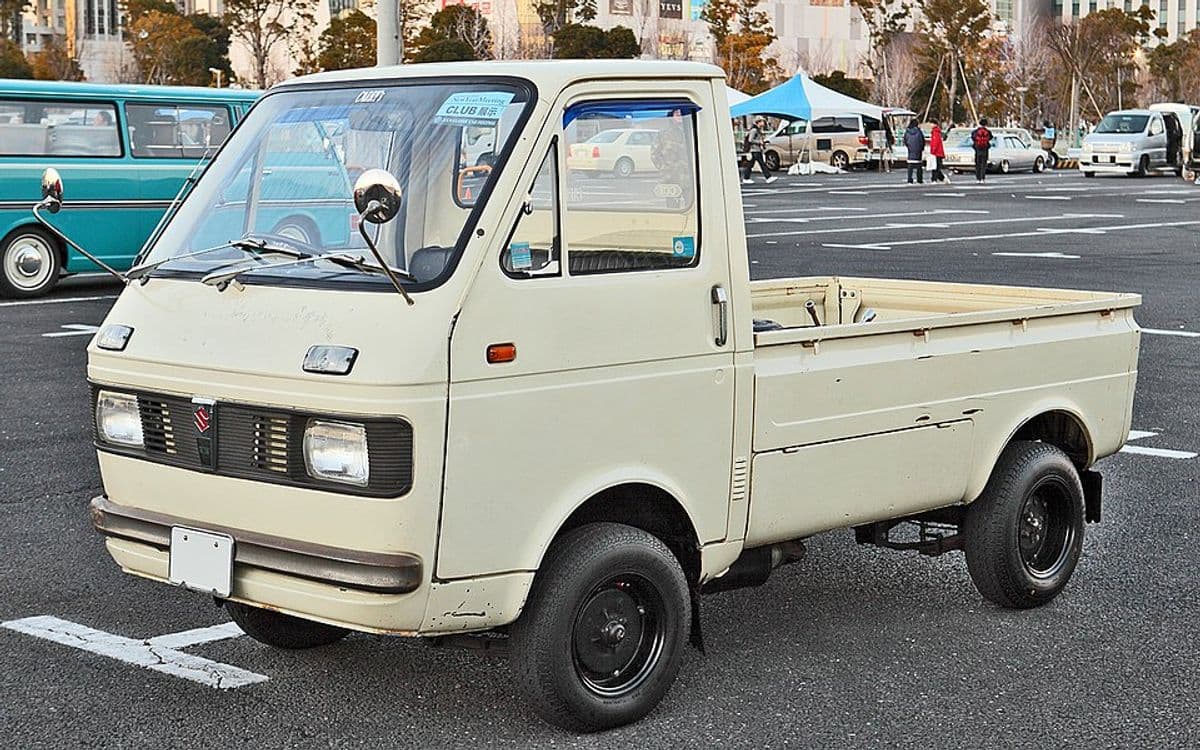
Suzuki Carry
1969-Present
Kansas wheat country and the county opt in model make the Carry the obvious pick. Cheapest factory dump bed in kei, deepest parts pipeline through Midwest importers, and the 4WD variant earns its keep on red dirt section roads when rain turns them into chocolate.