Kei Truck & Kei Car Laws in Oklahoma (2026)
RestrictedOklahoma allows kei trucks on roads posted 55 mph or less, with insurance and titling required and turnpikes off limits.
Are Kei Trucks Legal in Oklahoma?
Yes, kei trucks are legal in Oklahoma. The state allows these Japanese mini trucks on all public roads with speed limits of 55 mph or lower, but they are prohibited from operating on interstate highways. Oklahoma's approach is more permissive than many states, making it a favorable location for kei truck enthusiasts.
Under Oklahoma Statute 47 O.S. 1151.3, mini trucks are defined and regulated for road use, with specific restrictions on speed and road type. Kei trucks that are at least 25 years old are exempt from Federal Motor Vehicle Safety Standards (FMVSS) under the NHTSA's 25-year import rule, which makes importing and registering vintage models like the Suzuki Carry, Honda Acty, and Daihatsu Hijet significantly easier. For more details, check our complete guide to importing a kei truck from Japan.
Oklahoma has not enacted specific bans or restrictions targeting kei trucks, unlike states such as Rhode Island or Maine. As long as your kei truck meets basic safety requirements and you follow the registration process, you can legally drive it throughout most of the state.
How to Register a Kei Truck in Oklahoma
Registering a kei truck in Oklahoma requires several steps through the Oklahoma Tax Commission (OTC) and Department of Public Safety (DPS). Here's the complete process:
Step 1: Obtain a State-Assigned VIN
Most kei trucks imported from Japan lack the 17-digit VIN required by U.S. standards. You'll need to visit an Oklahoma Department of Public Safety inspection station to have a state-assigned identification number issued. Bring your vehicle, proof of ownership, and any import documentation.
Step 2: Gather Required Documents
You'll need:
- Bill of sale or original out-of-country title
- U.S. Customs documentation (Form 3299, 7501, or similar)
- Completed Application for Oklahoma Certificate of Title (Form 701-6)
- Proof of Oklahoma insurance
- State-assigned VIN certificate from DPS
- Odometer disclosure statement (if applicable)
Step 3: Submit to Oklahoma Tax Commission
Take your documents to a Service Oklahoma office or licensed operator location (formerly called tag agencies). The staff will process your title and registration application.
Step 4: Pay Fees
Registration costs vary based on vehicle weight and year, but expect to pay:
- Title fee: $11
- Registration fee: $85-$150 (depending on weight and year)
- Excise tax: 3.25% of purchase price
- Processing fees: approximately $1-$5
Total costs typically range from $200-$400 for initial registration.
Step 5: Pass Safety Inspection
While Oklahoma no longer requires annual safety inspections for most vehicles, your kei truck must meet basic equipment standards before registration. Ensure it has functioning headlights, taillights, brake lights, turn signals, windshield wipers, mirrors, and seat belts.
Restrictions and Limitations
Oklahoma imposes several restrictions on kei truck operation:
Speed and Road Restrictions
Kei trucks are permitted on roads with posted speed limits of 55 mph or lower. You cannot drive on interstate highways or any road where the speed limit exceeds 55 mph. This restriction is based on the vehicle's limited engine displacement (660cc) and top speed capabilities, which typically max out around 50-55 mph. New to kei vehicles? Start with our beginner's guide to kei trucks.
Equipment Requirements
Under 47 O.S. 12-101, your kei truck must have:
- Functional headlights and taillights
- Turn signals (front and rear)
- Brake lights
- Windshield wipers
- Rearview mirrors (at least one outside mirror)
- Seat belts for all occupants
- Horn
- Muffler (cannot be modified to increase noise beyond factory specifications)
Local Ordinances
Some municipalities may have additional restrictions. Always check with your local city or county government, as certain areas might prohibit kei trucks on specific roads or require additional permits for commercial use.
Insurance Requirements
Oklahoma requires all motor vehicles operating on public roads to carry liability insurance. This applies to kei trucks just as it does to standard vehicles.
Minimum Coverage Requirements
You must maintain at least:
- $25,000 bodily injury liability per person
- $50,000 bodily injury liability per accident
- $25,000 property damage liability per accident
Finding Insurance for Kei Trucks
Not all insurance companies offer coverage for kei trucks due to their unique classification. For more guidance, see our kei truck insurance guide. Companies known to insure kei trucks include:
- State Farm (varies by agent)
- Progressive
- Hagerty (specialty/collector vehicle insurance)
- Grundy Insurance
- American Modern Insurance
Expect to pay $400-$800 annually for basic liability coverage, though rates vary significantly based on your driving record, location, and the insurance provider's comfort level with kei trucks.
Inspection and Emissions
Oklahoma's inspection requirements for kei trucks are relatively straightforward.
Safety Inspections
As of 2026, Oklahoma does not require periodic safety inspections for most passenger vehicles. However, you must ensure your kei truck meets all equipment standards outlined in Oklahoma law before initial registration. Law enforcement can cite you if your vehicle fails to maintain required safety equipment.
Emissions Testing
Oklahoma does not have statewide emissions testing requirements. The state eliminated its vehicle emissions inspection program, so kei trucks are exempt from emissions testing regardless of age or location within the state.
VIN Inspection
The one-time VIN inspection through the Oklahoma Department of Public Safety is mandatory for all imported vehicles without a standard 17-digit VIN. This is part of the initial registration process and costs approximately $10-$15.
Tips from Oklahoma Kei Truck Owners
Oklahoma's kei truck community has grown in recent years. Here are practical tips from owners across the state:
Registration Tips
Start the registration process early, because obtaining the state-assigned VIN can take several weeks depending on DPS workload. Some owners report faster processing in rural counties versus Oklahoma City or Tulsa metro areas.
Insurance Shopping
Call multiple insurance agents before purchasing your kei truck. Be sure to review our pre-purchase inspection checklist. Some State Farm and Progressive agents are more familiar with kei trucks than others. Wondering how they compare to a side-by-side? Read our kei truck vs UTV comparison. Having photos and specifications ready can speed up the quote process.
Parts and Maintenance
Oklahoma has a small but growing network of mechanics familiar with kei trucks. Many owners order parts through online retailers like Yokohama Parts or connect with other owners through the r/keitruck subreddit.
Road Planning
Plan your routes to avoid interstate highways. Apps like Google Maps can be set to "avoid highways," though double-check that alternative routes don't have speed limits exceeding 55 mph.
Winter Considerations
Oklahoma winters are generally mild, but kei trucks typically lack modern insulation and heating systems. Many owners install aftermarket heaters or limit winter driving to short trips.
Frequently Asked Questions
Can I drive my kei truck on Oklahoma highways?
Yes, but only on highways with speed limits of 55 mph or lower. You cannot drive on interstate highways (I-35, I-40, I-44, etc.) or any road where the posted limit exceeds 55 mph.
Do I need a special license to drive a kei truck?
No. A standard Oklahoma Class D driver's license is sufficient. Kei trucks are classified as standard motor vehicles, not commercial vehicles, so no special endorsements are required.
Can I use a kei truck for my farm or ranch?
Absolutely. Kei trucks are popular on Oklahoma farms and ranches due to their compact size, excellent maneuverability, and useful cargo beds. You can operate them on private property without registration, but if you drive on public roads, you must follow all registration and insurance requirements.
What happens if I get pulled over in my kei truck?
As long as your kei truck is properly registered, insured, and meets equipment requirements, you should have no issues. Carry your registration and insurance proof at all times. Some officers may be unfamiliar with kei trucks, so having your documentation readily available helps.
Can I modify my kei truck in Oklahoma?
Yes, but modifications must not violate Oklahoma equipment laws. You can add lift kits, larger tires, and other accessories, but the vehicle must maintain all required safety equipment. Significantly altering the muffler system to increase noise levels is prohibited.
Are there any age restrictions on which kei trucks I can register?
While kei trucks of any age can theoretically be registered if they meet safety standards, importing vehicles less than 25 years old requires compliance with FMVSS, which is prohibitively expensive and complex. Most Oklahoma kei truck owners stick with vehicles 25+ years old to take advantage of the NHTSA exemption.
Can I register a kei truck for commercial use in Oklahoma?
Yes, but you'll need appropriate commercial registration and insurance. Contact the Oklahoma Tax Commission for commercial vehicle registration requirements. Using a kei truck for business purposes like landscaping or property maintenance is common in Oklahoma.
Useful Links
- Oklahoma Tax Commission - Motor Vehicle Division
- Service Oklahoma - Vehicle Registration
- NHTSA Vehicle Importation Guidelines
- Oklahoma Statute Title 47 - Motor Vehicles
- Hagerty Insurance for Specialty Vehicles
- r/keitruck - Reddit Community
Oklahoma's permissive approach to kei trucks makes it one of the better states for ownership. With proper registration and attention to road restrictions, you can enjoy your Suzuki Carry, Honda Acty, or other kei truck throughout the state. For more information on kei truck laws in other states, explore our complete state guides our complete state-by-state guide. If you're near the border, you may also want to check kei truck laws in Kansas, Missouri, Arkansas, Texas, New Mexico, and Colorado.
What you can do in Oklahoma
Kei trucks are legal here under specific limits. Here are the three moves that matter.
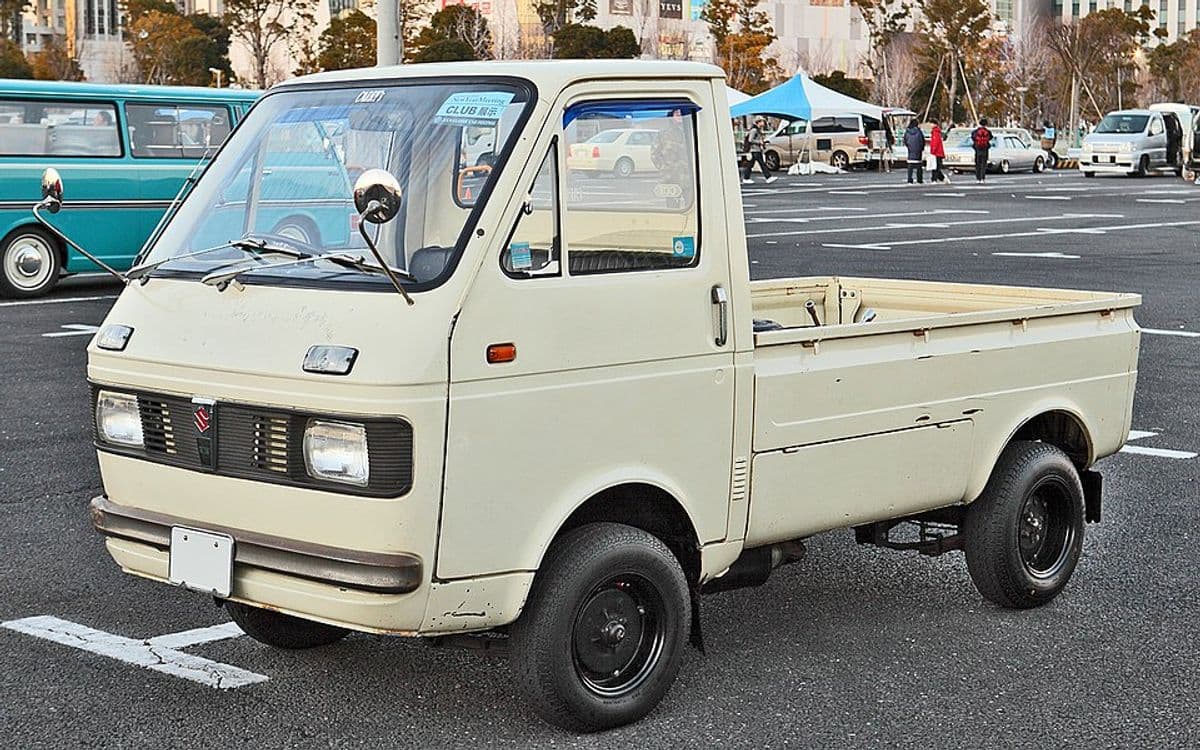
Suzuki Carry
1969-Present
Oklahoma red dirt, wheat country, and the 55 mph cap suit the Carry exactly. Deepest parts pipeline in the segment, cheapest factory dump bed, and the 4WD variant handles the section roads that turn to glue when rain hits. Built for ranch work, priced to keep running.