Kei Truck & Kei Car Laws in Maine (2026)
Not LegalMaine's BMV classifies kei trucks as off road vehicles that cannot be registered for road use, and its 2026 working group unanimously recommended no change to the law.
Are Kei Trucks Legal in Maine?
No. Maine does not register kei trucks for road use. The Bureau of Motor Vehicles classifies Japanese mini trucks as off road vehicles, which, in the BMV's words, cannot be registered for use on the state's roads and highways. Off road vehicles are barred from Maine roads altogether, with a narrow exception for trained government operators. Nobody gets a plate for a Carry, and there is no inspection you can pass to change that.
Federal law is a separate question. Under the NHTSA 25 year import rule, a kei truck that old can enter the country, and our complete guide to importing a kei truck from Japan walks through how. The BMV's report is blunt about what that does and does not buy you: "the mere act of importing them does not mean they have the ability to be safely or legally operated on public roads." Owners of a Suzuki Carry, Honda Acty, or Daihatsu Hijet in Maine get private property use and nothing else.
What the Maine BMV Working Group Decided
Maine did study this. LD 1209 passed in May 2025 as Resolves 2025, chapter 29, and told the BMV to convene a working group on the safety and use of nonconforming vehicles on Maine's roads and highways. The seven voting members included the BMV, the Maine State Police, an attorney, a municipal clerk, and the director of an auto auction and transportation museum. They met on the first and third Monday of each month from October 6, 2025 through November 17, 2025.
The result was a flat no. The BMV's final report says the group "unanimously suggests no changes to current laws and standards regarding nonconforming vehicles," meaning no carve out and no new inspection standard for road registration.
The reasoning is worth knowing, because it tells you what a future bill would have to beat. Kei trucks do not meet the federal safety standards, EPA pollutant rules, or NHTSA crash testing. Maine's inspection rules require equipment that meets standards set by the Chief of the State Police, so a standard inspection would fail a kei truck by definition, and writing a separate standard would mean ignoring the federal rules. The report also says the State Police lack the capacity to enforce over 800 pages of federal standards. It warns, too, that an exception for kei trucks "opens a proverbial 'Pandora's Box'," with pressure to extend it to ATVs and dune buggies. The group leaned on an American Association of Motor Vehicle Administrators survey too: of 27 states and one Canadian territory that answered, 11, Maine among them, allow no mini trucks on public roads.
Can You Register a Kei Truck in Maine?
No. There is no kei registration process in Maine, no special plate, and no road legal class to apply for. The Maine Bureau of Motor Vehicles will not plate a vehicle it classifies as off road. The forum workarounds do not hold up against the BMV's report either.
Registering in another state does not fix it. The report says a vehicle registered elsewhere can legally operate on Maine's roads only if it is similar to a Maine resident vehicle that would pass Maine's safety standards. It also calls out outside companies that register off road vehicles in another state and then try to transfer those registrations to Maine, and says that is not allowed. A plate from New Hampshire, Massachusetts, or Vermont does not make the truck legal on a Maine road.
The low speed vehicle class is not a door either. Maine's LSV rules require a manufacturer's certificate of origin showing the vehicle meets the federal LSV standard, and they limit LSVs to roads posted 35 mph or less. Kei trucks are not built to that standard. Antique plates fail for a similar reason: Maine's antique auto class requires the vehicle to meet federal safety standards for its year of manufacture and limits use mostly to exhibitions, club activities, and parades.
Where Kei Trucks Do Run in Maine
The BMV's report says these vehicles are "often found in places including but not limited to farms, campgrounds, theme parks, fairgrounds and other off highway locations." That matches what owners do with them. Private land is outside the BMV's road rules, so woodlots, hayfields, sugar bush roads, and hunting camps are where a kei truck earns its keep, and a trailer handles the trip between properties. If you are weighing it against a side by side for that kind of work, our kei truck vs UTV comparison lays out the tradeoffs.
Legislative History
Legislative Timeline
- Pending
LD 1071 Proposed (125th Legislature)
LD 1071, "An Act To Allow the Use of Mini-trucks on Public Ways," proposed a mini truck registration class: top speed of 60 mph, 2,000 pounds unloaded weight, operation only within 100 miles of the registered address, and a $35 annual fee. It never became law, and the BMV confirmed in 2026 that Maine still does not register kei trucks.
- Pending
LD 1209 Creates the Working Group
The Legislature passed LD 1209 (Resolves 2025, chapter 29), directing the BMV to convene a working group on the safety and use of nonconforming vehicles on Maine's roads and highways.
- Pending
Working Group Convenes
The BMV convened the working group on October 6, 2025. It met on the first and third Monday of each month through November 17, 2025.
- Banned
Working Group Recommends No Change
The BMV's final report found that kei trucks are classified as off road vehicles that cannot be registered for road use, and the group unanimously recommended no change to current laws and standards. The report is on file with the Legislature.
We have found no kei truck bill in Maine's 2026 session. Any change would need a new bill in the next Legislature, and the working group's unanimous finding makes that an uphill climb.
A correction. Earlier versions of this page, and some of our posts, reported that a bill called SP 884 carried out the working group's recommendations and failed on April 29, 2026. That was an error. SP 884 is the paper number for LD 2179, an unrelated act on licensing online used car dealers, signed April 3, 2026 as Public Law 2025, chapter 637. The April 29 date belongs to a different bill, LD 884, a law school legal aid clinic resolve that died on adjournment. The working group recommended no change, so no kei bill followed. The 60 mph cap, the 2,000 pound limit, and the 100 mile radius we once listed as Maine's rules were never law. They came from the 2011 proposal above.
Tips from Maine Kei Truck Owners
Plan around the ban instead of fighting it. Keep the truck on your own land, trailer it between properties, and keep your import paperwork organized in case the rules change. If you are buying, a truck you can only use on private ground should cost private ground money, so price it that way. Our pre purchase inspection checklist applies the same way it does in any state.
If you want to push for change, start with the people already doing it. The Maine Kei group and r/keitruck are where Maine owners compare notes and track any new bill. Legislators will point to the BMV report first, so the useful pitch answers its objections about federal safety standards, inspection capacity, and the slippery slope to other vehicle types.
Frequently Asked Questions
Can I drive a kei truck on Maine roads?
No. The BMV classifies kei trucks as off road vehicles that cannot be registered for use on the state's roads and highways, and Maine offers no kei registration class.
Can I register a kei truck in New Hampshire and drive it in Maine?
Not legally, according to the BMV's report. A vehicle registered in another state can operate on Maine roads only if it is similar to a Maine resident vehicle that would pass Maine's safety standards, and the report says transferring off road registrations from other states into Maine is not allowed.
Is it legal to own or import a kei truck in Maine?
Federal law allows importing a kei truck that is 25 years old or older, and the BMV's report acknowledges it may be legal to import these vehicles. Owning one is a different matter from driving it. Road use is what Maine does not allow.
Did Maine pass a law legalizing kei trucks in 2026?
No. The LD 1209 working group recommended unanimously in its 2026 report that nothing change, and we have found no kei truck bill in the 2026 session. Vermont did legalize kei trucks this year, as did Alaska.
Why did the BMV say no?
The report cites federal safety standards, EPA pollutant requirements, and NHTSA crash testing that kei trucks do not meet, plus the State Police's lack of capacity to enforce a separate standard and the risk of opening the door to other vehicle types.
Useful Links
- Maine BMV Nonconforming Vehicles Working Group - Official page for the working group
- Working Group Final Report (PDF) - Findings and appendices
- LD 1209 - The resolve that created the working group
- LD 1071 Bill Text - The 2011 mini truck proposal that never became law
- Maine Bureau of Motor Vehicles - Official registration and titling authority
- Maine Kei Organization - Local advocacy group
- NHTSA Vehicle Importation Guidelines - Federal import regulations
- r/keitruck Reddit Community - Owner discussion
Maine is a no. There is no road registration, no workaround, and no kei bill in sight after a state working group voted unanimously against changing the law. If you live in New England and want a kei truck you can drive on the street, look at Massachusetts, which now registers kei vehicles that meet the federal 25 year rule, and Vermont, where kei trucks have been street legal since July 2026.
When Maine changes, we tell you first.
One email. No newsletter. Only when the law actually moves. SEMA and state-level reform groups are pushing legalization bills across the country.
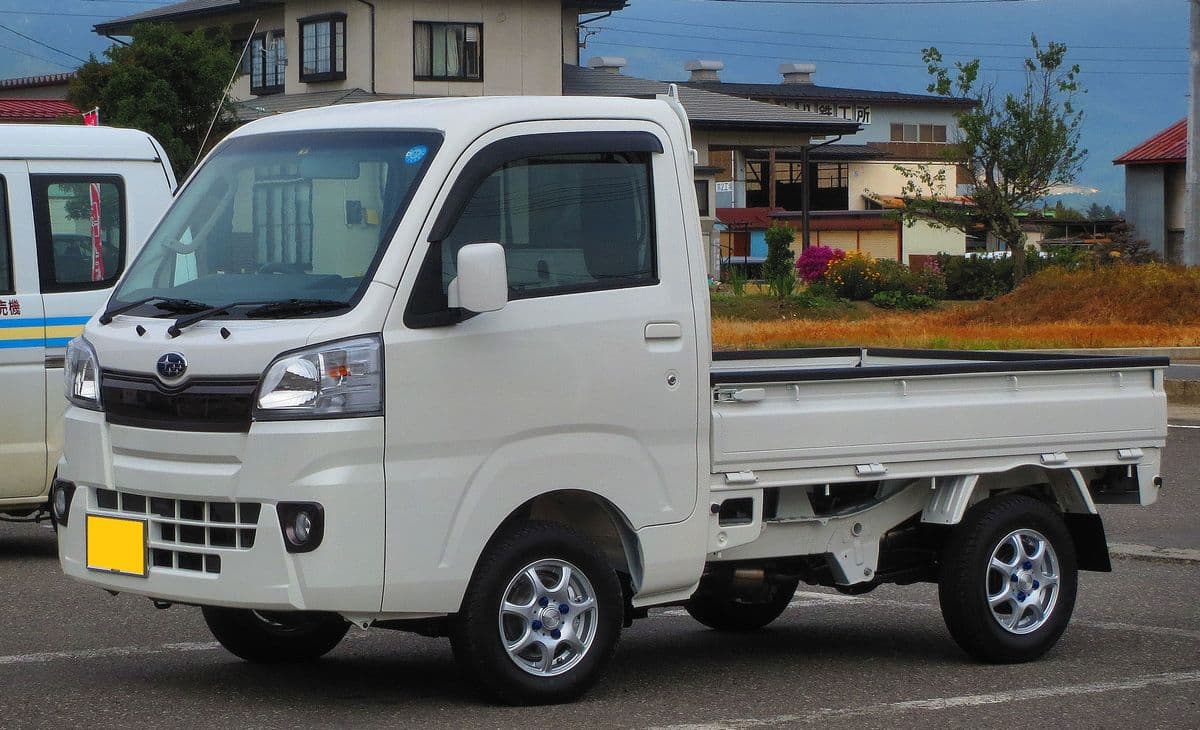
Subaru Sambar
1961-Present
Maine winters are brutal, dirt roads run deep, and woodlots up north need a hauler that handles snow. The Sambar 4WD supercharged variant has the rear engine weight for traction and the climbing torque for the western Maine grades. Survives Aroostook winters better than any front engine kei.
What you CAN do in Maine
Maine's BMV classifies kei trucks as off road vehicles, so they stay off public roads. The BMV's own report says they turn up on farms, campgrounds, fairgrounds, and other off highway ground. Woodlots, hayfields, and camp roads are where a Maine kei truck works. Move it between properties on a trailer.