Kei Truck & Kei Car Laws in Vermont (2026)
LegalKei trucks are street legal in Vermont as of July 1, 2026 under Act 153. Register as a pleasure car or farm truck via the standard VD-119 process; local bans are preempted.
Are Kei Trucks Legal in Vermont?
Yes. As of July 1, 2026, kei trucks are street legal in Vermont. Governor Phil Scott signed Senate Bill S.326 on June 16, 2026, making it Act 153 of the 2026 session, and the kei vehicle provisions took effect July 1, 2026. Vermont went from a complete DMV ban to the first northeastern state with a defined kei registration pathway in a single legislative session.
The mechanics matter here, because Vermont did this the right way. Act 153 Secs. 20 and 21 amend 23 V.S.A. § 4 to define a "kei vehicle" in subdivision (90) as a vehicle with four wheels, an engine of 660cc or less, and maximum dimensions of 130 inches long, 78 inches high, and 60 inches wide, with "kei truck" defined separately in subdivision (89). The act then folds kei vehicles into the "pleasure car" definition (subdivision (28)) and kei trucks into the "farm truck" definition (subdivision (72)). A brand new 23 V.S.A. § 1044 gives registered kei vehicles the same operating rights as pleasure cars and farm trucks, and it blocks both the Traffic Committee and municipalities from banning them. You can read the full text in the Act 153 as enacted.
The federal side has not changed. The NHTSA 25 year import rule still lets you bring in vehicles 25 years or older without meeting Federal Motor Vehicle Safety Standards (FMVSS). For the full process, check our complete guide to importing a kei truck from Japan. What changed is the state side: popular models like the Suzuki Carry, Honda Acty, Daihatsu Hijet, and Mitsubishi Minicab all fit comfortably inside the new kei vehicle definition, and the Vermont DMV now has a statutory obligation to register them.
How to Register a Kei Truck in Vermont
There is no special kei process, no separate permit, no asterisk. Your kei truck registers as a pleasure car or, if it fits the use case, as a farm truck, through Vermont's standard registration process:
- Completed Registration, Tax & Title Application (Form VD-119)
- Proof of ownership (certificate of origin or valid out of state title)
- Proof of Vermont insurance with minimum coverage of $25,000 per person and $50,000 per accident for bodily injury
- Payment of purchase and use tax (6% of purchase price)
- Registration fees based on vehicle weight and type
The pleasure car route is the default for most owners. The farm truck route exists because Act 153 wrote kei trucks directly into the farm truck definition in subdivision (72), which matters for Vermont's many working properties. Either way, the vehicle needs to meet the kei definition in 23 V.S.A. § 4(90): 660cc or less, and no bigger than 130 inches long, 78 inches high, and 60 inches wide. Every stock kei truck ever imported under the 25 year rule clears those numbers with room to spare.
New Vermont residents must register vehicles within 60 days of establishing residency. If you are moving in with a kei truck registered elsewhere, that same clock applies, and unlike before July 2026, the DMV will actually process your application.
Restrictions and Limitations
This is the part that separates Vermont from most kei friendly states: there are no kei specific restrictions in Act 153. No speed cap, no road class limits, no daylight only clause, no county opt outs. Section 1044 grants registered kei vehicles the same operating rights as pleasure cars and farm trucks, full stop.
Even better, the law preempts the usual death by local ordinance problem. 23 V.S.A. § 1044 prohibits the Traffic Committee and municipalities from banning kei vehicles from roads under their jurisdiction. In states like Texas and Colorado, owners won registration only to watch individual towns ban their trucks from local roads. Vermont's legislature saw that movie and wrote the ending out of the script.
The practical limits that remain are the ones that apply to every vehicle: you still need valid registration, insurance, and inspection, and you still cannot drive an unregistered kei truck on public roads.
Insurance Requirements
Vermont requires liability insurance for all registered vehicles, and now that kei trucks register like any other pleasure car, this is a real requirement rather than a moot point. For guidance on carriers that actually understand these vehicles, see our kei truck insurance guide. Vermont's minimums are:
- $25,000 bodily injury coverage per person
- $50,000 bodily injury coverage per accident (two or more people)
- $10,000 property damage coverage per accident
Alternatively, Vermont accepts self-insurance with coverage of at least $115,000.
Because Vermont now classifies kei vehicles as pleasure cars by statute, insurers have a clean category to write against. Specialty carriers like Hagerty have long covered imported Japanese vehicles in states with clear registration pathways, and Vermont just became one of them.
Inspection and Emissions
Vermont requires all registered vehicles to pass a safety inspection, and your kei truck is no exception now that it registers like everything else. The program works like this:
- Biennial safety inspections: Required every two years
- Inspection timing: Must be completed within 15 days of registration
- Inspection stations: Performed at state approved inspection facilities
- Inspection scope: Covers brakes, lights, steering, suspension, tires, exhaust, windshield wipers, mirrors, and safety equipment
Vermont does not have an emissions testing program, having phased out its previous emissions inspection requirement. However, vehicles must still have functional exhaust systems and cannot produce excessive smoke. A well maintained kei truck sails through this checklist; if yours has sat in a barn, budget time for brake lines, tires, and lighting before your inspection window closes. Our rundown of things to check before buying a kei truck doubles as an inspection prep checklist.
Tips from Vermont Kei Truck Owners
Vermont's kei community earned this one. Senator Becca White (D, Windsor County), vice chair of Senate Transportation, led the push after Vermont owners reported wildly inconsistent treatment depending on which DMV office they walked into. S.326 passed the Senate on March 20, 2026. On April 3, 2026, owners parked their kei trucks outside the Statehouse for "Mini Truck Day" to drum up House support, and it worked: the House passed the bill May 20, final concurrence came May 26, and Governor Scott signed it June 16, 2026. For the full story behind the grassroots effort, read our Mini Truck Day coverage, and for the complete breakdown of the signed law, our Act 153 legalization story.
Now that registration is open, the practical advice from early registrants:
- Bring complete import paperwork: Your customs entry documents and certificate of origin or prior title make the VD-119 process smooth. DMV counter staff are working from a new statute, so having everything in order helps.
- Decide pleasure car vs farm truck up front: Both are valid under Act 153. Farm truck registration fits working agricultural use; pleasure car is the simpler default for everyone else.
- Sort inspection early: You have 15 days after registration to pass safety inspection, so line up a station before you register.
- Winter prep matters: Vermont roads eat mild steel. Undercoat before your first salt season, and consider snow tires in kei sizes.
Rural owners who ran kei trucks purely on sugar bush and dairy property for years can finally connect their parcels by public road legally. And if you were leaning toward a UTV because of the old ban, the math has changed: read our kei truck vs UTV comparison, because a street legal kei truck now does everything a UTV does in Vermont plus the grocery run.
Frequently Asked Questions
Q: Can I register a kei truck in Vermont if it's 25+ years old?
Yes. The federal 25 year rule gets it into the country, and Act 153 gets it registered. As long as the vehicle fits the kei definition in 23 V.S.A. § 4(90), which is 660cc or less and within the 130 by 78 by 60 inch dimensional caps, the DMV registers it as a pleasure car or farm truck.
Q: What if I already own a kei truck and move to Vermont?
Register it within 60 days of establishing residency, same as any other vehicle. If it was registered in your previous state, bring that title and your Vermont insurance to the DMV with a completed VD-119.
Q: Do I need a special license or permit to drive a kei truck in Vermont?
No. A standard driver's license covers it. Kei vehicles registered under Act 153 have the same operating rights as pleasure cars and farm trucks, so there is nothing extra to obtain.
Q: Can my town ban kei trucks from local roads?
No. The new 23 V.S.A. § 1044 explicitly prohibits the Traffic Committee and municipalities from banning kei vehicles from roads under their jurisdiction. Statewide rights, no local carve outs.
Q: When did kei trucks become legal in Vermont?
Governor Phil Scott signed S.326 on June 16, 2026, making it Act 153 of the 2026 session. The kei vehicle registration provisions took effect July 1, 2026. Before that, Vermont had no registration pathway at all.
Q: Can I still use a kei truck on my farm without registration?
Yes. Nothing in Act 153 changed private property use. You can own and operate a kei truck entirely on private land without registration or insurance. The difference is that registering it now legally connects your property to the public road network.
Q: What happens if I'm caught driving an unregistered kei truck?
Same as any unregistered vehicle: fines, potential impoundment, and points on your license. With registration now open through the standard VD-119 process, there is no reason to run unregistered.
Useful Links
- Vermont Department of Motor Vehicles - Official DMV website
- Vehicle Registration Information - VT DMV registration page
- NHTSA Importing a Vehicle - Federal import regulations
- Vermont Vehicle Inspections - Inspection requirements
- Vermont Registration Fees - Fee schedules
- Vermont Insurance Requirements - Minimum coverage information
Legislative Timeline
Legislative Timeline
- Banned
Kei Trucks Banned from Registration
Vermont DMV refuses all registration applications for kei trucks. No special permits, farm exemptions, or alternative classifications available.
- Pending
S.326 Passes Senate with Kei Truck Definition
The Senate passed S.326, an omnibus motor vehicle bill, with a section that defines "mini truck" in state law and directs the DMV to register qualifying vehicles. Sen. Becca White (D, Windsor County) led the effort after owners reported wildly inconsistent DMV treatment.
- Pending
Mini Truck Day Rally at the Statehouse
Vermont owners parked their kei trucks outside the Statehouse to drum up House support for S.326. The bill was referred to House Transportation, where markup continued through April and into May.
- Pending
S.326 Passes House on Third Reading
The House passed S.326 in concurrence with proposal of amendment after committee markup by Transportation, Ways and Means, and Appropriations. The kei truck definition section survived intact.
- Pending
S.326 Final Passage by Both Chambers
The Senate concurred in the House's amendments and S.326 cleared both chambers. The bill was enrolled and sent to Governor Phil Scott's desk for action.
- Legalized
Governor Scott Signs S.326 into Law as Act 153
Governor Phil Scott signed S.326, making it Act 153 of the 2026 session. Secs. 20 and 21 define "kei vehicle" and "kei truck" in 23 V.S.A. § 4, fold them into the pleasure car and farm truck definitions, and add a new § 1044 preempting local bans.
- Legalized
Kei Vehicle Registration Provisions Take Effect
Act 153's kei vehicle provisions took effect. Kei trucks now register through the standard VD-119 process as pleasure cars or farm trucks, with the same operating rights and no kei specific speed or road class restrictions.
Conclusion
Vermont flipped from one of the most restrictive kei states in the country to arguably the cleanest legalization on the books. Act 153 defines kei vehicles in statute, registers them through the normal pleasure car and farm truck process, imposes zero kei specific restrictions, and preempts municipal bans before they could start. Governor Scott signed it June 16, 2026, it took effect July 1, 2026, and Vermont is now the first northeastern state with a defined kei registration pathway. If you have been sitting on a Suzuki Carry or Honda Acty waiting for this, the Governor's bill action page has the receipts and the DMV has your paperwork.
For information about kei truck laws in other states, visit our complete state by state guide. If you're near the border, you may also want to check kei truck laws in New Hampshire, New York, and Massachusetts.
Where to actually buy one in Vermont
No verified kei truck dealers in Vermont yet. The best buyers ship from nearby states or import directly from Japan.
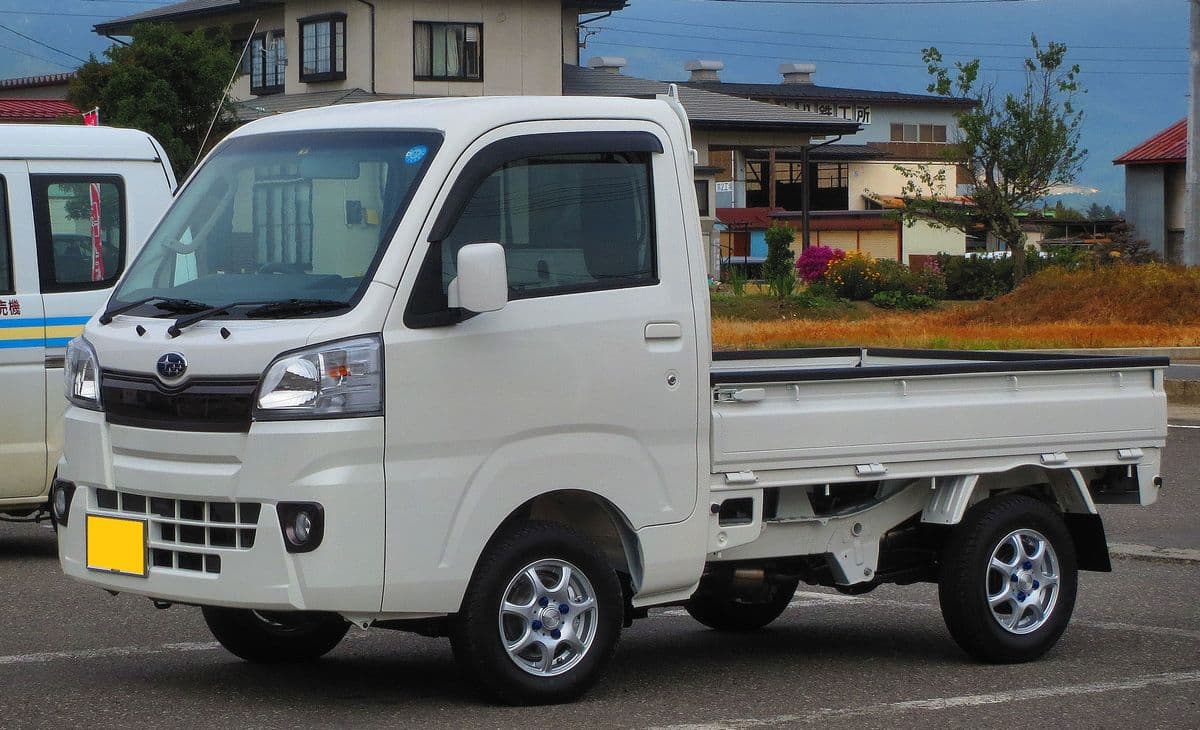
Subaru Sambar
1961-Present
Vermont winters, dirt roads, and sugar bush properties want a kei truck that handles snow and mud. The Sambar 4WD has the rear engine weight bias for traction, the supercharged variant climbs Green Mountain grades, and Subaru is a local cultural fit. Best snow rig in kei.
Across the state line
Get the weekly kei truck brief
Law changes, price drops, new models, and build inspiration. One email a week.