Kei Truck & Kei Car Laws in Minnesota (2026)
RestrictedMinnesota Statute 169.045 hands kei truck road authority to counties and cities, and HF 3865, a 2026 bill limiting collector plates to weekend daytime use, died in committee.
Are Kei Trucks Legal in Minnesota?
It depends on where you live. Minnesota does not have statewide authorization for kei trucks on public roads. Instead, the state allows counties, cities, and towns to regulate mini trucks through local ordinances under Minnesota Statute § 169.045. This means kei truck legality varies significantly by municipality. What's legal in one county may be prohibited in the next.
Unlike states with clear statewide yes-or-no policies, Minnesota takes a localized approach. This creates a patchwork of regulations across the state, requiring owners to research their specific jurisdiction's rules.
Several Minnesota counties and cities have adopted mini truck ordinances, including Hubbard County, Becker County, and various northern communities. These ordinances typically allow kei trucks on designated local roads with special permits, but restrictions apply.
Even when locally permitted, Minnesota mini trucks face equipment requirements, operational limitations, and permit conditions. And like all states, Minnesota cannot override the federal restriction prohibiting kei trucks from interstate highways.
The NHTSA 25-year import rule allows kei trucks 25 years or older to be legally imported, but Minnesota leaves the on road decision to local governments. For more details, check our complete guide to importing a kei truck from Japan.
How to Register a Kei Truck in Minnesota
Registration for kei trucks in Minnesota is a two-step process: first, obtain a permit from your local government, then register with the Minnesota Department of Public Safety.
Step 1: Check Local Ordinances
Before purchasing a kei truck, verify whether your county, city, or town has adopted a mini truck ordinance:
- Contact your county highway department or city clerk
- Ask if they've passed an ordinance under MN § 169.045
- Request a copy of the ordinance to review specific requirements
Step 2: Apply for Local Permit
If your municipality allows mini trucks:
- Complete the permit application (form varies by jurisdiction)
- Provide proof of ownership (title or bill of sale)
- Submit proof of insurance meeting Minnesota requirements
- Pay permit fee (typically $20-$50, varies by locality)
- Specify which roads you plan to use (must be under local jurisdiction)
Permit Details:
- Permits may be issued for up to three years
- Permits are renewable
- Only valid on roads under the issuing government's jurisdiction (city permits don't cover county roads)
- May include specific route or time restrictions
Step 3: Register with Minnesota DVS
Once you have a local permit:
- Visit a Minnesota Driver and Vehicle Services office
- Complete vehicle registration application
- Provide:
- Certificate of title or bill of sale
- Federal import documentation (for imported vehicles)
- Proof of Minnesota insurance
- Local permit authorization
- Valid Minnesota driver's license
Costs Breakdown:
- Local permit: $20-$50 (varies by municipality, renewable up to 3 years)
- Registration fee: Based on vehicle value (typically $50-$150)
- Title fee: $11.25
- Filing fee: $10
- Plate fee: $6.50 (passenger) or varies (commercial)
- Sales tax: 6.875% of purchase price, per the Minnesota Department of Revenue (it jumped from 6.5% back in July 2023, so budget for the extra)
Counties Known to Allow Mini Trucks:
- Hubbard County
- Becker County
- Cass County (verify current status)
- Various northern Minnesota townships
Important Notes:
- Without a local permit, you cannot register your kei truck for on road use
- Permits only authorize use on roads under the issuing government's jurisdiction
- Driving on non-authorized roads is illegal, even with a permit
- Minnesota does not require safety inspections for passenger vehicles
Restrictions and Limitations
Minnesota's mini truck regulations include significant restrictions, even in jurisdictions that permit them:
Geographic Limitations:
- Operation limited to roads designated in local ordinances
- City permits only valid on city streets
- County permits only valid on county roads
- Multiple permits required for cross-jurisdictional travel
- No interstate highway use (I-35, I-90, I-94) - federal restriction
Speed and Road Type:
- Mini trucks typically restricted to roads with speed limits of 40 mph or less
- May be prohibited from state highways even within permitting jurisdictions
- Local ordinances specify which roads are authorized
Equipment Requirements Under MN § 169.045:
All mini trucks must have:
- Headlights and taillights
- Turn signal lamps (front and rear)
- At least one rearview mirror (some ordinances require two)
- Windshield
- Seat belts for driver and front passenger positions
- Parking brake
- Horn
Additional Safety Standards:
- Maximum speed capability varies by ordinance (typically 40 mph minimum)
- Vehicle must be mechanically sound
- Adequate braking system
- Proper steering functionality
Operator Requirements:
- Valid Minnesota driver's license or instruction permit required
- Same traffic laws apply as for standard vehicles
- Must carry permit and proof of insurance at all times
Vehicle Definition:
Minnesota ordinances typically define mini trucks as:
- Four wheeled motor vehicles
- Designed primarily for load carrying
- Maximum speed of 40 mph or higher (varies by ordinance)
- Weight typically under 2,500 pounds
Weather Considerations:
Minnesota winters are severe. Consider:
- Kei trucks can handle winter conditions, especially 4WD models
- Lightweight design affects traction on ice
- Factory heaters adequate but not as powerful as U.S. vehicles
- Road salt causes rust, so undercoating is recommended
Insurance Requirements
Minnesota requires all motor vehicle owners to maintain auto insurance, including mini trucks operated under local permits. For more guidance, see our kei truck insurance guide.
Minimum Required Coverage:
- $30,000 bodily injury liability per person
- $60,000 bodily injury liability per accident
- $10,000 property damage liability per accident
No-Fault Coverage:
Minnesota is a no-fault state, requiring Personal Injury Protection (PIP) per the Minnesota Department of Commerce:
- $40,000 total per person per accident
- Split as $20,000 for medical expenses and $20,000 for nonmedical expenses (lost wages, replacement services)
- Covers you and passengers regardless of fault
Uninsured Motorist Coverage:
- $25,000 per person
- $50,000 per accident
- Required in Minnesota
Finding Insurance:
Insuring a kei truck in Minnesota can be challenging due to limited familiarity:
Companies That May Cover Kei Trucks:
- Hagerty - Specialty and collector vehicle insurance
- Progressive - Some agents handle unusual imports
- State Farm - Varies by local agent
- Farm Bureau - Good option for rural Minnesota owners
- West Bend Mutual - Minnesota-focused insurer worth contacting
Tips for Getting Coverage:
- Contact agents directly; online quotes typically won't work
- Explain the vehicle is legally imported under federal 25-year rule
- Have VIN/chassis number, import docs, and photos ready
- Mention you have a local permit under MN § 169.045
- Rural addresses may get better rates than Twin Cities
Expected Costs:
- $400-$900 per year depending on coverage and location
- Rural Minnesota typically cheaper than Minneapolis-St. Paul metro
- Your driving record and credit score affect rates
- Higher deductibles reduce premiums
Proof of Insurance:
You must provide proof of Minnesota auto insurance:
- When applying for your local permit
- When registering with Minnesota DVS
- If stopped by law enforcement
- MN insurance cards are standardized, so ensure your insurer provides proper documentation
Inspection and Emissions
Minnesota does not require periodic safety inspections or emissions testing for passenger vehicles, which simplifies kei truck ownership.
No Safety Inspections:
- Minnesota discontinued mandatory safety inspections
- Vehicle safety is the owner's responsibility
- Law enforcement can cite you for equipment violations if stopped
No Emissions Testing:
- Minnesota does not have mandatory emissions testing programs
- Even in Twin Cities metro area, no smog checks required
- Vehicles 25+ years old would be exempt if testing existed
Equipment Compliance:
While there's no formal inspection, your kei truck must meet Minnesota equipment standards:
- All lights must function (headlights, taillights, turn signals, brake lights)
- Windshield cannot have significant cracks
- Wipers must function
- Seat belts must be operational
- Brakes must work properly
- Tires must have adequate tread
- Horn must function
Self-Maintenance:
Since Minnesota doesn't inspect, responsible owners should:
- Regularly check all lights and signals
- Maintain brakes and steering systems
- Monitor tire condition and pressure
- Keep windshield clear of cracks
- Test horn functionality
- Ensure seat belts work properly
Import Compliance:
When importing a kei truck to Minnesota:
- Ensure federal importation paperwork is complete (Forms 3520-1 and HS-7)
- Vehicle must be 25+ years old to meet NHTSA requirements
- Verify VIN or chassis number is accurate
- Keep all customs documentation organized
Tips from Minnesota Kei Truck Owners
Minnesota's mini truck community is active, particularly in northern counties. Here's what local owners recommend:
Research Your Area First:
- Before buying, confirm your county or city allows mini trucks
- Get a copy of the local ordinance
- Understand which specific roads are authorized
- Some owners live near jurisdictional boundaries and obtain multiple permits
Northern Minnesota:
- Counties in northern Minnesota are generally more permissive
- Rural communities understand the utility of mini trucks
- Great for hunting, fishing access, and cabin maintenance
- Forest roads and lake access routes benefit from compact size
Winter Performance:
- 4WD kei trucks (Suzuki Carry 4WD, Honda Acty 4WD) handle Minnesota winters well
- Use winter tires, which are essential in Minnesota conditions
- Keep recovery gear, blankets, and emergency supplies
- Rust protection crucial due to road salt
Finding Parts and Service:
- Minneapolis-St. Paul has import specialists familiar with Japanese vehicles
- Online parts suppliers like Amayama Trading ship to Minnesota
- Many standard Japanese car parts are compatible
- Join Minnesota JDM import groups for mechanic recommendations
- See our kei truck parts guide for a full breakdown of online sources
Best Uses in Minnesota:
- Farm and ranch operations
- Hunting property access
- Ice fishing transportation (on designated roads to lakes)
- Small town delivery and service businesses
- Resort and campground maintenance
- Maple syrup operations and tree farms
Legislative Awareness:
- Stay informed about potential state-level mini truck legislation
- Contact state representatives to support broader legalization
- Join advocacy groups working on statewide authorization
- Watch collector plate rules. In March 2026, Rep. Meg Luger-Nikolai introduced HF 3865, which would have restricted collector-plated vehicles to weekend daytime use only. Kei owners who registered under the collector class would have been swept up. The bill got referred to the House Transportation Finance and Policy committee on March 2, 2026, drew immediate pushback from the antique car community, and never came up for a committee vote. It formally died when the 94th Legislature adjourned sine die on May 18, 2026. The underlying MN § 169.045 framework is unchanged, but it is a reminder that collector plate workarounds can be targeted at any session.
Route Planning:
- Keep a map of authorized roads
- Plan trips to avoid non-permitted routes
- Multiple permits required if traveling between jurisdictions
- Use GPS with custom waypoints for legal routes
Frequently Asked Questions
Can I drive my kei truck anywhere in Minnesota with a permit?
No. Your permit only authorizes operation on roads under the issuing government's jurisdiction. A city permit doesn't allow county road use, and vice versa. If you need to travel across jurisdictions, you'll need separate permits from each.
Do I need a special license to drive a kei truck?
No. A standard Minnesota Class D driver's license is sufficient. Kei trucks are four wheeled motor vehicles, so no special endorsements are needed. Even an instruction permit is acceptable under Minnesota law.
Can I drive on state highways with a local permit?
This depends on the specific ordinance. Most local ordinances restrict mini trucks to roads with speed limits of 40 mph or less, which typically excludes state highways. Check your local ordinance for specific restrictions.
What happens if I drive outside my permitted area?
Operating a mini truck outside authorized roads is illegal and can result in citations, fines, and potential vehicle impoundment. Law enforcement can verify your permit restrictions when stopped.
Can I use a kei truck for my business?
Yes, if your local ordinance permits it. You'll need appropriate business licenses and commercial vehicle insurance. Many northern Minnesota businesses use mini trucks for local operations like landscaping, maintenance, and delivery.
Are kei trucks good in Minnesota winters?
4WD models perform well in Minnesota snow due to their lightweight design and good weight distribution. However, they're not as heavy as full size trucks, so traction is more limited. Use quality winter tires, drive cautiously, and keep emergency gear. Many northern Minnesota owners use kei trucks year-round successfully.
Can I register a kei truck if my city doesn't have an ordinance?
Technically no. Without a local ordinance and permit, the Minnesota DVS won't register your kei truck for on road use. You could potentially use it on private property without registration, or work with your local government to adopt a mini truck ordinance.
How do I convince my county to adopt a mini truck ordinance?
Contact your county commissioner or city council. Present examples of neighboring counties with ordinances (Hubbard County, Becker County). Explain your intended use and how mini trucks benefit your community. Attend local government meetings and advocate for adoption.
Useful Links
- Minnesota Driver and Vehicle Services - Vehicle registration authority
- Minnesota Statute § 169.045 - Mini truck statutory provisions
- Hubbard County Mini Truck Ordinance - Example county ordinance
- Minnesota Auto Insurance Requirements - Coverage information
- NHTSA Vehicle Importation Guidelines - Federal import regulations
- Hagerty Insurance - Specialty vehicle insurance
- Minnesota House Research: Low-Power and Unconventional Vehicles - Legislative background
- r/keitruck Reddit Community - Owner discussions and advice
Minnesota's localized approach to kei truck regulation creates unique challenges but also opportunities for rural and northern residents. If you're considering kei truck ownership in the Upper Midwest, compare our guides for Wisconsin, Iowa, and North Dakota. If you're near the border, you may also want to check kei truck laws in Wisconsin, Iowa, South Dakota, and North Dakota.
What you can do in Minnesota
Kei trucks are legal here under specific limits. Here are the three moves that matter.
Where you can drive
Posted 40 mph or under. No interstates, no high speed arterials.
Read the rule →Find a nationwide dealer
No verified dealers in state yet. Browse importers who ship nationwide.
Browse dealers →When the rules change
Restrictions shift. We email you when Minnesota updates.
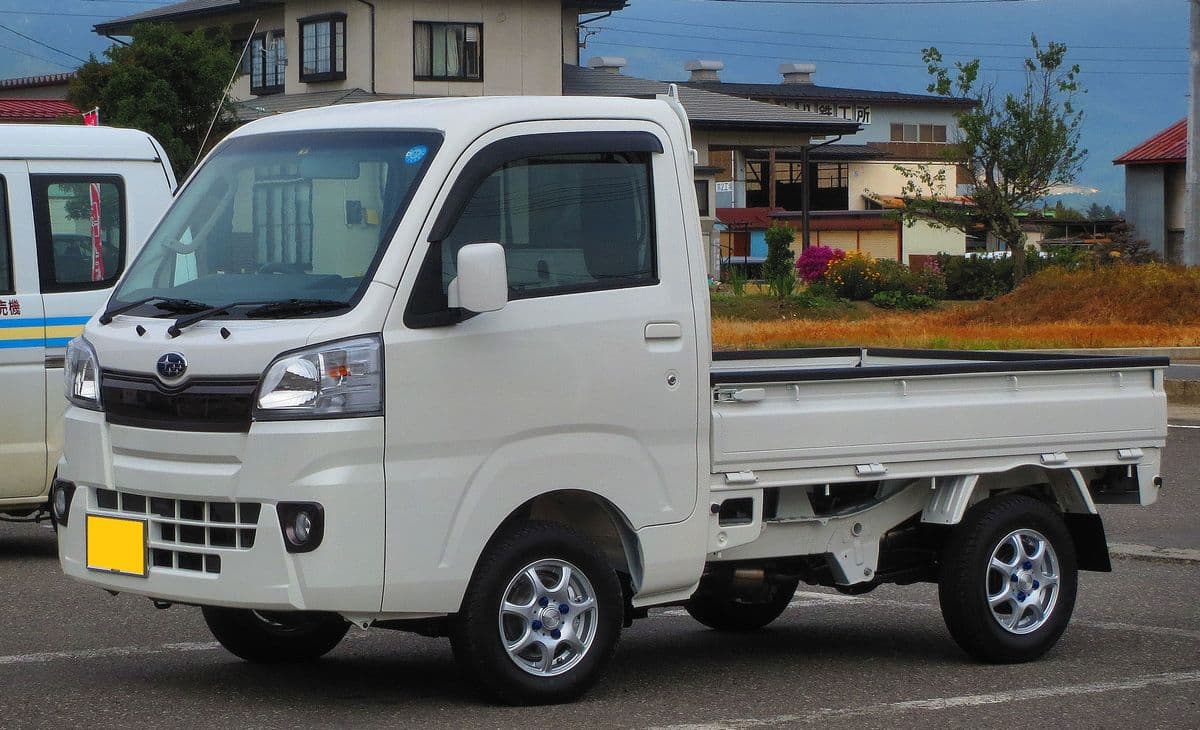
Subaru Sambar
1961-Present
Minnesota winters are the real test, and the Sambar passes it. Rear engine weight bias keeps the drive tires planted on glare ice, the supercharged variant has the torque to push through unplowed county roads, and Iron Range cold starts are easier with the smaller cylinder count. Snow rig of choice.