Kei Truck & Kei Car Laws in North Dakota (2026)
RestrictedNorth Dakota allows kei trucks on roads posted 55 mph or less and requires a safety inspection at registration.
Are Kei Trucks Legal in North Dakota?
Yes, kei trucks are legal in North Dakota with specific restrictions. The Peace Garden State allows Japanese mini trucks like the Suzuki Carry, Honda Acty, and Daihatsu Hijet to operate on roads with posted speed limits of 55 mph or less. This relatively permissive stance makes North Dakota one of the more kei truck friendly states in the nation, particularly beneficial for the state's extensive agricultural community. See how they stack up in our kei truck vs UTV comparison.
Unlike neighboring Minnesota, which has varying county-level restrictions, North Dakota applies its rules statewide through the North Dakota Department of Transportation (NDDOT). The state has no specific statutes explicitly mentioning "kei trucks," meaning these vehicles must comply with general vehicle standards for safety, equipment, and registration, similar to any other motor vehicle.
North Dakota's 55 mph speed limit allowance is notably more generous than states like New Hampshire (35 mph) or Kansas (50 mph), providing greater utility for rural residents and farmers who need to travel on county highways connecting properties and towns.
Vehicles 25 years or older benefit from the NHTSA 25-year import rule, which exempts them from Federal Motor Vehicle Safety Standards (FMVSS) compliance for import purposes. For more details, check our complete guide to importing a kei truck from Japan. This makes older kei trucks easier to bring into the country, and North Dakota's relatively straightforward registration process means you can get them on the road without excessive bureaucracy.
How to Register a Kei Truck in North Dakota
Registering a kei truck in North Dakota follows the standard motor vehicle registration process. Here's the complete step-by-step guide:
Step 1: Gather Required Documents
Before visiting a motor vehicle office, prepare:
- Proof of ownership: Vehicle title, Manufacturer's Statement of Origin (MSO), or bill of sale
- Proof of identity: Valid driver's license or state-issued ID
- Proof of insurance: North Dakota liability insurance certificate meeting minimum requirements
- Import documentation (if applicable): U.S. Customs forms, bill of lading, importation paperwork
- Odometer disclosure: Required for vehicles under 10 years old
- Previous registration (if applicable): Out-of-state title or registration
Step 2: Complete Safety Inspection
North Dakota requires a general safety inspection when registering any vehicle for the first time in the state. This is a one-time requirement. No annual inspections are needed for registration renewal.
Take your kei truck to a licensed inspection station where technicians will verify:
- Functional headlights, taillights, brake lights, and turn signals
- Working seat belts for all seating positions
- Rearview and side mirrors providing adequate visibility
- Adequate braking system
- Horn and windshield wipers
- Tire condition and tread depth
- Exhaust system (no excessive leaks)
- General roadworthiness
The inspection ensures your imported kei truck meets basic safety standards. Many Japanese imports need minor modifications like additional mirrors (due to right-hand drive configuration) or upgraded lighting to pass.
Step 3: Visit a Motor Vehicle Office
You can register your vehicle at any NDDOT motor vehicle office or authorized deputy registrar office. Appointments are recommended. Schedule through the Online Scheduler or call 1-855-633-6835.
Bring all documents from Step 1 plus your safety inspection certificate.
Step 4: Pay Registration Fees and Taxes
North Dakota registration fees are based on the vehicle's original registration year (not model year) and weight. Most kei trucks weigh 1,500-2,000 pounds, placing them in the lightest truck category.
Registration Fees:
- Light trucks under 3,000 lbs: Approximately $39-$69 (varies by age)
- Annual registration system (no multi-year options for trucks)
Additional Fees:
- Title fee: $5
- Excise tax: 5% of purchase price
- Filing fees: Approximately $10
Example: For a 1995 Honda Acty purchased for $8,000:
- Registration: ~$49
- Title: $5
- Excise tax: $400 (5% of $8,000)
- Filing: $10
- Total: ~$464
Step 5: Receive Your Registration and Plates
Upon approval, you'll receive:
- North Dakota title in your name
- Registration certificate
- License plates (front and rear required)
- Registration stickers
Your registration must be renewed annually by your birth month.
Important Considerations
Pickup Truck Classification: According to North Dakota Century Code, a pickup truck is defined as a motor vehicle with manufacturer's gross vehicle weight rating of less than 11,500 pounds and unladen weight less than 8,000 pounds. Most kei trucks easily qualify under this definition.
First-Time Registration Timing: Register your vehicle within 30 days of establishing North Dakota residency or purchasing the vehicle to avoid late fees.
Restrictions and Limitations
Understanding North Dakota's restrictions ensures legal and safe kei truck operation:
Speed Limit Restrictions
Kei trucks in North Dakota are limited to roads with posted speed limits of 55 mph or less. This restriction accommodates the vehicles' design limitations while allowing practical use on:
- County highways (most have 55 mph limits)
- State highways with reduced speed limits (common in rural areas)
- Municipal streets and roads
- Township and local roads
- Agricultural service roads
Prohibited Roads:
- Interstate highways (I-29, I-94) with 75 mph limits
- U.S. routes with speed limits exceeding 55 mph
- Any road where the posted limit is 60 mph or higher
North Dakota's extensive county highway system with 55 mph speed limits makes this restriction less burdensome than in more urbanized states. Many rural routes connecting farms, ranches, and small towns fall within the allowable range.
Equipment Requirements
All registered kei trucks must have functional:
- Lighting: DOT-approved headlights, taillights, brake lights, turn signals, and license plate light
- Mirrors: Rearview mirror and at least one side mirror (two side mirrors recommended for right-hand drive vehicles)
- Seat belts: Properly anchored seat belts for all seating positions
- Windshield and wipers: Functional windshield with working wipers
- Horn: Audible from at least 200 feet
- Tires: Adequate tread depth (minimum 2/32 inch)
- Brakes: Working service brake and parking brake
Many Japanese domestic market (JDM) kei trucks require modifications to meet these standards, particularly:
- Upgrading to DOT-compliant lighting (JDM lights may have different specifications)
- Adding or repositioning mirrors for left-hand traffic
- Installing or replacing seat belts to meet DOT standards
- Ensuring turn signals are amber (front) and red (rear)
Off-Highway Operation
Kei trucks excel in North Dakota's agricultural setting. On private property (farms, ranches, industrial sites), you don't need registration or insurance. Many North Dakota farmers use kei trucks exclusively off road for:
- Fence line maintenance
- Livestock management
- Equipment and feed transport
- Irrigation system access
- Hunting and land management
Weather Considerations
North Dakota experiences extreme winter conditions. Kei truck operators should consider:
- Heating: Many JDM kei trucks lack adequate cabin heating for -30°F temperatures
- Four wheel drive: Essential for winter operation
- Winter tires: Rated for severe snow conditions
- Cold weather starting: Block heaters or battery warmers recommended
- Rust prevention: Road salt requires aggressive rust protection measures
Insurance Requirements
North Dakota requires all motor vehicles operated on public roads have liability insurance.
Minimum Coverage Requirements
Your kei truck insurance must provide at least:
- $25,000 per person for bodily injury or death
- $50,000 per accident for bodily injury or death of two or more people
- $25,000 for property damage
You must carry proof of insurance and present it upon request by law enforcement or during traffic stops.
Finding Insurance for Kei Trucks
Securing insurance for kei trucks can be challenging, as not all carriers cover imported specialty vehicles. For more tips, see our kei truck insurance guide. Companies known to insure Japanese mini trucks include:
Standard Carriers:
- State Farm: Often covers kei trucks as utility vehicles; success varies by agent
- Progressive: Has specialty vehicle policies that may include kei trucks
- Farmers Insurance: Some agents write policies for imported mini trucks
- American Family: Coverage available in some North Dakota markets
Specialty Insurers:
- Hagerty: Offers classic and collector vehicle insurance for 25+ year old kei trucks
- American Modern: Specializes in non-standard and recreational vehicles
- National General: Known for covering unique and imported vehicles
Insurance Application Tips
When seeking insurance for your kei truck:
- Call ahead: Verify the company insures kei trucks before applying
- Provide documentation: Have your title, registration, and import papers ready
- Photos: Some insurers require photos of the vehicle
- VIN verification: Ensure your VIN matches across all documents
- Inspection: May require professional mechanical inspection
- Usage declaration: Clearly state whether the vehicle is for personal, farm, or commercial use
Farm and Agricultural Insurance
North Dakota's large agricultural sector means many farmers have existing farm insurance policies. Check with your farm insurance provider about adding a kei truck as a scheduled vehicle. This often provides more favorable rates and easier approval than standard auto insurance.
Self-Insurance
North Dakota allows self-insurance for individuals or organizations operating 25 or more motor vehicles. However, this is impractical for most individual kei truck owners.
Inspection and Emissions
North Dakota has straightforward inspection requirements and no emissions testing, which is a significant advantage for kei truck owners.
Safety Inspection (One-Time)
North Dakota requires a general safety inspection only when first registering a vehicle in the state. This is a one-time requirement. Annual inspections are not required for registration renewal.
The initial inspection verifies your kei truck meets basic safety standards:
- Brake system functionality (service brake and parking brake)
- Steering system (no excessive play or wear)
- Suspension components (shocks, springs, control arms)
- Tires (adequate tread, proper inflation, no damage)
- Lighting systems (all required lights functional)
- Horn operation
- Windshield condition (no cracks in driver's sight line)
- Mirror positioning and condition
- Seat belt presence and mounting
- Exhaust system (no excessive leaks or noise)
Inspections are performed at licensed inspection stations. Find locations through the NDDOT website.
No Emissions Testing
North Dakota does not require emissions testing or smog checks for any vehicles. This is a major advantage for kei truck owners, as many Japanese imports would struggle to meet strict emissions standards in states like California or New York.
The absence of emissions testing means:
- Older kei trucks without catalytic converters can be registered
- No concerns about OBD-II diagnostic requirements
- No tailpipe emissions testing
- No evaporative emissions system requirements
This makes North Dakota particularly attractive for classic kei truck enthusiasts importing 25+ year old vehicles.
Federal Compliance Considerations
While North Dakota doesn't require extensive compliance proof, kei trucks still must meet federal import requirements:
- 25-year rule: Vehicles 25+ years old are exempt from FMVSS compliance for import under the NHTSA 25-year rule
- Newer vehicles: Kei trucks under 25 years old face significant federal import barriers and may not be legally importable
Most kei trucks in North Dakota are 1990s models (Suzuki Carry, Honda Acty, Daihatsu Hijet) that qualify under the 25-year exemption.
Tips from North Dakota Kei Truck Owners
North Dakota's agricultural landscape and rural character create ideal conditions for kei truck ownership. Here's practical advice from local owners:
Best Use Cases
Agricultural Operations: North Dakota has over 26,000 farms averaging 1,500+ acres. Kei trucks excel at:
- Moving between field sections connected by county roads (55 mph routes)
- Transporting tools and parts during harvest
- Checking livestock across large pastures
- Irrigation system maintenance and repair
- Fence line work and property management
Rural Property Management: Perfect for ranchers, hobby farmers, and rural homeowners with extensive acreage and minimal highway travel needs.
Small Town Transportation: Many North Dakota small towns have no roads exceeding 55 mph, making kei trucks practical for local errands, mail routes, and community services.
Hunting and Recreation: Popular for accessing hunting land via county roads and navigating field trails during hunting season.
County Highway Navigation
North Dakota's county highway system is extensive and well maintained. Most county roads have 55 mph speed limits, providing excellent kei truck accessibility. Use resources like:
- North Dakota Road Conditions - Check road status, especially in winter
- County highway maps - Available from county highway departments
- GPS apps - Verify speed limits before traveling unfamiliar routes
Winter Operation Strategies
North Dakota winters are brutal (-40°F temperatures, blizzards, ice). Successful winter kei truck operation requires:
Essential Upgrades:
- Aftermarket cab heater or upgraded heating system
- Block heater or engine warmer for cold starts
- Battery tender or upgraded cold-cranking-amp battery
- Winter tires (Bridgestone Blizzak or similar)
- Undercoating and rust prevention treatment
Operational Practices:
- Store in heated garage when possible
- Use fuel stabilizer and anti-gel additive for diesel models
- Check tire pressure frequently (cold affects pressure)
- Keep emergency kit (blankets, shovel, sand, jumper cables)
Finding Parts and Service
Parts availability can be challenging for Japanese kei trucks in North Dakota:
Online Sources:
- Japanese parts exporters (Nengun Performance, RHDJapan)
- Domestic mini truck parts suppliers (Mini Truck Depot, JapaneseClassics.com)
- eBay and online marketplaces
- Our kei truck parts guide covers the best domestic suppliers in detail
Local Options:
- Small engine repair shops (familiar with similar engines)
- Agricultural mechanics (experienced with utility vehicles)
- ATV/UTV dealers (sometimes service kei trucks)
DIY Maintenance: Many owners perform their own maintenance. Kei trucks have simple mechanical systems ideal for self-service.
Community and Resources
Connect with North Dakota kei truck enthusiasts:
- r/keitruck subreddit: National community with North Dakota members
- Local farm equipment groups: Network through Farm Bureau and agricultural organizations
- Japanese vehicle meets: Occasional gatherings in Fargo and Bismarck areas
- Online forums: Japanese Mini Truck Forum and dedicated Facebook groups
Frequently Asked Questions
Can I drive my kei truck on Highway 2 or Highway 85?
Only if the posted speed limit on that section of highway is 55 mph or less. Many rural portions of North Dakota state highways have 55 mph speed limits, but verify before traveling. If the posted limit is 60, 65, or higher, kei trucks are prohibited.
Do I need a special license to drive a kei truck?
No. A standard North Dakota Class D (operator's) driver's license is sufficient. No special endorsements or classifications are required.
Can I use my kei truck for commercial purposes?
Yes. You can register your kei truck for commercial use if you're operating a business. You'll pay standard commercial registration fees based on vehicle weight. Common commercial uses include landscaping, property maintenance services, and agricultural contracting.
What about operating on township roads?
Township roads typically have speed limits of 55 mph or less, making them legal for kei truck operation. However, always observe posted speed limits and be aware that some township roads may be unimproved or seasonal.
Can I register a brand-new kei truck from Japan?
This is challenging. New kei trucks don't qualify for the 25-year import exemption and must meet current FMVSS standards, which they typically don't. Focus on vehicles 25+ years old for straightforward importation and registration.
Do I need to renew my safety inspection annually?
No. North Dakota only requires the initial safety inspection when first registering the vehicle. Annual registration renewal does not require reinspection.
What happens if I get pulled over on a road with a 65 mph speed limit?
Operating a kei truck on roads exceeding 55 mph speed limits violates North Dakota vehicle operation laws. Penalties can include traffic citations, fines ($20-$100+), and potential vehicle impoundment in egregious cases. Always plan routes to avoid prohibited roads.
Can I drive my kei truck in winter?
Yes, but be prepared for extreme cold. Many owners install aftermarket heaters, use block heaters, and equip winter tires. Four wheel drive kei trucks handle snow well, but extreme cold (-20°F to -40°F) can cause starting issues and mechanical problems without proper preparation.
Are kei vans and kei cars legal too?
Yes. The same 55 mph speed limit restriction applies to all kei class vehicles, including kei vans (like Honda Acty van), kei cars (like Honda Beat or Suzuki Cappuccino), and kei trucks. All must meet registration and safety inspection requirements.
Useful Links
Here are essential resources for North Dakota kei truck owners:
- North Dakota Department of Transportation - Official NDDOT website
- Motor Vehicle Services - Registration information and office locations
- Online Appointment Scheduler - Schedule registration appointments
- Motor Vehicle Registration Manual (PDF) - Comprehensive registration guide
- North Dakota Century Code - Chapter 39-04 - Vehicle registration statutes
- NHTSA Importing a Vehicle - Federal import rules and 25-year exemption
- North Dakota Road Conditions - Real-time road status and travel information
- Hagerty Insurance - Specialty insurance for classic and imported vehicles
- r/keitruck Reddit - Community discussions and owner experiences
North Dakota's relatively permissive approach to kei trucks, combined with the state's agricultural economy and extensive rural road network, makes it one of the better states for kei truck ownership and operation. With proper registration, insurance, and understanding of the 55 mph speed limit restriction, kei trucks can serve as practical utility vehicles throughout the Peace Garden State. For information on kei truck laws in other states, explore our comprehensive complete state-by-state guide. If you're near the border, you may also want to check kei truck laws in Minnesota, South Dakota, and Montana.
What you can do in North Dakota
Kei trucks are legal here under specific limits. Here are the three moves that matter.
Where you can drive
Posted 55 mph or under. No interstates, no high speed arterials.
Read the rule →Find a nationwide dealer
No verified dealers in state yet. Browse importers who ship nationwide.
Browse dealers →When the rules change
Restrictions shift. We email you when North Dakota updates.
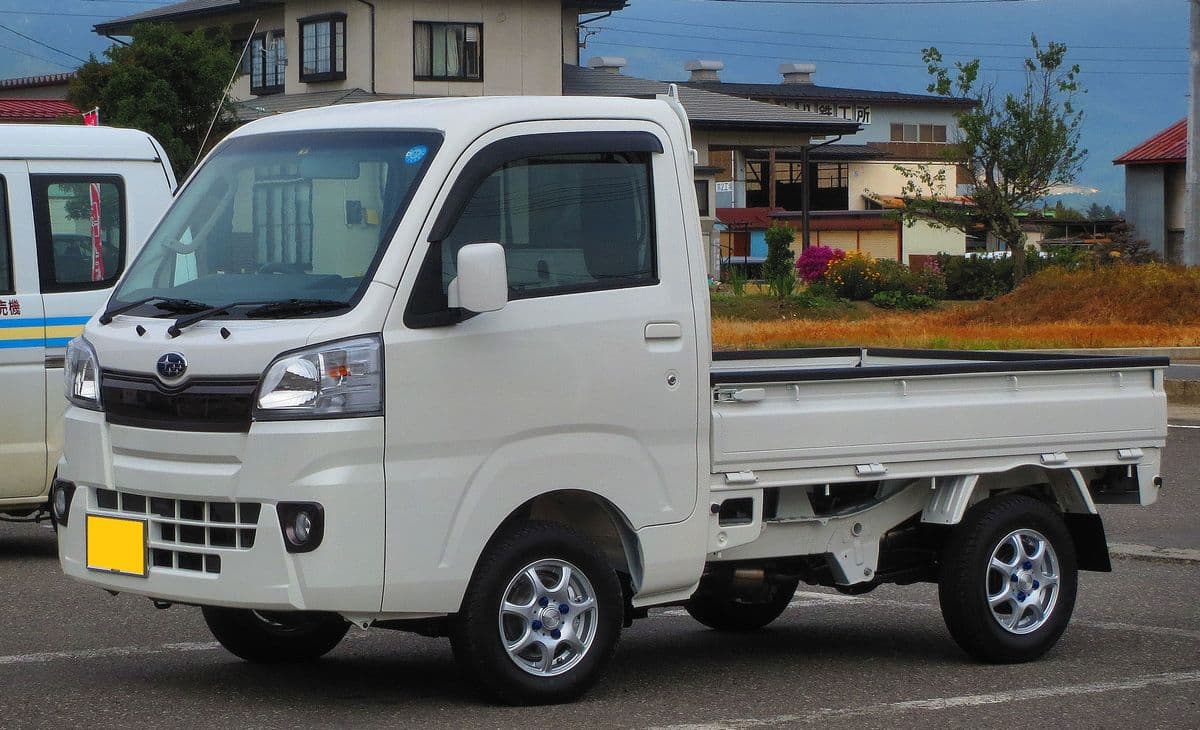
Subaru Sambar
1961-Present
North Dakota winters are no joke and the prairie wind never stops. The Sambar 4WD supercharged variant has the rear engine traction for snow, the torque to fight a stiff crosswind, and the climbing power for the Killdeer Mountains. Best cold weather kei truck on the market.