Kei Truck & Kei Car Laws in South Dakota (2026)
LegalSouth Dakota registers kei trucks as street legal UTVs and allows operation on roads posted up to 65 mph, one of the most permissive limits in the Midwest.
Are Kei Trucks Legal in South Dakota?
Yes, kei trucks are legal in South Dakota. The state allows these Japanese mini trucks to be registered as street legal UTVs (Utility Task Vehicles) with operation permitted on roads with speed limits up to 65 mph. This makes South Dakota one of the more permissive states for kei truck ownership in the Midwest.
South Dakota's approach to kei trucks is unique. Rather than creating a separate vehicle class, the state allows them to be registered under its existing street legal UTV framework. This classification gives kei truck owners substantial freedom while maintaining safety standards.
Like all imported vehicles, kei trucks must comply with federal regulations. For more details, check our complete guide to importing a kei truck from Japan. The NHTSA 25-year import rule exempts vehicles 25 years or older from Federal Motor Vehicle Safety Standards (FMVSS), making vintage models like the Suzuki Carry, Honda Acty, Daihatsu Hijet, and Mitsubishi Minicab the most practical options for South Dakota registration.
South Dakota requires proper documentation showing the vehicle meets federal import requirements, including U.S. Customs forms. Once these federal hurdles are cleared, state registration is relatively straightforward through your local county treasurer's office.
How to Register a Kei Truck in South Dakota
South Dakota handles vehicle registration through county treasurer's offices rather than a centralized DMV. Here's the complete process:
Step 1: Ensure Federal Import Compliance
Before state registration, verify your kei truck meets federal requirements:
- Vehicle must be 25+ years old (to qualify for FMVSS exemption)
- Must have U.S. Customs documentation proving legal importation
- Acceptable forms include: HS-7 (Declaration Form), Customs Form 368, 7523, 3299, 3311, 7501, 7533, 6059B, or 3461
Step 2: Gather Required Documents
Collect these documents for your county treasurer:
- Original registration or verification from foreign government agency
- Bill of sale showing chain of ownership
- U.S. Customs documentation (one of the forms listed above)
- Proof of South Dakota residency
- Valid South Dakota driver's license
- Proof of insurance
Step 3: VIN Inspection
All vehicles titled or registered in South Dakota for the first time require a VIN inspection. Complete Form MV-602 (Certificate of Inspection).
The VIN inspection can be performed by:
- South Dakota Law Enforcement
- County Treasurer's Office staff
- Licensed vehicle dealers
- Other authorized agents
For imported kei trucks without standard 17-digit VINs, the state will assign an identification number during this process.
Step 4: Visit Your County Treasurer
South Dakota has 66 county treasurer's offices that handle vehicle registration. Find your local county treasurer and bring all documents.
Submit Form MV-4 (Application for Certificate of Title) along with your supporting documents.
Step 5: Pay Registration Fees
Registration fees vary based on vehicle age and weight. Kei trucks typically fall into the light truck category:
- Title fee: $10
- Registration fee: $56-$120 (varies by age and weight)
- License plate fee: $5
- Total estimated cost: $80-$150 for initial registration
Registrations must be completed within 45 days of purchase. Fees are prorated for the first year based on the first letter of your last name (South Dakota's staggered renewal system).
Step 6: Pass Required Inspections
After making any necessary modifications to meet safety standards, your kei truck must pass an inspection by the county treasurer or authorized agent to verify:
- Functioning headlights, taillights, turn signals
- Seat belts
- Mirrors
- Horn
- Brakes in proper working order
Restrictions and Limitations
South Dakota imposes several restrictions on kei truck operation under its street legal UTV classification.
Speed and Road Restrictions
Kei trucks registered as street legal UTVs can operate on roads with speed limits up to 65 mph. However, they are typically prohibited from:
- Interstate highways (I-90, I-29, etc.)
- Roads posted above 65 mph
- High-speed limited-access highways
The 65 mph limit aligns with most kei trucks' capabilities, as they typically max out around 50-60 mph due to their 660cc engines. New to kei vehicles? Start with our beginner's guide to kei trucks.
Equipment Requirements
To qualify as a street legal UTV in South Dakota, your kei truck must have:
- Functional headlights and taillights
- Turn signals (front and rear)
- Brake lights
- Horn
- Rearview mirrors (at least one)
- Seat belts for all passengers
- Windshield wipers (if equipped with windshield)
- Brakes in proper working order
Many imported kei trucks require modifications to meet these standards, particularly for turn signals and seat belts that may not have been standard in the Japanese market.
Safety Modifications
Common modifications South Dakota owners make include:
- Adding or upgrading seat belts to three-point systems
- Installing DOT-compliant lighting systems
- Upgrading brake components
- Adding larger mirrors for better visibility
- Installing windshields with wiper systems
Work with a mechanic experienced in kei trucks to ensure modifications meet South Dakota standards.
Insurance Requirements
South Dakota requires all street legal vehicles to carry liability insurance.
Minimum Coverage Requirements
You must maintain at least:
- $25,000 bodily injury per person
- $50,000 bodily injury per accident
- $25,000 property damage per accident
Finding Insurance for Kei Trucks
Not all insurance companies readily insure kei trucks due to their unique classification. For more guidance, see our kei truck insurance guide. Carriers known to provide coverage include:
- State Farm (varies by agent)
- Progressive
- Hagerty (specialty/collector vehicle insurance)
- American Modern Insurance
- Farm Bureau (especially for agricultural use)
Expected Costs: Annual premiums typically range from $400-$800 for basic liability coverage, depending on your driving record, location, and the insurer's familiarity with kei trucks.
Tips for Getting Insurance: Call multiple agents and explain that your kei truck is registered as a street legal UTV. Having photos, specifications, and your registration documents ready can expedite the quote process. Rural agents may be more familiar with non-traditional vehicles than urban agents. For a detailed comparison, see our kei truck vs UTV guide.
Inspection and Emissions
South Dakota has minimal ongoing inspection requirements, making it relatively easy to maintain kei truck registration.
No Periodic Safety Inspections
South Dakota does not require regular safety inspections for vehicle registration renewal. Once your kei truck passes the initial inspection during first-time registration, there are no mandatory recurring inspections.
However, you're still responsible for maintaining your vehicle in safe operating condition. Law enforcement can cite you for equipment violations if your lights, brakes, or other safety features fail.
No Emissions Testing
South Dakota is one of the few states with no vehicle emissions testing requirements. This eliminates a significant barrier for kei truck owners, as older imported vehicles sometimes struggle to meet modern emissions standards.
One-Time VIN Inspection
The VIN inspection (Form MV-602) is required only once during initial registration. If you sell your kei truck to another South Dakota resident, the new owner won't need a new VIN inspection if the vehicle remains titled in the state.
Tips from South Dakota Kei Truck Owners
South Dakota's growing kei truck community offers valuable practical advice:
County Variations
While state law is consistent, individual county treasurers may have varying familiarity with kei trucks. Rural counties like Custer, Meade, and Pennington often have more experience with non-traditional vehicles due to their ranching and farming communities. If you encounter confusion, politely reference the street legal UTV classification.
Winter Considerations
South Dakota winters are harsh. Kei trucks often lack modern insulation and heating. Many owners:
- Install aftermarket heaters
- Use engine block heaters for cold starts
- Store vehicles during extreme weather (below -10°F)
- Upgrade to winter tires
Parts and Maintenance
South Dakota has limited kei truck mechanics. Many owners:
- Order parts online from specialized importers
- Connect with mechanics in Sioux Falls or Rapid City who work on agricultural equipment
- Join online communities like r/keitruck for troubleshooting advice
Agricultural Use
Kei trucks are popular on South Dakota farms and ranches. If you're using yours primarily for agricultural purposes, you may qualify for agricultural registration, which can reduce fees. Check with your county treasurer.
Insurance Shopping
Farm Bureau and rural-focused insurers are often more willing to insure kei trucks than national carriers. If you have existing farm or homeowner's insurance, ask about adding your kei truck to your policy.
Frequently Asked Questions
Can I drive my kei truck on South Dakota highways?
Yes, as long as the highway's speed limit is 65 mph or lower. You cannot drive on interstate highways or roads posted above 65 mph. Most state highways (US 18, US 212, etc.) have sections within the allowable limits.
Do I need a special license to operate a kei truck?
No. A standard South Dakota Class 2 operator's license (regular driver's license) is sufficient. Kei trucks don't require motorcycle endorsements or commercial driver's licenses.
Can I use my kei truck for farm or ranch work?
Absolutely. Kei trucks are excellent for agricultural use due to their maneuverability, cargo capacity, and fuel efficiency. You may qualify for agricultural registration, which can reduce costs.
What if I get pulled over in my kei truck?
As long as your kei truck is properly registered, insured, and meets equipment requirements, you should have no issues. Keep your registration and insurance documents in the vehicle. Some officers may be unfamiliar with kei trucks, so having documentation readily available helps.
Can I register a kei truck less than 25 years old?
Technically yes, but it's prohibitively expensive and complex. Vehicles under 25 years old must comply with all FMVSS regulations, which requires extensive modifications and federal approval. Nearly all South Dakota kei truck owners choose vehicles 25+ years old to take advantage of the NHTSA exemption.
Are modifications allowed on kei trucks in South Dakota?
Yes, as long as modifications don't violate safety equipment requirements. Lift kits, larger tires, brush guards, and cosmetic changes are generally acceptable. Ensure all required safety equipment remains functional.
Can I use my kei truck for commercial purposes?
Yes, but you'll need appropriate commercial registration and insurance. Contact your county treasurer for commercial vehicle registration requirements. Many South Dakota businesses use kei trucks for landscaping, property maintenance, and light hauling.
Useful Links
- South Dakota Department of Revenue - Motor Vehicle Division
- Find Your County Treasurer's Office
- South Dakota Vehicle Registration Information
- NHTSA Vehicle Importation Guidelines
- Hagerty Insurance
- r/keitruck Reddit Community
South Dakota's permissive approach to kei trucks, combined with no emissions testing and minimal ongoing inspection requirements, makes it an attractive state for ownership. Whether you're using your Suzuki Carry for farm work in rural counties or your Honda Acty for light hauling in Sioux Falls, South Dakota's registration process is straightforward once you clear federal import requirements. For kei truck laws in other states, explore our complete guides our complete state-by-state guide. If you're near the border, you may also want to check kei truck laws in North Dakota, Minnesota, Iowa, Nebraska, Wyoming, and Montana.
Where to actually buy one in South Dakota
No verified kei truck dealers in South Dakota yet. The best buyers ship from nearby states or import directly from Japan.
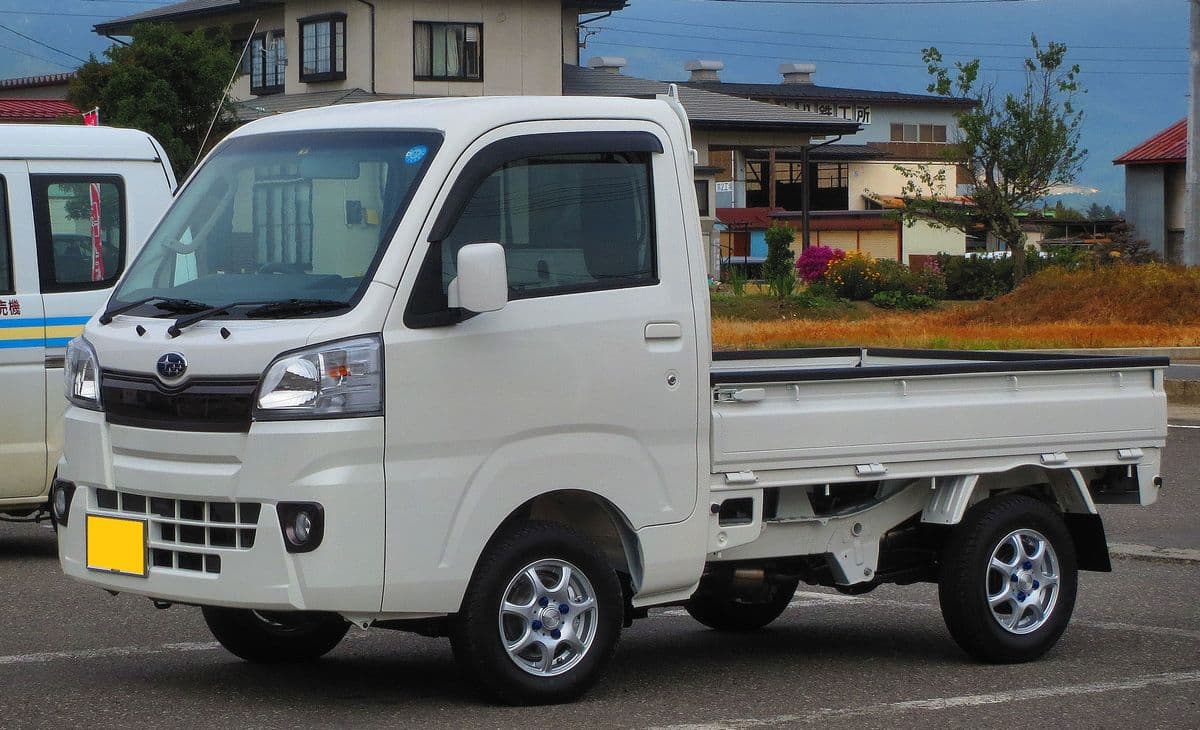
Subaru Sambar
1961-Present
Black Hills grades, plains wind, and South Dakota winters call for the Sambar 4WD with its rear engine traction and supercharged climbing torque. The 65 mph limit means you actually need a kei truck that can run at speed without struggling. Sambar holds 60 mph more comfortably than the front engine kei trucks.
Across the state line
Get the weekly kei truck brief
Law changes, price drops, new models, and build inspiration. One email a week.