Kei Truck & Kei Car Laws in North Carolina (2026)
RestrictedNorth Carolina G.S. 20-121.1 defines mini trucks as a class and allows them on roads posted 55 mph or less, with annual safety inspection required.
North Carolina explicitly allows mini trucks on public roads under G.S. 20-121.1, which was enacted through Session Law 2019-34 (HB 179). This law defines mini trucks as a distinct vehicle class and permits them on roads with posted speed limits of 55 mph or less, provided they meet specific safety equipment requirements. Wondering how they compare to a side-by-side? Read our kei truck vs UTV comparison.
Disclaimer: Laws and regulations change frequently. Always verify current requirements with your local North Carolina DMV office or the North Carolina Division of Motor Vehicles (NCDMV) before purchasing or registering a kei vehicle. Be sure to review our pre-purchase inspection checklist.
Overview
North Carolina passed HB 179 in 2019, creating a clear legal framework for mini truck operation on public roads. The law took effect June 21, 2019 and defines a "mini truck" in the state motor vehicle code. This puts North Carolina in the growing group of states that have created a specific regulatory pathway for kei trucks like the Suzuki Carry, Honda Acty, and Daihatsu Hijet.
The law allows operation on streets and highways where the posted speed limit is 55 mph or less. Mini trucks cannot be driven on interstates or controlled access highways, but the statute expressly lets you cross a road posted above 35 mph at an intersection. You just cannot travel along that faster road. This makes North Carolina moderately permissive, allowing local and rural road use while keeping kei trucks off high speed corridors.
One notable restriction: regardless of age, a mini truck cannot qualify as an antique vehicle or historic vehicle under G.S. 20-79.4(b). This prevents owners from using antique plates to bypass the mini truck classification requirements.
Registration Process and Requirements
North Carolina's G.S. 20-121.1 provides a clear registration pathway for mini trucks. Here is what you need:
- Title: North Carolina can issue a title for a kei vehicle. You will need either a title from another state or the Japanese export certificate with translation, along with customs documentation.
- Bill of Sale: Required showing the purchase price and vehicle information.
- Customs Documentation: CBP Form 7501, EPA Form 3520-1, and DOT Form HS-7 (for imported vehicles meeting the 25-year exemption). For more details, check our complete guide to importing a kei truck from Japan.
- Safety Inspection: North Carolina requires an annual safety inspection for all registered vehicles. The inspection covers brakes, lights, tires, steering, suspension, exhaust, windshield, mirrors, and horn. See our best off road mods guide for popular upgrades.
- Emissions Inspection: Required in 19 North Carolina counties: Alamance, Buncombe, Cabarrus, Cumberland, Davidson, Durham, Forsyth, Franklin, Gaston, Guilford, Iredell, Johnston, Lincoln, Mecklenburg, New Hanover, Randolph, Rowan, Union, and Wake, per the NCDMV emissions inspection page. Vehicles model year 1995 and older are typically exempt, which covers every 25 year rule kei import. And the whole program may be on its way out: on May 8, 2026, the EPA proposed approving North Carolina's plan to remove the vehicle emissions testing requirement in those 19 counties, though news coverage suggests Mecklenburg County would likely keep testing. As of July 2026 that is still a proposal, not a final rule, so plan on the current requirements until it lands.
- Proof of Insurance: North Carolina requires minimum liability insurance of 30/60/25 ($30,000 per person, $60,000 per accident for bodily injury, $25,000 for property damage).
Required Safety Equipment Under G.S. 20-121.1
Before your mini truck can be registered, it must be equipped with:
- Headlamps
- Stop lamps (brake lights)
- Turn signal lamps
- Tail lamps
- Reflex reflectors
- Parking brake
- Rearview mirrors
- Windshield
- Windshield wipers
- Speedometer
- Seat belts at all seating positions
- Vehicle identification number (VIN)
All required equipment must be maintained in proper working order at all times. Most imported kei trucks like the Suzuki Carry and Daihatsu Hijet already have this equipment, though you should verify all lights and signals meet U.S. standards.
Registration Process
- Gather all import and customs documentation.
- Obtain North Carolina auto insurance meeting 30/60/25 minimum requirements.
- Pass the NC safety inspection at a licensed inspection station.
- Visit the NCDMV with all documents and request registration as a mini truck.
- Pay applicable title, registration, and tax fees.
Off road Only Path
If you prefer to skip registration, you can still title the vehicle for ownership documentation and use it exclusively on private property, farms, or designated off road areas. No registration, insurance, or inspection is required for off road only use.
Restrictions
- 55 mph Speed Limit: Mini trucks can only be operated on streets and highways where the posted speed limit is 55 mph or less. Interstates and controlled access highways are prohibited.
- Intersection Crossing: Mini trucks may cross roads with posted speed limits above 35 mph at intersections, but cannot travel on those higher speed roads.
- No Antique Classification: Under G.S. 20-121.1, mini trucks cannot qualify as antique or historic vehicles regardless of age, preventing use of antique plates to bypass restrictions.
- Safety Equipment Mandatory: All equipment listed in the statute must remain in proper working order at all times. Operating with non-functional required equipment can result in citations.
- Annual Safety Inspection: The inspection remains a hurdle for some kei trucks. Inspectors may flag equipment that does not meet NC standards, such as headlight height or non-DOT-compliant lighting.
Cost Breakdown
| Item | Estimated Cost |
|---|---|
| Title | $56.00 |
| Registration (annual) | $36.00 - $72.00 (by weight) |
| Safety Inspection | $13.60 |
| Emissions Inspection (if applicable) | $30.00 |
| Highway Use Tax (3%) | Varies by purchase price |
| Insurance (annual) | $300 - $800 (varies) |
For off road only use, your costs are limited to the title fee and any applicable taxes.
Legislative History
Legislative Timeline
- Legalized
HB 179 Signed into Law (Session Law 2019-34)
Governor signed HB 179, creating G.S. 20-121.1 which defines mini trucks as a distinct vehicle class and permits their operation on roads with posted speed limits of 55 mph or less. The law requires specific safety equipment and prohibits mini trucks from qualifying as antique or historic vehicles.
- Legalized
No New Mini Truck Legislation
No new bills specifically targeting kei trucks or mini trucks were filed in the 2025 session. HB 179's framework from 2019 remains the governing law.
- Pending
EPA Proposes Ending NC Emissions Testing
The EPA proposed approving North Carolina's plan to remove the vehicle emissions testing requirement in the 19 counties where it still applies, with news coverage indicating Mecklenburg County would likely retain testing. As of July 2026 this is a proposal, not a final rule, so emissions inspections continue for now. The mini truck framework under G.S. 20-121.1 is unaffected either way.
North Carolina's 2019 legislation provided the clear legal framework that kei truck owners had been requesting for years. The law codified mini trucks as a recognized vehicle class with defined rights and restrictions, eliminating the inconsistency that previously existed between DMV offices. See our complete state-by-state guide for details on how other states handle kei truck registration.
If you're near the border, you may also want to check kei truck laws in Virginia, Tennessee, Georgia, and South Carolina.
Tips from Local Owners
- Title it regardless. Even if you plan to use the vehicle off road only, getting a North Carolina title establishes legal ownership and can make the vehicle easier to sell or transfer later.
- Reference the statute. When visiting the NCDMV, bring a printout of G.S. 20-121.1 to show staff the mini truck classification. Not all offices process these registrations frequently.
- Farm use is popular. Many NC kei truck owners use models like the Honda Acty on farms, hunting properties, and large rural parcels. For these purposes, no registration is needed, and the vehicles excel at light duty hauling, towing, and navigating rough terrain.
- Verify all equipment first. Before attempting registration, ensure every item in the G.S. 20-121.1 equipment list is present and functional. Missing a single item (like a speedometer reading in mph) can delay the process.
- Document everything. Bring the 25-year exemption documentation, the federal register notice, customs paperwork, and any other supporting materials to the DMV. The more prepared you are, the smoother the process.
- Plan your routes. Map out roads with 55 mph or lower speed limits in your area. Most county roads and city streets qualify, but some state routes may exceed the limit.
Find verified kei truck dealers in North Carolina in our dealer directory.
What you can do in North Carolina
Kei trucks are legal here under specific limits. Here are the three moves that matter.
Where you can drive
Posted 55 mph or under. No interstates, no high speed arterials.
Read the rule →Find a dealer in North Carolina
Verified importers who know your state's registration process.
Browse dealers →When the rules change
Restrictions shift. We email you when North Carolina updates.
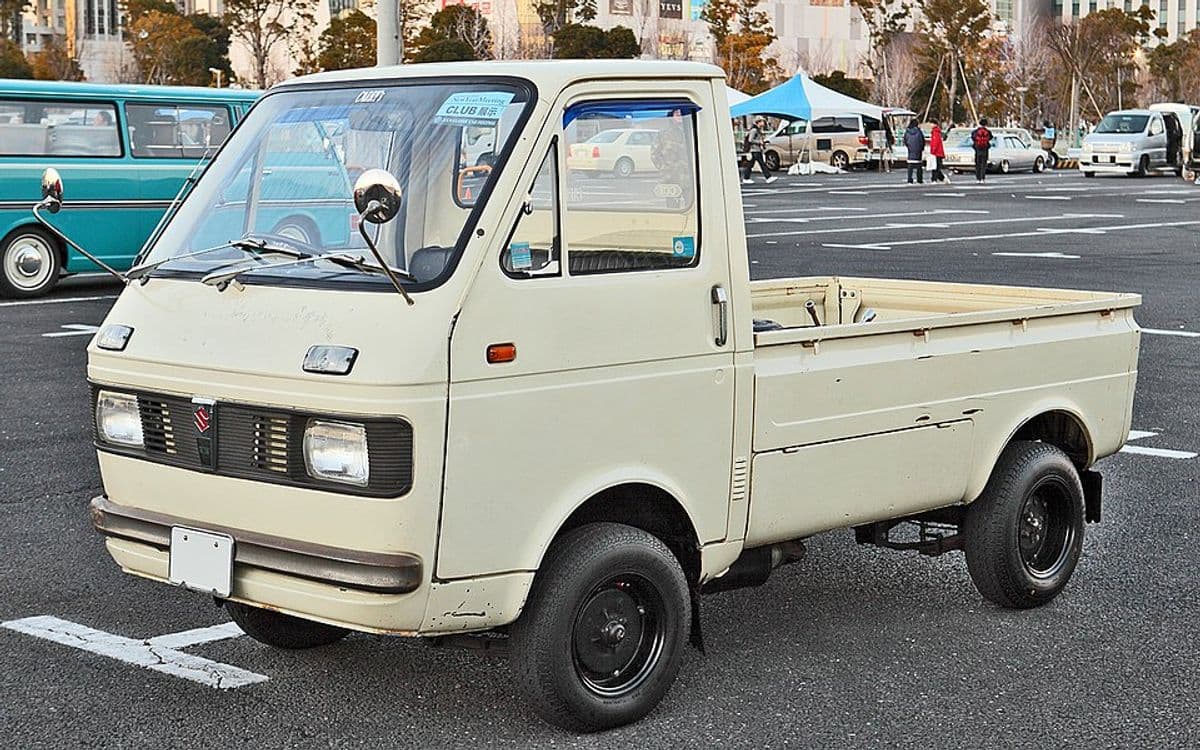
Suzuki Carry
1969-Present
Piedmont farms, Outer Banks beach roads, and Appalachian foothills mean variable terrain at a 55 mph cap. The Carry has the deepest parts pipeline through southeast importers, factory dump bed for landscaping side work, and the 4WD variant climbs the Blue Ridge without struggling.