Kei Truck & Kei Car Laws in Virginia (2026)
RestrictedVirginia caps kei trucks at 35 mph posted roads with mandatory annual safety inspection, and HB 219 (the 2026 legalization attempt) was continued to 2027 in committee.
Virginia allows kei trucks and kei cars to be titled and registered, but with significant restrictions. Kei vehicles are classified as low speed vehicles or special purpose vehicles and are limited to roads with posted speed limits of 35 mph or lower. They cannot be driven on highways, interstates, or any road with a speed limit above 35 mph. Virginia also requires a mandatory annual safety inspection for all registered vehicles, which covers a comprehensive list of safety equipment and conditions. For owners of a Suzuki Carry, Honda Acty, or other kei vehicle, this means finding an inspection station that is knowledgeable about and willing to inspect imported Japanese vehicles. For more details, check our complete guide to importing a kei truck from Japan.
Disclaimer: Laws and regulations change frequently. Always verify current requirements with your local Virginia DMV office or the Virginia Department of Motor Vehicles (VADMV) before purchasing or registering a kei vehicle. Be sure to review our pre-purchase inspection checklist.
Overview
Virginia treats kei vehicles as low speed vehicles or special purpose vehicles rather than standard motor vehicles. Once a kei truck or kei car meets the 25-year federal FMVSS exemption for importation, it can be titled and registered in Virginia, but only for operation on roads with posted speed limits of 35 mph or lower. This restriction effectively limits kei vehicles to local streets, residential roads, and low speed zones.
Virginia also titles some kei vehicles as antique or specially constructed vehicles, which restricts them to hobbyist use rather than daily driving. The specific classification depends on the vehicle and how the DMV processes your application.
The annual safety inspection is another notable requirement. Virginia is one of a shrinking number of states that still mandates yearly inspections, and this can be both a benefit (ensuring your vehicle is maintained) and a challenge (finding an inspector comfortable with kei vehicles).
Virginia used to have a strange loophole: pay a $500 annual Uninsured Motor Vehicle fee and legally drive without insurance. That is gone. SB 951 (2023) repealed the fee effective July 1, 2024, so every vehicle registered in Virginia now has to carry liability coverage. Get caught without it and you are looking at a Class 3 misdemeanor, a $600 noncompliance fee, a suspended license and registration, and three years of SR-22 filings.
Registration Process and Requirements
To register a kei vehicle in Virginia, you will need:
- Title: A valid title from another U.S. state or, for first-time titling, the Japanese export certificate with certified English translation along with customs documentation. Virginia uses Form VSA-17A for title applications.
- Bill of Sale: Showing purchase price, vehicle details, and buyer/seller information.
- Customs Documentation: CBP Form 7501, EPA Form 3520-1, and DOT Form HS-7 showing the 25-year exemption (for imported vehicles).
- Safety Inspection: The vehicle must pass a Virginia safety inspection before registration. Inspections are conducted at licensed Virginia Safety Inspection Stations and cost a state-set fee.
- Emissions Inspection: Required in Northern Virginia and the Hampton Roads area. Vehicles model year 1995 and older are typically exempt.
- Proof of Insurance: Virginia requires minimum liability insurance of 50/100/25 ($50,000 per person, $100,000 per accident for bodily injury, $25,000 for property damage), plus matching uninsured and underinsured motorist limits. These minimums took effect January 1, 2025 and apply as policies renew. The old $500 Uninsured Motor Vehicle fee no longer exists, so a real policy is your only path to registration. For more guidance, see our kei truck insurance guide.
- VIN Verification: May be required for vehicles not previously titled in the U.S.
Step-by-Step Registration
- Gather all import and customs documentation.
- Obtain Virginia auto insurance meeting state minimums.
- Pass the Virginia safety inspection at a licensed inspection station.
- Complete emissions testing if you are in an applicable locality.
- Visit a Virginia DMV office with all documents.
- Submit the title application (Form VSA-17A) with supporting documents.
- Pay applicable fees and taxes.
- Receive your Virginia title and license plates.
Restrictions
- Annual Safety Inspection: Required for all registered vehicles. The inspection covers brakes, lights, turn signals, tires, steering, suspension, exhaust, windshield, wipers, mirrors, horn, and other safety equipment. See our best off road mods guide for popular upgrades. The inspection sticker must be current for the vehicle to be operated on public roads.
- Emissions Inspection: Required in certain localities (Northern Virginia, Hampton Roads). Age-exempt vehicles avoid this requirement.
- 35 mph Road Restriction: Kei vehicles registered in Virginia can only be operated on roads with posted speed limits of 35 mph or lower. This means no highway, interstate, or high speed road use. You may cross roads with higher speed limits at intersections where permitted.
- No Interstate or Highway Use: Kei vehicles are prohibited from interstates, US routes, and state highways with speed limits above 35 mph.
- Equipment Standards: Virginia's safety inspection standards require specific equipment that kei vehicles may not have in stock form. Check that your vehicle has proper DOT-compliant headlights, reflectors, mirrors, seatbelts, and other required equipment before your inspection.
Cost Breakdown
| Item | Estimated Cost |
|---|---|
| Title | $15.00 |
| Registration (annual) | $30.75 - $35.75 |
| License Plates | $10.00 (standard) |
| Safety Inspection (annual) | $20.00 |
| Emissions Inspection (if applicable) | $28.00 |
| Sales and Use Tax (4.15%) | Varies by purchase price |
| Local Tax | Additional 0.7% - 1% (varies) |
| Insurance (annual) | $350 - $900 (varies) |
First-year costs excluding insurance and the purchase price typically range from $150 to $400. Virginia's fees are moderate compared to many other states. See our complete state-by-state guide for details.
Recent Legislative Changes
HB 219 (2026): Del. Michael Feggans (D) introduced HB 219 on January 8, 2026, the first serious Virginia attempt to formalize a kei registration pathway. The bill would have created a defined "Kei vehicle" class, banned operation on roads with speed limits of 55 mph or higher, required DMV licensing and registration, preempted local kei specific restrictions, shielded dealers from FMVSS noncompliance liability, and directed the State Air Pollution Control Board and State Police to write emissions and safety inspection standards. House Transportation continued the bill by voice vote on January 29, 2026, which means it got no floor vote in 2026 and carries over to the 2027 session without reintroduction. Treat it as stalled until a 2027 hearing is scheduled. For a full procedural breakdown, see our HB219 explainer. Virginia's 35 mph low speed vehicle posture is unchanged, and HB 219 is the template for any 2027 push.
Virginia's safety inspection program has been a subject of periodic debate in the General Assembly, with some lawmakers proposing its elimination to align with the majority of states that no longer require inspections. As of 2026, the inspection requirement remains in place. For 2026, Virginia State Police announced that passed inspection stickers will be blue, and rejection stickers will be white instead of pink. Any future changes to the inspection program would directly impact kei vehicle owners.
At the federal level, President Trump announced in December 2025 that the administration would direct the Secretary of Transportation to explore changes to regulations affecting kei vehicles. However, no federal safety or emissions regulations have actually changed as of April 2026. This remains a policy signal, not a finalized rule change.
If you're near the border, you may also want to check kei truck laws in Maryland, West Virginia, Kentucky, Tennessee, and North Carolina.
Tips from Local Owners
- Find a kei friendly inspection station. This is the single most important tip for Virginia kei vehicle owners. Not all inspection stations are familiar with or willing to inspect kei vehicles like the Mitsubishi Minicab or Daihatsu Hijet. Ask other kei owners in Virginia for recommendations. Some stations in the Shenandoah Valley, Southwest Virginia, and rural areas are known to be more accommodating.
- Prepare your vehicle for inspection. Before taking your kei vehicle to an inspection station, ensure all lights, signals, brakes, tires, mirrors, and other safety equipment are in good working order. Replace any non-DOT-compliant bulbs or lights with DOT-approved replacements.
- Northern Virginia is stricter. Owners in the NoVA area generally report a more rigorous experience with both DMV registration and safety inspections compared to other parts of the state. Consider whether a trip to a less congested DMV office might be worthwhile.
- Insurance is manageable. Virginia's insurance requirements are standard, and most major insurers will write policies for kei vehicles. Hagerty, Progressive, and State Farm are commonly mentioned by Virginia owners.
- Forget the old $500 uninsured trick. Virginia repealed the $500 Uninsured Motor Vehicle fee effective July 1, 2024, so paying your way out of an insurance policy is no longer legal. Driving uninsured now earns a Class 3 misdemeanor and a suspension. Budget for a real policy from day one.
- Virginia has an active kei community. Groups in the Richmond, Virginia Beach, and Northern Virginia areas regularly host meetups and can provide local guidance on registration, inspection, and maintenance.
Find verified kei truck dealers in Virginia in our dealer directory.
What you can do in Virginia
Kei trucks are legal here under specific limits. Here are the three moves that matter.
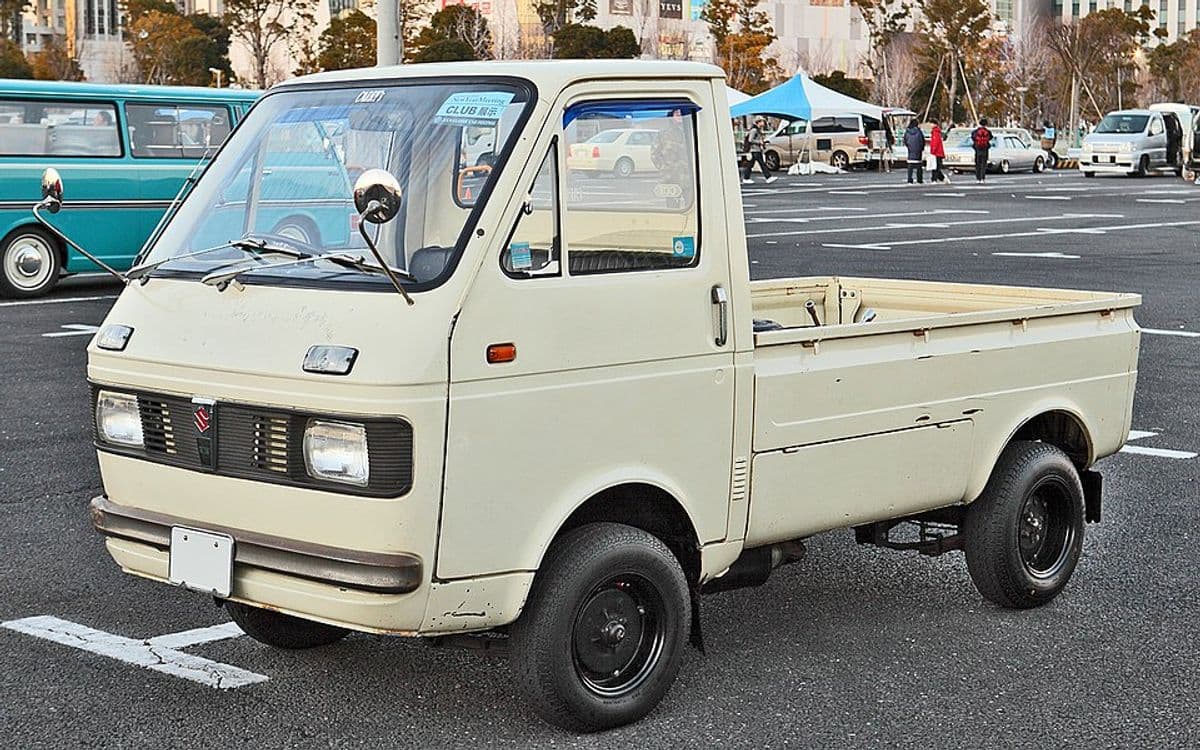
Suzuki Carry
1969-Present
Virginia inspection is the practical hurdle, and the Carry is the kei truck inspection stations have seen the most. Deepest parts pipeline for the safety equipment that fails first (brake lines, wipers, lights), and the 4WD variant handles Blue Ridge dirt road farms at the 35 mph cap.