Oregon's Kei Truck Bill Died Again: The State Legalization Fight
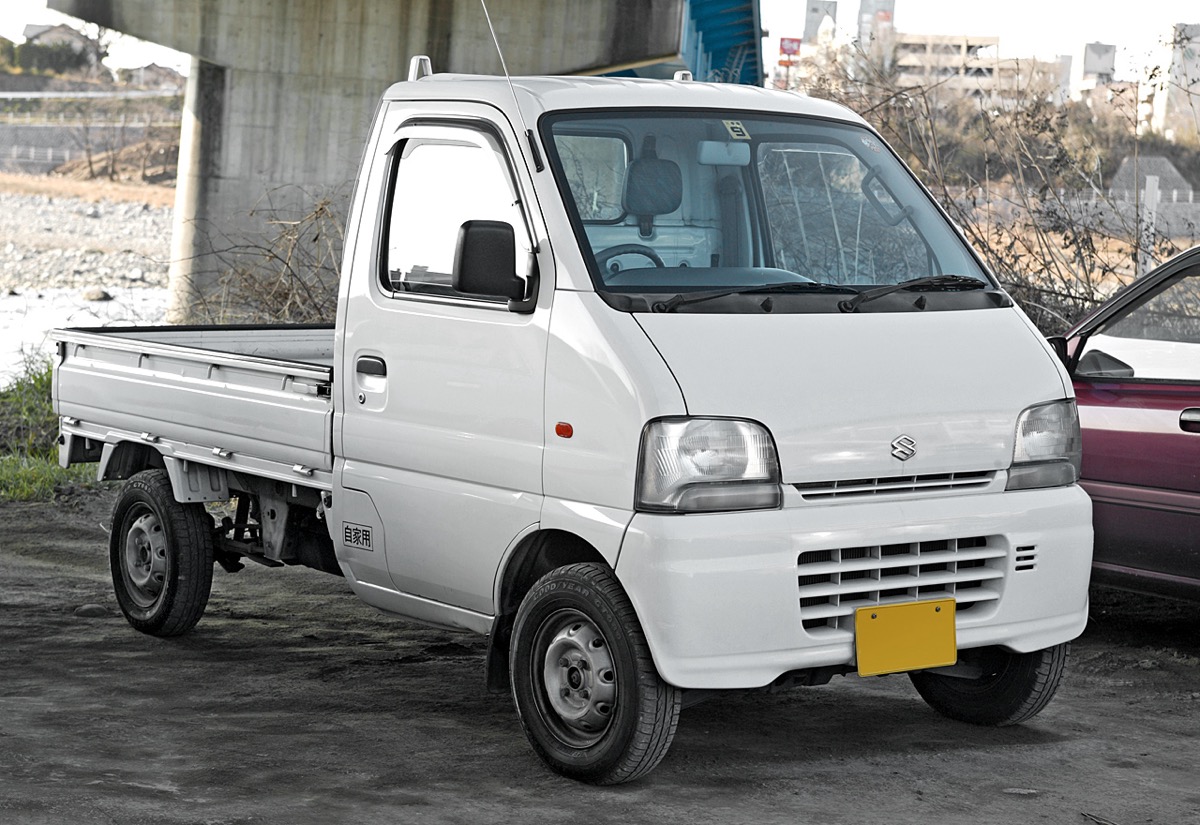
Oregon House Bill 4063 never got a vote before the 2026 short session adjourned. It is the second time in two years that Oregon's kei truck legalization effort has stalled. Here is what happened, why it matters, and what the state by state fight actually looks like.

Advertisement
Oregon's kei truck bill is dead. Again. (For a New England state taking the opposite approach, see our Maine SP 884 explainer on a bill built from a formal working group's recommendations.)
House Bill 4063, the second attempt in two years to legalize kei trucks for road use in Oregon, never received a vote before the state's short legislative session adjourned on March 6, 2026. The bill was referred to the House Transportation Committee early in the session but failed to clear the February 16 policy committee deadline. By the time the gavel came down, HB 4063 was buried under a pile of higher priority legislation.
According to Crankshaft Culture, David McChristian of Lone Star Kei and JDM Oregon Advocates summed it up bluntly: "There was a lot of internal politics at play (unrelated to our kei bill) that made this specific short session challenging."
If you are an Oregon kei truck owner reading this and wondering what comes next, the short answer is 2027. The longer answer is that Oregon's failure tells us something important about the real battlefield for kei truck legality in America, and it is not in Washington, D.C.
What HB 4063 Would Have Done
The bill was not radical. HB 4063 would have created a legal framework for registering kei trucks on Oregon roads with speed limits of 65 mph or lower. The proposed requirements were straightforward:
- Engine displacement of 660cc or smaller
- Overall length of 11 feet or less
- Width of 4.9 feet or less
- Height of 6.6 feet or less
- Model year at least 25 years old (matching the federal import exemption)
- A $63 registration fee
State Senator Anthony Broadman and Representatives Virgle Osborne (R) and Alek Skarlatos (R) co-sponsored the bill. It had bipartisan support. It was not controversial. It simply did not get heard in time.
This was not the first attempt. In 2025, Senate Bill 1213 tried the same thing with the same basic framework. It also died in committee when the regular session adjourned. Two years, two bills, zero votes. For a full breakdown of Oregon's legislative history, check our Oregon kei truck laws page.
Why Oregon Keeps Failing
Oregon's problem is not opposition to kei trucks. It is legislative bandwidth.
Oregon runs on a unique two year cycle: odd years get long sessions (roughly five months), and even years get short sessions (about 35 days). The 2026 short session lasted from February 3 to March 6, just 31 days. In that window, legislators handle budget adjustments, emergency measures, and whatever else the leadership prioritizes. A niche vehicle registration bill, no matter how sensible, rarely makes the cut.
The February 16 policy committee deadline is the real chokepoint. Any bill that does not clear committee by that date is effectively dead for the session. HB 4063 was referred to Transportation but never scheduled for a hearing. There was no testimony. No debate. No vote. It simply ran out of calendar.
McChristian remains optimistic. "I'm still hopeful for the regular session next year," he told the JDM Oregon Advocates Facebook group. He also offered context that should encourage frustrated advocates: "It took us 2.5 years to get a law passed in Texas."
Texas Shows It Can Be Done
That Texas reference matters. Texas Senate Bill 1816, signed by Governor Abbott in 2025, created a "miniature vehicle" classification that legalized kei trucks statewide. The bill was backed by SEMA's Action Network, which has been pushing kei truck friendly legislation across multiple states.
But SB 1816 did not happen overnight. Lone Star Kei, the same advocacy group with members now working Oregon, spent over two years building relationships with Texas legislators, organizing testimony, and navigating committee politics. The bill required multiple sessions before it gained enough traction to pass. New to these vehicles? Our beginner's guide covers the basics.
The lesson from Texas: kei truck legalization is a ground game. It requires showing up at committee hearings, building relationships with legislators, and being ready when the window opens. Viral social media posts about "tiny trucks" help with awareness, but they do not move bills through committee.
The State by State Scoreboard
Oregon's failure highlights a fragmented national landscape. As of March 2026, the map looks like this:
12 states where kei trucks are fully legal for road use with standard registration: Arizona, Idaho, Massachusetts, Michigan, Mississippi, Montana, South Carolina, South Dakota, Tennessee, Texas, Utah, and Indiana (no interstates).
24 states where kei trucks are restricted, meaning road use is allowed but with speed limits, road class restrictions, or local ordinance requirements: Alabama (25 mph), Arkansas, Colorado, Florida (35 mph), Hawaii, Illinois, Kansas, Kentucky, Louisiana, Maine, Minnesota, Missouri, Nebraska, New Hampshire, North Carolina, North Dakota, Ohio, Oklahoma (55 mph), Pennsylvania, Virginia (35 mph), Washington, West Virginia, Wisconsin, and Wyoming.
12 states where kei trucks are illegal for on road use: Alaska, California, Georgia, Iowa, Maryland, New Jersey, New Mexico, Nevada, New York, Oregon, Rhode Island, and Vermont. Though Vermont may not stay on this list much longer: S.326 has already passed the Senate and is advancing through the House with strong support. Read our coverage of Vermont's Mini Truck Day for the full story.
3 jurisdictions where status is unclear: Connecticut, Delaware, and Washington D.C.
Our full 2026 state law audit uncovered several corrections to these counts, including four states that were previously listed as legal but actually have statutory speed restrictions.
Check the interactive map on our state legality guide for details on each state's specific requirements. The differences between "legal" and "restricted" states matter. In Colorado, for example, kei trucks can only operate on roads with speed limits of 55 mph or lower. In Montana, they get full road access with standard plates.
The states where kei trucks remain banned share some common traits. Most are coastal states with larger urban populations and stricter vehicle safety standards. California and New York, the two biggest vehicle markets in the country, remain firmly in the "illegal" column. That is not changing soon. For a deeper look at how kei trucks fit into the broader Japanese vehicle classification system, the Wikipedia entry is a solid starting point.
The Federal vs State Disconnect
Here is the thing that confuses people: Trump's December 2025 announcement about approving kei trucks for America did not change state law. Even if the federal government creates a pathway for new kei trucks to be manufactured or sold in the US (which still requires NHTSA rulemaking on FMVSS standards), individual states still control vehicle registration.
The 25 year rule already allows importing kei trucks that are old enough. The federal government exempts these vehicles from crash safety standards because they are classified as antiques. But Oregon does not care about the federal exemption. Oregon says those vehicles cannot be registered for road use regardless of their age or import status.
This is why the state level fight matters more than federal action for current kei truck owners. You can import a 1998 Suzuki Carry or Daihatsu Hijet legally into the United States today. Whether you can drive it on public roads depends entirely on your state's DMV.
What Oregon Advocates Should Do Now
McChristian's advice to the community is worth repeating: do not give up. Here is what the Oregon playbook should look like heading into 2027:
Start now, not next January. The 2027 regular session will have more time and fewer procedural chokepoints, but legislators need to hear from constituents well before session starts. Contact your state representative and senator. Tell them you support kei truck legalization. Personal stories about how you use your kei truck on your property and why road access matters are more effective than form letters.
Organize locally. JDM Oregon Advocates and Lone Star Kei are doing the work, but they need numbers. Showing up to a committee hearing with five people sends a different message than showing up with fifty. If you are in Oregon and own a kei truck, join the advocacy groups and be ready to testify when the bill gets scheduled.
Work with SEMA. The Specialty Equipment Market Association has been instrumental in passing kei truck legislation in other states. Their advocacy arm has professional lobbyists and legislative relationships that grassroots groups can leverage. Texas proved this partnership works.
Frame it as economic development. Legislators respond to economic arguments. Kei trucks are popular with farmers, ranchers, landscapers, and small businesses. They cost less than UTVs, get better fuel economy than full size pickups, and fill a practical niche that no American manufacturer currently serves. Our kei truck vs UTV comparison and kei truck vs pickup breakdown lay out the case. Oregon's agricultural community in particular would benefit from legal road access for these vehicles.
Point to neighboring states. Washington allows kei trucks with restrictions. Idaho allows them fully. Montana allows them fully. Oregon is becoming an island of prohibition surrounded by states where these vehicles are on the road every day. That is a compelling argument for any legislator representing a border community.
What Oregon Owners Can Do Right Now
Until the law changes, Oregon kei truck owners have limited options:
Off road use only. You can legally title a kei truck in Oregon as a Class IV ATV and use it on private property, farms, and designated off road areas. This is how most Oregon owners operate today.
Register in another state. Some owners register their kei trucks in neighboring states like Idaho or Montana that allow full road use, though driving a vehicle with out of state plates as your primary vehicle in Oregon gets into gray legal territory. We do not recommend this as a long term strategy.
Buy for the property, plan for the road. If you have been eyeing a Honda Acty or Subaru Sambar for farm work, the current legal situation should not stop you. These trucks earn their keep on private property regardless of road legality. Check our farming guide for the best models. You can find importers through our dealer directory and research the import process in our step by step guide.
Stay informed. Follow JDM Oregon Advocates on Facebook and watch the Oregon Legislature's bill tracker for 2027 session prefiling. Bills typically start appearing in late 2026.
The Bigger Picture
Oregon's story is not unique. Across the country, kei truck enthusiasts are fighting the same fight in different statehouses. Kansas is the most recent casualty: HB 2262 died in the House Transportation Committee when the 2026 session adjourned without a vote, leaving Kansas owners still locked out of state highways. Georgia, Iowa, Maryland, New Jersey, New Mexico, Nevada, and Rhode Island all ban road use. Each of those states has advocates pushing for change, and each faces its own version of Oregon's legislative bandwidth problem.
The r/keitruck community on Reddit tracks legislative efforts across all 50 states, and organizations like SEMA and Lone Star Kei are building a national network of advocates. The momentum is real. Ten years ago, kei trucks were curiosities. Today, 36 states allow them on public roads in some form. The trend line is clear even if the pace is frustrating.
What Hagerty's market analysis shows is that demand for imported kei trucks keeps climbing year over year. More trucks on properties means more voters who care about road legality. More voters who care means more legislators who listen. It is a slow cycle, but it works.
Oregon will get there. It just will not be this year.
The Bottom Line
Oregon House Bill 4063 is dead for 2026. Kei trucks remain illegal for road use in the Beaver State. The 2027 regular session is the next real opportunity, and advocates need to start building momentum now, not when the session opens.
If you are in one of the 36 states where kei trucks are already legal or restricted, count yourself lucky and drive your mini truck. If you are in Oregon or one of the other holdout states, get involved with local advocacy groups, contact your legislators, and keep pushing. Texas took 2.5 years. Oregon's clock is still ticking.
For the latest on kei truck laws in every state, bookmark our state by state legality guide. And if you are looking to buy a kei truck regardless of road legality, start with our pre purchase checklist so you know exactly what to look for. The Drive also maintains solid coverage of the evolving US kei truck scene.
Advertisement


