Kei Truck Camper Builds: The Ultimate Micro Camper Guide
How to turn a kei truck into a micro camper. Build approaches, real dimensions, costs, and lessons learned from the growing kei truck camping community.

Advertisement
TL;DR: You can build a kei truck micro camper for $500-$3,000 depending on complexity. The bed is roughly 6 feet long and 4.5 feet wide, enough for two adults sleeping diagonally or one lengthwise with gear. Best base trucks: Suzuki Carry (most common) or Daihatsu Hijet (widest bed). Key decisions: removable shell vs permanent build, insulation material, and power system. Japanese pro builds like the Coastline Fabula run $30K with AC and solar.
There is a particular kind of satisfaction in sleeping in something you built yourself on the back of a truck most people have never seen before. The kei truck camper movement has exploded over the last few years, and for good reason: these Japanese mini trucks offer a ridiculously capable platform for micro camper builds that can go places full size truck campers cannot even dream of reaching.
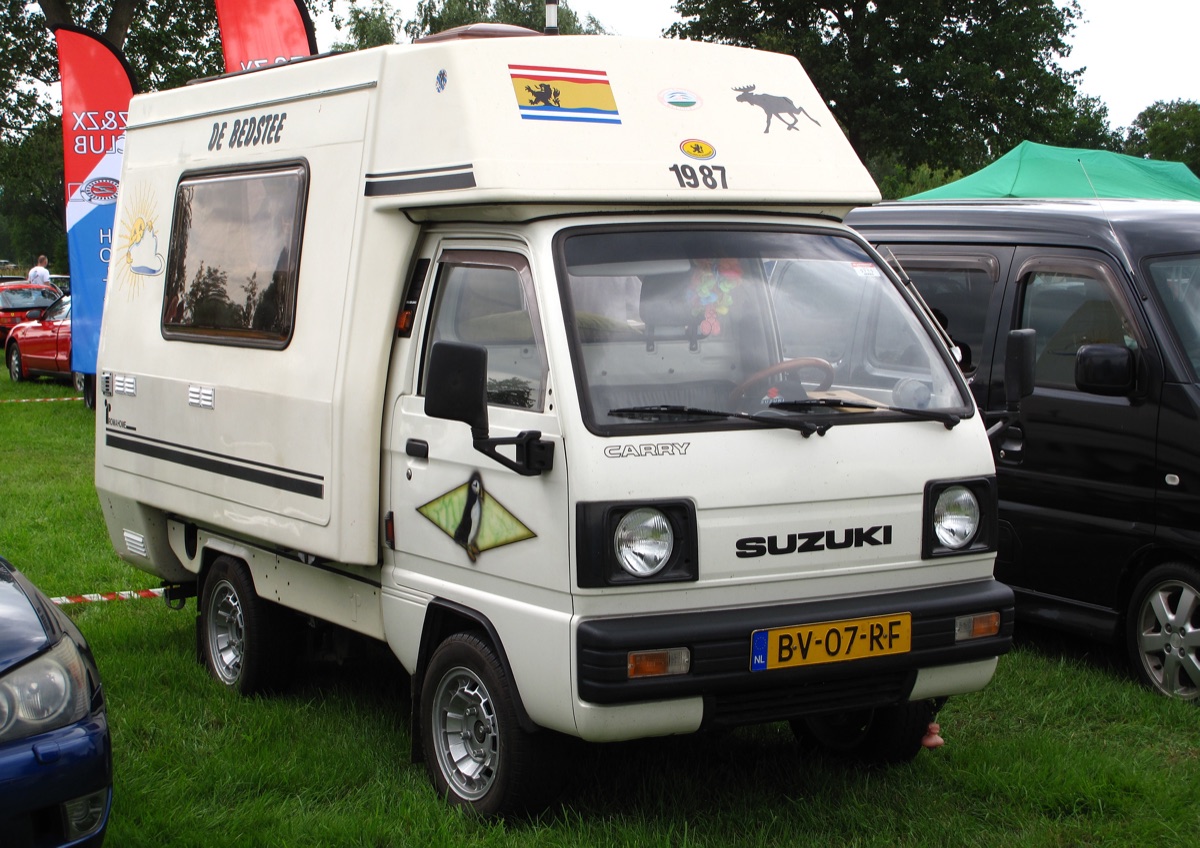
I have spent the better part of two years building, tweaking, and sleeping in kei truck campers. Japan's professional builders are taking the concept even further, with rigs like the Coastline Fabula packing AC, solar, and four sleeping spots into a Carry chassis for $30K. What follows is everything I wish someone had told me before I cut the first piece of plywood.
If you are brand new to these trucks, start with our what is a kei truck overview for the basics. Otherwise, let us get into the build.
Why Kei Trucks Make Great Micro Campers
The appeal is simple math. A kei truck costs a fraction of what you would pay for a full size pickup. You can find solid examples on kei truck classifieds for $5,000 to $8,000, and auction prices for clean, low mileage units have remained surprisingly reasonable. Compare that to even a used Tacoma before you have added a single camping accessory.
But price is only part of the story. Kei trucks are narrow enough to fit on forest service roads that would give a full width truck a panic attack. They are light enough that you are not tearing up fragile backcountry terrain. They get 35 to 45 MPG, so a weekend camping trip does not require a second mortgage on fuel. And their flat beds are practically begging to be built on: no wheel wells eating into your floor plan, no complicated bed liner shapes to work around.
The kei vehicle class was designed around strict dimension and engine limits, and those constraints turn out to be features for camping. A small footprint means you can stealth camp in places where a van or full size truck would draw attention. The Drive has covered the growing kei truck trend extensively, and the camping angle is a big part of why these trucks keep showing up in lifestyle and adventure media.
When you compare the camping utility of a kei truck against alternatives like side by sides, the truck wins on road legality and range every time. Our kei truck vs UTV comparison lays out the details, but the short version is: you can drive a kei truck to the trailhead, camp in it, and drive home, no trailer required.
Bed Dimensions and What Fits
Before you design anything, you need to know your canvas. Here are the bed dimensions for the three most popular build platforms:
- Suzuki Carry: Bed length approximately 6.2 feet (1,900 mm), width approximately 4.1 feet (1,255 mm), bed height from ground approximately 2.2 feet (670 mm).
- Honda Acty: Bed length approximately 6.1 feet (1,860 mm), width approximately 4.0 feet (1,220 mm). Very similar to the Carry, and the fold down sides add versatility.
- Daihatsu Hijet: Standard bed is comparable, but the Jumbo Cab version shortens the bed to approximately 5.5 feet (1,680 mm) while giving you a more comfortable cab with extra legroom. That trade off matters for sleeping arrangements.
The critical number is width. At roughly 4 feet wide, you can sleep one person comfortably lengthwise or two people snugly crosswise if your build extends slightly past the bed rails. A standard twin mattress is 38 inches wide and 75 inches long, and it fits inside the bed rails with room to spare on a Carry or Acty. This is why those two models dominate the camper build scene.
Height is your design variable. Most shell builds add 3 to 4 feet of height above the bed rails, giving you a total interior height of 3.5 to 4.5 feet. You will not be standing up in there, but you will be sitting up comfortably on your sleeping platform, and that is what matters.
Popular Build Approaches
The kei truck community has settled on four main approaches, each with distinct trade offs.
Shell or Topper Build
The most common approach. You build a lightweight wooden or aluminum frame shell that sits on the bed and bolts to the stake pockets or bed rails. Most builders use a 2x2 lumber frame skinned with thin plywood or aluminum sheet, with insulation sandwiched between. Total shell weight typically runs 150 to 250 lbs depending on materials and complexity.
This gives you a fully enclosed sleeping and living space. Add a rear door or hatch and a couple of windows, and you have a legitimate micro camper. Build time is typically 2 to 4 weekends for someone comfortable with basic woodworking.
Slide In Camper
A miniature version of the slide in campers you see on full size trucks. The advantage is that you can remove it entirely and have your truck bed back for hauling. The downside is that slide in builds tend to be heavier because they need a self supporting structure, and weight is the one thing you cannot be casual about on a kei truck.
Some builders use aluminum framing with composite panels to keep weight down. A well built slide in runs 200 to 350 lbs, which eats significantly into your payload capacity.
Flatbed Popup
This is the clever approach. A low profile box sits on the bed during driving, then the roof pops up on gas struts or a simple hinge mechanism when you make camp. You get a low center of gravity and better aerodynamics while driving, plus more headroom when parked. The popup adds complexity to the build but solves the "I want headroom without looking like I am hauling a refrigerator box" problem.
Rooftop Tent
The simplest path to sleeping on your kei truck. Mount a rooftop tent on a bed rack and you are camping in an afternoon instead of a month of weekends. The catch is weight: most rooftop tents weigh 100 to 175 lbs, and the rack adds another 30 to 50 lbs, all of it sitting high on the truck. You need to be very careful about your total weight and center of gravity.
The iKamper Skycamp Mini 2.0 runs about $3,199.
The Smittybilt Overlander Tent runs about $899.
Build Costs Breakdown
Here is what realistic kei truck camper builds actually cost, based on builds I have done and dozens of build threads I have tracked:
Budget Shell Build (DIY, wood frame): $400 to $800. Lumber, plywood, basic insulation, hardware, paint or sealant. This gets you a weatherproof sleeping box with a door and a couple of windows. Not glamorous, but functional.
Mid range Shell Build (DIY, mixed materials): $1,200 to $2,500. Aluminum framing, better insulation, real windows (polycarbonate or repurposed RV windows), proper weather sealing, interior finishing. This is where most builders land.
Premium Build (DIY or fabricator assisted): $3,000 to $6,000. Composite panels, custom fabricated aluminum work, integrated electrical system, built in cabinetry. Professional fabrication for specific components pushes costs up but produces a result that looks intentional rather than improvised.
Rooftop Tent Route: $1,000 to $4,000 for the tent, plus $200 to $600 for a bed rack. Faster to set up, but less customizable and no enclosed storage space below.
These numbers do not include the truck itself. Budget $5,000 to $10,000 for a solid, 25 year old imported kei truck. A US kei truck dealer can walk you through the import and registration process if you want a turn key purchase.
Essential Features for Your Kei Truck Camper
Sleeping
Your bed platform is the foundation of the entire build. Most builders create a raised platform with storage underneath, sleeping on a trimmed to fit foam mattress. A 3-inch memory foam mattress trimmed to 48 by 72 inches works well for the Carry and Acty beds. For the Hijet Jumbo Cab with its shorter bed, you may need to build a slight extension over the tailgate area.
A Milliard 4 inch tri fold mattress runs about $70 on Amazon.
Cooking
You are not fitting a full kitchen in a kei truck camper. Most builders go with a pull out drawer system that holds a single burner stove. Cook outside or at the tailgate because trying to cook inside a 4-foot wide space is a fire hazard and a misery. For sourcing drawer slides and mounting hardware, check out kei truck parts suppliers that stock JDM compatible accessories.
The Jetboil Flash runs about $115 on Amazon.
The Camp Chef Everest 2X runs about $170.
Storage
Every cubic inch matters. Build vertically: overhead nets or shelves for lightweight items, under bed drawers for heavy gear, side wall organizers for daily use items. Magnetic strips for knives and tools save surprising amounts of space. The mini truck enthusiasts subreddit is full of creative small space storage solutions that apply directly to camper builds.
Electrical
A basic electrical setup for a kei truck camper does not need to be complicated or expensive. The essentials: a 100Ah lithium battery, a small solar panel on the roof of the shell, a charge controller, and a few 12V outlets plus USB ports for devices and lighting.
A Renogy 100Ah Smart LiFePO4 battery runs about $340.
A Renogy 100W solar panel runs about $100.
A Victron SmartSolar MPPT 75/15 charge controller runs about $105.
For LED lighting, a strip of warm white 12V LEDs draws almost nothing and makes the interior feel like a space you actually want to spend time in. Total electrical system cost runs $500 to $900 for a solid setup that powers lights, charges devices, and runs a small fan.
Insulation
If you are camping in anything below 50 degrees Fahrenheit, insulation matters. Polyiso rigid foam board (1-inch thick, R-6.5) is the go to for most builders. It is light, easy to cut, and it does not absorb moisture like fiberglass. Line the walls and ceiling of your shell, seal the seams with foil tape, and you have a space that holds heat remarkably well. Our kei truck parts guide covers sourcing insulation and build materials.
A sheet of Owens Corning Foamular 150 XPS insulation runs about $38.
Real Build Examples with Dimensions
The Weekend Warrior (Suzuki Carry shell build): A 2-inch by 2-inch lumber frame with half inch plywood skin. Exterior dimensions: 50 inches wide, 74 inches long, 42 inches tall above the bed rails. Interior sleeping platform at 12 inches above the bed floor, with full length storage drawers underneath. Single rear barn door, two 12-by-18-inch polycarbonate windows on each side. Total build weight: 185 lbs. Total material cost: $1,100. Build time: 5 weekends.
The Minimalist (Honda Acty rooftop tent setup): Bolt on steel bed rack rated to 300 lbs dynamic load. Rooftop tent mounted on top, pull out kitchen drawer below at tailgate. No shell, so the bed stays open for hauling bikes or gear when not camping. Total added weight: 210 lbs (tent plus rack plus drawer system). Total cost: $2,800. Setup time: one afternoon.
The Overbuilt Beauty (Daihatsu Hijet Jumbo Cab with popup): Aluminum framed popup shell with gas struts. Closed height: 18 inches above bed rails. Open height: 48 inches above bed rails with canvas sides. Built in 100Ah electrical system, fold out cooking station, and a full width sleeping platform that extends 8 inches past the shortened Jumbo Cab bed using a tailgate supported extension. Total build weight: 280 lbs. Total cost: $4,200. Build time: 3 months of weekends.
You can find more real world examples in our video library, including owner built campers and other conversions.
Weight Considerations: The 770 lb Payload Limit
This is the single most important constraint for any kei truck camper build, and the one most new builders underestimate. Japanese kei vehicles are rated for a 350 kg (approximately 770 lb) payload capacity. That number includes everything: the camper shell, your gear, water, food, you, and your passenger.
Let us do the math for a typical scenario. Shell build: 200 lbs. Sleeping and cooking gear: 50 lbs. Electrical system: 40 lbs. Water (5 gallons): 42 lbs. Clothes and personal items: 30 lbs. One adult occupant: 180 lbs. That totals 542 lbs, leaving you about 228 lbs of margin. Bring a second person and you are at roughly 720 lbs, pushing right up against the limit.
This is why material choice matters so much. Every pound you save on the shell is a pound you can spend on comfort or a second occupant. Aluminum framing instead of lumber saves 30 to 40 percent on frame weight. Thin plywood or composite panels instead of three quarter inch plywood makes a meaningful difference. Weigh everything as you build. Get a bathroom scale and weigh every component before it goes on the truck.
Exceeding the payload limit does not just risk a citation. It stresses the suspension, brakes, and drivetrain of a truck designed for light loads. If you plan to camp regularly with heavy builds, consider upgrading your suspension. Our best kei truck mods for off road guide covers suspension upgrades that help with both off road performance and load carrying.
And make sure your truck is insured properly. A modified kei truck with a camper build is worth discussing with a specialty vehicle insurance provider who understands non standard vehicles.
Best Models for Camper Builds
After building on multiple platforms and studying hundreds of builds, here is my ranking:
1. Suzuki Carry: The best all around camper platform. The longest bed of the three main models, the most robust aftermarket support, and parts are the easiest to find. The 4WD models with the low range transfer case are particularly capable for getting to remote campsites. This is where I tell most first time builders to start.
2. Honda Acty: A very close second. The fold down bed sides are genuinely useful for creating a wider sleeping or cooking platform when camped. The mid engine layout gives slightly better weight distribution with a camper load. Parts are a bit harder to find than for the Carry, but the truck itself is mechanically excellent.
3. Daihatsu Hijet: The Jumbo Cab version deserves special mention. If you spend significant time driving to your campsites (say, road tripping across multiple states), the extra cab room is a genuine quality of life upgrade. You trade bed length for driver comfort, and that is a reasonable trade if you are not building a massive shell.
If you want a camper platform that skips the shell build entirely, consider a kei van instead. The Suzuki Every, Honda Vamos, Daihatsu Atrai, and Honda N-Van share drivetrains with their truck counterparts but come with a factory enclosed body, ready made for insulation, a sleeping platform, and interior buildout without any external carpentry. The N-Van in particular has become one of the most popular camper van platforms in Japan thanks to its completely flat cargo floor and tall roof. Before committing to a van base, watch our honest one year kei van ownership review for the unfiltered reality of living with one.
For sourcing any of these models, start with our dealer directory, check a US kei truck dealer like Duncan Imports, or browse kei truck classifieds for private sales. If you are importing directly from Japan, look specifically for the extended cab or dump variants that offer unique build possibilities.
Tips from Builders
These are hard won lessons from the kei truck community and my own builds:
Build it removable. Bolt your camper to the bed using the existing stake pockets or bed tie downs. Do not weld anything to the truck. You will want the option to remove the camper and use the truck for hauling, and you will want the ability to iterate on your design without permanent modifications.
Waterproof from the outside. The number one complaint from first time shell builders is leaks. Use quality sealant at every joint. Overlap your roofing material past the walls. Test with a garden hose before your first trip. Then test again.
Ventilation is not optional. Even in cool weather, condensation from your breathing will soak the interior of an unventilated camper overnight. Install at least two vents (one low, one high) to create airflow. A small 12V fan at the high vent makes a huge difference.
Plan your entry and exit. Think about how you will get in and out of the camper in the dark, in the rain, when you are tired. A rear door with a simple step is better than climbing over the tailgate. Ask anyone in the mini truck enthusiasts community who has tried the tailgate climb approach at 2 AM.
Do a test overnight in your driveway. Before you drive four hours to a remote campsite, sleep in the build at home. You will discover every problem (the light that shines in your eyes, the storage bin you cannot reach, the ventilation gap that whistles in the wind) and you can fix them while your real bed is 30 feet away.
Keep it simple on the first build. Your first kei truck camper does not need a shower, a toilet, running water, a heater, or an espresso machine. Build the basics: a dry, insulated box with a comfortable bed and adequate lighting. Live in it for a few trips. Then upgrade based on what you actually need, not what looks cool on Instagram.
The kei truck camper movement keeps growing because the platform genuinely works. A sub $15,000 total investment gets you a running, road legal truck with a custom built micro camper on the back. That is a fraction of the cost of a van build or a traditional truck camper setup, and the experience of camping in something you built from scratch on a truck the size of a golf cart is genuinely hard to beat.
For the extreme end of the DIY spectrum, watch Rich Rebuilds' solar kei truck camper build where they strapped ATV tracks and a custom off grid camper onto an Acty for $1,100. Or check out the Coastline Fabula to see what Japanese professionals can do with the same platform.
Start small, build smart, keep it light, and go find a dirt road.
Advertisement


