The Kei Truck Tool Kit: Every Tool You Actually Need to Wrench on a Japanese Mini Truck
Your American toolbox will strip screws and round bolts on a Japanese kei truck. Here is the exact kei truck tool kit to build instead: JIS screwdrivers, the right metric sockets, the spark plug socket trap, and about $400 of gear that covers 95 percent of jobs.

Advertisement
The first screw you strip on your kei truck will not be the screw's fault. It will be your screwdriver's fault. That Craftsman number 2 Phillips that has served you faithfully for twenty years is ground to the wrong standard for the fasteners holding your truck together, and the moment you lean on a corroded air box screw with it, you will learn an expensive lesson about Japanese Industrial Standards.
Every kei truck in America is a 25 year old Japanese vehicle built entirely with Japanese fasteners, and most of the frustration new owners report in their first year of ownership traces back to fighting those fasteners with American tools. The good news is that the correct kit is cheap. For roughly $400 you can assemble a toolbox that handles 95 percent of what a Suzuki Carry or Honda Acty will ever ask of you, and about $40 of that total does the heaviest lifting.
Start With JIS Screwdrivers, Because Everything Else Is Optional
Here is the practical reality: a screwdriver ground to JIS B 4633, the Japanese cross recess driver standard, has a shorter and more pointed tip than an American Phillips. On a number 2 driver, the JIS spec requires a minimum tip length of 3.70 mm against 4.83 mm for the American ASME spec, with a pointed end where American drivers can be nearly flat. A US driver sits proud in the shallow recess of a Japanese screw, loads the wrong part of the wall, and skates. A JIS driver seats deep and turns the screw.
You have probably heard the internet version of this story, where Phillips screws were "designed to cam out" and JIS is a secret different geometry. That version is mostly folklore. A deep dive into the actual standards documents shows the Phillips patent explicitly aimed to prevent cam out, the common Japanese recess actually conforms to the ISO standard, and the little dot you see on Japanese screw heads marks thread pitch, not recess type. None of that changes the conclusion, though. Japanese drivers are ground shorter and pointier within the standard's tolerances, they fit Japanese screws better, and the difference between fitting and almost fitting is the difference between a five minute job and drilling out a rounded screw head.
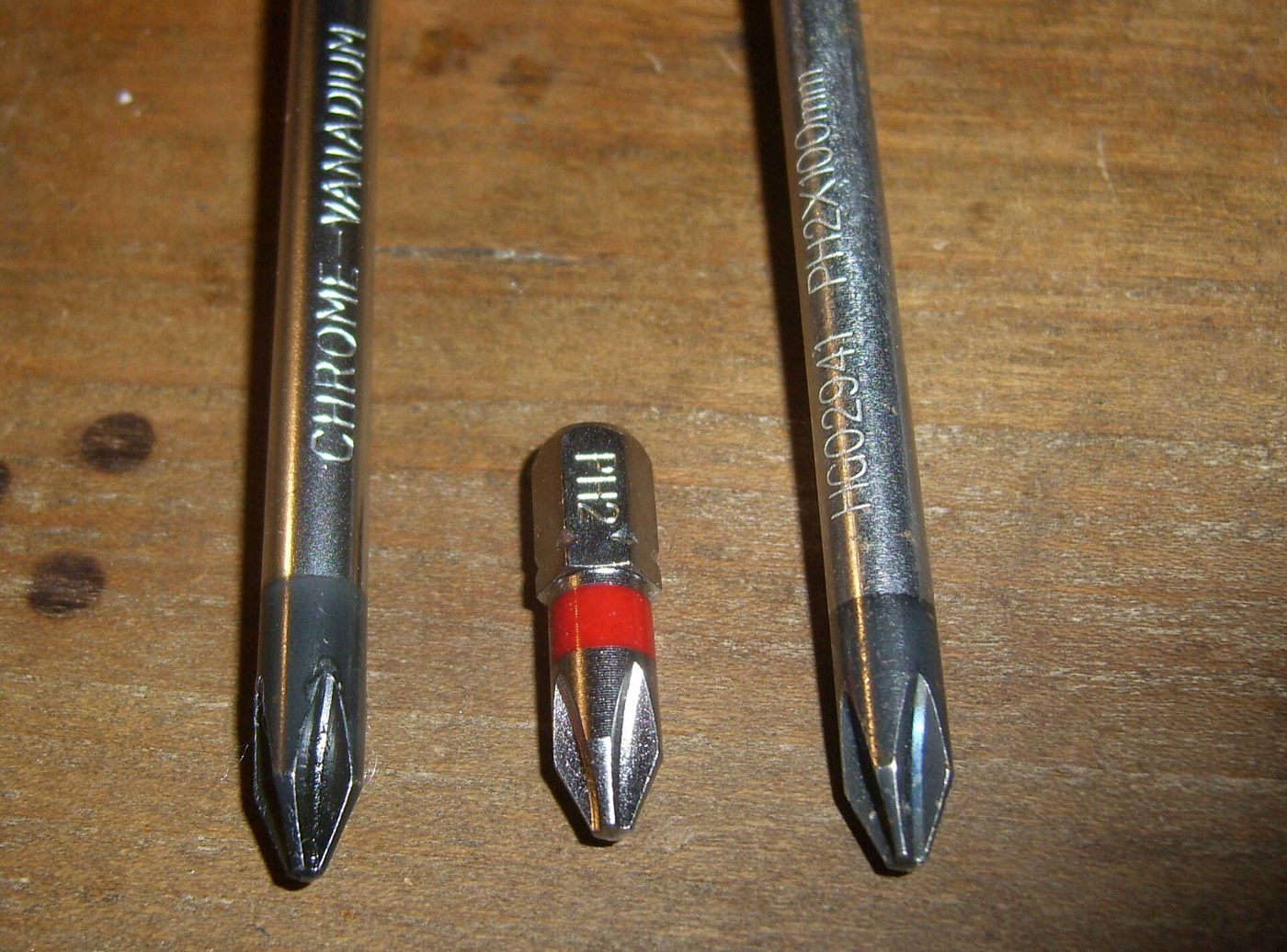
Vessel is the brand nearly everyone lands on, and for good reason: it is the oldest screwdriver maker in Japan and grinds its tips to the JIS standard as a matter of course. Buy three drivers and you are covered. A Vessel Megadora 900 series number 2 handles everyday work. The Vessel Megadora 980 Impacta number 2 accepts hammer strikes on the handle and twists the bit into the screw as it drives, which breaks loose seized screws that a normal driver only rounds. A Hozan JIS-4 four piece set covers the smaller screws on gauge clusters and trim.
Twenty five years of heat cycles and farm duty means half the screws on your truck are seized. The Impacta earns its spot the first time you meet a brake drum screw that laughs at hand pressure.
Sockets and Wrenches: Buy Metric, Skip the 13
Japanese vehicles use smaller bolt heads than European and American metric hardware. An M8 bolt from the hardware store wears a 13 mm head; the same M8 bolt on your kei truck wears a 12 mm head. An M10 wears 14 mm instead of 17. As one Mitsubishi Delica owner put it after years of mixing hardware store bolts into a Japanese truck, every mismatched head means carrying one more wrench size, and that gets old fast.
Practically, this means your kei truck lives on seven sizes: 8, 10, 12, 14, 17, 19, and the occasional 21 mm. You will almost never touch a 13 mm or 15 mm on original hardware. The 10 mm does most of the work, the 12 and 14 do the rest, and the big sizes show up on suspension and drivetrain bolts.
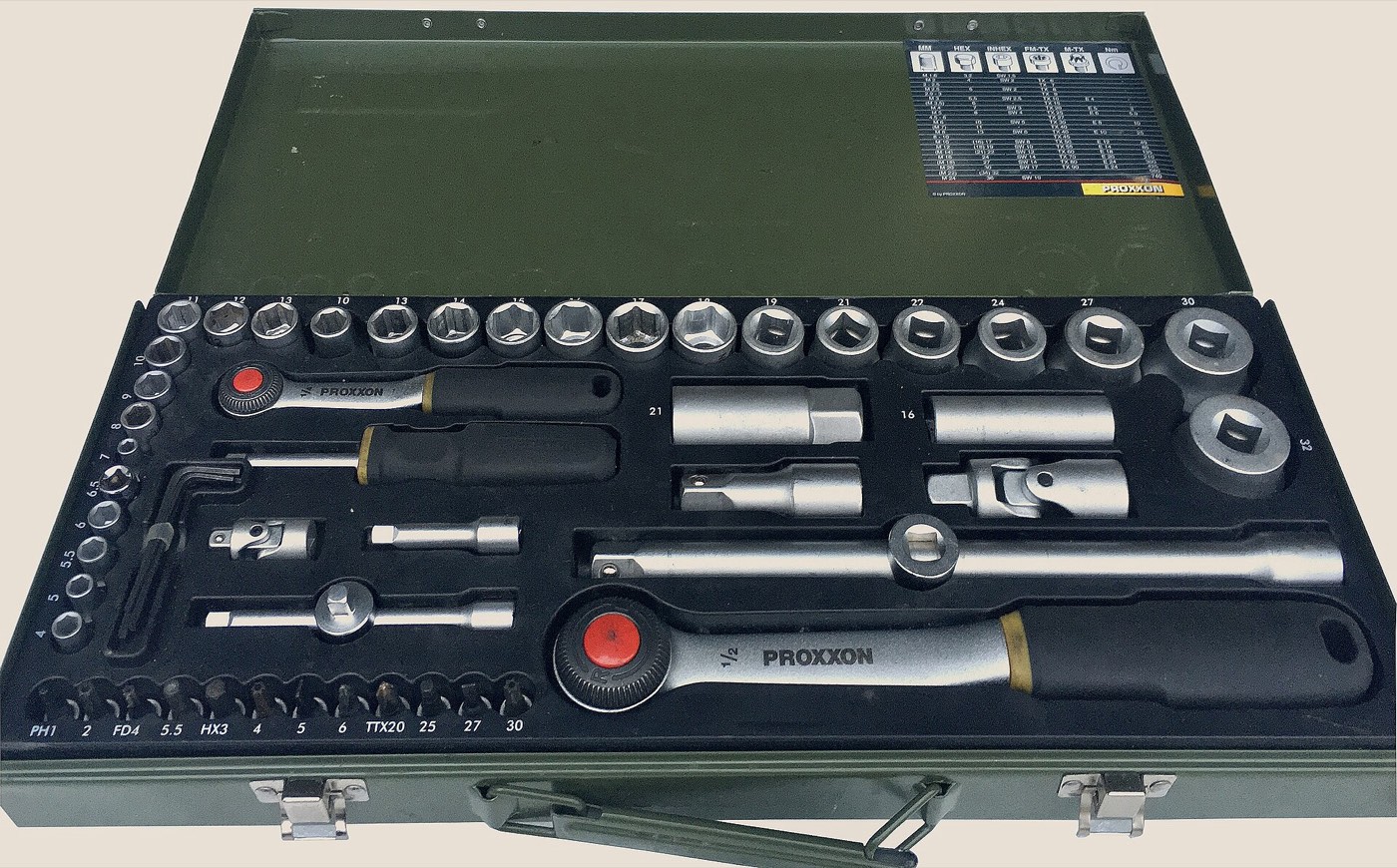
Buy six point sockets, not twelve point. A six point socket grips the flats of a fastener; a twelve point grips the corners, and corners on 25 year old Japanese bolts are already halfway to round. Add two more items while you are at it: a stubby metric combination wrench set covering 8 to 17 mm, because kei truck engine bays are shallow and packed and full length wrenches often physically do not fit, and a metric flare nut wrench set that includes a 10 mm, for brake line fittings that an open end wrench will round instantly.
Torque matters more on small fasteners than big ones. Kei truck hardware is mostly M6 and M8, and the difference between snug and snapped on an M6 into aluminum is one grunt. A basic torque wrench pays for itself the first time it stops you.
The Spark Plug Socket Trap
This one catches almost everyone. The 5/8 inch spark plug socket that fits every modern American car is too small for the plugs in most older kei engines. Suzuki F6A, Daihatsu EF, and their contemporaries typically run NGK B series plugs, and the NGK spec for that plug family calls for a 20.8 mm hex, which means a 13/16 inch socket. Owners regularly discover this at the exact moment the truck is apart in the driveway, then lose an afternoon to a parts store run.
Check what your engine actually runs before you buy, because late model trucks with newer plug designs do switch to the smaller hex. But if you own a 1990s truck, the odds heavily favor 13/16.
While you are in the ignition aisle, know that plug access is its own adventure depending on the truck. On a Carry or a Daihatsu Hijet the engine hides under the seats, and on a Subaru Sambar or Acty it sits at the back under the bed. Which brings us to the next section.
Getting Under and Into a Truck With No Hood
A kei truck has no hood. The engine lives under the cab or under the bed, and the service access panels assume a familiarity that owners raised on hoods and fender liners do not have yet. The regulars on the mini truck tool thread at MiniTruckTalk converge on the same answer: small tools, good light, and patience beat big tools every time on these trucks.
Two things make cab over wrenching civilized. First, a jack and stands. Kei trucks weigh 700 to 900 kg, so you do not need a monster jack, but you need a stable one, and you must never trust the factory scissor jack for anything except roadside tire changes.
Second, light and reach. The clearances around a kei engine are motorcycle tight, and half of every job is seeing the fastener before you drop it into the frame rail. A rechargeable LED work light with a magnetic base and a telescoping magnetic pickup tool with an inspection mirror cover most of it.
If you are still deciding which truck to buy, engine placement is worth weighing before money changes hands. Our pre-purchase checklist covers which layouts are easiest to live with, and the mid and rear engine trucks genuinely cost you some knuckle skin at every oil change.
Electrical: Small Battery, Skinny Posts
Kei trucks run small JIS batteries, typically B19 or B20 group sizes, and the terminal posts are noticeably thinner than the posts on an American group 24 battery. Clamp style accessories sized for US posts sit loose on JIS posts, and a loose battery connection produces exactly the kind of maddening intermittent starting failure that gets misdiagnosed as a bad starter. When you eventually replace the battery or add accessories, get the adapter sleeves instead of crushing the clamps down.
Most kei trucks in America are second vehicles that sit between weekend jobs, and a small battery discharges fast. Hagerty has been telling classic car owners the same thing for decades: anything that sits gets a maintainer.
A basic digital multimeter matters more on a kei truck than on a modern car because there is no OBD2 port on most pre-1998 trucks. Diagnosis is old school: check power, check ground, check continuity. The wiring is simple enough that a $25 meter and a factory diagram solve most gremlins, and the common electrical failure points are covered in our rundown of kei truck common problems.
The Consumables Shelf
Tools without consumables are furniture. Every seized fastener fight starts the night before with penetrating oil, and every rubber part on a 25 year old truck appreciates grease.
Beyond that, stock the service parts before you need them: oil filters, an air filter, a fuel filter, plugs, and a CV boot kit, because CV boots are the single most common wear item on these trucks. Sourcing is its own topic, and our parts sourcing guide walks through the whole landscape, but the short version is that Japanese OEM parts flow reliably through exporters like Amayama and Megazip, and stateside specialists like Oiwa Garage stock the fast moving items domestically. Order the slow boat stuff before the truck needs it and the 25 year old vehicle ownership experience gets dramatically calmer.
The Full Shopping List
Here is the whole kit in one table, roughly in order of how much pain each item prevents per dollar.
| Tool | Approximate Price | Why |
|---|---|---|
| Vessel JIS number 2 screwdriver | $10 | Fits every cross recess screw on the truck |
| Vessel Impacta 980 | $22 | Breaks seized screws without rounding them |
| Hozan JIS-4 small driver set | $30 | Interior, gauges, carb linkage screws |
| Metric six point socket set, 8 to 21 mm | $60 to $100 | Covers effectively every bolt on the truck |
| Stubby wrench set, 8 to 17 mm | $30 | Fits where full size wrenches do not |
| Flare nut wrenches with 10 mm | $25 | Brake lines |
| 13/16 spark plug socket | $10 | Most older kei engines, check your plugs first |
| 3/8 torque wrench | $40 to $70 | Small fasteners strip easily |
| 1.5 ton floor jack | $90 to $130 | Truck weighs under a ton |
| Jack stands, pair | $40 | Never work under a jack alone |
| Work light plus magnet and mirror | $42 | Cab over access is blind access |
| JIS battery terminal adapters | $8 | Skinny Japanese posts |
| Battery maintainer | $35 | Kei trucks sit, small batteries drain |
| Multimeter | $25 | No OBD2 port on most pre-1998 trucks |
| Penetrating oil and grease gun | $38 | Every fastener is 25 years old |
Call it $380 to $450 more than the empty toolbox you started with, and note what is not on the list: nothing over $130, no specialty dealer tools, no scan tool subscriptions. Compare that to the tool budget a modern pickup demands and the kei ownership math keeps looking better. The JIS drivers even pull double duty if there is a Japanese motorcycle in the garage, which is exactly where riders discovered Vessel years before kei trucks went mainstream in America. Pair the kit with the service intervals in our maintenance guide and you can realistically do everything short of internal engine work in a single car garage.
The Bottom Line
Buy the JIS screwdrivers first. They are the cheapest items on the list and they prevent the most common damage new owners inflict on their own trucks. Build out the metric sockets and wrenches around the sizes Japanese vehicles actually use, respect the 13/16 spark plug socket trap, and put a maintainer on that little battery. The trucks themselves are famously simple; owners on r/keitruck routinely handle their own timing belts and clutches with exactly this kind of modest kit. The entire point of a kei truck is cheap, honest utility. The toolbox should match the truck.
Advertisement


