Vermont's Mini Truck Day: Kei Trucks Take Over the Statehouse
A half dozen kei trucks lined the street outside the Vermont Statehouse on April 3 for Mini Truck Day. The event backed Senate Bill S.326, which would create a legal definition for kei vehicles and could take effect July 1, 2026.

Advertisement
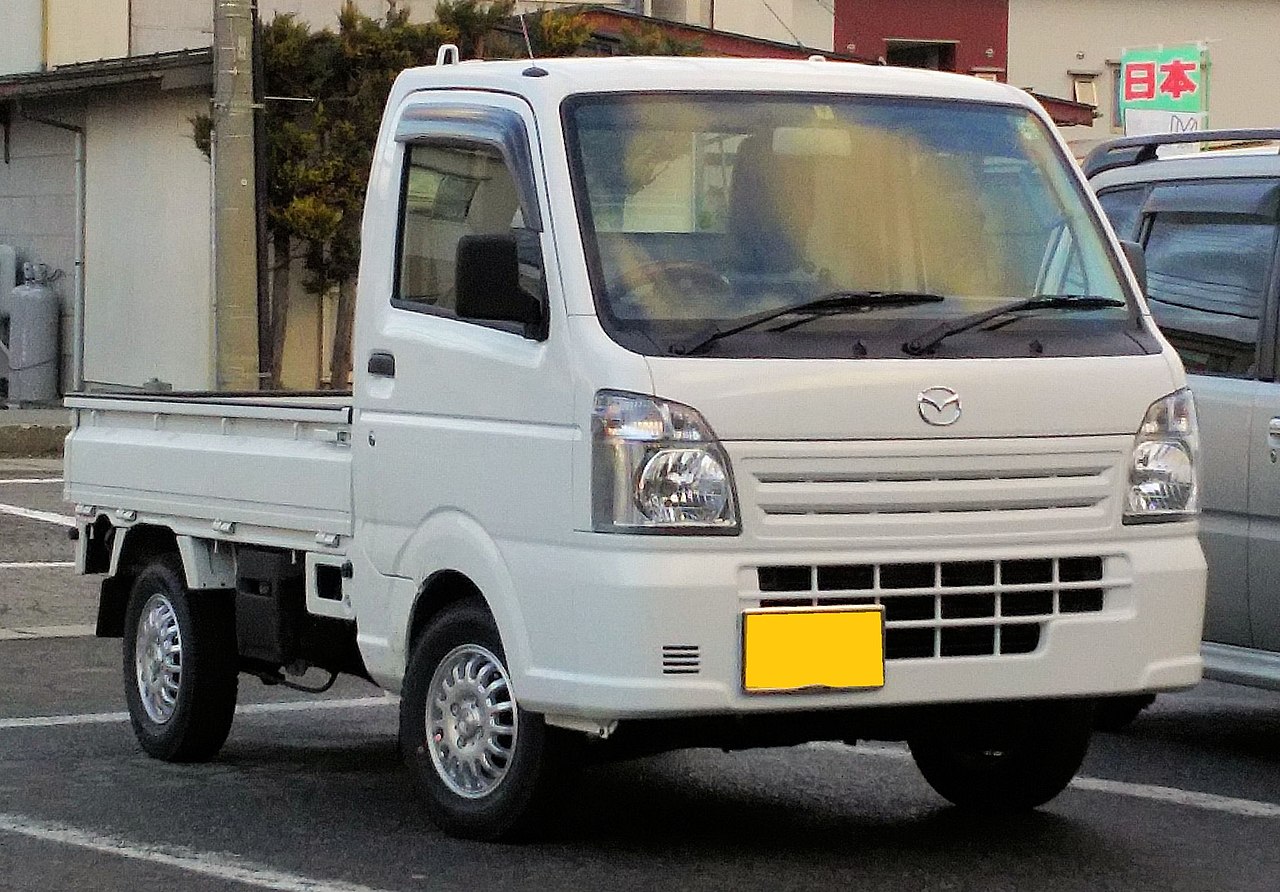
A pint sized fire truck rolled up to the Vermont Statehouse on April 3. Next to it sat a 1995 Mazda Scrum painted in New York Giants colors, an 11 foot long pickup with a bumper sticker bragging it will get from zero to 60 eventually. Miniature cupcakes were handed out under a tent. It was Mini Truck Day in Montpelier, and it was not a joke.
About a half dozen kei trucks and similarly scaled vehicles lined State Street that Friday, parked outside the golden dome to drum up support for a bill that could finally make these vehicles legal to register in Vermont. After years of inconsistent DMV rulings and owners resorting to workarounds like Montana LLCs just to get plates, Vermont is on the verge of doing what 36 other states have already done: let people register their kei trucks and drive them on public roads.
What S.326 Would Actually Do
Senate Bill S.326 is not a standalone kei truck bill. It is an omnibus motor vehicle bill, officially titled "An act relating to miscellaneous amendments to laws relating to motor vehicles." The kei truck provision is one section among many, which is actually a strategic advantage. Attaching a niche vehicle classification to a must pass DMV bill gives it a much smoother path than a standalone bill that needs its own committee time and floor debate.
The bill creates two new vehicle definitions in Vermont law:
A "kei vehicle" is defined as a motor vehicle with four wheels, an engine displacement of 660 cubic centimeters or less, an overall length of 130 inches or less, an overall height of 78 inches or less, and an overall width of 60 inches or less. Those dimensions map exactly to Japan's kei class regulations, which have governed the Suzuki Carry, Daihatsu Hijet, Honda Acty, Subaru Sambar, and Mitsubishi Minicab since 1990.
A "kei truck" is a kei vehicle designed, used, or maintained primarily for the transportation of property.
Here is the part that matters most: the bill specifies that neither the state Traffic Committee nor any political subdivision of Vermont can adopt rules or ordinances that would prohibit a registered kei vehicle from being operated in the same manner and locations as other vehicles of the same class. In plain English, once a kei truck is registered as a farm truck, no town or county can ban it from roads where other farm trucks drive. And if a kei car is registered as a pleasure car, it gets the same road access as any other pleasure car.
That preemption clause is significant. In some states where kei trucks are technically legal, local municipalities have created their own restrictions that effectively ban them from certain roads. Vermont's bill would prevent that patchwork from forming in the first place. The full bill text is available on the Vermont Legislature's website.
If signed into law, S.326 takes effect July 1, 2026.
Vermont's Registration Mess
Vermont's current kei truck situation is a bureaucratic contradiction. The state does not have a statute explicitly banning kei trucks. Instead, the Department of Motor Vehicles has been rejecting registration applications because these vehicles do not fit neatly into existing vehicle classification categories. The problem is that "does not fit neatly" has been interpreted differently at different DMV offices.
According to Senator Becca White (D, Windsor County), who serves as Vice Chair of the Senate Transportation Committee, some owners have managed to register their kei trucks while others have been turned away. The outcome depended on which DMV location they visited and which clerk processed the paperwork.
"Mini trucks will be much easier to register in the state of Vermont because there will be clarity for all DMV staff folks to know that, yes, in fact, this is a registered appropriate vehicle for the state of Vermont," White told WCAX.
That inconsistency is not unique to Vermont. Several states have faced similar gray areas where the law neither explicitly allows nor explicitly bans kei trucks, leaving DMV employees to make judgment calls. Our state by state legality guide tracks these nuances across all 50 states.
Xavier Stevens of Newport, one of the Mini Truck Day attendees, experienced the problem firsthand. He could not get his 1995 Mazda Scrum registered in Vermont despite the DMV not having a clear statutory basis for the refusal. His solution was setting up an LLC in Montana and registering the truck there, a workaround that is technically legal but creates insurance complications and puts owners in a gray area if they are stopped by law enforcement.
Stevens paid $2,300 for his Scrum, including the cost of importing it from Japan. The truck has four wheel drive, a 650cc engine, and a bed that handles the same tasks as trucks costing ten times more. The ironic Giants paint job and the zero to 60 "eventually" sticker are just bonuses.
The People Showing Up
Mini Truck Day was not organized by a national lobbying group or an auto industry trade association. It was a grassroots event driven by actual owners who use these vehicles and want to stop jumping through hoops.
Cristina Shayonye met her spouse when they both pulled up to an apple pie festival in Dummerston driving the same model of miniature van. That is the kind of coincidence that only happens in a community this small and this passionate. The couple now operates a vehicle repair shop in Brattleboro that specializes in tiny vehicles, filling a niche that grows every year as more kei trucks make their way into New England.
"I kind of feel like Santa Claus every time I roll up into a parking lot," Shayonye told VTDigger. "It just brightens people's days."
That community energy is exactly what moves legislation. Oregon tried twice to legalize kei trucks and failed both times because standalone bills did not generate enough legislative urgency. Vermont's approach of embedding the provision in an omnibus DMV bill, combined with visible grassroots support like Mini Truck Day, gives S.326 a much better shot.
The bill had serious institutional backing during its Senate journey. DMV Commissioner Andrew Collier and Deputy Commissioner Matthew Rousseau both testified before the Senate Transportation Committee. The committee held specific sessions on the kei truck provisions in early February 2026, hearing from department officials about how the new definition would integrate with existing registration processes. That level of engagement from the DMV itself is a strong signal that the agency wants this clarity as much as owners do.
Where the Bill Stands Now
Update, July 2026: The green lights held. S.326 passed both chambers, Governor Scott signed it on June 16, 2026 as Act 153, and the kei provisions took effect July 1. We covered how Vermont legalized kei trucks and what registration looks like now. The original status report continues below.
S.326 passed the Vermont Senate and was read for the first time in the House on March 25, 2026. It is currently sitting in the House Committee on Transportation.
Senator White told VTDigger she sees "all green lights" for the mini truck provision in the House. That is an unusually confident statement from a legislator, and given that the provision is packaged inside a broader DMV bill with bipartisan support, the optimism seems warranted. This is not a controversial provision competing for floor time. It is a definitional fix riding inside a bill that the Legislature needs to pass anyway.
The legislative timeline for the remainder of Vermont's 2025 to 2026 session gives the House committee time to review S.326 and move it to a floor vote. If it follows the typical path for omnibus bills, it should reach the governor's desk before the session adjourns.
Compare this to Oregon, where House Bill 4063 died for the second time because Oregon's short session gave the bill only 31 days to clear committee, get a hearing, and reach a vote. Vermont's regular session structure gives S.326 dramatically more runway.
How This Fits the National Picture
Vermont going from "illegal" to "legal" would be a significant shift on the national map. As of April 2026, our tracking shows 12 states where kei trucks are fully legal, 24 states where they are restricted (speed limits, road class limitations, or local requirements), 12 states where they remain illegal, and 3 jurisdictions where status is unclear.
Vermont currently sits in the illegal column alongside states like California, New York, Oregon, and New Jersey. If S.326 passes, Vermont would not just move to the legal category. It would become one of the most clearly defined legal frameworks in the country, thanks to the preemption clause preventing local restrictions.
The SEMA Action Network has been pushing kei truck friendly legislation across multiple states, and Texas proved the model works when Governor Abbott signed SB 1816 in 2025. Vermont's approach is different from Texas, but potentially more elegant. Rather than creating an entirely new vehicle class from scratch, S.326 slots kei vehicles into existing registration categories (farm truck, pleasure car) and just defines what qualifies. Maine tried a third path: a formal working group study. It ended in February 2026 with the BMV recommending no change.
For kei truck owners in neighboring states, Vermont's legalization would have ripple effects. New England already has a growing kei truck community, and a repair shop in Brattleboro specifically catering to tiny vehicles shows the infrastructure is developing. New Hampshire allows kei trucks with restrictions. Massachusetts is fully legal, though owners there are still waiting on H.4053 to lock that 2024 win into permanent law. If Vermont joins them, the remaining New England holdouts (New York to the west and Connecticut and Rhode Island to the south) will face increasing pressure from a region where their neighbors all allow these vehicles. Check our dealer directory for importers who serve the Northeast.
The r/keitruck community has been tracking the Vermont bill closely, and the consensus is cautiously optimistic. Veterans of state legislative fights know that "all green lights" from a senator does not guarantee passage, but the structural advantages here are real.
What Vermont Owners Should Do Right Now
If you own a kei truck in Vermont and have been operating it on private property or through an out of state registration, here is what the bill means for you:
Watch the House committee. S.326 is in the House Committee on Transportation. Committee meetings are public, and showing up or submitting written testimony reinforces the grassroots support that Mini Truck Day demonstrated. The Legislature's website posts meeting agendas in advance.
Do not rush to the DMV. The bill has not passed the House yet, and even if it does, the effective date is July 1, 2026. Until then, the current inconsistent enforcement remains the reality. Showing up at the DMV with your Suzuki Carry before the law changes is setting yourself up for the same lottery of outcomes that prompted this legislation in the first place.
Get your paperwork ready. Once the law takes effect, you will need to register your kei truck as either a farm truck or pleasure car. That means having your title, proof of import, and insurance documentation in order. If you bought through an importer, make sure you have the EPA and DOT entry documents from when the vehicle cleared customs. Our pre purchase checklist covers what documentation you should have.
Line up insurance. Some insurers are familiar with kei trucks and others are not. Companies like Hagerty that specialize in imported and specialty vehicles are a good starting point. Our kei truck insurance guide walks through the process of getting coverage for a vehicle that most agents have never heard of.
The Bottom Line
Vermont's Mini Truck Day was a small event with potentially large consequences. A handful of kei trucks parked outside a statehouse, some miniature cupcakes, and a lot of enthusiasm for vehicles that cost less than most monthly car payments. Senate Bill S.326 has passed the Senate, sits in the House Transportation Committee, and has "all green lights" according to its sponsor.
If it passes, Vermont joins 36 other states that allow kei trucks on public roads, and it does so with one of the cleanest legal frameworks in the country: clear vehicle definitions, integration into existing registration categories, and a preemption clause that prevents local governments from undermining the state law.
For the kei truck community, this is how legalization actually happens. Not through viral tweets or federal announcements, but through people like Xavier Stevens hauling a Giants painted Mazda Scrum to Montpelier on a Friday and showing legislators that these vehicles are practical, affordable, and already part of Vermont's landscape. The trucks are here. The law just needs to catch up.
For the full breakdown of Vermont's current kei truck laws and how they will change when S.326 takes effect, visit our Vermont kei truck laws page. And for a look at how another state's legalization effort played out differently, read about how Oregon's HB 4063 stalled in our Oregon kei truck bill coverage.
Advertisement


