Kei Truck & Kei Car Laws in West Virginia (2026)
RestrictedWest Virginia Code 17A-13-1 registers kei trucks as Special Purpose Vehicles with a 20 mile centerline road cap and a farm exemption for property owners.
Are Kei Trucks Legal in West Virginia?
Yes, kei trucks are legal in West Virginia, but only under specific conditions. The state allows kei trucks like the Suzuki Carry and Mitsubishi Minicab to be registered as "Special Purpose Vehicles" (SPVs) under West Virginia Code §17A-13-1, which creates a limited-use classification for minitrucks and similar vehicles.
Once registered as an SPV, kei trucks face significant operational restrictions. Most notably, they cannot be driven on interstate highways or federal-aid highways, and they're limited to traveling no more than 20 miles on roads with centerline pavement markings. These restrictions make West Virginia's approach more permissive than states that ban kei trucks entirely, but more limiting than states allowing full highway access.
Additionally, West Virginia provides a special exemption for farmers, who may operate kei trucks on public roads within 20 miles of their property without full SPV registration. Wondering how they compare to a side-by-side? Read our kei truck vs UTV comparison. This agricultural exemption recognizes the practical utility of mini trucks for farm operations.
The federal NHTSA 25-year rule allows vehicles 25 years or older to be imported without meeting current Federal Motor Vehicle Safety Standards (FMVSS), making most kei trucks in the U.S. eligible for importation. State registration requirements then determine where they can be driven.
How to Register a Kei Truck in West Virginia
West Virginia requires kei trucks to be registered as Special Purpose Vehicles. Here's the complete registration process:
Equipment Requirements Before Registration
Before you can register your kei truck as an SPV, it must be equipped with:
- One or more headlamps
- One or more tail lamps
- One or more brake lamps
- A lamp constructed and placed to illuminate the registration plate with white light
- One or more red reflectors on the rear
- Amber electric turn signals, one on each side of the front
- Rearview mirror
- Horn
Most imported kei trucks already have this equipment, though you should verify all lights function properly and meet West Virginia standards. Before buying, review our pre-purchase inspection checklist.
Required Documents
- Proof of ownership: Certificate of origin, manufacturer's statement of origin (MSO), or valid out-of-state title
- Bill of sale: If purchased from a private party
- Import documentation: U.S. Customs Entry Documents (Form 7501) and Japanese export certificate with English translation
- Valid driver's license: West Virginia driver's license or valid out-of-state license
- Proof of insurance: Policy meeting West Virginia minimum liability requirements
Registration Process
- Ensure equipment compliance: Verify your kei truck has all required safety equipment
- Obtain insurance: Secure liability insurance meeting state minimums
- Visit the DMV: Go to a West Virginia DMV office
- Complete SPV application: Request and fill out the Special Purpose Vehicle registration application
- Submit documentation: Provide all ownership documents, import paperwork, and insurance proof
- Pay fees: Registration fees for SPVs vary by weight and vehicle type
- Receive SPV plates: You'll get special registration indicating the vehicle's restricted status
Registration Fees
West Virginia calculates registration fees based on vehicle weight and type. For minitrucks registered as SPVs:
- Base registration fee: Approximately $30-$60 annually
- Title fee: $15 (one-time for new titles)
- Registration plate fee: $10 (one-time)
- Processing fees: Varies by county
Total first-year registration typically ranges from $60-$100.
Timeline
If you have all required documentation, registration can typically be completed in one DMV visit. Processing time is usually immediate for in-person applications. Some rural DMV offices may need additional time to process SPV registrations if they're unfamiliar with the classification.
Farm Vehicle Alternative
If you're using your kei truck exclusively for agricultural purposes on your farm and only need to travel on roads within 20 miles of your property, you may qualify for the farmer exemption. This allows operation without full SPV registration, though insurance and basic safety equipment are still required.
Restrictions and Limitations
West Virginia's Special Purpose Vehicle classification imposes several significant restrictions on kei truck operation:
Road Type Restrictions
- No interstate highways: I-64, I-77, I-79, and all other interstate routes are prohibited
- No federal-aid highways: Roads constructed with federal highway funding are off-limits
- No controlled access highways: Any highway with controlled entry/exit points is prohibited
- Limited to state and local roads: Primarily county roads, municipal streets, and local routes
Distance Restrictions
The most significant limitation is the 20-mile restriction: No SPV-registered kei truck may travel more than 20 miles on any highway with centerline pavement markings.
This restriction means:
- Short-distance local travel is permitted
- Long-distance trips are illegal, even on allowed road types
- Distance is measured from your starting point, not round-trip
- Enforcement can vary, but the law is clear
The restriction is designed to keep SPVs in local, low speed environments rather than allowing extended highway travel.
Speed Considerations
While West Virginia law doesn't specify an explicit maximum speed for SPVs, the road type and distance restrictions effectively limit operation to lower-speed environments. Most allowed roads have speed limits of 35-45 mph.
Equipment Requirements
All required safety equipment must remain functional at all times. Operating an SPV with non-functional lights, mirrors, or turn signals can result in citations and potential registration suspension.
Insurance Requirements
West Virginia requires all registered motor vehicles, including kei trucks registered as SPVs, to carry liability insurance. The state's minimum coverage requirements are:
- $25,000 bodily injury per person
- $50,000 bodily injury per accident (two or more people)
- $25,000 property damage per accident
Finding Insurance for Kei Trucks
Many standard insurance carriers are unfamiliar with kei trucks or hesitant to provide coverage. For more guidance, see our kei truck insurance guide. Here are your options:
- Farm Bureau: If you're a farmer or rural landowner, Farm Bureau may offer coverage
- State Farm and Progressive: Some West Virginia owners report success with these carriers
- Specialty insurers: Hagerty and similar collector vehicle insurers may provide coverage for 25+ year old kei trucks
- Independent agents: Local insurance agents may access surplus lines carriers willing to write policies
When contacting insurers, be prepared to explain that your kei truck is:
- Legally registered in West Virginia as an SPV
- Limited to specific road types and distances
- Used for local transportation, farm work, or hobby purposes
Insurance Costs
Liability insurance for kei trucks in West Virginia typically costs $350-$700 annually, depending on your driving record, location, and the insurance carrier's familiarity with these vehicles.
Inspection and Emissions
West Virginia has comprehensive vehicle inspection requirements that apply to kei trucks registered as SPVs:
Safety Inspections
West Virginia requires all registered vehicles to undergo safety inspections every 24 months. This inspection must be performed at an official inspection station licensed by the West Virginia State Police.
The inspection covers:
- Registration verification: Valid current registration
- Insurance verification: Current proof of insurance
- Safety glass: Windshield and windows free of cracks and damage
- Body and frame: Structural integrity, bumpers, fenders
- Horn, mirrors, wipers: Functional warning and visibility equipment
- Brake system: All brakes, parking brake, and brake lines
- Front end and steering: Steering components, ball joints, tie rods
- Exhaust system: Complete exhaust, no leaks, functional muffler
- Fuel system: No leaks, secure fuel tank and lines
- Tires and wheels: Adequate tread depth, no damage, proper size
- Lights and signals: All headlights, tail lights, brake lights, turn signals
- Seat belts: All seating positions must have functional belts
Inspection Timeline
- New registrations: Must be inspected within 10 days of purchase or registration
- Renewal inspections: Every 24 months (two years)
- Failed inspection: Must be repaired and retested within 5 days, or a complete new inspection is required
Inspection Costs
Safety inspections in West Virginia typically cost $10-$20 at licensed inspection stations.
Emissions Testing
West Virginia does not currently have a statewide emissions testing program. However, inspection stations will check that your exhaust system is complete and functional, with no significant leaks or excessive smoke production.
Most kei trucks are 25+ years old and would be exempt from emissions testing even if the state implemented such a program. However, your vehicle must still have a functional exhaust system with a muffler.
Inspection Challenges for Kei Trucks
Some inspection stations may be unfamiliar with kei trucks and uncertain about how to inspect them. Tips for successful inspection:
- Choose an inspection station familiar with unusual vehicles
- Bring your SPV registration showing the vehicle is legally registered
- Ensure all lights and safety equipment function properly before arriving
- Be prepared to explain the vehicle's legal status if the inspector has questions
Tips from West Virginia Kei Truck Owners
West Virginia's kei truck community is small but growing, with Daihatsu Hijet and Honda Acty owners particularly active in rural areas. Here's practical advice from owners:
Best Areas for Operation
- Rural counties: Southern and eastern West Virginia have extensive local road networks perfect for kei trucks
- Small towns: Places like Lewisburg, Elkins, and Shepherdstown have low speed town centers
- Farm areas: Agricultural regions where the 20-mile radius covers most necessary travel
- Mountain communities: Small mountain towns with local road networks
Areas to Avoid
- Charleston metro area: Heavy reliance on interstate and federal highways
- Morgantown: University town with highway-dependent infrastructure
- I-81 corridor: Eastern panhandle cities rely on prohibited highways
Measuring the 20-Mile Limit
The law doesn't specify how the 20-mile limit is measured or enforced. Most owners interpret it as straight-line distance from their home or starting point on roads with centerlines. Practical application:
- Plan routes under 20 miles from your base
- Use GPS or mapping tools to verify distances
- Stick to local roads when possible
- Avoid long-distance trips even on permitted roads
Farmer Exemption Benefits
If you qualify for the farmer exemption (agricultural use within 20 miles of your property), you may have more flexibility in registration requirements. Contact your county DMV office to understand how this exemption is applied locally.
Frequently Asked Questions
Q: Can I drive my kei truck on US Routes in West Virginia?
It depends on the specific route. U.S. Routes that are not federal-aid highways and don't have controlled access may be legal. However, many U.S. Routes receive federal funding and would be prohibited. When in doubt, stick to clearly local roads.
Q: How is the 20-mile limit enforced?
Enforcement varies by jurisdiction. The law provides the restriction, but practical enforcement depends on local law enforcement priorities. However, if you're involved in an accident or stopped more than 20 miles from home on a centerline-marked road, you could face penalties.
Q: Do I need a special driver's license for an SPV?
No. A standard West Virginia Class E driver's license is sufficient for operating a kei truck registered as an SPV.
Q: Can I register my kei truck as a regular vehicle instead of an SPV?
No. West Virginia Code requires minitrucks to be registered as Special Purpose Vehicles. The DMV will not accept standard registration applications for these vehicles.
Q: What happens if I'm caught driving on an interstate?
You could be cited for operating a vehicle in violation of its classification. Penalties may include fines, points on your license, and potential vehicle impoundment. The violation could also affect your insurance coverage.
Q: Can I use my kei truck for commercial purposes?
Yes, but you'll need appropriate commercial insurance and business licensing. The SPV restrictions still apply, so you're limited to the same road types and 20-mile distance as personal use.
Q: Will West Virginia change its SPV restrictions in the future?
There's no pending legislation to change kei truck regulations as of 2026. West Virginia's approach represents a compromise between outright bans and unrestricted access, and changes seem unlikely in the near term.
Useful Links
- West Virginia DMV - Official DMV website
- Special Purpose Vehicles Information - WV DMV SPV page
- Vehicle Inspection Information - Inspection requirements
- WV State Police Inspection Program - Detailed inspection procedures
- NHTSA Importing a Vehicle - Federal import regulations
- West Virginia Code §17A-13-1 - SPV statute
- Hagerty Insurance - Specialty vehicle insurance
Conclusion
West Virginia's Special Purpose Vehicle classification provides a legal pathway for kei truck ownership and operation, though with meaningful restrictions. The 20-mile limit on centerline-marked roads and prohibition on federal highways make kei trucks practical primarily for rural residents, farmers, and those whose daily activities stay within a limited geographic area.
If you live in a small town or rural area and don't need to travel long distances or use interstates, a kei truck can be a legal and practical vehicle in West Virginia. However, if your lifestyle requires frequent highway travel or long-distance commuting, the restrictions may be too limiting.
The agricultural exemption makes West Virginia particularly friendly to farmers considering kei trucks for property maintenance and local farm-related travel. Combined with the state's relatively straightforward registration process, West Virginia offers a reasonable middle ground for mini truck enthusiasts.
For information about how West Virginia's laws compare to neighboring states, explore our complete state-by-state guide. If you're near the border, you may also want to check kei truck laws in Ohio, Pennsylvania, Maryland, Virginia, and Kentucky.
What you can do in West Virginia
Kei trucks are legal here under specific limits. Here are the three moves that matter.
Where you can drive
Restrictions vary by road class. See the quick facts above for the specifics.
Read the rule →Find a nationwide dealer
No verified dealers in state yet. Browse importers who ship nationwide.
Browse dealers →When the rules change
Restrictions shift. We email you when West Virginia updates.
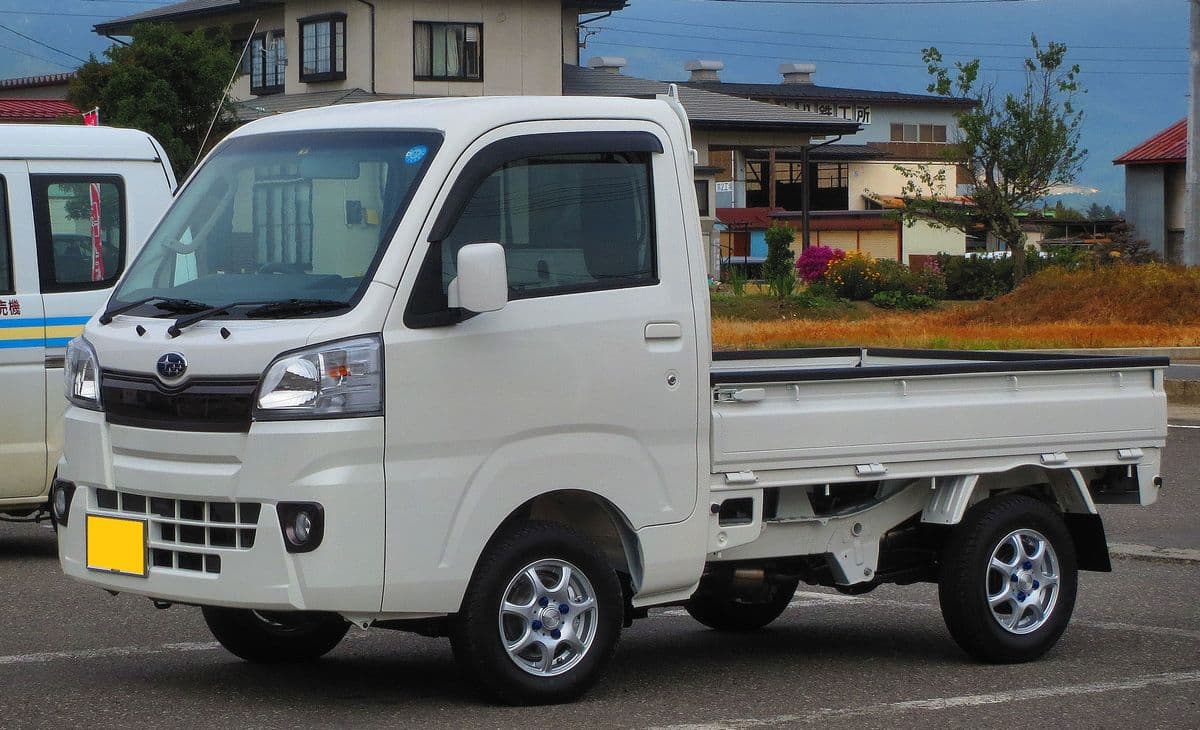
Subaru Sambar
1961-Present
Appalachian hollers, coal country grades, and a 20 mile cap that fits hunting cabin and farm life. The Sambar 4WD supercharged variant has the rear engine traction for West Virginia winter, the torque for vertical driveways, and the simplicity to keep running where parts shipments take a week.