Kei Truck & Kei Car Laws in Washington (2026)
RestrictedWashington allows kei trucks on roads posted 35 mph or less with standard title and registration, but interstates and arterials over 35 mph are off limits.
Are Kei Trucks Legal in Washington?
Washington allows kei trucks on public roads, but only under a low speed vehicle (LSV) classification that limits where they can be driven. Kei trucks can be registered and driven on streets posted 35 mph or under. They are not permitted on highways, high speed arterials, or interstate freeways. Anyone telling you Washington is a "yes, full road use" state is wrong.
This classification puts Washington in the middle of the pack. More permissive than states that ban kei trucks outright. More restrictive than states that allow full road use. The restriction is based on safety concerns, as kei trucks like the Suzuki Carry and Daihatsu Hijet typically have smaller engines (660cc in Japan) and may not reach speeds safe for highway travel. New to kei vehicles? Start with our beginner's guide to kei trucks.
Washington law requires kei trucks to meet the same basic registration, licensing, and insurance requirements as conventional motor vehicles. For more guidance, see our kei truck insurance guide. The Washington State Department of Licensing enforces these regulations statewide, and local jurisdictions cannot override the 35 mph speed limit restriction.
The federal NHTSA 25-year rule allows kei trucks 25 years or older to be imported without meeting current Federal Motor Vehicle Safety Standards (FMVSS), which makes most kei trucks in the U.S. eligible for importation. However, state-level registration requirements still apply.
How to Register a Kei Truck in Washington
Registering a kei truck in Washington follows the standard vehicle registration process with a few specific considerations. Here's the step-by-step process. For a full walkthrough of the import side, see our complete guide to importing a kei truck from Japan.
Required Documents
- Proof of ownership: Bill of sale, previous title, or Manufacturer's Certificate of Origin (MCO)
- Customs documentation: U.S. Customs Entry Documents (Form 7501) and the Japanese export certificate with English translation
- Valid driver's license: Washington State driver's license or valid out-of-state license
- Proof of insurance: Policy meeting Washington's minimum liability requirements
Registration Process
- VIN inspection: If the vehicle was purchased out-of-state or imported, you may need a Vehicle Identification Number inspection from law enforcement or a licensed vehicle inspection facility
- Visit a DOL office: Go to a Washington Department of Licensing office or authorized vehicle licensing office
- Complete registration forms: Fill out the vehicle registration application
- Submit documentation: Provide all required paperwork including customs documents
- Pay fees: Registration fees are based on vehicle weight, type, and your county of residence
- Receive plates and registration: You'll get your license plates, registration certificate, and tabs
Registration Fees
Washington registration fees vary by vehicle weight and location. Kei trucks typically fall into the lightest truck category:
- Base registration fee: Approximately $30-$50 annually for trucks under 4,000 lbs
- Weight fee: Calculated based on vehicle weight (kei trucks are typically 1,500-2,000 lbs)
- Filing fee: $15 for electronic filing, $25 for paper filing
- Plate fee: $10 for standard plates (one-time)
Total first-year registration typically ranges from $75-$150 depending on your county and specific vehicle weight.
Timeline
Registration can typically be completed in one visit to a DOL office if you have all required documentation. Processing time is usually immediate for in-person registration. If registering by mail, allow 4-6 weeks for processing.
Restrictions and Limitations
Washington's restrictions on kei trucks are primarily speed-related, but there are additional considerations:
Speed and Road Restrictions
- Maximum road speed limit: 35 mph posted speed limit
- No highway access: State highways, freeways, and interstates are prohibited
- No high-speed arterials: Many major city streets with speeds above 35 mph are off-limits
- Local roads only: Limited to residential streets, low speed commercial areas, and rural roads with appropriate speed limits
This restriction is based on Washington's classification of kei trucks as low speed vehicles. RCW 46.16A.060 and related statutes govern vehicle registration and use.
Equipment Requirements
To be street legal in Washington, your kei truck must have:
- Headlights and tail lights: Functional and properly aimed
- Brake lights: Working brake light system
- Turn signals: Amber front signals, red or amber rear signals
- Rearview mirrors: At least one, though two are recommended
- Windshield wipers: Functional wipers if the vehicle has a windshield
- Seat belts: Required for all seating positions
- Horn: Audible warning device
- Tires: Adequate tread depth and no visible damage
Most imported kei trucks already have this equipment, though you may need to verify all lights meet U.S. standards and function properly.
Clean Car Law Considerations
Washington's Clean Car Law requires vehicles from model year 2009 and newer to meet California emissions standards. Since most kei trucks available in the U.S. are 25+ years old (to meet federal import requirements), they typically predate this requirement.
However, if you're registering a newer kei truck that somehow meets federal import criteria, be aware that it must comply with California emission certification standards.
Insurance Requirements
Washington requires all registered vehicles, including kei trucks, to carry liability insurance. The state's minimum coverage requirements are:
- $25,000 bodily injury or death per person
- $50,000 bodily injury or death per accident (two or more people)
- $10,000 property damage per accident
These minimums are relatively standard, but many insurance companies are unfamiliar with kei trucks or unwilling to insure them. Here's what to know:
Finding Insurance
Many major insurance carriers may decline to insure kei trucks or classify them as high-risk. Consider these options:
- Specialty insurers: Companies like Hagerty that specialize in collector vehicles may offer coverage
- Classic car insurance: If your kei truck is 25+ years old, classic car policies may be available at lower rates
- Progressive and State Farm: Some drivers report success with these carriers
- Independent agents: Local insurance agents may have access to surplus lines carriers willing to write policies
Be prepared to provide detailed information about your kei truck, including:
- Year, make, and model
- VIN and import documentation
- Photos of the vehicle
- Odometer reading and estimated annual mileage
Insurance Costs
Insurance costs vary widely but typically range from $300-$800 annually for liability-only coverage, depending on your driving record, location, and the insurer's comfort level with these vehicles.
Inspection and Emissions
Washington has significantly simplified its vehicle inspection requirements in recent years:
Safety Inspections
Washington does not require periodic safety inspections for registered passenger vehicles or light trucks. Once your kei truck is registered, you won't need to pass annual safety inspections.
However, if purchasing a used kei truck or importing one yourself, you may need a one-time VIN inspection to verify the vehicle identification number matches your documentation.
Emissions Testing
As of January 1, 2020, Washington ended its vehicle emissions testing program after 38 years. This means:
- No emissions testing required: You won't need to pass smog checks for registration renewal
- Older vehicles exempt: Kei trucks 25+ years old (most models in the U.S.) would have been exempt anyway
- Visible smoke still illegal: While testing isn't required, operating a vehicle that produces excessive smoke remains prohibited
This makes Washington particularly friendly for older kei trucks that might have struggled with emissions testing in other states.
Modified Emissions Equipment
Tampering with or removing emissions control equipment remains illegal under state law, even though testing has ended. Maintain your kei truck's original emissions equipment to avoid potential penalties if stopped by law enforcement.
Tips from Washington Kei Truck Owners
Washington has a small but growing community of kei truck enthusiasts, particularly in rural areas and small towns. Here's practical advice from owners:
Best Areas for Operation
- Rural counties: Eastern Washington's small towns and rural areas have extensive road networks with 35 mph limits, ideal for a Subaru Sambar or Honda Acty
- Small city centers: Places like Port Townsend, Bellingham, and Walla Walla have low speed downtown cores perfect for kei trucks
- Island communities: San Juan Islands and similar communities have lower speed limits and shorter travel distances
- Suburban neighborhoods: Residential areas typically stay within the 35 mph restriction
Areas to Avoid
- Seattle metro area: Limited usefulness due to extensive highway network and high-speed arterials
- I-5 corridor cities: Tacoma, Everett, and other I-5 cities have highway-dependent infrastructure
- Bellevue and eastside: High-speed arterials make navigation challenging
Registration Tips
- Be patient: Some DOL employees may be unfamiliar with kei trucks, so bring extra documentation
- Bring customs paperwork: Even if your state didn't require it, Washington may want to see import documentation
- Use a knowledgeable licensing office: Some offices are more experienced with unusual imports than others
Community Resources
Washington kei truck owners recommend connecting with:
- r/keitruck on Reddit - Active discussions about Washington registration experiences
- Local car clubs - Several accept kei trucks as specialty vehicles
- Japanese import groups - Northwest has several groups familiar with kei vehicles
Find verified kei truck dealers in Washington in our dealer directory.
Frequently Asked Questions
Q: Can I drive my kei truck on Washington highways if I stay in the right lane?
No. The 35 mph road restriction is absolute. It's based on the posted speed limit of the road, not the speed you're traveling. Even if you could physically keep up with traffic, it's illegal to operate a kei truck on roads posted above 35 mph.
Q: Do I need a special license to drive a kei truck in Washington?
No special license is required. A standard Washington driver's license (Class D) is sufficient. The same license that allows you to drive a regular car covers kei trucks.
Q: Can I use my kei truck for commercial purposes in Washington?
Yes, but you'll need appropriate commercial insurance and business licensing. The 35 mph speed restriction still applies, which limits commercial viability. Some landscapers, farmers, and mobile businesses use them within local operating areas.
Q: What happens if I get pulled over while driving on a 40 mph road?
You could be cited for operating a vehicle in violation of its classification restrictions. This could result in fines and potentially having your vehicle impounded if the officer determines it's a safety risk.
Q: Will Washington change its speed restrictions for kei trucks?
There's no current legislation pending to change the restrictions. Some advocacy groups have pushed for expanded access, but safety concerns about small engines and crash protection have prevented changes so far.
Q: Can I modify my kei truck to make it highway-legal?
Engine modifications won't change the vehicle's legal classification. Washington bases the restriction on vehicle type, not performance capability. Even if you installed a larger engine, it would remain classified as a low speed vehicle.
Q: Are there any areas in Washington that don't enforce the 35 mph rule?
While enforcement varies by jurisdiction, the law applies statewide. Operating in violation of the speed restriction puts you at risk regardless of local enforcement patterns. Don't count on lax enforcement.
Useful Links
- Washington State Department of Licensing - Official DOL website
- Vehicle Registration Information - WA DOL registration page
- NHTSA Importing a Vehicle - Federal import regulations
- Washington Emissions Information - State emissions program details
- Clean Car Law Requirements - Emission standards for newer vehicles
- Hagerty Insurance - Specialty vehicle insurance
- r/keitruck Reddit Community - Owner discussions and advice
Conclusion
Washington offers a middle-ground approach to kei truck legality: they're permitted but restricted to low speed roads. This makes them practical for rural residents, small-town dwellers, and those who don't need highway access. The 35 mph restriction limits their usefulness in metropolitan areas but doesn't eliminate them entirely.
If you're considering a kei truck in Washington, think carefully about your typical driving patterns. If your daily routine involves highway travel or high-speed arterials, a kei truck won't work as a primary vehicle. But for farm use, neighborhood errands, or rural property maintenance, they can be practical and economical.
For information about kei truck laws in neighboring states or other regions, check out the other complete state-by-state guide. If you're near the border, you may also want to check kei truck laws in Oregon and Idaho.
What you can do in Washington
Kei trucks are legal here under specific limits. Here are the three moves that matter.
Where you can drive
Posted 35 mph or under. No interstates, no high speed arterials.
Read the rule →Find a dealer in Washington
Verified importers who know your state's registration process.
Browse dealers →When the rules change
Restrictions shift. We email you when Washington updates.
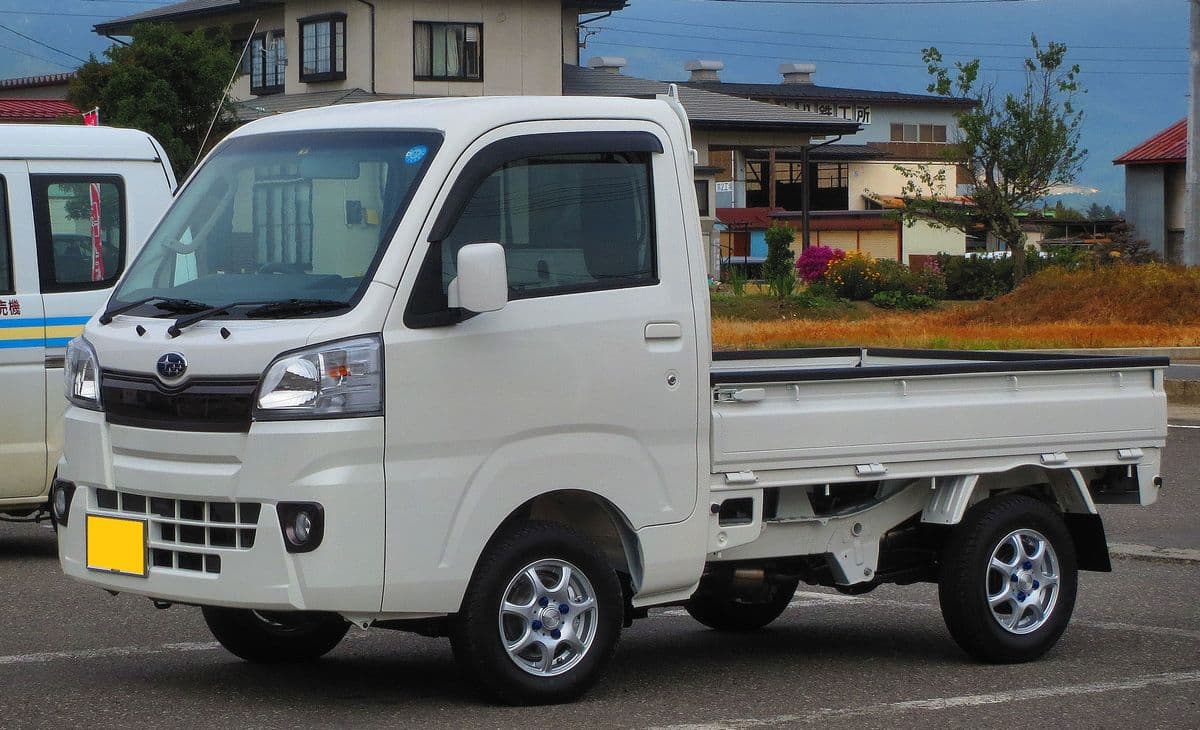
Subaru Sambar
1961-Present
Cascade winters, Olympic rain forest, and PNW mountain roads need a 4WD kei truck with snow capable weight bias. The Sambar 4WD supercharged variant has the rear engine traction and the climbing torque for I-90 corridor weather, and Subaru is a cultural fit in Washington.