Kei Truck & Kei Car Laws in Oregon (2026)
Not LegalOregon allows Class IV ATV titling but blocks road registration. SB 1213 and HB 4063 both died. Advocates target the 2027 session.
Are Kei Trucks Legal in Oregon?
As of July 2026, kei trucks are not street legal in Oregon for on road use. Oregon allows kei trucks to be titled but not registered for public road operation, restricting them to off road use on private property, farms, and ranches. See how they stack up in our kei truck vs UTV comparison.
Oregon lawmakers have made multiple attempts to change this, and both have failed. In 2025, Senate Bill 1213, co-sponsored by Sen. Anthony Broadman (D-Bend), Rep. Emily McIntire (R-Eagle Point), and Rep. Hai Pham (D-Hillsboro), would have allowed kei truck registration with a $63 fee and a ban on roads over 65 mph. The bill had strong bipartisan support but died in committee when the 2025 session adjourned.
House Bill 4063 picked up where SB 1213 left off in the 2026 short session, but it also died without receiving a vote when the session adjourned on March 6, 2026. The bill was referred to the House Transportation Committee but failed to meet the February 16 policy committee deadline. For a deeper look at what happened and what it means for the national legalization fight, read our coverage of the bill's failure. New to kei vehicles? Start with our beginner's guide to kei trucks.
Advocates are now targeting the 2027 regular session, which will have more legislative bandwidth than the 31 day short session that killed HB 4063. For now, anyone purchasing a kei truck in Oregon should assume off road use only. Check the Oregon Legislature's bill tracker for 2027 session prefiling.
Legislative Timeline
Legislative Timeline
- Banned
Title Only, No Road Registration
Oregon allowed kei trucks to be titled as Class IV ATVs but banned them from public road use. Off-road and private property only.
- Pending
SB 1213 Introduced with Bipartisan Support
Senate Bill 1213, co-sponsored by Sen. Broadman (D), Rep. McIntire (R), and Rep. Pham (D), proposed a $63 registration fee and use on roads with 65 mph or lower speed limits.
- Banned
SB 1213 Dies in Committee
Despite bipartisan backing, SB 1213 did not receive a vote before the 2025 session adjourned.
- Pending
HB 4063 Introduced in Short Session
House Bill 4063, sponsored by Sen. Broadman, Rep. Osborne (R), and Rep. Skarlatos (R), picks up where SB 1213 left off. Same 65 mph road limit, same 25-year age requirement, same $63 fee.
- Banned
HB 4063 Dies Without a Vote
HB 4063 failed to meet the February 16 policy committee deadline and never received a hearing or vote before the short session adjourned on March 6. Advocates are targeting the 2027 regular session.
How to Register a Kei Truck in Oregon
Under current Oregon law, you can title a kei truck but cannot register it for on road use. Here's what the process looks like today and what it would likely look like if a 2027 bill modeled on HB 4063 finally gets across the finish line.
Current Process (Off road Title Only)
To title a kei truck in Oregon as an off road vehicle:
Step 1: Classify as Class IV ATV
Kei trucks can be titled if they meet Oregon's definition of a Class IV All-Terrain Vehicle under ORS 801.194. Visit an Oregon DMV office to determine eligibility.
Step 2: Gather Documents
You'll need:
- Bill of sale or foreign title
- U.S. Customs import documentation (Form 3299, 7501, or similar)
- Application for Oregon Title and Registration (Form 735-226)
- Proof of ownership chain
- VIN verification (DMV can assign if needed)
Step 3: Submit and Pay Fees
Submit your documents to an Oregon DMV office. Current fees for titling:
- Title fee: $116
- Class IV ATV registration (off road only): approximately $30-$50
You'll receive a title but not street legal plates.
What a 2027 Bill Would Likely Include
HB 4063 died without a hearing on March 6, 2026, so nothing is pending right now. But the next legalization bill will almost certainly be built on the same framework, since SB 1213 and HB 4063 shared it. Here's what registration would look like under that model:
Registration Fee: HB 4063 proposed a $63 registration fee specifically for kei trucks, and a 2027 bill would likely carry that number forward.
Required Documentation: Similar to current requirements, plus proof the vehicle meets the 25-year age requirement and kei truck specifications.
On road Plates: You would receive standard Oregon license plates valid for roads with speed limits of 65 mph or lower.
DEQ Emissions: If you live in one of Oregon's two DEQ testing areas (the Portland metro area and the Medford area), your kei truck would need to pass Oregon's emissions test unless exempt. The Medford area exempts vehicles more than 20 years old, which covers any 25 year old kei import.
Restrictions and Limitations
The restrictions on kei trucks differ depending on whether you're operating under current law (off road only) or a future legalization bill built on the HB 4063 framework.
Current Restrictions (2026)
Under existing law, kei trucks:
- Cannot be driven on any public road or highway
- Are limited to private property, farms, ranches, and designated off road areas
- Can be titled but not street-registered
- May not be insured for road use by most carriers
Likely Restrictions Under a Future Bill
Nothing is pending as of July 2026. HB 4063 never got a hearing before the short session adjourned on March 6, 2026, so these are the limitations it would have imposed, and the template a 2027 bill would almost certainly reuse:
Speed and Highway Restrictions: Kei trucks could not operate on highways with speed limits exceeding 65 mph. Violating this restriction would constitute a traffic offense.
Equipment Requirements: Vehicles would need to comply with Oregon's basic safety standards, including:
- Headlights and taillights
- Turn signals
- Brake lights
- Mirrors
- Windshield wipers
- Seat belts
- Horn
Age Requirement: Only kei trucks with model years at least 25 years old would qualify, aligning with the NHTSA 25-year import exemption. For more details, check our complete guide to importing a kei truck from Japan.
Size Specifications: Vehicles must not exceed 11 feet in length, 4.9 feet in width, 6.6 feet in height, and must have engines of 660cc or smaller.
Local Ordinances
Individual cities and counties may impose additional restrictions even if state law legalizes kei trucks. Check with your local government for specific rules.
Insurance Requirements
Oregon requires all motor vehicles operating on public roads to carry liability insurance under ORS 806.010.
Current Situation
Since kei trucks cannot currently be registered for on road use, standard auto insurance is generally not required or available. Some farm insurance policies may cover off road use.
If Legalized
If a future bill legalizes kei trucks for road use, you'll need:
Minimum Liability Coverage:
- $25,000 bodily injury per person
- $50,000 bodily injury per accident
- $20,000 property damage per accident
Finding Insurance: Not all carriers insure kei trucks. For more guidance, see our kei truck insurance guide. Companies that may offer coverage include:
- State Farm (agent discretion)
- Progressive
- Hagerty (specialty vehicle insurance)
- Grundy Insurance
Expect premiums of $500-$900 annually for basic liability coverage. Shop around, as rates vary significantly between carriers and agents.
Inspection and Emissions
Oregon's inspection requirements vary by county and vehicle type.
Safety Inspections
Oregon does not require periodic safety inspections for most passenger vehicles. However, if kei trucks become street legal, they must meet all equipment standards at the time of registration.
DEQ Emissions Testing
Oregon's Vehicle Inspection Program covers exactly two testing areas:
- Portland metro area (portions of Clackamas, Multnomah, and Washington counties)
- Medford area (part of Jackson County)
If you live in a DEQ testing area and kei trucks become legal, your vehicle must pass testing unless it qualifies for an exemption. The Medford area exempts vehicles more than 20 years old, which would cover any importable kei truck (25+ years old under federal import rules).
VIN Verification
The Oregon DMV may need to verify or assign a VIN for imported kei trucks lacking standard 17-digit VINs. This is a one-time requirement during initial titling.
Tips from Oregon Kei Truck Owners
Oregon has a dedicated community of kei truck enthusiasts, many of whom have been advocating for legalization.
Stay Informed on Legislation
HB 4063 died in the 2026 short session without a vote. Advocates are targeting the 2027 regular session, which offers significantly more legislative time. Contact your state representative and senator now to voice support. Follow the Oregon Legislature's bill tracker for 2027 session prefiling.
Off road Use
Until the law changes, stick to private property. Oregon has strict enforcement in some areas, and driving an unregistered vehicle on public roads can result in citations and impoundment.
Plan for Registration Once Legal
If a 2027 bill passes, be ready to register quickly. Have all import documents, bills of sale, and proof of ownership organized. Join online communities like r/keitruck to share experiences and tips with other Oregon owners.
Rural vs. Urban Counties
If kei trucks become legal, registration and insurance may be easier in rural counties compared to Portland metro, where DEQ testing and stricter enforcement can complicate matters.
Find verified kei truck dealers in Oregon in our dealer directory.
Consider Nearby States
If you need on road functionality now, consider registering your kei truck in a neighboring state where they're already legal (though this requires residency in that state). See our complete state-by-state guide for details. Montana and Idaho permit kei trucks with varying restrictions.
Frequently Asked Questions
When will kei trucks be legal in Oregon?
The earliest opportunity is the 2027 regular legislative session. HB 4063 died in the 2026 short session without a vote, and SB 1213 died in committee in 2025. Both bills had bipartisan support. Read our full analysis of the bill's failure and what comes next.
Can I drive my kei truck on rural roads right now?
No. Even on low-traffic rural roads, operating an unregistered vehicle on public highways is illegal. You risk citations, fines, and vehicle impoundment. Stick to private property until the law changes.
Do I need a special license to drive a kei truck?
No special license is required. If legalized, a standard Oregon Class C driver's license would suffice. Kei trucks are not classified as commercial vehicles.
Can I use a kei truck for work or business?
If legalized for road use, yes. Many people use kei trucks for landscaping, property maintenance, and farm work. You'd need appropriate commercial insurance and possibly commercial registration depending on your use case.
What if I bought a kei truck before legalization?
You can title it now as an off road vehicle. If a 2027 bill modeled on HB 4063 passes, you'll likely be able to convert your title to a street legal registration by meeting the new requirements and paying the proposed $63 registration fee.
Will kei trucks be legal on Interstate 5 or other major highways?
No. Every Oregon legalization bill so far, including the dead HB 4063, would have prohibited kei trucks on highways with speed limits exceeding 65 mph, and a future bill will almost certainly keep that line. Most interstate sections have 65 or 70 mph limits, so expect restrictions on I-5, I-84, and other major routes.
Can I modify my kei truck in Oregon?
Once legal, modifications are generally allowed as long as the vehicle maintains required safety equipment. Lift kits, wheels, and cosmetic changes are typically fine. Major engine swaps that exceed 660cc might disqualify the vehicle from kei truck classification.
Useful Links
- Oregon Department of Transportation - DMV
- Oregon Legislature - Bill Tracker
- House Bill 4063 (2026 Session)
- Oregon DEQ Vehicle Inspection Program
- NHTSA Vehicle Importation Guidelines
- Hagerty Insurance
- r/keitruck Reddit Community
- Subcompact Culture - Oregon Kei Truck Coverage
Oregon stands at a crossroads regarding kei truck legalization. The 2026 short session came and went without HB 4063 getting so much as a hearing, so current law keeps these vehicles off road until at least the 2027 regular session. Stay informed, stay legal, and advocate for sensible regulations that allow kei truck enthusiasts to enjoy their Suzuki Carrys, Honda Actys, and Daihatsu Hijets on Oregon roads. For kei truck laws in other states, visit our complete guide our complete state-by-state guide. If you're near the border, you may also want to check kei truck laws in Washington, Idaho, Nevada, and California.
When Oregon changes, we tell you first.
One email. No newsletter. Only when the law actually moves. SEMA and state-level reform groups are pushing legalization bills across the country.
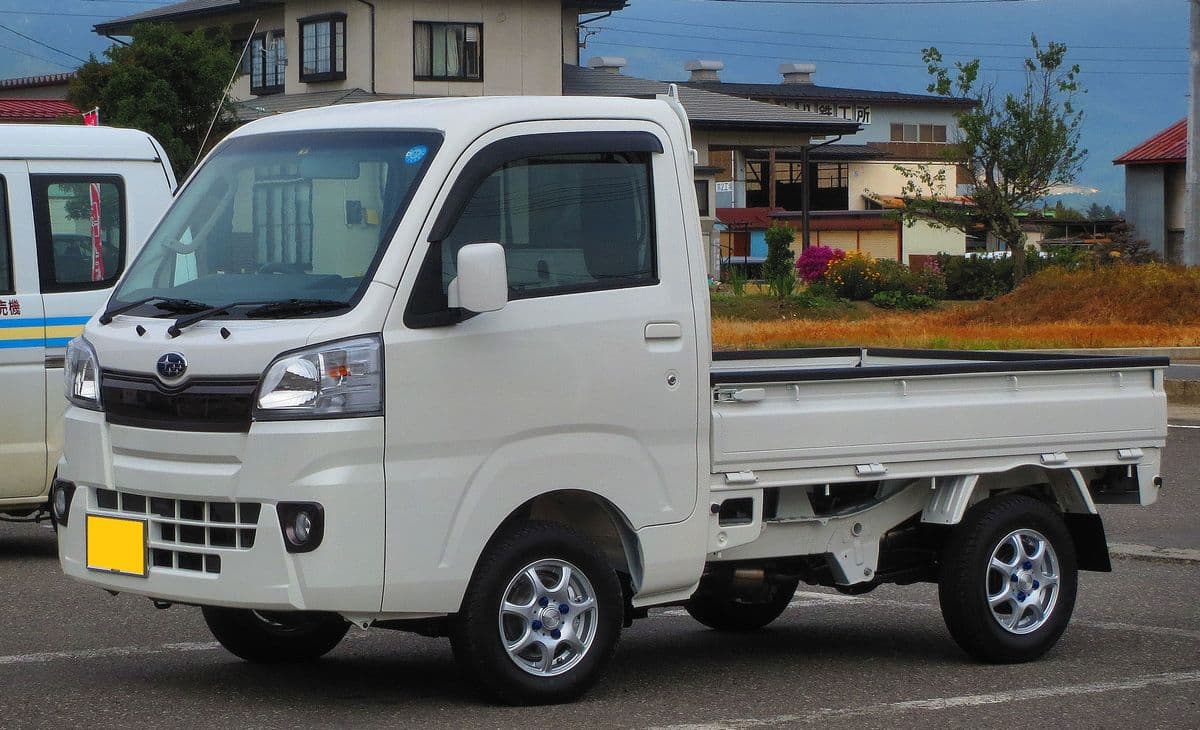
Subaru Sambar
1961-Present
Oregon is wet, hilly, and the working properties are vineyards, hops farms, and timber tracts. The Sambar has the supercharged four cylinder option that climbs Willamette Valley grades without complaint, the rear engine handles slick conditions, and Subaru parts cross over from US models in a pinch.
What you CAN do in Oregon
Oregon lets you title a kei truck as a Class IV ATV under ORS 801.194 for off road use. Willamette Valley vineyards, southern Oregon hops farms, and timber tracts in the Coast Range run kei trucks daily on private land. Trailer transport between properties is the only clean public road move.