Can You Write Off a Kei Truck? Section 179 Guide
Your kei truck might qualify for a full Section 179 deduction. Here's how business owners, farmers, and landscapers are writing off their Japanese mini trucks.

Advertisement
Disclaimer: This is not tax advice. Tax law is complicated, changes frequently, and your situation is unique. Consult a licensed CPA or tax professional before claiming any vehicle deduction. We are gearheads, not accountants.
A $7,000 Suzuki Carry that hauls mulch six days a week might be one of the best business purchases you can write off this year. Farmers, landscapers, property managers, and small business owners across the country are buying kei trucks for legitimate work use. And the IRS has clear rules about deducting business vehicles, even the ones that weigh less than a riding mower.
The question is not whether kei trucks qualify for business deductions. They do. The real questions are which deduction method saves you the most money, how much paperwork you need, and what trips up owners at audit time. If you are still getting familiar with these vehicles, our beginner's guide covers the basics before you start thinking about tax strategy.
Section 179: The Big One
Section 179 of the Internal Revenue Code lets business owners deduct the full purchase price of qualifying equipment in the year they buy it, instead of depreciating it over several years. Vehicles count as equipment. Kei trucks are vehicles. The math works.
For the 2026 tax year, the overall Section 179 deduction limit is $2,560,000. That number is irrelevant for most kei truck buyers since you are probably spending $5,000 to $15,000 on the truck itself. What matters is the per vehicle cap, and that depends entirely on weight.
The Weight Question
The IRS splits vehicles into categories based on Gross Vehicle Weight Rating (GVWR). This is where kei trucks land in an interesting spot.
Most kei trucks have a curb weight between 1,400 and 1,800 pounds. The Honda Acty comes in around 1,476 lbs, and the Suzuki Carry sits in a similar range. Even fully loaded with 770 lbs of payload (the Japanese regulatory max of 350 kg), you are looking at a GVWR well under 6,000 lbs. That puts kei trucks squarely in the "light vehicle" category for IRS purposes.
For light vehicles under 6,000 lbs GVWR, the 2026 Section 179 first year deduction limit is $12,200. Combined with bonus depreciation, you can deduct up to $20,200 in the first year. Block Advisors maintains an updated breakdown of these caps by vehicle weight class.
Here is the good news: most kei trucks cost between $5,000 and $15,000 depending on condition, year, and whether you imported it yourself or bought from a dealer. If your truck cost $8,000 and you use it 100% for business, you can likely deduct the entire purchase price in year one under Section 179. No need to spread it over five years.
The 50% Business Use Rule
This is the single biggest requirement and the one that catches people. To claim Section 179, the vehicle must be used more than 50% for business purposes in the year you place it into service. Not exactly 50%. More than 50%.
Your deduction scales proportionally with business use. If you use the truck 80% for business and 20% for personal errands, you deduct 80% of the qualifying amount. Use it 100% for farm work and never drive it to the grocery store? You get the full deduction.
The IRS expects you to prove that percentage. More on documentation below.
Bonus Depreciation: The 100% Write Off Is Back
The One, Big, Beautiful Bill Act reset bonus depreciation to 100% for qualifying property acquired after January 19, 2025. This is a big deal. Before this legislation, bonus depreciation had been phasing down from 100% (in 2022) to 80% (2023), 60% (2024), and 40% (2025 pre legislation).
Now it is back to 100%. For a kei truck purchased and placed into service in 2026, you can combine Section 179 with bonus depreciation. On a vehicle under 6,000 lbs, the first year deduction cap is $12,200 under Section 179 plus up to $8,000 in bonus depreciation, totaling $20,200. NerdWallet's Section 179 guide has a clear walkthrough of how these two deductions stack.
Since most kei trucks cost well under $20,200, the practical effect is simple: you can likely deduct the entire cost of the truck in the year you buy it, as long as business use exceeds 50%.
The Farm Use Advantage
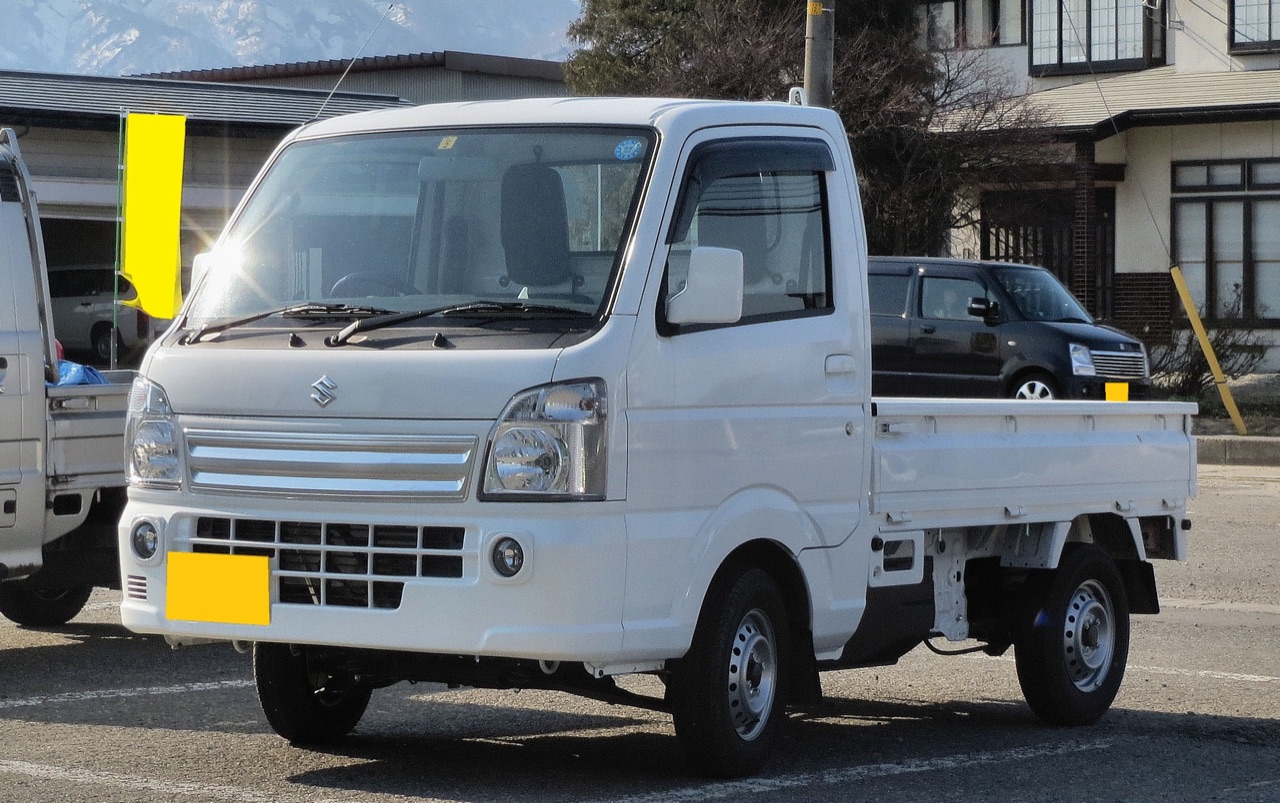
Farmers get some of the cleanest tax treatment for kei truck purchases. If you file Schedule F (Profit or Loss From Farming), your kei truck used for farm operations is deductible as farm equipment.
This is where kei trucks shine compared to full size pickups. A farmer buying a $50,000 F-250 hits the same Section 179 caps (unless the truck exceeds 6,000 lbs GVWR, which an F-250 does). But the farmer buying a $7,000 Suzuki Carry with a dump bed for hauling feed, tools, and fencing supplies can write off the entire purchase price in year one, and the truck probably costs less than the sales tax on that F-250.
Common farm uses that strengthen a deduction claim:
- Hauling feed, fertilizer, seed, and supplies between barns and fields
- Transporting tools and equipment around the property
- Moving harvested crops from field to storage
- Fence repair and maintenance runs
- Livestock management and pasture checks
The IRS Publication 225 (Farmer's Tax Guide) covers agricultural vehicle deductions in detail. Nationwide's farm equipment deduction guide also breaks down the process in plain language. One important note: if you use the truck exclusively on your farm and never take it on public roads, some states do not require registration or insurance. That said, you should still carry coverage, and our insurance guide breaks down the options.
If you are considering a kei truck specifically for agricultural work, our best kei truck for farming guide compares models by payload, bed size, 4WD capability, and real world farm durability.
Standard Mileage Rate vs. Actual Expenses
Not every kei truck owner wants to mess with Section 179 depreciation schedules. The IRS gives you two simpler methods for deducting vehicle expenses year over year.
Standard Mileage Rate
For 2026, the IRS business standard mileage rate is 72.5 cents per mile. Multiply your business miles by $0.725 and that is your deduction. Simple.
If you drive 5,000 business miles in your kei truck, that is a $3,625 deduction. At 10,000 miles, you are looking at $7,250. This method is attractive because it is easy. You track mileage, multiply, done.
The catch: if you use Section 179 or bonus depreciation in the first year, you cannot use the standard mileage rate for that vehicle in any subsequent year. You are locked into the actual expense method going forward. Choose wisely.
Actual Expense Method
With the actual expense method, you deduct the real costs of operating the truck for business: fuel, oil changes, tires, repairs, insurance, registration, and depreciation. You multiply total expenses by your business use percentage.
For kei trucks, actual expenses tend to be low. These trucks sip fuel (40+ mpg is common), parts are inexpensive, and routine maintenance is straightforward. That means the standard mileage rate often produces a larger deduction than actual expenses for kei trucks. Run both calculations before you file.
What the IRS Wants to See: Documentation
The IRS does not take your word for business use percentage. They want records. If you get audited, sloppy documentation is what turns a legitimate deduction into a disallowed one with penalties. Members of the r/keitruck community frequently share tips on mileage logging and documentation that has held up to scrutiny.
Keep these records from day one:
- Mileage log: Date, destination, business purpose, and odometer readings for every business trip. Apps like MileIQ, Everlance, or a plain spreadsheet work fine.
- Purchase documentation: Bill of sale, import paperwork, shipping receipts, title documents. Keep everything that shows what you paid.
- Business use evidence: Photos of the truck in use, invoices for supplies hauled, contracts for jobs where the truck was used.
- Maintenance records: Receipts for fuel, oil, tires, and repairs. These support your actual expense method if you go that route.
- Separate personal vs. business use: If you occasionally daily drive your kei truck or use it for personal errands, log those trips separately. The IRS wants to see a clear split.
A dedicated vehicle used only for business is the cleanest scenario. If your kei truck lives on the farm and never leaves the property for personal use, documenting 100% business use is straightforward. If you also drive it to the hardware store on weekends, you need to track every trip.
Who Can Claim a Kei Truck Deduction
You do not need to be a Fortune 500 company. These deductions are available to:
- Sole proprietors filing Schedule C (landscapers, handymen, mobile mechanics)
- Farmers filing Schedule F
- S-Corps and LLCs purchasing vehicles for business operations
- Partnerships with legitimate business use
- Rental property owners using the truck for property maintenance
The common thread: you need a legitimate business purpose, consistent use, and documentation. Buying a kei truck, driving it to your day job, and calling it a "business vehicle" is not going to hold up. Using it to haul equipment to job sites, manage a property, or run a farm operation is exactly what these deductions are designed for.
Real World Examples
The Landscaper: You buy a 1998 Suzuki Carry 4WD for $8,500 from a dealer like Duncan Imports. You use it exclusively to haul mowers, trimmers, and mulch between job sites. Business use: 100%. Section 179 deduction: $8,500. Your entire truck is written off in year one.
The Small Farmer: You purchase a Honda Acty with a dump bed for $10,000. It lives on the farm, hauls feed and fencing supplies, and never leaves the property for personal use. Filed on Schedule F, full Section 179 deduction: $10,000. You also deduct fuel and maintenance as operating expenses.
The Property Manager: You pick up a Daihatsu Hijet for $6,000 to shuttle tools and supplies between rental properties. Business use is 75% (you occasionally run personal errands). Section 179 deduction: $4,500 (75% of $6,000). You track mileage diligently.
The Side Hustle: You work a day job and do weekend handyman work. You buy a kei truck for $7,000 and use it 60% for side business, 40% personal. Section 179 deduction: $4,200. You report the side business on Schedule C with your 1040.
Common Mistakes That Get Kei Truck Owners in Trouble
Claiming 100% business use on a truck you clearly also drive personally. The IRS knows that most vehicles get some personal use. If you claim 100% and you do not have a second personal vehicle, expect questions.
No mileage log. The IRS has denied vehicle deductions outright for taxpayers who could not produce a contemporaneous mileage record. "I mostly used it for work" is not a defense. Track from day one.
Forgetting the placed in service date. Section 179 applies to the year the vehicle is placed into service, not the year you pay for it. If you buy in December 2026 but do not actually start using it for business until January 2027, the deduction falls in 2027.
Double dipping on methods. You cannot take Section 179 in year one and then switch to the standard mileage rate in year two. Once you depreciate, you are on the actual expense method for the life of that vehicle.
Not filing the right form. Section 179 deductions require Form 4562. Your CPA knows this. TurboTax can walk you through it. But if you are hand filing, do not skip it.
How to Talk to Your Accountant About This
Most CPAs have never heard of a kei truck. Walk in prepared. Bring the following to your tax appointment:
- The purchase price and all associated costs (import fees, shipping, registration)
- The truck's GVWR (check the door jamb sticker or the original Japanese specs)
- Your mileage log showing business vs. personal use
- A one sentence description of what a kei truck is: "It's a Japanese mini truck, under 6,000 lbs GVWR, used as work equipment."
- The IRS classification you believe applies (Section 179 eligible property, light vehicle under 6,000 lbs)
Your CPA will know how to handle it from there. The vehicle type does not matter for Section 179 eligibility. What matters is the weight class, business use percentage, and documentation. A kei truck is treated the same as any other light truck in the IRS's eyes.
For guidance on financing your purchase, our financing guide covers loan options that play well with business deductions. Some owners structure kei truck purchases through their business entity specifically to simplify the deduction process. Before buying, check our pre purchase inspection guide so you know what to look for.
The Bottom Line
Kei trucks qualify for the same business vehicle deductions as any other light truck under 6,000 lbs GVWR. For most buyers spending $5,000 to $15,000, Section 179 lets you deduct the entire purchase price in year one. Farmers on Schedule F get the cleanest path. Business owners on Schedule C have a straightforward process. The 2026 rules are favorable thanks to restored 100% bonus depreciation.
The keys to a bulletproof deduction: legitimate business use over 50%, a detailed mileage log from day one, purchase documentation, and a CPA who understands vehicle depreciation. The truck itself is the easy part. The paperwork is what separates a clean deduction from an audit headache.
Your $8,000 kei truck doing real work on a farm, job site, or rental property is one of the most cost effective business vehicle purchases you can make, and Uncle Sam will help you pay for it. Just keep the receipts.
Advertisement


