Alaska Just Legalized Kei Trucks: SB 239 Makes 25 Year Old Imports Street Legal
Alaska signed SB 239 into law on June 24, 2026, making kei trucks and every other legally imported 25 year old vehicle street legal. Here's what the law says, how the fix happened in four months, and the one paperwork catch that's tripping up owners.

Advertisement
There's a guy near Anchorage named Chris Blankenship who owns a 2000 Ford F350 with a plow on the front. It stays parked about 99 percent of the time now, by his own math. The thing that replaced it for grocery runs, camping trips, and hauling gear is a 1995 Suzuki Carry with a cargo carrier, a truck bed tent, and a Starlink dish. Until a few weeks ago, driving that Carry on an Alaska public road put him at the mercy of whichever officer happened to notice it. As of June 24, 2026, it's a fully road legal vehicle in the eyes of the State of Alaska.
That's the day Governor Mike Dunleavy signed SB 239, and it makes Alaska the newest state to legalize kei trucks. Not with a speed cap, not with a county road restriction, not with an antique plate scheme that bans night driving. Full registration and title, same as any other vehicle, for anything at least 25 years old that was legally imported into the United States. The law took effect immediately on signing.
We've updated our Alaska kei truck law page to reflect the change, but the story of how Alaska got here deserves its own writeup, because it's the fastest turnaround from enforcement crackdown to signed legalization that any state has pulled off. Owners in Wisconsin, Georgia, and New York should be taking notes.
What SB 239 Actually Does
The operative language is two short sections. The bill creates a new statute, AS 28.10.068, which reads: if a vehicle is at least 25 years old and was legally imported into the United States, the department may not require that the vehicle comply with current federal motor vehicle safety standards before registering it. A second section amends the title statute, AS 28.10.221, so the DMV also cannot refuse, suspend, or revoke a certificate of title over FMVSS compliance for a vehicle registered under the new section.
That's the whole mechanism. The official bill page at the Alaska State Legislature shows it was enacted as Chapter 39 SLA 26, with the registration and title sections taking effect immediately under Alaska's emergency effective date provision. Both chambers passed it without a single no vote: 20 to 0 in the Senate on April 29, and 39 yes with one member absent in the House on May 19.
Two things make this law better than most of the kei bills we cover. First, it's a rolling standard. The bill ties registration to the vehicle being 25 years old, mirroring the federal import rule, so every year a new batch of vehicles ages into eligibility automatically. Second, it isn't kei specific. The same language that legalizes a Honda Acty also legalizes a Nissan Skyline, a Toyota Hilux Surf diesel, or a German market BMW wagon. Any legally imported vehicle past the 25 year line gets the same treatment, which means there's no definitional fight about what counts as a "kei class vehicle" for a future DMV administrator to exploit.
The 1981 Mistake That Started All This
Alaska never actually passed a kei truck ban. What it had was worse: a drafting error that sat dormant for two decades. Back in 2006, Alaska adopted a regulation, 2 AAC 92.020, that let the DMV refuse registration to any vehicle from model year 1981 or newer that lacked an FMVSS certification label or a manufacturer's compliance letter. The intent was to create a classic vehicle carve out matching the federal 25 year rule, and in 2006, a 25 year old car was a 1981 car. According to Mercedes Streeter's reporting at The Autopian, Representative Mike Prax has said the state simply wrote the fixed year into the regulation instead of a rolling standard. Nobody noticed, because nobody enforced it.
Then, around 2025, the Alaska DMV started actually checking. The screening method was blunt: look for a 17 digit VIN. Japanese domestic market vehicles use shorter chassis codes, so no 17 digit VIN meant the system assumed no FMVSS compliance, and the registration got denied. Owners who had been importing and driving keis for years suddenly couldn't get plates. Some got stuck with trucks they could legally own but not legally drive, the same trap we documented when Wisconsin started enforcing its own dormant ban this year.
The workaround before SB 239 was registering the truck as an "all purpose vehicle," an off road classification closer to an ATV tag. Per the Alaska's News Source coverage from KTUU, that allowed limited on road operation at the discretion of law enforcement. Read that again: your daily driver's legality depended on the mood of whoever pulled you over. Blankenship says every officer he met loved the truck. That's nice, but "the cops think it's cute" is not a registration status.
Four Months From Filed Bill to Signed Law
Here's the timeline that should embarrass every state still dragging its feet. Senator Cathy Tilton, a Republican from Wasilla, filed SB 239 on February 11, 2026. It cleared the Senate Transportation and State Affairs committees by late April, passed the Senate unanimously, picked up House amendments in May, and was signed June 24. Four and a half months, start to finish, with a zero dollar fiscal note.
The coalition is the story. The sponsor list spans twelve Republicans, five Democrats, an independent, and an unaffiliated member, per The Autopian's count. Tilton's own framing, from the Senate majority's press release, was pure red tape reduction: "We often talk about cutting red tape. SB 239 actually does it." Notice what's absent from that framing. Nobody argued about crash tests. Nobody debated whether a 660cc truck belongs on the Seward Highway in January. The bill was positioned as fixing a 20 year old clerical mistake that was stopping Alaskans from driving vehicles the federal government already lets them import, and framed that way, nobody voted against it.
The House amendments bolted on two unrelated provisions, one letting CDL applicants retake only the failed portion of their written exam and one adjusting insurance proof requirements after license suspensions. Standard legislative carpooling. The import sections came through untouched, per the LegiScan bill history.
How to Register a Kei Truck in Alaska Now
The process now looks like any other title and registration transaction, with one big asterisk: you have to prove the vehicle was legally imported. That means the customs paperwork from when the truck entered the country, the CBP Form 7501 entry summary and the HS-7 declaration filed at the port. If you imported the truck yourself or bought from an importer who handed you the full document stack, you're set. Our kei truck import guide covers exactly which forms matter and why you should never accept a truck without them. Alaska also runs a VIN verification on vehicles with foreign ownership documents, using its Form 811 inspection, so expect that step at the Alaska DMV.
Here's the catch that's already biting people. Plenty of Alaska kei trucks were bought secondhand, in state, from owners who never kept the import paperwork. Blankenship's Carry came from a previous owner in Tok, no original import form included. His fix, straight from the KTUU piece (we broke down the full ride along segment separately), is driving the truck to the Canadian border so customs can inspect it, verify the paperwork trail, and stamp it back in. He's trying to round up other owners in the same situation to caravan up and do them all at once, which is maybe the most Alaska sentence ever written about vehicle registration. If you're shopping for a truck that's already stateside, put the import documents at the top of your pre purchase checklist, because a missing Form 7501 just turned into a road trip to Beaver Creek.
One more practical note: registration means insurance. Alaska requires liability coverage like anywhere else, and insuring a 25 year old right hand drive import takes a little carrier shopping, so start those quotes before the DMV trip, not after.
What This Means for the National Map
Alaska flips from one of the worst states to own a kei truck to one of the best, overnight. The law has no speed limited road restriction, no kei specific carve out to reinterpret, and a rolling eligibility year. That puts it in the same tier as the Texas statute and ahead of states that legalized with strings attached.
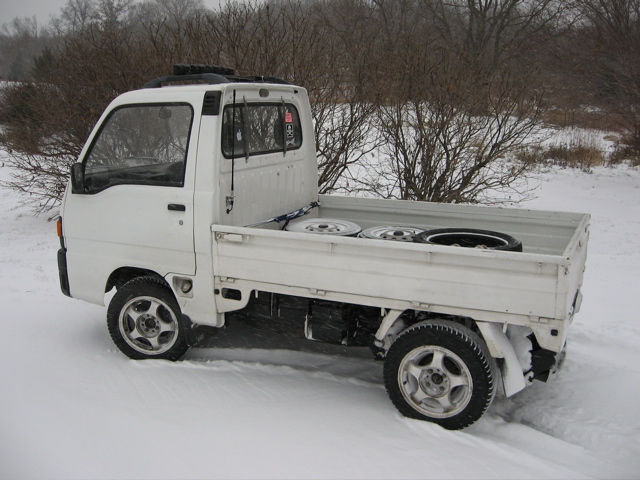
The bigger lesson is the playbook, because it keeps working. Texas enthusiasts organized, educated legislators, and codified kei registration into statute. Colorado did the same in 2025. Michigan sued. Massachusetts lobbied. Vermont wrote kei vehicles into its pleasure car and farm truck definitions eight days before Alaska's signing. Alaska's owners got denial letters in 2025, started calling legislators, and had a signed law before the 2026 session ended. The pattern in every winning state is identical: a small group of owners refused to treat the denial letter as final, showed legislators what a kei truck actually is, and made the fix easy to vote for. The r/keitruck community threads on Alaska are full of owners from banned states asking how it happened so fast, and the honest answer is that a fixed year drafting error is an easier sell than repealing a deliberate ban. But the mechanics of the campaign are the same ones we tracked in our 2026 state by state law update, and they're available to anyone in Pennsylvania, New York, or Rhode Island willing to make phone calls.
It also matters that Alaska's law covers all imports. Kei advocacy usually fights alone. SB 239 passed partly because Skyline owners, Delica owners, and classic European car importers all had skin in the game. Broadening the tent got a bill through two chambers without a single no vote.
Is a Kei Truck Actually Good in Alaska?
Fair question, since the old version of our Alaska page argued cold weather was one reason the state would never budge. The owners already running them say otherwise. A 4WD Carry or Subaru Sambar with proper tires handles snow better than its size suggests, and the light footprint is an advantage on ice where a 7,000 pound pickup is just momentum with a hood ornament. Blankenship parked his plow truck, not his Carry, for the winter routine.
That said, a Japanese market truck from the 1990s needs winterization before it faces Fairbanks in January. The stock cab heaters are adequate rather than heroic, block heaters are borderline mandatory in the Interior, and you want a proper set of studded or severe snow rated rubber. Specialty suppliers like Oiwa Garage carry maintenance and upgrade parts for these trucks, which beats waiting six weeks for a slow boat from Japan. Our kei truck winter guide covers the full cold weather setup, from battery upgrades to keeping a carbureted engine happy at 20 below.
The Bottom Line
Alaska legalized kei trucks on June 24, 2026, when SB 239 became Chapter 39 SLA 26. Any vehicle at least 25 years old and legally imported into the US can now be titled and registered for full road use, effective immediately, with no FMVSS proof required. The fix repaired a 2006 regulation that hard coded 1981 as the cutoff year instead of a rolling 25 year standard, a mistake that went unnoticed until DMV enforcement tightened around 2025.
If you're in Alaska with a kei truck, gather your import paperwork and head to the DMV. If you bought in state and the customs documents are missing, you'll need to reconstruct the trail, possibly via a border crossing inspection. If you're anywhere else watching your state refuse registrations, Alaska just demonstrated the ceiling: four months, zero no votes, zero fiscal cost. The template is public record at the federal 25 year import rule Alaska now mirrors. Print SB 239, hand it to your state senator, and ask why not here.
Advertisement


