Vermont Kei Trucks Are Street Legal: S.326 Signed Into Law as Act 153
Governor Phil Scott signed S.326 on June 16, and the kei vehicle provisions took effect July 1, 2026. Vermont kei trucks now register as farm trucks and kei cars as pleasure cars, with local bans preempted. Here's what Act 153 says and how the community pulled it off in under a year.

Advertisement
Back in April we covered a pint sized fire truck and a Giants painted Mazda Scrum parked outside the Vermont Statehouse for Mini Truck Day, drumming up support for a bill that was supposed to have "all green lights." Legislative optimism is usually where good news goes to die. Not this time. Governor Phil Scott signed S.326 into law on June 16, 2026, it became Act 153, and the kei vehicle provisions took effect July 1. Kei trucks are now street legal in Vermont, full stop.
That makes Vermont the first state in the Northeast with a clean, statutory kei registration pathway, and the second state in eight days to get a kei win signed, since Alaska's SB 239 was signed June 24. Two states, two different mechanisms, one obvious trend. We've updated our Vermont kei truck law page with the full registration details; this is the story of what the law says and how it got done.
What Act 153 Actually Says
The kei language lives in Sections 20 and 21 of the act, and it works by definition rather than by exception. Section 20 amends 23 V.S.A. § 4, Vermont's master list of vehicle definitions, to add subdivision (90): a "kei vehicle" is a motor vehicle with four wheels, an engine of 660 cubic centimeters or less, and maximum dimensions of 130 inches long, 78 inches high, and 60 inches wide. Subdivision (89) defines a "kei truck" as a kei vehicle built or used primarily to haul property. Those numbers track Japan's kei class specs with one catch: the 130 inch length is Japan's limit from before October 1998, not the current 3.4 meter one. Older trucks built before October 1998, including many Suzuki Carry and Mazda Scrum imports, fit under it. The 1999 and newer Suzuki Carry and Honda Acty trucks we checked measure 133.7 inches, so they run over the cap. We originally wrote that every imported truck fits with room to spare, and that was wrong. The full breakdown is in our follow up on the 130 inch length cap.
Then comes the elegant part. Instead of inventing a new vehicle class with its own plate type and restrictions, the act folds kei vehicles into definitions that already exist. Kei cars are added to the "pleasure car" definition in subdivision (28), which is Vermont's ordinary passenger car category. Kei trucks are written into the "farm truck" definition in subdivision (72). Section 21 creates a brand new statute, 23 V.S.A. § 1044, which grants registered kei vehicles the same operating rights as other vehicles in their class and explicitly bars both the state Traffic Committee and municipalities from prohibiting them. No town by town patchwork, no 35 mph asterisk, no antique plate scheme. You can read the enrolled language yourself on the Vermont Legislature's S.326 page or in the Act 153 enacted text.
Compare that to the states that legalized with strings attached. Washington caps kei trucks at 35 mph roads. North Carolina caps them at 55 mph roads. Rhode Island grandfathered about 30 vehicles and slammed the door. Vermont wrote kei vehicles into the same categories as everything else on the road and then blocked anyone downstream from clawing that back. Along with Texas, it's now one of the strongest kei statutes in the country.
From Ban Rumor to Signed Law in Under a Year
Here's the detail that makes this a playbook story rather than just a news item: S.326 had no kei language when it was introduced. It was an omnibus DMV housekeeping bill covering nondriver ID cards, salvage titles, abandoned vehicles, and penalties for driving prohibited vehicles through Smugglers' Notch. As Mercedes Streeter reported at The Autopian, the kei section was added during the bill's journey through the legislature, after rumors surfaced in November 2025 that Vermont was finally going to settle its kei gray area and was leaning toward a ban.
For years, Vermont registration was a clerk lottery. The state had no statute banning kei vehicles, but the DMV had no category for them either, so some owners walked out with plates while others got refused at the counter. One Newport owner we profiled in our Mini Truck Day coverage resorted to a Montana LLC to plate his $2,300 Scrum. When the ban rumor started circulating, the community had a choice: wait and hope, or organize.
They organized. David McChristian, founder of Lone Star Kei and the architect of the Texas legalization, helped Vermont enthusiasts run the same play that worked in Austin: educate legislators about what a kei vehicle actually is, separate it from the 25 mph off road mini truck that AAMVA's guidance conflates it with, and give lawmakers clean statutory language to adopt. Senator Becca White of Windsor County carried it inside the omnibus bill, DMV Commissioner Andrew Collier testified on integration with existing registration processes, and Mini Truck Day put actual trucks and actual owners in front of the Statehouse. From ban rumor to signed act took about seven months. Oregon has been trying for three sessions and still has nothing.
How to Register Your Kei Truck in Vermont Now
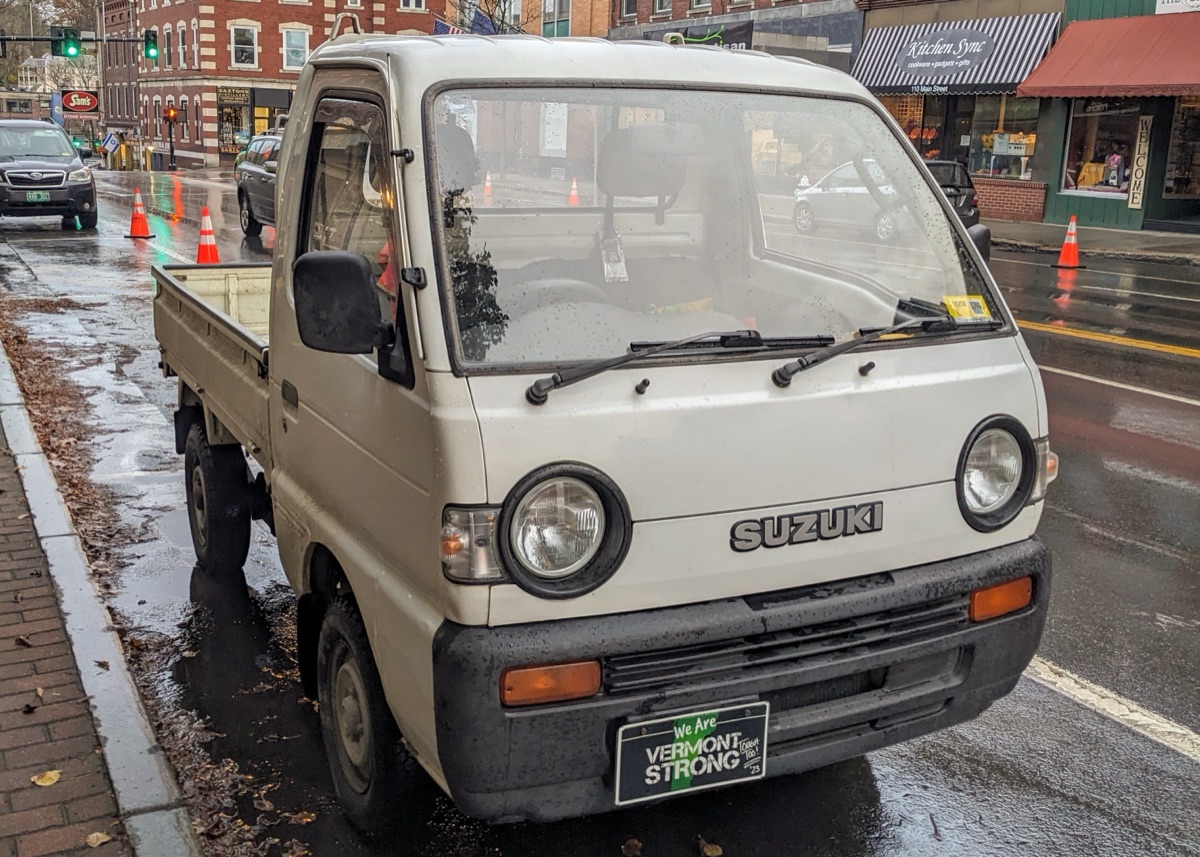
There is no special kei process, which is the whole point. You register through the standard Vermont DMV registration process with Form VD-119, proof of ownership (Japanese export certificate with translation, or an out of state title), proof of insurance at Vermont's minimums of $25,000 per person and $50,000 per accident, and the 6 percent purchase and use tax. Kei cars go in as pleasure cars. Kei trucks can register as farm trucks, a category with real fee advantages for working properties, or take the pleasure car route.
Two practical notes. First, paperwork is destiny: the DMV will want the customs entry documents from when your truck cleared the port, so if you're buying a truck already stateside, get the CBP Form 7501 from the seller before money changes hands. Our import guide covers the full document stack. Second, Vermont still requires annual safety inspection, and Act 153 separately directed the DMV to revise its inspection standards to focus on genuine safety concerns, which should make the inspection experience for a 30 year old JDM truck less dependent on an individual inspector's mood. Line up coverage before your DMV trip; our insurance guide lists the carriers that actually write these policies.
If you spent the last few years running a Montana LLC plate on your kei truck, this is your exit ramp. Bring the truck home, register it where you live, and drop the LLC before it causes an insurance claim dispute. That workaround made sense when Vermont gave you no legal path. Now it's just risk with extra paperwork.
Two States in Eight Days, and the Northeast Domino
Zoom out and June 2026 was the best month the American kei community has ever had. Vermont signed June 16 with a July 1 effective date. Alaska signed June 24, effective immediately. Both laws are rolling, both are unrestricted, and both passed with overwhelming bipartisan support. The AAMVA guidance that pushed a dozen states into bans between 2011 and 2021 is now losing on the scoreboard: Texas, Colorado, Massachusetts, Michigan, Alaska, and Vermont have all reversed course or codified protections since 2024.
The Northeast is where this gets interesting. Vermont now sits as a fully legal island bordered by New York, where kei registration remains banned and a Lone Star Kei backed legalization push is now organizing, and Massachusetts, where kei trucks are legal but owners are still waiting on codification. Connecticut is a gray zone. Rhode Island just watched its own legalization bill die in committee despite tri partisan sponsorship. Every one of those states now has a neighbor whose DMV hands out plates for the same trucks their own agencies refuse, and that contrast is exactly the argument advocates need. The r/keitruck community is already coordinating across state lines, and the Vermont win gives New England organizers both a template and a nearby existence proof.
The pattern from Texas, Vermont, and Alaska is now well established. Find the legislative vehicle, whether a standalone bill or an omnibus. Bring clean definitional language. Get the DMV testifying for clarity instead of against imports. Show up with the actual trucks. None of it is complicated, and all of it works.
The Bottom Line
Vermont kei trucks are street legal as of July 1, 2026. Act 153, signed June 16 per the legislative record, defines kei vehicles in statute, registers kei cars as pleasure cars and kei trucks as farm trucks, and preempts any state committee or municipality from banning them. Registration runs through the normal VD-119 process with standard insurance and inspection requirements, and our Vermont law page has the step by step.
The bigger story is velocity. A state that was rumored to be drafting a ban in November 2025 signed one of the nation's strongest kei laws seven months later, because a few dozen owners refused to wait and see. Alaska proved it again a week later. If you're a kei owner in New York, Connecticut, or Rhode Island, the trucks parked outside the Vermont Statehouse in April just showed you exactly how this gets done.
Advertisement


