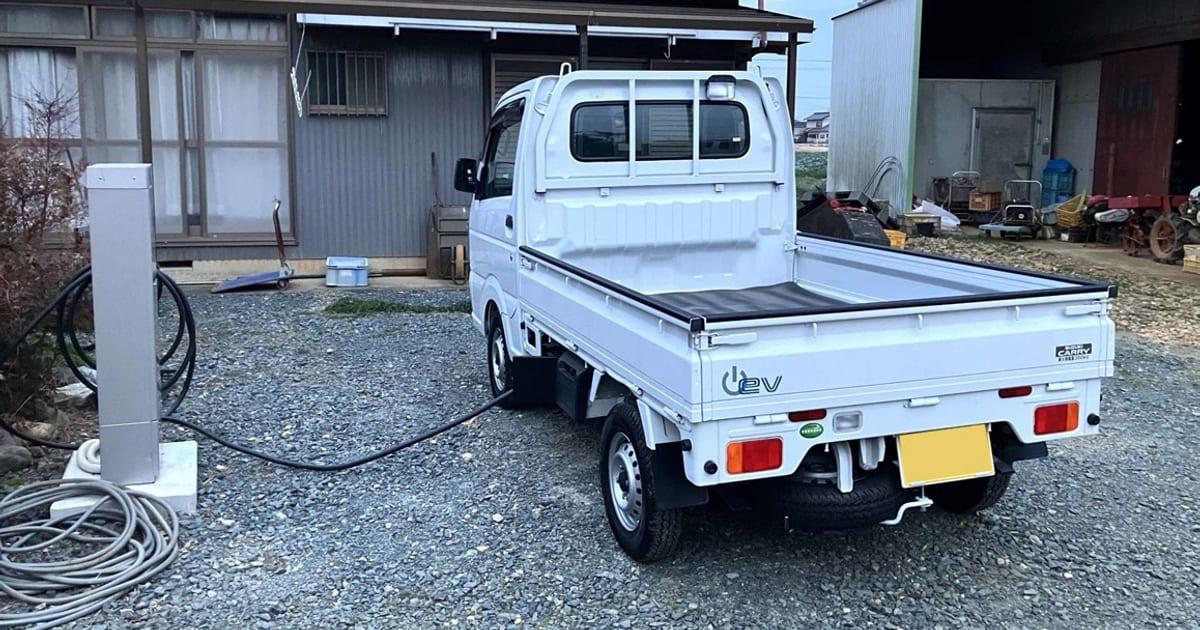
Daihatsu Ammonia Engine: The Next Hijet Fuel?
Daihatsu just pulled the wraps off a 658cc kei engine that burns ammonia and makes its own hydrogen on the fly. It's built off the same KF three cylinder in today's Hijet, and work trucks are first in line. Here's how it works, what's still broken, and why US owners won't see one until the 2060s.
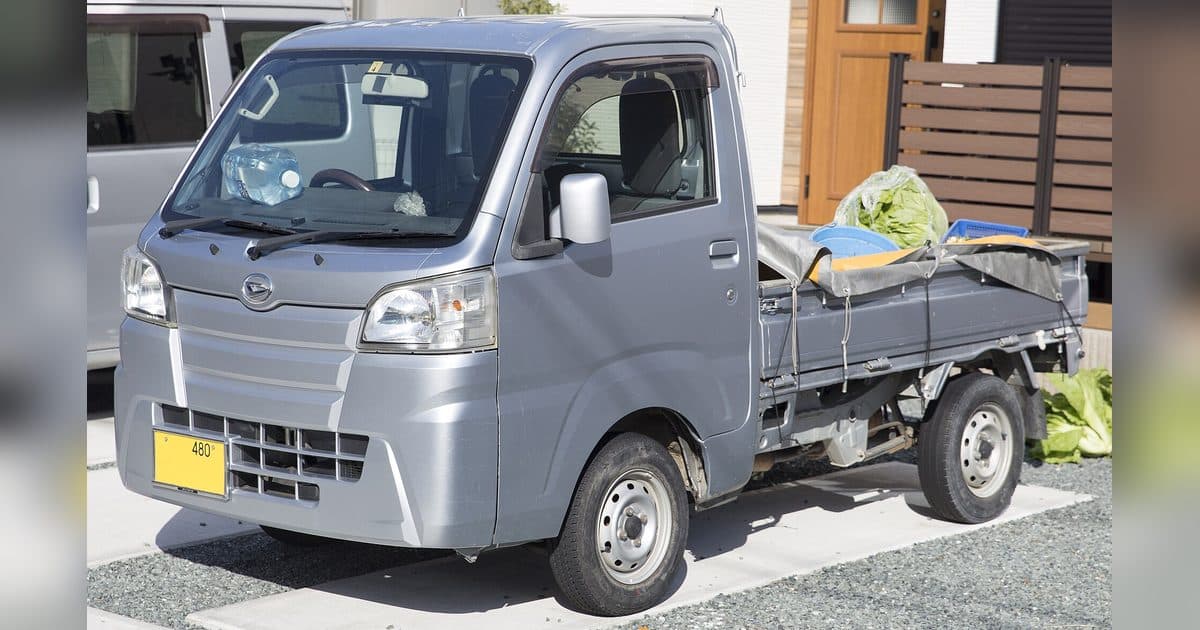
TL;DR: At Japan Mobility Show Bizweek 2026 (October 13 to 16), Daihatsu showed a prototype 658cc kei engine that burns ammonia. The tank holds only liquid ammonia; a plasma reactor and a catalyst on top of the engine split some of it into hydrogen, which gets burned alongside the ammonia so the mix actually lights. It's built off the KF three cylinder that powers today's Hijet Truck, it's still on a test bench, and Daihatsu says commercial vehicles come first. The target is the 2030s. For anyone importing under the 25 year rule, that means the 2060s at the earliest.
Every few years a Japanese automaker parks a strange engine on a show stand and tells you it's the future of the kei truck. Most of the time it's a concept you never hear about again. This one deserves a closer look, because it isn't a clean sheet science project. It's the engine sitting under the seat of a new Daihatsu Hijet, reworked to run on the same stuff farmers inject into cornfields.
Here's what Daihatsu actually showed, why ammonia makes more sense in a kei truck than hydrogen does, and the list of problems Daihatsu's own engineers put on the display board.
What Daihatsu Put on the Stand
Daihatsu announced the exhibit on October 6, and its official Bizweek release calls it the first public display of the actual engine. It sat in the Japan Automobile Manufacturers Association's shared hall at Makuhari Messe outside Tokyo, a few steps from Suzuki's cow manure biomethane display. Bizweek is the business focused show JAMA runs in the off years between full Japan Mobility Shows, so there were no glitzy concept cars around it. Just engines, panels, and engineers.
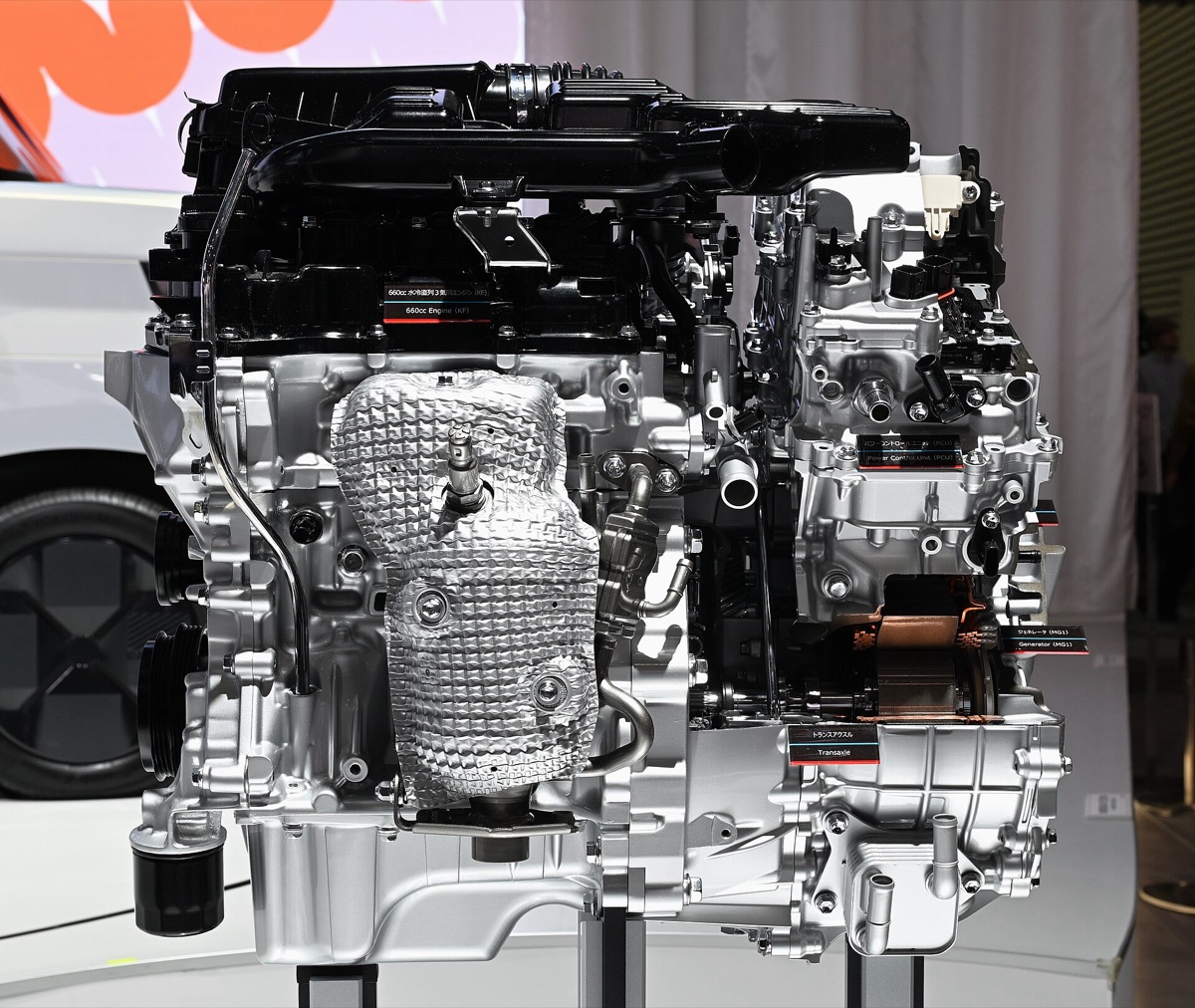
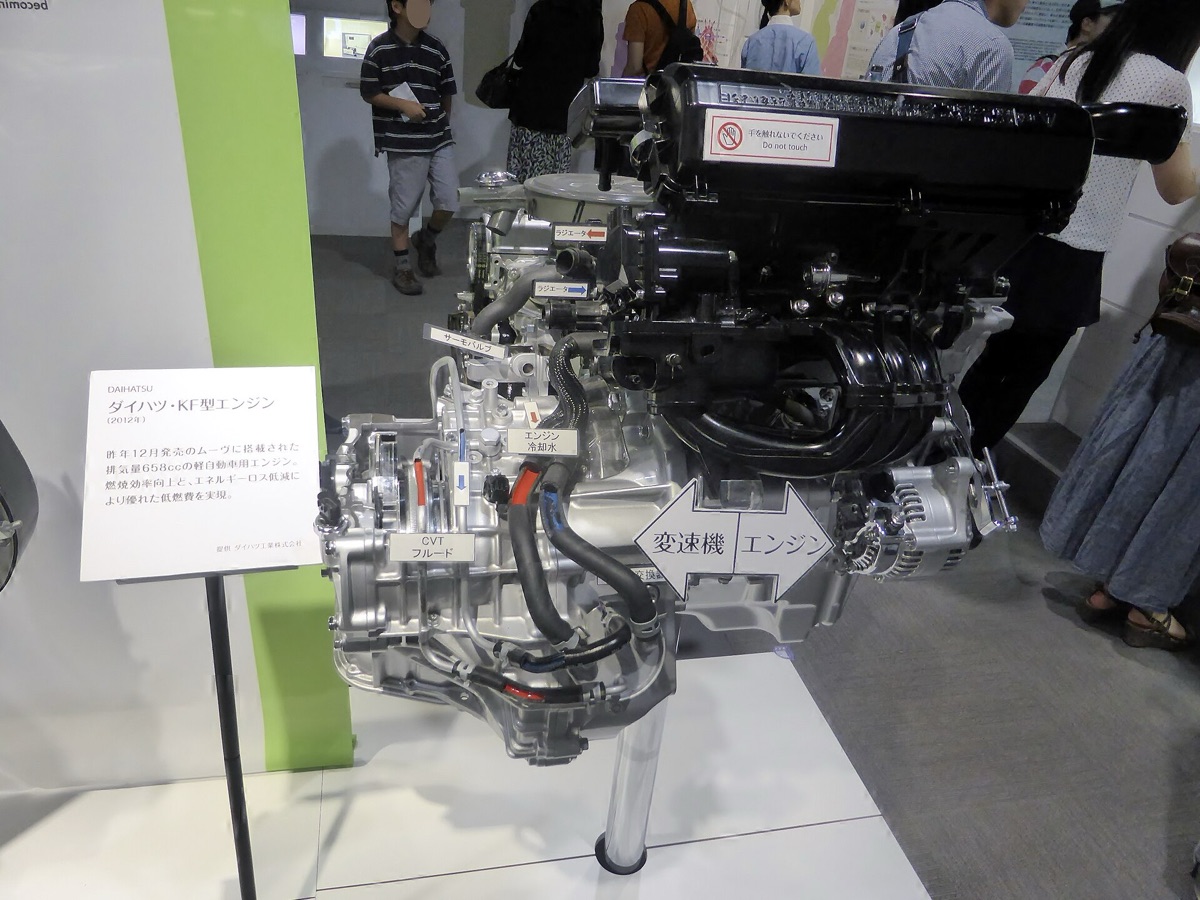
The base engine is Daihatsu's KF, the 658cc three cylinder used across its kei lineup. According to a detailed technical breakdown from Motor-Fan, Daihatsu kept as many production parts as it could and changed what ammonia forced it to change: the cylinder head and combustion chamber, injectors suited to the new fuel, and fuel system materials that won't corrode. The display unit wore a turbocharger, and the goal is output on par with today's kei engines. Motor-Fan notes that's a development target, not a number Daihatsu has hit. Research started roughly five years ago, and the engine has only run on a dyno so far. It hasn't been fitted to a vehicle.
The clever part sits on top of the engine. There's a small square plasma reactor and a larger rectangular catalytic reformer. Murakami, an engineer in Daihatsu's carbon neutral advanced development office, explained the sequence to Autocar Japan: liquid ammonia leaves the tank, a vaporizer turns it to gas, and part of it gets cracked into hydrogen before both are injected. On a cold start the plasma reactor does the cracking with electricity. Once the engine is warm, a heat driven autothermal reforming catalyst takes over and the plasma reactor shuts off. The hydrogen share swings with load, from a small fraction up to about 30 percent. Murakami also said the fuel should cost about the same to run as gasoline, since ammonia is already made in huge volumes for fertilizer, and that Daihatsu is aiming for practical use in the second half of the 2030s. Response's report on the same exhibit just said the 2030s.
The whole package weighs about 60 kg, and Daihatsu says it's roughly the size and weight of a normal kei engine even with the reformer bolted on. That matters more than any combustion stat, because in a kei truck there's nowhere to hide extra hardware.
Why Ammonia Instead of Straight Hydrogen
Hydrogen burns great and makes no CO2. The problem is carrying enough of it. The Toyota Mirai stores hydrogen at 70 MPa, around 10,000 psi, in big carbon fiber tanks. Liquid hydrogen needs to stay at about minus 253°C. Neither of those fits under the bed of a truck that's capped at 3.4 meters long and 1.48 meters wide by kei rules.
Ammonia is NH3: one nitrogen atom, three hydrogens, no carbon. It liquefies at minus 33°C at normal air pressure, and at room temperature it only needs about 10 atmospheres to stay liquid, as Daihatsu staff told MONOist. That's propane territory, not rocket territory. The same Daihatsu rep put it plainly: ammonia suits kei cars because they have tighter size and weight limits than regular cars.
Motor-Fan ran the energy numbers, and they make the case better than any press release:
| Fuel | Energy per kg | Energy per liter (as a liquid) |
|---|---|---|
| Gasoline | about 43 MJ | about 32 MJ |
| Liquid ammonia | about 18.6 MJ | about 12.6 MJ |
| Liquid hydrogen | about 120 MJ | about 8.5 MJ |
By weight, hydrogen wins by a mile. By volume, which is what actually limits a kei truck, liquid ammonia packs about 50 percent more energy than liquid hydrogen and needs no cryogenic tank. A liter of liquid ammonia also holds more hydrogen atoms than a liter of liquid hydrogen does.
The catch is the first row of that table. Gasoline holds about 2.5 times the energy per liter that ammonia does. The current Hijet Truck carries 34 liters of regular unleaded, according to Daihatsu's spec sheet. Matching that on raw energy would take something like 86 liters of ammonia. Engine efficiency and the energy spent cracking hydrogen will move that number around, but you get the idea. Range is going to be the fight.
Ammonia also hates to burn. It lights reluctantly, the flame spreads slowly, and it only ignites across a narrow mixture range. That's why the hydrogen is there. Hydrogen burns fast and lights easily, so a little of it stabilizes the whole charge. Making that hydrogen on board from the same tank means one fuel, one filler, and one tank.
Why a Kei Truck Gets It First
This is the part that should make kei truck people sit up. According to Kuruma News, Daihatsu plans to start with commercial vehicles. Early on, the fuel will need handling under some kind of managed setup, so Daihatsu wants to begin with users who can run one.
Translate that out of corporate speak and it describes a work truck fleet. Think farm cooperative trucks, municipal crews, and delivery outfits that come home to the same yard every night and refuel from the same tank. Passenger kei cars go everywhere and fill up anywhere. A Hijet that runs between the barn, the field, and the depot is the easiest possible customer for a fuel with almost no stations.
Daihatsu also wants to pair the engine with a series hybrid. MONOist reports the plan is to mate it with e-SMART HYBRID, the kei hybrid system Daihatsu debuted in the K-VISION concept at the 2025 Japan Mobility Show. Let the engine run as a generator at a steady, efficient speed and let the electric motor handle the stop and go. That suits ammonia's slow burn far better than a gas pedal wired straight to the throttle.
Here's our take: if any ammonia vehicle makes it to production, the odds favor a Hijet or a Hijet based work truck over a Tanto or a Move. The managed fleet use case, the series hybrid packaging, and the space under a truck bed for a bigger tank all point the same way. Daihatsu has already gone this route with batteries. The electric kei vans it launched in February with Toyota and Suzuki were cargo vans first, not passenger cars. When Daihatsu tries a new fuel, the work vehicles go first.
The Problems Daihatsu Admits Up Front
Credit where it's due: Daihatsu didn't oversell this. Its own display panels listed the open problems, and the list is long.
Exhaust is the big one. Ammonia carries nitrogen into the combustion chamber, so you get nitrogen oxides, plus unburned ammonia slipping out the tailpipe, plus nitrous oxide (N2O). That last one is a potent greenhouse gas. Make enough of it and you've cancelled out the point of skipping CO2. Daihatsu says the aftertreatment system to clean up all three is still in development, and a cold catalyst at startup makes it harder.
Then there's the fuel itself. Ammonia is toxic. The CDC's NIOSH chemical guide lists 300 ppm as immediately dangerous to life or health, and notes it attacks copper and galvanized surfaces. A leaking fuel line in a gasoline truck is a fire risk. A leaking fuel line in an ammonia truck is a poison gas risk in an enclosed cab. Leak protection, crash safety, and corrosion resistance are all on Daihatsu's to do list.
The reformer needs to make hydrogen faster, start up instantly when cold, and shrink. And the fuel supply chain barely exists for vehicles. Most ammonia today is made from natural gas, which releases CO2 at the plant. Unless low carbon ammonia gets cheap and plentiful, the climate math doesn't work. Daihatsu's release is openly looking for partners on reforming, exhaust cleanup, downsizing, safety, and supply infrastructure. Companies don't ask for that much help with a product that's nearly ready to sell.
Daihatsu Has Pitched a Weird Fuel Kei Truck Before
Some perspective. At the 2013 Tokyo Motor Show, Daihatsu rolled out the FC Deco Deck, a small truck concept built around what its 2013 show release called a "precious metal free liquid fuel cell" sized for a kei vehicle. It had a compact, low cost fuel cell under the floor and a liquid fuel with high energy density. Same pitch, different chemistry: a small truck needs a fuel that's dense and easy to carry. MONOist covered it as a working, driving prototype.
Thirteen years later, you can't buy a fuel cell Hijet. That's not a knock on Daihatsu's engineers; that's how advanced development goes. Most of it teaches the company something and never reaches a dealer. Daihatsu is hedging, not betting. The same Bizweek booth showed a biogas project at its Ryuo plant in Shiga that runs on manure from local Omi beef cattle, plus battery electric microgrids, and in 2025 Daihatsu joined Toyota, Suzuki, Subaru, Mazda, and ENEOS in running synthetic fuel cars at the Osaka Expo.
The difference this time is that the ammonia engine is mostly a KF. Reusing a production engine's block and parts is a much shorter road to a dealer than inventing a new fuel cell stack. We'd still bet against an ammonia Hijet on sale before 2035. We wouldn't bet against it ever showing up.
What It Means If You Own a Hijet in America
Short version: nothing changes for your truck, and you won't be importing one of these for a long time.
The NHTSA import rules let a vehicle that never met US safety standards in only once it's 25 years old. If an ammonia Hijet hits Japanese dealers in 2038, it turns 25 in 2063. Our 25 year import rule explainer walks through the math, but this one isn't complicated. The kei trucks Americans can legally bring in today run on gasoline, and that will hold for decades.
The funny part is that American farmers may be better prepared for an ammonia truck than Japanese ones. Anhydrous ammonia is a standard nitrogen fertilizer across the Corn Belt, and farms already handle it in steel nurse tanks. North Dakota State's anhydrous ammonia safety guide notes those tanks are built to at least 250 psi, and warns that one cubic foot of liquid ammonia turns into 855 cubic feet of gas. Anyone who has run a nurse tank knows the respect that stuff demands. That's the honest takeaway. Ammonia isn't exotic on a farm, but it's also not something you'd want slowly leaking under the seat of a truck with a cab the size of a phone booth.
If you want your kei truck off gasoline today, an ammonia Hijet isn't coming to save you. Batteries are the real option. A kei truck EV conversion is doable with off the shelf parts, and new factory electric kei trucks like the Folofly FKT are finally on sale in Japan, even if they're decades from import eligibility too. A healthy gas engine already does better than most people expect; our kei truck MPG breakdown has the real numbers.
The one thing this engine does tell US owners: Daihatsu is still betting on the KF. A family that's still being developed for new fuels in the 2030s isn't going away, and that's good news for long term parts availability on the KF powered trucks that will keep aging into import eligibility.
The Bottom Line
Daihatsu's ammonia engine is the most interesting kei powertrain news of the year because it's so unglamorous. It's a 658cc KF with a new head, a plasma box, and a catalytic reformer on top, aimed squarely at the trucks and vans that already do Japan's dirty work. The physics argument is real: ammonia stores more energy per liter than liquid hydrogen and stays liquid at modest pressure, which matters a lot in a vehicle as tight as a kei truck.
The problems are real too. Daihatsu hasn't solved the exhaust chemistry, the toxicity, the range penalty, or the fuel supply, and it says so itself. Late 2030s is the target, and targets slip. If one ships, put your money on a Hijet badge and a fleet of farm and municipal buyers, not a Tanto in a Tokyo suburb.
For American owners, file this under "cool, see you in 2063." Keep your gas Hijet's oil changed, and if you want to see what Japanese owners make of an ammonia kei truck, the crowd on r/keitruck will have opinions long before any of us can register one.