Kei Truck EV Conversion: How to Go Electric for Under $20K
A complete guide to converting your kei truck from gas to electric. Motor options, battery choices, real build costs, range expectations, and the legal stuff nobody talks about.

Advertisement
TL;DR: You can convert a kei truck to electric for $5,000 to $20,000 depending on your battery and motor choices. A budget build with a 20kW AC motor and small lithium pack gets you 40 to 60 miles of range, perfect for farm and property use. A premium build with a Hyper9 motor and 33kWh battery pack delivers 120+ horsepower, 125 miles of range, and rolling burnouts. Installation takes 40 to 80 hours for a skilled builder. Most states let you register a converted EV without hassle, but check your local DMV first.
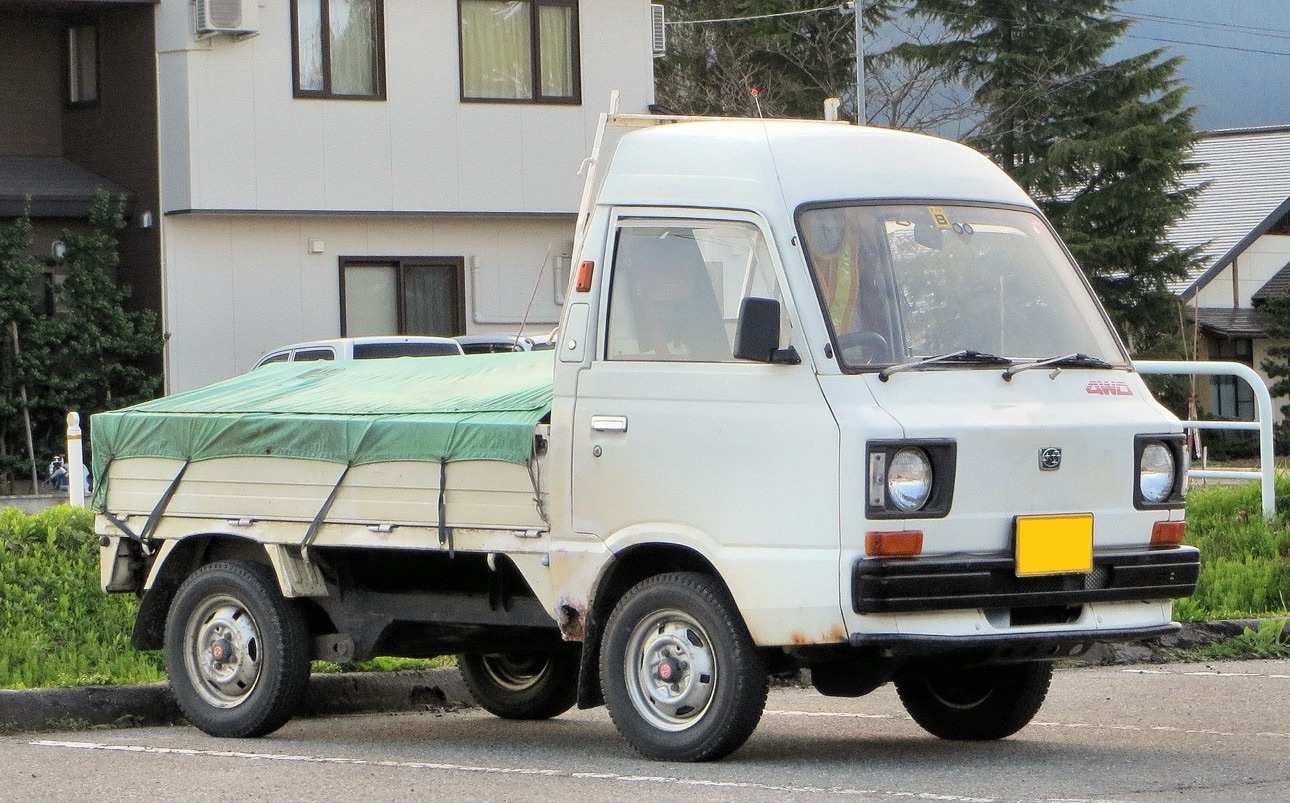
Your Suzuki Carry gets 40 miles per gallon. That is impressive for any truck. But what if it got infinite miles per gallon and made triple the torque while doing it? That is the pitch behind kei truck EV conversions, and a growing community of builders is proving it works.
The idea is straightforward: rip out the 660cc three cylinder gas engine and replace it with an electric motor, battery pack, and controller. What you get back is a truck that is quieter, faster off the line, cheaper to run, and arguably more useful than the original. If you are brand new to these trucks, start with our what is a kei truck overview. If you already own one and want to know whether electrifying it makes sense, keep reading.
Why Kei Trucks Are Perfect EV Candidates
The physics of EV conversions favor small, light vehicles. A kei truck typically weighs between 1,500 and 1,800 pounds with the gas engine still in it. Remove that engine, the transmission (or most of it), the exhaust, the radiator, the fuel tank, and the coolant system, and you have shed a couple hundred pounds. Even after adding the motor, controller, and batteries, a well planned conversion ends up close to the original curb weight.
That matters because battery range is directly tied to vehicle weight. Real world numbers for converted kei trucks land between 80 and 125 miles depending on the build, which is more than enough for how most people actually use these trucks. Most kei trucks live on farms, properties, job sites, and small towns where they might see 20 to 30 miles of driving per day. An EV conversion with even modest range covers that with room to spare, and you recharge overnight from a standard 120V outlet.
The other advantage is the powertrain simplicity. An electric motor has one moving part. No oil changes, no timing belts, no valve adjustments, no spark plugs, no coolant, no exhaust. The maintenance savings alone start to justify the conversion cost over a few years of ownership.
Motor Options: Budget vs Premium
The motor you choose determines the character of your converted truck. There are two main tiers in the kei truck EV conversion world, and the gap between them is significant.
Budget: 20kW AC Induction Motor ($5,000 to $8,000 total)
Companies like CMVTE sell complete conversion kits built around a 144V 20kW AC induction motor that peaks at 55kW. The kit includes the motor, controller, wire harness, gear selector, dashboard, DC to DC converter, rear axle assembly, lithium battery pack, charger, programmer unit, and BMS monitor. It is designed for vehicles in the 1,000 to 1,800kg range, which covers every kei truck ever made.
The 20kW system produces roughly 27 horsepower continuous and 74 horsepower peak. That sounds modest until you remember that a stock Honda Acty makes 45 horsepower and a Subaru Sambar makes 39. The peak power is more than enough for daily driving, and the instant torque from zero RPM means the truck feels peppier than the power numbers suggest.
Top speed lands around 55 to 75 mph depending on gearing, which is right in the kei truck sweet spot. Range depends entirely on the battery pack you pair it with, but a 10 to 15kWh lithium pack gets you 40 to 60 miles, enough for serious property and farm duty.
Premium: Hyper9 Motor ($15,000 to $20,000 total)
The NetGain Hyper9 is the gold standard for serious EV conversions. It is a three phase AC synchronous reluctance permanent magnet motor that delivers 120 horsepower and 173 pound feet of torque at zero RPM. For perspective, that is more than double the power and four times the torque of a stock kei truck engine.
Flash Drive Motors sells a complete Hyper9 conversion kit for $18,635 that includes the motor, controller, five Tesla Model S battery modules (33kWh total), an Orion BMS, a 3.3kW onboard charger, a 1kW DC to DC converter, a throttle pedal, an NACS charging port, a complete wiring harness, and a liquid cooling system. Estimated range with this setup is approximately 125 miles.
The Hyper9 transforms a kei truck into something genuinely fast. Legacy EV documented a 1997 Subaru Sambar conversion using a Hyper9 with a 32.9kWh battery pack and 14 Kore Power modules. The result: a truck that went from 39 horsepower and 39 pound feet to 120 horsepower and 162 pound feet. The builders reported "rolling burnouts" from the instant torque delivery. That is a far cry from the leisurely acceleration of a stock Sambar.
Battery Choices and the Weight Problem
Batteries are the most important and most expensive decision in any EV conversion. They determine your range, your payload capacity, and your truck's handling characteristics. And in a kei truck, the weight math gets tight fast.
Lithium Iron Phosphate (LFP)
LFP cells are the safest and most durable option. They tolerate abuse, handle temperature extremes better than other chemistries, and last thousands of cycles. Jesse Tufts built a 1992 Daihatsu Hijet Jumbo Cab conversion using 24 Thundersky 100Ah LFP cells in a 72V configuration. The truck hits 53 mph, which he noted is "quite good up till about 40km/hr and then it starts to fall off." His build logged over 1,000 hours and he admitted he wished he had gone with 34 to 36 cells instead of 24 for better performance.
LFP cells are heavier per kilowatt hour than NMC chemistry, which means you get less range for the same weight. In a kei truck that weighs under a ton empty, every pound matters.
Tesla Modules (NMC)
Salvaged Tesla Model S battery modules are the most popular choice for higher budget builds. Each module holds about 6.3kWh and they are compact enough to fit under a kei truck bed. Five modules give you 33kWh, which is the sweet spot for range versus weight in a vehicle this size.
The trade off is that NMC cells require more careful thermal management than LFP. You need a proper BMS (the Orion BMS 2 is the community standard) and ideally a liquid cooling loop. The Flash Drive Motors kit handles all of this, but if you are sourcing your own salvage modules, budget an extra $1,000 to $2,000 for the BMS and cooling system.
The Weight Reality Check
Here is the uncomfortable truth that not every conversion shop will tell you: kei trucks were not designed to carry 500 to 800 pounds of batteries. Their chassis, axles, wheel bearings, and brakes were engineered for a 660cc engine and a 770 pound payload. A 33kWh NMC pack weighs roughly 450 to 500 pounds. That eats directly into your cargo capacity.
A stock Daihatsu Hijet can haul 770 pounds in the bed. Add a 33kWh battery pack underneath and your usable payload drops to 300 to 400 pounds. That is still enough for most tasks, but you are not hauling a pallet of feed or a cubic yard of mulch anymore. Builders who need full payload capacity should stick with a smaller 10 to 15kWh pack and accept the shorter range.
Frame reinforcement is strongly recommended for any conversion over 20kWh of battery. The Legacy EV Sambar build added tubular steel reinforcement to protect the battery box and maintain structural integrity. This is not optional: it is a safety issue.
The Build Process
A kei truck EV conversion follows the same basic steps as any vehicle conversion, but the small scale makes some things easier and other things harder.
Step 1: Strip the Gas Powertrain
Remove the engine, transmission (partially or fully), exhaust system, radiator, coolant lines, fuel tank, and fuel lines. In a mid engine kei truck like the Sambar or Acty, the engine sits under the bed. In a front engine truck like the Mitsubishi Minicab, it is under the cab. Either way, budget a weekend for this step.
Keep the original heater core if possible. The Legacy EV build adapted the factory heater box with a high voltage heater core that bolted to the stock mounting points. This gives you cabin heat without running a separate combustion heater, which defeats some of the purpose of going electric.
Step 2: Mount the Motor and Adapter
The motor connects to the existing drivetrain via a custom adapter plate. Some builders retain the original transmission (or at least the transfer case for 4WD trucks) as a torque multiplier. The Legacy EV Sambar used a repurposed front differential with a 1.9:1 torque box mounted in the rear. Jesse Tufts kept the original 5 speed transmission as an "empty case" for neutral and low range shifting.
The adapter plate requires machining: an aluminum plate that mates the motor face to the transmission bellhousing. Budget $300 to $800 depending on complexity.
Step 3: Install Batteries
This is where things get creative. The bed of a kei truck is flat and roughly 6 feet by 4.5 feet, which gives you a lot of options for battery placement. Most builders mount the pack underneath the bed in a custom aluminum or steel enclosure, keeping the entire bed surface available for cargo.
The battery box needs to be weatherproof, structurally mounted to the frame (not the bed), and ventilated. Custom enclosures can be ordered from laser cutting services like Send Cut Send, which is what the Legacy EV team used for their Sambar build.
Step 4: Wire Everything
This is the step that separates weekend projects from proper builds. You need:
- A high voltage main loop connecting the battery pack, motor controller, and charger through a contactor and fuse
- A low voltage (12V) system powered by a DC to DC converter replacing the original alternator
- A BMS monitoring every cell for voltage, temperature, and state of charge
- A charging port (J1772 or NACS) with an onboard charger
- A throttle signal from a pedal sensor to the motor controller
If you are using a complete kit from Flash Drive Motors or CMVTE, the wiring harness is included. If you are building from scratch, expect this step alone to take 20 to 30 hours. High voltage wiring must follow proper safety protocols: double insulated cables, properly rated connectors, and clearly marked orange sheathing per NHTSA standards for electric vehicles.
Step 5: Test and Commission
Before the first drive, verify every electrical connection, check for shorts, confirm the BMS is reading all cells correctly, and test the throttle response at low speed in a controlled area. Jesse Tufts spent months on testing and debugging before his Hijet was road ready. If you live anywhere that sees freezing temperatures, add a battery heating system: cold lithium batteries suffer voltage sag that can trigger low voltage cutoffs and leave you stranded.
Real Costs Broken Down
Here is what you are actually looking at, with no sugarcoating:
| Component | Budget Build | Premium Build |
|---|---|---|
| Donor kei truck | $4,000 to $7,000 | $4,000 to $7,000 |
| Motor and controller | $1,500 to $2,500 | $4,000 to $5,000 |
| Battery pack | $1,500 to $3,000 | $5,000 to $8,000 |
| BMS | $200 to $500 | $800 to $1,200 |
| Charger and DC/DC | $500 to $800 | $1,000 to $1,500 |
| Wiring and connectors | $300 to $500 | $500 to $800 |
| Adapter plate and fabrication | $300 to $800 | $500 to $1,200 |
| Miscellaneous (mounts, brackets, hardware) | $200 to $400 | $500 to $1,000 |
| Total (parts only) | $4,500 to $8,500 | $12,300 to $18,700 |
| Total (with donor truck) | $8,500 to $15,500 | $16,300 to $25,700 |
Labor is free if you do it yourself. Professional installation adds $3,000 to $8,000. For context, Japan's factory electric kei vans launched in early 2026 at roughly $20,000 but they are not available in the US due to EPA and FMVSS requirements. Converting your existing truck is the only path to an electric mini truck on this side of the Pacific.
Legal and Registration
Converting a gas vehicle to electric is legal in every US state, but the registration process varies. According to the Department of Energy's Alternative Fuels Data Center, most states accept EV conversions if basic safety systems (lights, brakes, wipers, horn) are functional and you have documentation. Virginia requires a certified safety inspector. California requires a Bureau of Automotive Repairs Referee station inspection. Texas and Michigan do not distinguish between original and converted vehicles at all.
Your truck's existing registration and state legality are not affected by the powertrain swap. If your Carry is legally registered for road use today, it stays legal after conversion. Federal EV tax credits do not apply to conversions, but several states have their own incentive programs that some conversion owners have successfully claimed.
Who Should (and Should Not) Do This
An EV conversion makes the most sense if you already own a kei truck, use it primarily for short range tasks, have basic mechanical skills (or access to a shop), and are motivated by lower operating costs or the desire to build something unique. If you are using your truck for farming, landscaping, or property maintenance, the daily fuel savings add up. The Department of Energy estimates electricity costs roughly 3 to 5 cents per mile versus 8 to 12 cents per mile for gas, even with kei truck fuel economy.
An EV conversion does not make sense if you need maximum payload capacity, drive more than 80 miles per day on a budget build, or plan to use the truck in extreme cold without a battery heating system. It also does not make sense if your kei truck has significant rust or mechanical issues beyond the powertrain: fix the platform first, then electrify it. Our pre-purchase checklist covers what to look for.
The Community Is Growing
The kei truck EV conversion community is small but active. The DIY Electric Car Forums have multiple ongoing build threads with detailed photos and parts lists. YouTube channels like Big Time have documented full builds from start to finish. Legacy EV is incorporating kei truck conversions into their educational curriculum.
Start by joining these communities before you buy a single part. The builders who came before you have already made the expensive mistakes. The parts sourcing guide covers where to find OEM components, and our off road mods guide has suspension upgrade tips that complement an EV conversion (the added battery weight often calls for stiffer springs).
The Bottom Line
Converting a kei truck to electric is not the cheapest project and it is not the easiest. But it is genuinely practical in a way that most EV conversions are not. These trucks are light enough that a modest battery pack delivers real range. They are simple enough that a competent builder can handle the work in a garage over a few weekends. And they are cheap enough that even a premium conversion with a Hyper9 motor and 33kWh battery costs less than a used Rivian or F-150 Lightning.
The best part is what you end up with: a silent, torquey, virtually maintenance free work truck that costs pennies per mile to operate and turns heads everywhere it goes. As Hagerty and the broader collector vehicle community have noted, well built kei trucks are holding their value. An electric conversion only adds to the appeal. There is no factory vehicle on the US market that offers this combination of capability, efficiency, and sheer entertainment value.
Start with a solid donor truck. Pick your budget tier. Join the community. And go build something.
Advertisement


