Japan Just Launched Electric Kei Vans and They Cost Three Times More Than Gas
Toyota, Daihatsu, and Suzuki just launched four electric kei vans in Japan with 160 miles of range and a $20,000 price tag. That is three times what their gas versions cost. Here is what it means for the future of kei trucks.

Advertisement
TL;DR: Toyota, Daihatsu, and Suzuki launched electric kei vans in Japan at ~$20,000, which is three times the gas price. Range is 160 miles, cargo space is unchanged, and sales targets are tiny. Electric kei trucks will follow eventually, but not soon. For US buyers, the real signal is that manufacturers are investing billions in the kei platform's future, which is great news for parts and longevity.
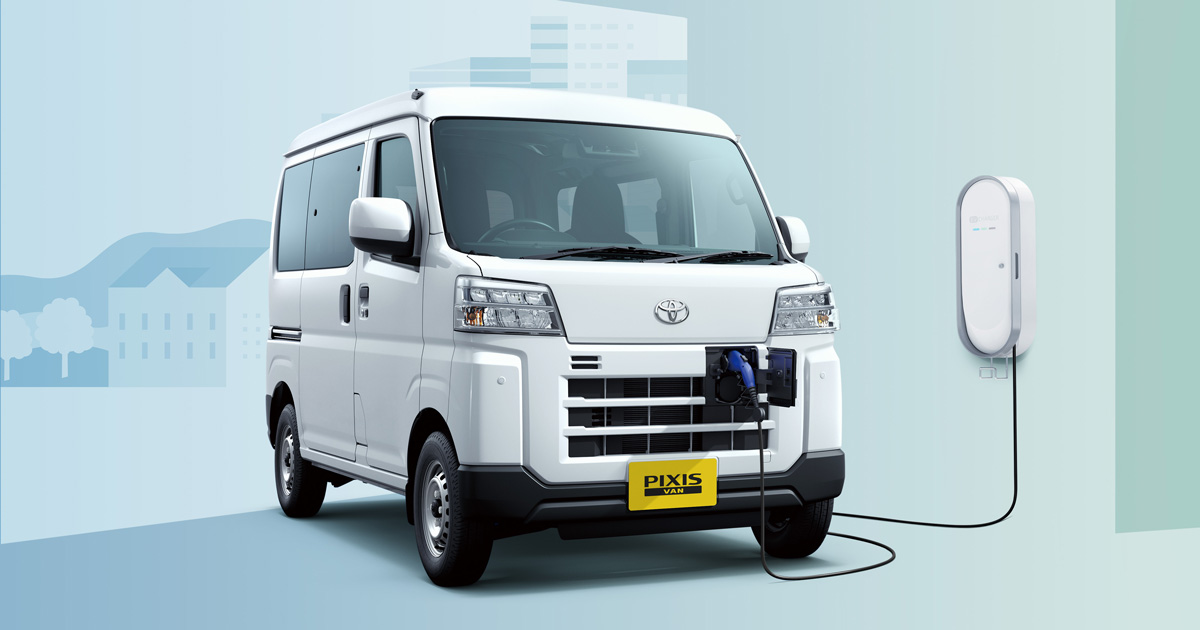
Three years of delays, a joint development deal between three automakers, and the result is a $20,000 electric van that does the same job as a $7,000 gas one. Welcome to the electric kei van era.
In February 2026, Toyota, Daihatsu, and Suzuki officially launched battery electric versions of their kei commercial vans in Japan. The Toyota Pixis Van BEV, the Daihatsu e-Hijet Cargo, the Daihatsu e-Atrai RS, and the Suzuki e-Every are now real production vehicles that you can actually walk into a Japanese dealer and order. They share the same platform, the same motor, the same battery, and essentially the same body panels. The only things that differ are the badges and the price of the fancier Atrai trim.
For Americans who have been watching the Daihatsu Hijet dominate farms and job sites across the country, this news matters, even if you cannot buy one. Because where the vans go, the trucks usually follow.
What They Actually Built
The electric kei vans ride on the Daihatsu New Global Architecture platform with a powertrain that all three manufacturers co-developed. According to Carscoops, the setup uses a single rear mounted electric motor producing 63 horsepower and 93 pound feet of torque. That horsepower figure matches the turbocharged 660cc three cylinder gas engine, but the electric motor delivers an extra 26 pound feet of torque. That matters when you are hauling 770 pounds of cargo through Osaka side streets.
The floor mounted lithium ion battery pack holds 36.6 kilowatt hours and delivers a WLTC rated range of 160 miles. That exceeded the development target by 36 miles, which is the kind of over-delivery engineers love to brag about. A 50 kilowatt DC fast charger brings the battery to 80 percent in about 50 minutes. A standard Japanese 6 kilowatt AC outlet takes roughly six hours for a full charge.
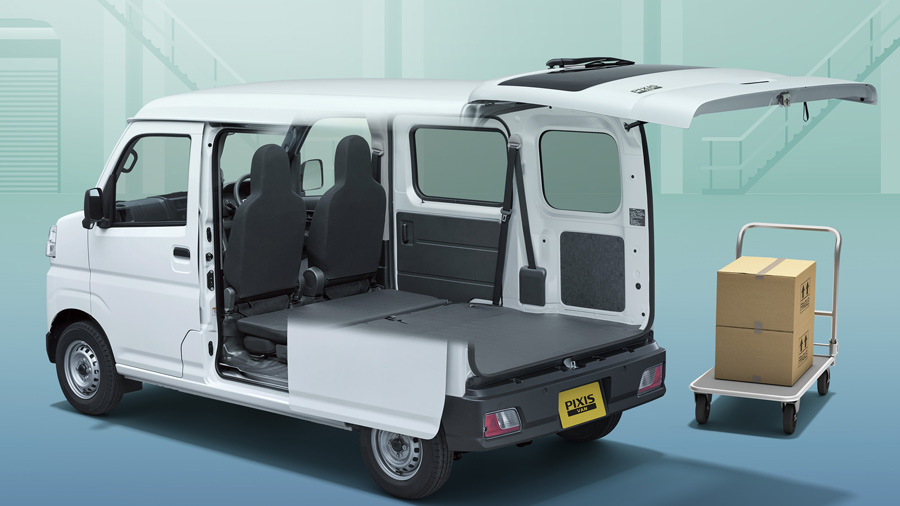
On the outside, you would have to squint to spot the difference between an electric van and its gas sibling. The main giveaway is a charging port on the front bumper. The cargo dimensions are identical to the gas models: 1,920 millimeters long, 1,270 millimeters wide, and 1,250 millimeters high. Maximum payload stays at 350 kilograms. Daihatsu made sure electrification did not eat into the space that actually makes these vans useful.
The Price Problem
Here is where the enthusiasm hits a wall. The Toyota Pixis Van BEV and Daihatsu e-Hijet Cargo both start at ¥3,146,000, which converts to roughly $20,300 at current exchange rates. The fancier Daihatsu e-Atrai RS, the electric version of the Daihatsu Atrai, starts at ¥3,465,000 (about $22,400).
For context, a base model gas powered Hijet Cargo starts at ¥1,100,000, or roughly $7,100. That means the electric version costs nearly three times as much as the vehicle it is meant to replace. In a market segment defined by affordability and practicality, that is a brutal premium.
The sales targets reflect this reality. Toyota is aiming for just 50 units per month. Daihatsu expects around 300 units monthly. Compare that to Daihatsu's gas kei van sales of 12,000 to 15,000 units per month and you can see exactly how much confidence the manufacturers have in early adoption.
This is not a volume play. This is a toe in the water.
Why It Took Three Companies to Build One Van
The collaboration behind these vans is worth understanding because it reveals how expensive electrification is at the kei vehicle scale. Toyota, Suzuki, and Daihatsu (three separate automakers) pooled their resources through a partnership that also involved Commercial Japan Partnership Technologies Corporation, a multi company initiative focused on logistics decarbonization.
Suzuki and Daihatsu contributed decades of experience building kei vehicles. Toyota brought its electrification technology and deep pockets. The result is four mechanically identical vehicles wearing different badges. It is a classic badge engineering exercise, but one driven by necessity rather than laziness.
Building an affordable electric drivetrain that fits within kei vehicle dimensions (no longer than 3.4 meters, no wider than 1.48 meters) while maintaining full cargo capacity is genuinely hard. The battery has to go under the floor without raising the loading height. The motor and inverter have to fit within the rear axle assembly. The structural reinforcements for the added battery weight cannot compromise the suspension geometry.
Daihatsu's engineers solved this with a new trailing link rigid axle rear suspension and optimized spring rates. The lower center of gravity from the floor mounted battery actually improves handling, which is a rare case where the EV version drives better than the gas original.
Honda Was Already There
The Toyota/Daihatsu/Suzuki launch is big news, but Honda beat everyone to market. The Honda N-Van e: went on sale in Japan in mid-2024, making it the first electric kei commercial van available for purchase.
The N-Van e: offers a similar concept but slightly different specs. Its range of 152 miles is a bit shorter than the new trio's 160 mile figure. Pricing starts at ¥2,439,800 (about $15,600), which is significantly cheaper than the $20,300 Pixis/e-Hijet. Honda also offers a leisure oriented "e:FUN" variant with round LED headlights aimed at private buyers rather than delivery fleets.
With Honda, Toyota, Daihatsu, and Suzuki all now selling electric kei vans, Japan has four competing products in a segment that barely existed two years ago. The kei EV transition is real. It is just slow and expensive. For context on how this electric push slots into the broader kei market, the gas powered Honda N-Box that Honda just refreshed for 2026 remains Japan's bestselling vehicle of any type, kei or otherwise.
What This Means for Kei Trucks
Here is what American kei truck owners are actually wondering: when does the Suzuki Carry go electric? What about the Hijet Truck? The Subaru Sambar?
The honest answer is that electric kei trucks are almost certainly coming, but not soon. The van platform is the logical first step because commercial delivery fleets have predictable routes, guaranteed overnight charging windows, and corporate sustainability mandates that justify the price premium. A farmer in Nagano running a Hijet Truck does not have those advantages. As MotorTrend's kei truck coverage has noted, the appeal of these vehicles in America is fundamentally about simplicity and low cost, two things that EVs have not yet delivered at this scale. Update: we undersold the timeline. In September 2026 a Kyoto startup opened orders on the Folofly FKT electric kei truck, beating all three of these automakers to a battery powered kei truck.
Daihatsu has manufactured mini commercial vehicles since the three wheeled Midget launched in 1957. The company is also rebuilding its public image after a major safety scandal that halted all production in late 2023, and it reinforced that comeback by rolling out the 2026 Hijet upgrade with new safety tech alongside the electric launch. If the e-Hijet Cargo sells even modestly well, expect an e-Hijet Truck announcement within a couple of years. The platform work is done. The motor, battery, and suspension architecture that fits under a kei van floor can be adapted for a kei truck chassis.
For the roughly 60 percent of Japan's commercial vehicle fleet that consists of kei vehicles, according to Toyota's own data, electrification is not optional. It is just a matter of timing and cost reduction.
Will Americans Ever Get Electric Kei Vehicles?
The short answer: not through any official channel, and not for a very long time.
Even gas powered kei trucks can only be legally imported to the US under the 25 year import rule. Brand new kei vehicles of any powertrain do not meet Federal Motor Vehicle Safety Standards, and despite President Trump's December 2025 statements about "clearing the deck" for kei vehicles in America, no actual FMVSS rulemaking has occurred. As Covington & Burling's legal analysis noted, presidential enthusiasm does not rewrite crash safety standards.
The electric versions face the same regulatory wall, plus an additional challenge: kei EVs are expensive enough in Japan at $20,000. Adding US safety compliance costs, shipping, customs duties, and the 25 percent "Chicken Tax" on imported light trucks would push prices well past $30,000. At that point, you are competing with mainstream American EVs that have full crash ratings, dealer networks, and warranties.
There is one wildcard: Mutiny Motors in Detroit is attempting to build affordable electric mini trucks domestically, sidestepping both the import rule and the Chicken Tax entirely. Whether that becomes a real product remains to be seen. For now, the realistic path for American kei truck fans remains what it has always been: import 25 year old gas models, maintain them well, and source parts from specialists like Oiwa Garage and Amayama. Or, if you want electric now, do what the BigTime crew did and convert a 1997 Subaru Sambar to EV with a Hyper9 motor and 32.9 kWh battery pack. Our kei truck EV conversion guide covers the full DIY process, motor options, battery choices, and real costs from $5,000 to $20,000. Check your state's legality rules before buying, and use the dealer directory to find reputable importers near you.
The Bigger Picture
What is fascinating about this launch is what it says about Japan's commitment to the kei vehicle format. These are not compliance cars built to satisfy a regulation. They are genuine attempts to electrify the backbone of Japan's commercial transportation network. Kei vehicles move produce, deliver packages, haul construction materials, and serve as mobile workshops across every prefecture in the country.
The fact that Toyota, the world's largest automaker, is investing in a van that it expects to sell 50 units per month tells you this is a long term platform bet, not a short term sales play. The technology will get cheaper. The batteries will get smaller and more energy dense. And eventually, the price gap between gas and electric kei vehicles will close enough for volume adoption.
That timeline may have just accelerated. In July 2026, BYD launched the Racco, a kei class EV with a bigger battery and a lower price than anything the Japanese makers currently offer, and it pulled over 1,000 orders in two weeks. The three company consortium that needed years to ship these vans now has a Chinese competitor inside the kei segment, and that pressure lands on electric kei pricing first. Early reviews back the product up too: the first in depth Racco test drive found little to complain about beyond ergonomic nitpicks.
For American kei truck enthusiasts, the takeaway is that your platform is alive and evolving. The manufacturers are not abandoning kei vehicles. They are spending billions to future proof them. That means continued parts production, platform development, and engineering attention for the gas models you are already driving.
Your 1995 Honda Acty or 1998 Mitsubishi Minicab is running on a platform that its manufacturer still believes in. In the automotive world, that kind of continuity is worth something. For a look at how another manufacturer is tackling the small electric commercial vehicle space from the non-kei side, watch our Kia PV5 electric truck breakdown.
The Bottom Line
Japan's electric kei van launch is a milestone, but it is not a revolution. Not yet. At three times the price of gas equivalents, with sales targets that barely register as rounding errors compared to combustion volumes, these are proof of concept vehicles dressed up as production models.
The technology works. The range is adequate. The cargo space is preserved. What is missing is the cost parity that would make fleet operators switch en masse. That will come eventually, probably within five to seven years as battery costs continue to drop and Japan's carbon neutrality deadlines get closer.
For the American kei truck community, the most important signal is not the electric powertrain itself. It is the investment. Toyota, Daihatsu, and Suzuki just spent years and untold millions developing a shared electric kei platform. They are not doing that for a vehicle category they plan to abandon. The kei truck's future, gas or electric, just got a lot more secure.
If you are considering getting into the kei truck world, start with our buying checklist, browse the import guide, and check what kei truck mods make sense for your use case. The community on r/keitruck is always happy to help newcomers figure out which model fits their needs. And if you want to track auction pricing trends from Japan, Goo-net Exchange remains the best window into the market.
Advertisement


